Should I remove pacifier when baby is sleeping? It’s a moment every parent knows. Your baby finally drifts off. The pacifier hangs half out of their mouth, and you hover, unsure whether to slip it away.
Here’s the reassuring answer. You don’t need to remove it. The American Academy of Pediatrics (AAP) recommends offering a pacifier at nap time and bedtime. It also says you don’t have to put it back if it falls out after your baby is asleep.
In this guide from Zayapol, you’ll learn what pediatric guidance says and five safe pacifier tips. You’ll also see what to do when it drops at 3 a.m., what the real downsides are, and when to start weaning.
Quick Answer
- The short answer to “should I remove pacifier when baby is sleeping” is no.
- You don’t have to put it back if it falls out once your baby is asleep.
- The AAP recommends offering one at nap time and bedtime to lower SIDS risk.
- Use a plain one-piece pacifier with nothing attached, and keep the crib bare.
- Think about weaning between 6 and 12 months, aim to finish by about age 2, and stop by age 3 at the latest.
Should I Remove Pacifier When Baby Is Sleeping? The Short Answer
No, you don’t need to. The AAP recommends offering a pacifier when you put your baby down for naps and bedtime. It doesn’t ask you to take it out later. Once your baby is asleep, it can stay in or fall out on its own.
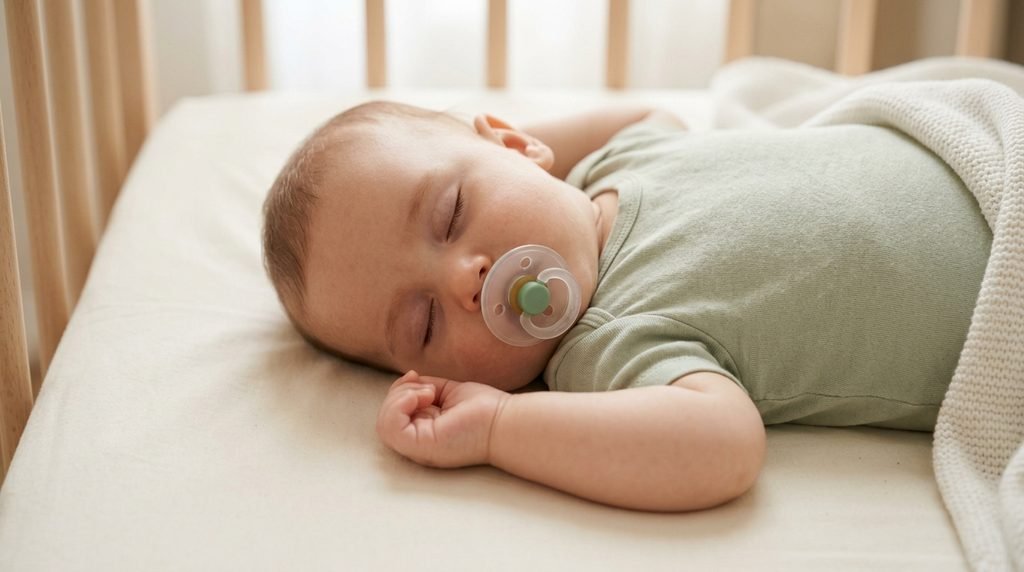
Studies have linked pacifier use during sleep to a lower risk of sudden infant death syndrome (SIDS). The AAP says the protective effect appears to continue even if the pacifier falls out of the mouth. That’s why you don’t need to wake a sleeping baby to put it back.
Nobody knows exactly why it helps. The AAP calls the mechanism unclear. Researchers have suggested that sucking may help keep the airway open or keep a baby from sleeping too deeply, though more research is needed. It’s also an association seen in studies, not proof that a pacifier prevents SIDS on its own.
What about taking it out yourself? That’s a personal choice, not a safety rule. Some sleep coaches ease the pacifier out as a baby drifts off, hoping to reduce dependence. If you’d rather leave it, that’s perfectly fine too.
Many parents worry that leaving it in builds a bad habit. That worry is understandable. Still, in the early months the safety benefit comes first, and habits can be changed later, as the weaning section explains.
One point matters more than the rest. A pacifier never replaces a safe sleep setup. Always place your baby on their back on a firm, flat surface with nothing else in the crib. Our safe sleep guide walks through the basics.
What Pediatric Guidance Says About Pacifiers and SIDS
Parents who search “should I remove pacifier when baby is sleeping” are often really asking a safety question. Pediatric guidance is consistent on it: offer a pacifier at sleep, and don’t stress if it falls out.
The American Academy of Pediatrics’ 2022 safe sleep policy recommends offering a pacifier at nap time and bedtime to reduce the risk of SIDS. The CDC lists the same advice among its safe sleep steps. Both treat the pacifier as one helpful piece of a bigger plan, not a cure-all.
Studies reporting a protective effect compared groups of babies, and they didn’t run experiments. Their estimates of the effect’s size also vary widely, which is why you’ll see very different percentages online. This article sticks to what the AAP says instead of quoting one big number.
Here’s a point that trips up many parents. The guidance describes a pacifier that falls out on its own, and it says the protective effect continues in that case. It says nothing about taking the pacifier out on purpose. So there’s no evidence-based reason to remove it, and no rule against it either.
Timing matters if you’re breastfeeding. The AAP advises waiting until breastfeeding is firmly established. That means a steady milk supply, a comfortable latch, and good weight gain. One hospital notice puts it at around 3 to 4 weeks, though it varies. Babies who aren’t breastfed directly can start whenever you like. Our breastfeeding basics post can help you gauge where you are.
Fingers and thumbs don’t offer the same protection. A state health department handout notes that finger or thumb sucking doesn’t lower SIDS risk. Pediatric dentists also point out that pacifiers can help premature babies develop the sucking reflex.
The Sleep Foundation adds one more detail. The benefit seems larger when a baby sleeps in an unsafe setup, such as on the stomach or with soft bedding. That’s no reason to relax. It’s a reminder to fix the sleep space first.
5 Safe Pacifier Tips for Sleep
If your answer to “should I remove pacifier when baby is sleeping” is no, a few habits keep things safe. Follow these five.
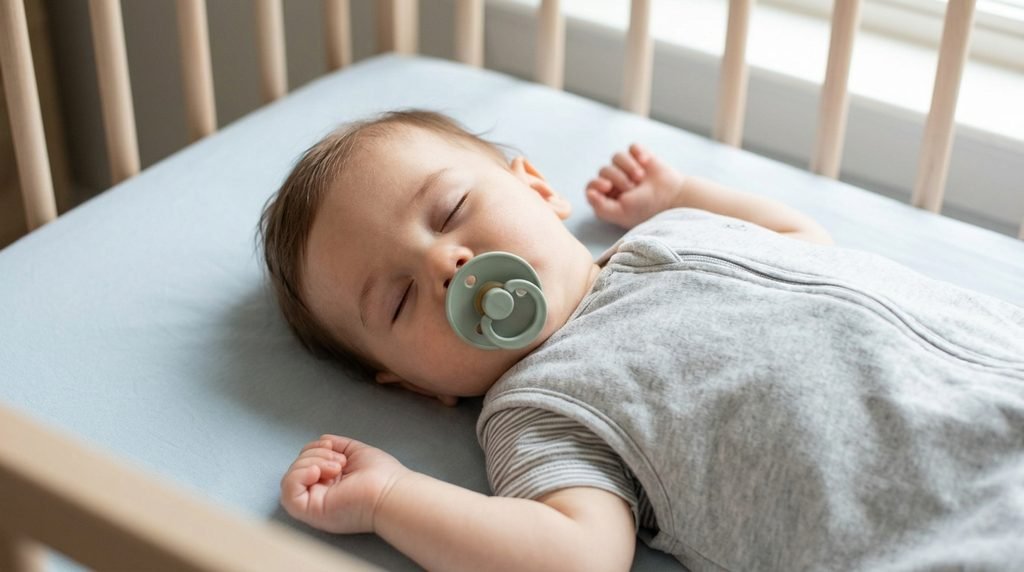
1. Offer it at the start of sleep, after a feed
Offer the pacifier when you place your baby down, not while they’re hungry. Mayo Clinic suggests giving one only after feedings or between them. A hungry baby needs food, and sucking can hide hunger cues. Once your baby is asleep, leave it be.
2. Don’t force it
Some babies never take a pacifier, and that’s normal. The AAP says not to force one on a baby who refuses. You can try again when your baby is a little older, or skip it altogether. Plenty of babies sleep beautifully without one. It also doesn’t have to be your first move. Mayo Clinic suggests trying a change of position or a rocking session before reaching for it.
3. Choose a plain, one-piece pacifier with nothing attached
Pick a one-piece pacifier in the right size for your baby’s age. Two-piece designs can break and become a choking hazard. Skip clips, ribbons, and cords in the crib, and never attach a pacifier to clothing or a toy for sleep. Strings can strangle, and toys can smother. During supervised awake time, a short clip can help, but take it off before sleep.
Before every sleep, run this quick check:
- It’s one piece, with no loose parts.
- The shield is vented and wider than your baby’s mouth.
- The size matches your baby’s age.
- It has no cracks, tears, or sticky texture.
- Nothing is attached, such as a clip, string, or toy.
4. Keep it clean and replace it often
Until about 6 months, Mayo Clinic advises boiling pacifiers often or running them through the dishwasher, since a baby’s immune system is still developing. After that, soap and water is enough. Don’t rinse it in your own mouth, because that only passes germs along. Replace pacifiers regularly and check them for signs of wear. Skip sugar or honey on the pacifier, since sweet coatings raise cavity risk.
5. Keep the sleep space bare, with baby on their back
A pacifier works alongside safe sleep, not instead of it. Place your baby on their back on a firm, flat surface. Keep pillows, blankets, bumpers, toys, and positioners out of the crib. If your baby dozes off in a car seat, move them to a flat surface when you arrive.
What to Do When the Pacifier Falls Out at Night
So, should I remove pacifier when baby is sleeping and it keeps falling out? Usually you don’t need to do anything. If it drops after your baby is asleep and they stay settled, leave it. That’s the AAP’s advice.
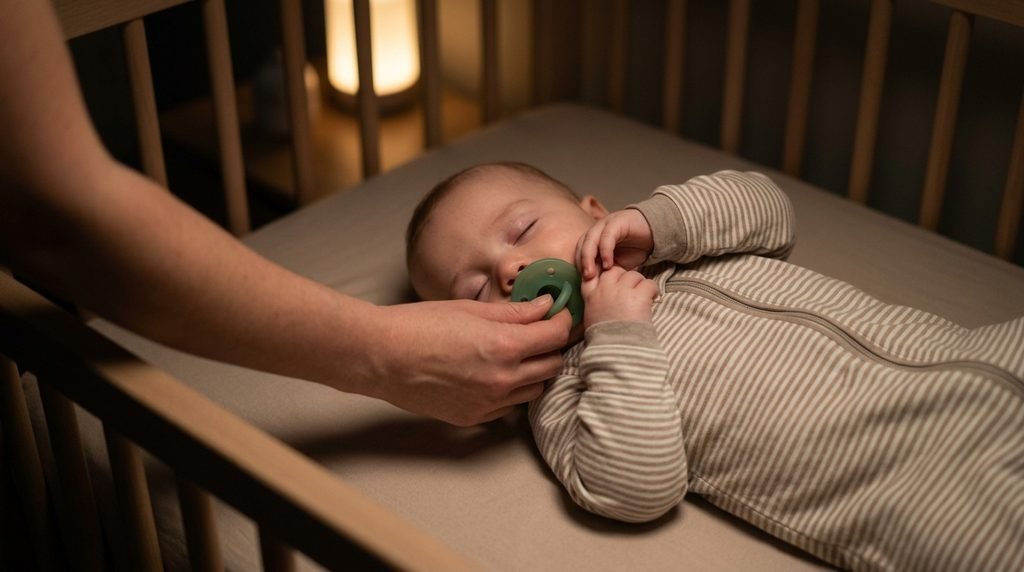
Trouble starts when your baby wakes every time it drops. Babies who fall asleep sucking a pacifier often learn to expect it. When it slips away during light sleep, they may wake and cry until it’s back. That’s a normal sleep association, not a sign that something’s wrong.
Young babies can’t find the pacifier themselves. Many gain that skill somewhere around 6 to 8 months, though it varies. Until then, wakings around a dropped pacifier are common. For what to expect from newborn nights, see our newborn sleep schedule.
Here’s a quick guide to the most common situations.
| What’s happening | What to do |
| It falls out after your baby is asleep, and they stay settled | Leave it out. No need to replace it. |
| Your baby wakes and is clearly upset | Re-offer it, after checking for hunger, a wet diaper, or discomfort. |
| It keeps falling out before your baby is fully asleep | Re-offer it a couple of times, then stop. |
| An older baby wakes each time it drops | Practice finding it during the day, pause before going in, and think about gradual weaning. |
| Your baby falls asleep in a car seat or stroller | Move them to a flat sleep surface when you arrive. |
| Your baby refuses the pacifier | Don’t force it. Try again when they’re older. |
At 3 a.m., try pausing for a minute or two before you go in. Some babies settle on their own, and a short wait tells you whether they truly need help. If they don’t settle, go in calmly, keep the lights low, and offer the pacifier without a big fuss.
Before you blame the pacifier, rule out the basics. A hungry, gassy, or uncomfortable baby wakes for real reasons, and sucking can mask hunger.
If you’re keeping the pacifier past 6 months, you can practice during the day. Guide your baby’s hand to the pacifier during tummy time. At night, help their hand guide it in instead of doing it for them. Some sleep coaches also place a few plain pacifiers within reach in the crib. Ask your pediatrician first, since the crib should otherwise stay bare. If wakings come in waves, our sleep regression guide may help.
Ear Infections, Teeth, and Breastfeeding: Are There Downsides?
Yes, pacifiers have downsides. Are you asking “should I remove pacifier when baby is sleeping” because of ear infections or teeth? Most of those risks show up later, not in the newborn months. Here’s the honest picture.
Start with ear infections. Mayo Clinic points out that pacifier use might raise the risk of middle ear infections. Those infections are least common from birth to 6 months, though. That’s also when SIDS risk is highest and babies most want to suck. The American Academy of Pediatric Dentistry (AAPD) says use after 12 months can increase the risk. Mayo adds that weaning between 6 and 12 months may lower it.
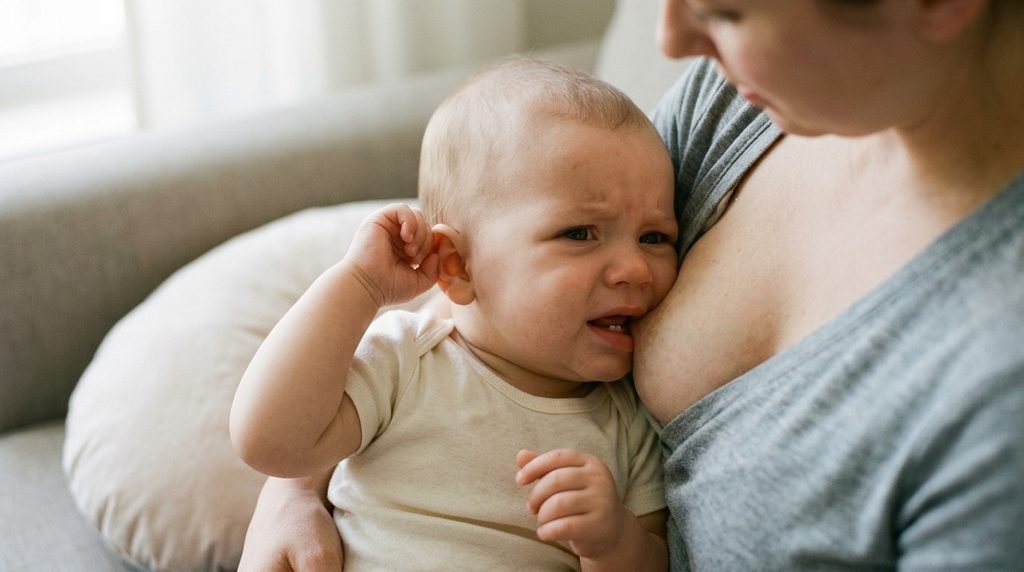
Teeth come next. Using a pacifier in the first few years generally won’t cause long-term dental problems, says Mayo Clinic, but longer use can misalign teeth. The AAPD says use beyond 18 months can affect the developing bite, including open bite and crossbite. Our teething and dental care guide covers early tooth basics.
Tell your dentist or pediatrician if front teeth tilt outward. Also mention a gap between the upper and lower front teeth when the mouth is closed, or repeated ear infections. Catching changes early usually keeps the fix simple.
Many parents worry about nipple confusion. Mayo Clinic notes that research found pacifier use doesn’t change how long babies breastfeed when it starts after breastfeeding is routine. The AAP still advises waiting until breastfeeding is well established.
The downside parents notice first is dependency. A baby who needs the pacifier to fall asleep may wake more when it drops. That’s inconvenient, but it isn’t dangerous.
So weigh the benefits against the downsides by age. In the early months, guidance favors offering one at sleep. As your baby grows, the balance shifts toward weaning.
When and How to Wean Off the Pacifier
Once you’ve settled “should I remove pacifier when baby is sleeping,” the next question is when to stop for good. Sources differ a little, but the range is clear. Think about it between 6 and 12 months. Aim to finish by about age 2, and stop by age 3 at the latest.
This age-by-age guide pulls the main advice together.
| Baby’s age | What to do | Why |
| Birth to about 1 month | Breastfed babies wait until feeding is established. Formula-fed babies may start whenever you like. | The AAP advises waiting for breastfeeding to settle. |
| 1 to 6 months | Offer it at every nap and bedtime. No need to replace it once asleep. | SIDS risk is highest in this window, and ear infections are least common. |
| 6 to 12 months | Keep it for sleep, and start thinking about cutting back. | Weaning now may lower ear infection risk. |
| 12 to 18 months | If your baby isn’t dropping it, start weaning. | Ear infection risk rises after 12 months. |
| 18 to 36 months | Finish weaning. | Dental effects can appear, and dentists advise stopping by 36 months. |
Two approaches work well. Gradual weaning limits the pacifier to sleep, then to bedtime only, then ends with a goodbye. A clean break removes all pacifiers at once. Either can work, depending on your child, and sleep may be bumpy for a few nights. Praise your child whenever they skip it.
Whatever the method, plan for comfort. Add an extra cuddle, a longer story, or a calming bedtime routine to fill the gap. Some families let a toddler pick a new toy as a goodbye gift. Many report that the hardest stretch lasts only a few nights.
Try not to force an early stop. Pediatric dentists note that forced early quitting has been linked to lasting finger sucking. Also, a pacifier is easier to take away than a thumb. If it’s a struggle, ask your child’s doctor or dentist for help.
Some guides suggest swapping in a soft toy or blanket. That suits toddlers, but babies under 12 months shouldn’t have soft objects in the crib. Wait until your pediatrician says it’s okay.
Frequently Asked Questions About Pacifiers and Sleep
Here are quick answers to the questions parents ask right after “should I remove pacifier when baby is sleeping.”
Do I need to put the pacifier back in when it falls out?
No. The AAP says a pacifier doesn’t need to be reinserted once your baby is asleep. Re-offer it only if your baby wakes and is clearly upset, after you’ve checked for hunger or discomfort.
Can a newborn sleep with a pacifier?
Yes, when you follow safe sleep rules. If you’re breastfeeding, wait until breastfeeding is established, often around 3 to 4 weeks. Babies who aren’t breastfed can start whenever you like. Offer it after a feed.
Is it safe to take the pacifier out once my baby is asleep?
Nothing in the guidelines forbids it, and nothing recommends it. The protective effect the AAP describes applies to a pacifier that falls out on its own. Leaving it alone is simplest, and it avoids waking your baby.
Can I use a pacifier clip in the crib?
No. Clips, ribbons, and cords can strangle. A short clip can help during supervised awake time, but take it off before sleep.
What if my baby refuses a pacifier?
That’s fine. The AAP says not to force it. Try again when your baby is a little older, or lean on a calm bedtime routine instead.
Will a pacifier cause ear infections or crooked teeth?
Not in the early months, generally. Ear infection risk rises with use after 12 months, and dental effects tend to appear with use beyond 18 months to 2 years. Weaning on time keeps both risks low.
When should I stop giving a pacifier?
Think about weaning between 6 and 12 months, aim to finish by about age 2, and stop by age 3 at the latest. If your child struggles, ask your doctor or dentist for help.
Conclusion: What to Remember About Pacifiers and Sleep
So, should I remove pacifier when baby is sleeping? No. Offer it at sleep, leave it if it falls out, and keep the crib simple and safe. Watch the calendar too, since the balance shifts toward weaning after the first year. Trust your instincts, and remember that every baby settles a little differently.
Run the quick pacifier check before every sleep, and talk to your pediatrician if you’re unsure. For more calm, practical guidance, explore our other safe sleep guides on Zayapol.
Did your baby take a pacifier, and how did weaning go? Tell us in the comments.
This article is for general information and doesn’t replace advice from your child’s doctor.
Related Post:
When Can Baby Face Forward in Carrier? 5 Essential Signs
When Do Babies Start Smiling? The Real Timeline
Why Do Some Babies Wear Helmets? 7 Simple, Essential Facts
When Can You Find Out Baby Gender? Reveal Party Timing
Why Do Babies Grunt in Their Sleep? A Complete Parent’s Guide

2 thoughts on “Should I Remove Pacifier When Baby Is Sleeping? 5 Safe Tips”