You’re sorting through a pile of tiny shirts, and it’s genuinely harder to tell them apart than you’d expect is this a onesie, a bodysuit, or just a plain baby tee? A quick note before we dive in: if you searched this term and landed here expecting a cropped fashion top, that’s a different “baby tee” entirely a Y2K-style women’s crop top trend. This guide is about the actual clothing item for babies.
Quick answer:
A baby tee is a simple short-sleeve or long-sleeve top with no crotch closure, distinct from a bodysuit (or “onesie”), which snaps at the bottom to stay put and allow diaper access. Tees are great for layering, warm weather, and older babies, while bodysuits tend to work better for newborns. One safety note worth knowing upfront: a standard cotton tee isn’t designed to be sleepwear, and shouldn’t be used as one past the newborn stage.
Baby Tee vs. Bodysuit — What’s the Actual Difference?
At a glance, a baby tee and a bodysuit can look nearly identical same soft cotton, same short sleeves, same tiny size. The real difference is at the bottom hem. A tee ends at the waist, just like an adult t-shirt, which means it can ride up when your baby is held, lifted, or starts crawling. A bodysuit (commonly, if technically incorrectly, called a “onesie”) extends past the waist and snaps closed between the legs, which keeps it in place and gives quick access to the diaper without having to undress your baby completely.
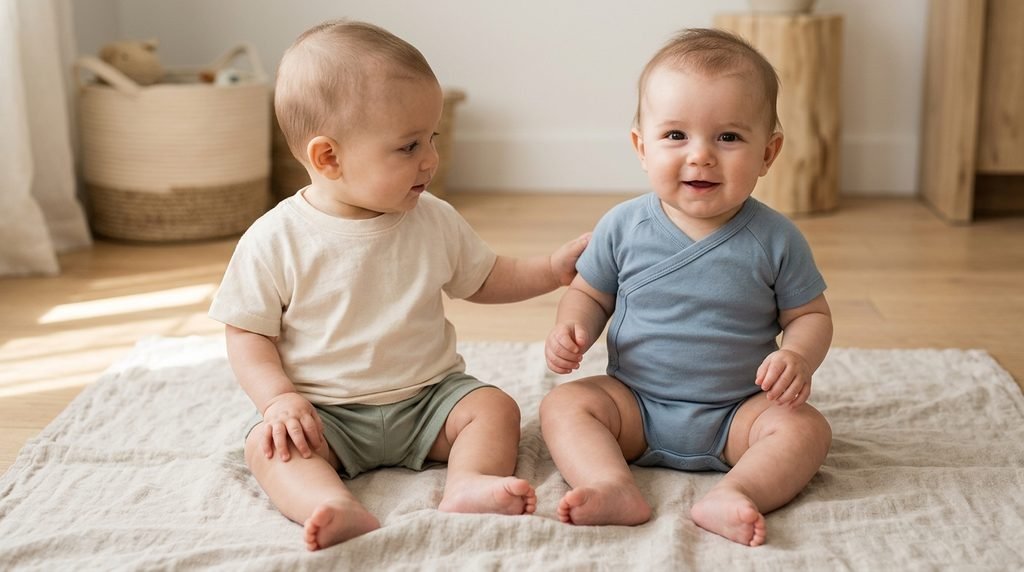
Fun bit of trivia while we’re on the topic: “Onesie” is technically a trademark owned by Gerber Childrenswear, so other brands Carter’s, Old Navy, and pretty much everyone else officially call the same garment a “bodysuit.” In everyday conversation, most parents use the two terms interchangeably, and that’s completely fine.
When to Reach for a Tee vs. a Bodysuit
Both have their place, and it mostly comes down to your baby’s age and what you’re using it for.
A bodysuit makes more sense for newborns and younger babies who are being changed constantly and spend a lot of time lying down or being carried. The snap closure keeps everything in place and makes diaper changes fast, which matters a lot in those early exhausting weeks.
A plain tee works well once your baby is a bit older, especially for layering under a sweater or jacket, for warm-weather days when a full bodysuit feels like too much fabric, or simply as your baby transitions into toddler-style clothing that doesn’t need to accommodate constant diaper access in quite the same way. Tees are also handy as a lightweight base layer you can mix and match more easily than a one-piece.
Neither one is “better” outright most baby wardrobes end up with a mix of both, used for slightly different moments.
Fabric and Comfort Basics
Whatever you choose, fabric matters more for babies than it does for the rest of us. Soft, breathable cotton is the standard for good reason it’s gentle against sensitive skin, machine washable, and holds up well to frequent laundering. Look for flat or covered seams and tag-free labeling (often printed directly on the fabric instead of sewn in), since even a small seam or scratchy tag can genuinely bother a baby who’s spending most of their day lying against it.
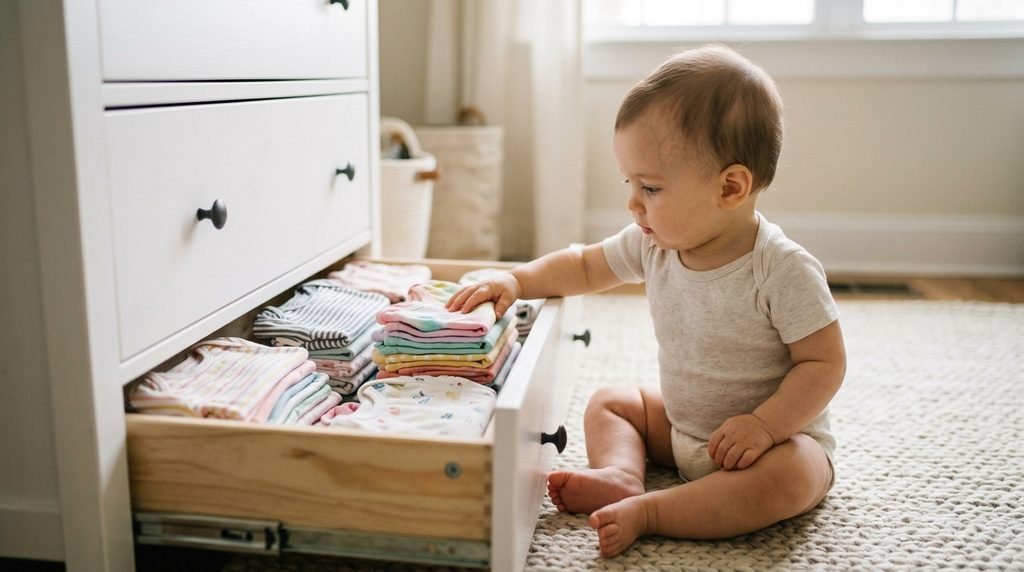
Loose, relaxed cuts are generally more comfortable for a squirming baby than anything tight or restrictive around the arms and neck, and a wide, stretchy neckline makes a huge difference when you’re pulling a shirt over a baby who very much does not want a shirt pulled over their head.
Getting the Size Right
Baby clothing sizes are usually labeled by age 0-3 months, 3-6 months, and so on but actual babies vary enormously in size at any given age, so treating the age label as a loose guideline rather than a rule will save you some frustration. If the packaging or tag lists a weight range alongside the age, that’s genuinely the more reliable number to check, since a baby in the 90th percentile for weight might need the next size up well before the “expected” age, while a smaller baby might comfortably stay in a size longer than the label suggests.
A general rule of thumb: if you’re between sizes, size up rather than down. A slightly roomy tee is far more comfortable and adjustable than one that’s already snug and about to be outgrown in a few weeks.
An Important Safety Note for Bedtime
Here’s the part that genuinely doesn’t get enough attention in most baby-clothing guides. In the U.S., children’s sleepwear is regulated for flammability, and the standard specifically distinguishes between snug-fitting sleepwear and loose, oversized garments. According to the CPSC’s guidance on children’s sleepwear safety, parents should not put children to sleep in t-shirts, sweats, or other oversized, loose-fitting cotton or cotton-blend garments, since these can catch fire more easily and are associated with burn injuries.
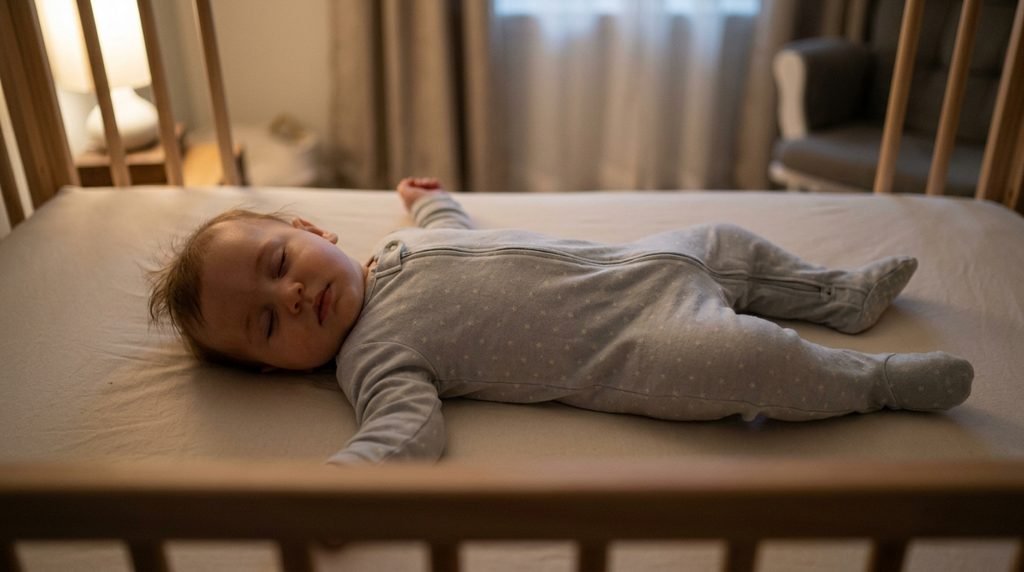
The reasoning is straightforward: sleepwear in sizes larger than 9 months is required to be either flame-resistant or genuinely tight-fitting against the body, since snug fabric doesn’t catch fire as easily as loose fabric does. A standard baby tee is neither it’s regular daywear cotton, cut with the same relaxed fit as any casual shirt, not designed or tested to meet sleepwear standards. That doesn’t mean tees are unsafe in general; it means they’re the wrong choice specifically for sleep once your baby is past the very youngest infant stage. For actual sleep, reach for pajamas or a sleeper labeled as sleepwear, which will carry the tight-fitting or flame-resistant designation on the tag our guide on how to dress your baby for sleep covers the full picture if you want more detail there.
How Many Do You Actually Need?
For a newborn wardrobe, somewhere around 8 to 12 bodysuits or tees is a reasonable starting point, accounting for the inevitable spit-up, blowouts, and the fact that laundry doesn’t always happen daily. As your baby grows out of the newborn stage and into a more predictable routine, you can scale that down a bit, since laundry becomes more manageable and outfits get more varied. It’s rarely a problem to have a few extra on hand, especially in a size your baby is currently wearing.
Frequently Asked Questions
Can my baby wear a regular tee to sleep?
For very young infants under about 9 months, sleepwear regulations don’t apply the same way, but once your baby is older, it’s safer to use pajamas or a sleeper specifically labeled as sleepwear rather than a loose everyday tee, per CPSC fire-safety guidance.
What’s the actual difference between a onesie and a bodysuit?
Functionally, nothing “onesie” is technically a Gerber Childrenswear trademark, while “bodysuit” is the generic industry term everyone else uses for the same snap-crotch garment. In everyday conversation, people use both words for the same thing.
What size should I buy if my baby is between sizes?
Check the weight range on the label if one’s listed, since it’s usually more reliable than the age range alone, and when in doubt, size up rather than down a slightly loose fit is more forgiving than one your baby will outgrow in a matter of weeks.
Are graphic or printed tees safe for babies?
Generally yes, as long as the print is soft and flexible rather than a stiff, raised design that could feel scratchy against sensitive skin. It’s worth double-checking the inside of the shirt for how the print feels before dressing your baby in it regularly.
Conclusion
A baby tee is a simple, versatile piece great for layering, warm weather, and life past the newborn stage while a bodysuit’s snap closure makes it the more practical choice for younger babies who need frequent diaper changes. Pay attention to weight-based sizing rather than the age label alone, and keep one genuinely important rule in mind: save the plain tees for daytime, and reach for actual sleepwear once bedtime rolls around.
Does your baby’s dresser lean more toward tees, bodysuits, or a healthy mix of both at this point? It’s one of those small wardrobe balances that tends to shift every few months as they grow.
Related Post:
What to Write in a Baby Shower Card: Ideas & Etiquette
Does Baby Oil Help You Tan? What Dermatologists Say
Baby’s Skin Is Mottled: Causes and When to Worry
When Can You Find Out Baby Gender? Reveal Party Timing
Why Do Babies Grunt in Their Sleep? A Complete Parent’s Guide
