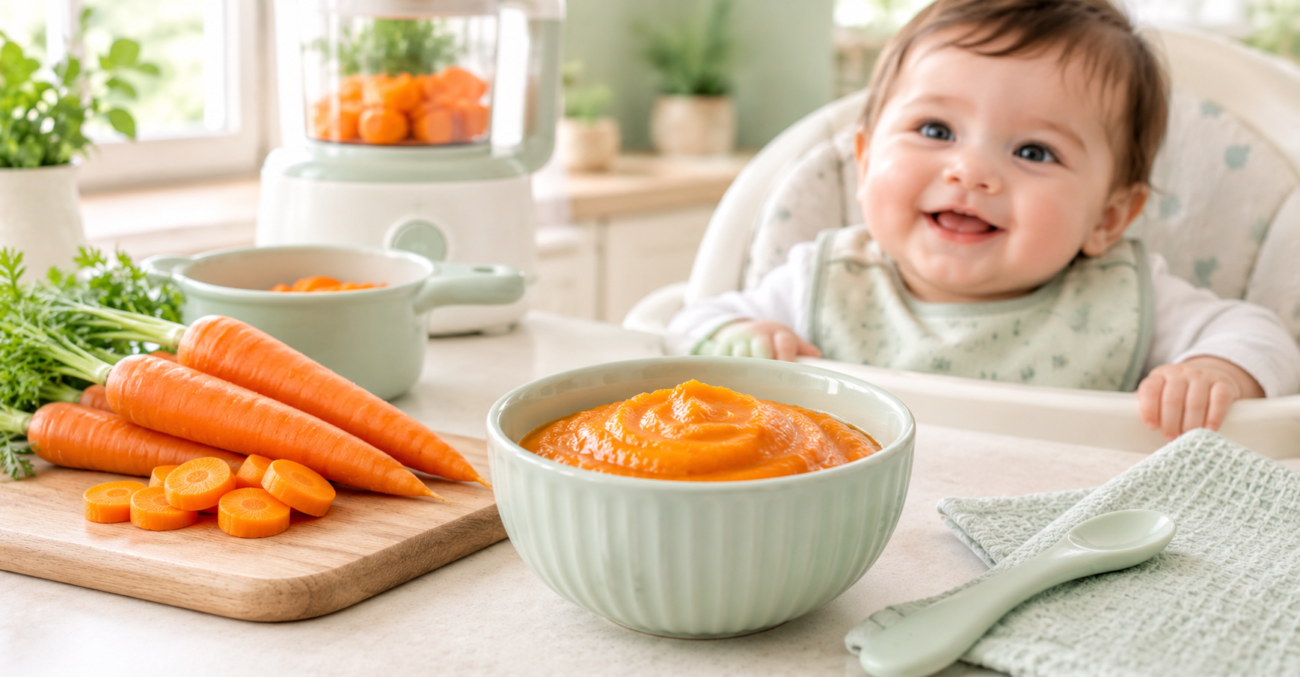
zayapol answers the baby questions parents actually search for, and “what should I feed my baby first?” is one of the biggest. If you’re wondering how to make carrot puree for baby, the good news is that it takes one ingredient, one pot, and about 25 minutes. Carrots are mild, naturally sweet, and soft enough to blend into a silky Stage 1 puree.
This guide gives you the exact method, three cooking options, and the texture, storage, and safety details most recipes skip. You’ll also see what current guidance says about nitrates and heavy metals, so you can cook with confidence instead of worry.
Quick Takeaways
- Start carrot puree around 6 months, when your baby shows all the readiness signs.
- Steam peeled carrots for 15 to 20 minutes (or boil small pieces for 6 to 8) until a fork slides in with no resistance.
- Blend with the cooking water, breast milk, or formula until completely smooth.
- Refrigerate for up to 2 days. Freeze extras in single-serve cubes for best quality up to 1 month.
- Raw carrot pieces are a choking hazard, so stick to puree or very soft cooked carrot.
How to Make Carrot Puree for Baby: The Short Answer
Wash, peel, and chop about 1 pound of carrots, steam them for 15 to 20 minutes until very soft, then blend with a few tablespoons of cooking water, breast milk, or formula until smooth. That one pound (6 to 8 medium carrots) makes roughly 1½ cups of puree, or about a dozen 2-tablespoon cubes.
Three cooking methods work well. Steaming keeps the most flavor and is the easiest to get right. Boiling is fastest. Roasting gives the sweetest, deepest taste. The full steps are below.
When Can Babies Eat Carrot Puree?
Most babies are ready for carrot puree around 6 months old. The American Academy of Pediatrics recommends starting solids at about that age, and its Starting Solid Foods guidance on HealthyChildren.org stresses watching your baby’s readiness rather than the calendar alone.
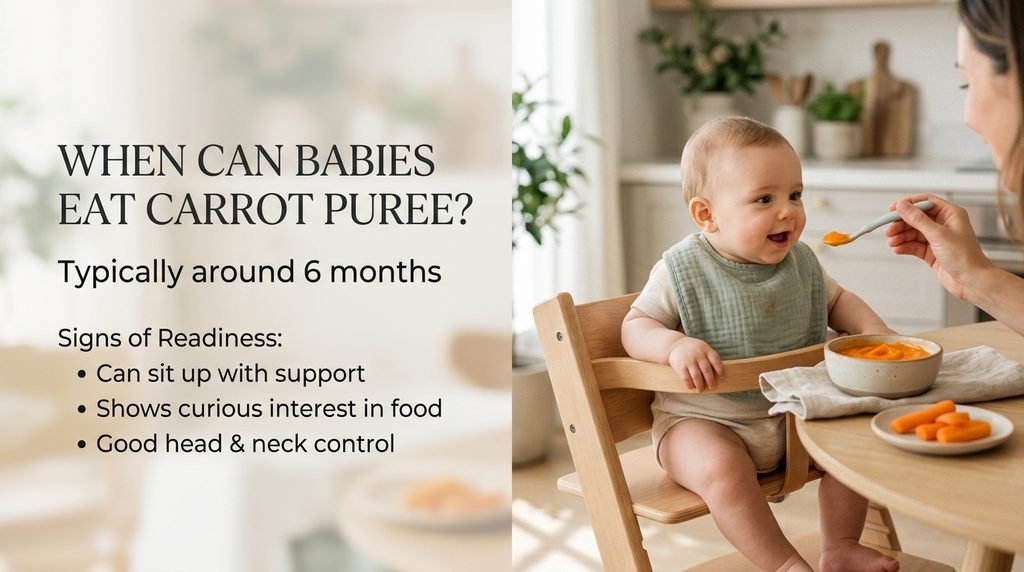
Look for all of these signs together, as listed by WIC’s solid food readiness checklist:
- Your baby sits up and holds their head steady.
- They show interest in what you’re eating.
- They open wide when a spoon approaches.
- They keep food in their mouth instead of pushing it out with their tongue.
Breast milk or formula stays your baby’s main nutrition through the first year, so think of carrots as practice, not a meal replacement. Check with your pediatrician before starting solids, especially if your baby was born early or has a health condition.
What You Need to Make Carrot Puree
You don’t need fancy gear. Here’s the whole list:
- 1 pound fresh carrots (6 to 8 medium), or any type you like, including baby carrots
- A steamer basket and pot with a lid (or just a pot, if you’re boiling)
- A blender, food processor, or immersion blender
- Breast milk, formula, or cooking water for thinning
- Silicone ice cube trays for freezing
Tip: Taste a raw carrot before you start. The puree will taste only as sweet as the carrots you begin with. If your first batch seems bland, a sweeter bunch is the easiest fix.
Step-by-Step: How to Make Carrot Puree for Baby (Steamed Method)
Steaming takes about 25 minutes from start to finish and gives you a bright, naturally sweet puree.
- Wash and peel. Scrub the carrots well, then peel them. Peeling lowers the fiber a little, which is gentler on a new eater’s tummy.
- Chop evenly. Cut into chunks about 1 inch thick. Even pieces cook at the same speed.
- Steam for 15 to 20 minutes. Add about an inch of water to a pot, set the basket in, and cover. The carrots are done when a fork slides in with no resistance.
- Save the cooking water. Set aside about ½ cup. It carries nutrients and flavor you’ll want in the puree.
- Blend for 1 to 2 minutes. Add ¼ cup of liquid to start, then add more a tablespoon at a time until the puree is smooth.
- Cool and serve. Test the temperature on your wrist or with a clean spoon before feeding.
Boiled and Roasted Carrot Puree: How They Compare
| Method | Time | Taste and texture | Best for |
| Steaming | 15 to 20 minutes | Mild, sweet, very smooth | Beginners and Stage 1 |
| Boiling | 6 to 8 minutes (small pieces) | Milder, slightly watery | Quick weeknight batches |
| Roasting | 25 to 35 minutes at 400°F | Sweeter, deeper flavor | Babies who like bolder taste |
If you boil, keep the cooking water and blend with it so you don’t lose nutrients down the drain. For roasting, toss the chunks with a tiny drizzle of oil or none at all, and cook until fork-tender.
How to Get the Right Texture
For Stage 1, aim for a puree that’s completely smooth and slides off the spoon. Thinner puree is easier for a brand-new eater, and you can thicken it for Stage 2 by using less liquid.
- Stringy or lumpy? Press the puree through a fine-mesh sieve to catch stubborn fibers.
- Too thick? Add breast milk, formula, or cooking water one tablespoon at a time.
- Too bland? Use sweeter carrots or try the roasted method.
- Add nothing extra. Skip salt, sugar, and honey. Honey isn’t safe before a baby’s first birthday.
As your baby gets comfortable, you can move toward a thicker, mashed texture. Follow your baby’s cues and your pediatrician’s advice on timing.
Are Nitrates in Carrots a Concern?
For babies starting solids at about 6 months, nitrates in homemade carrot puree are not a practical worry. The concern applies to much younger infants. A well-known 2005 American Academy of Pediatrics statement advises avoiding home-prepared vegetables like carrots, spinach, and beets until babies are at least 3 months old, as summarized by pediatrician Dr. Greene.
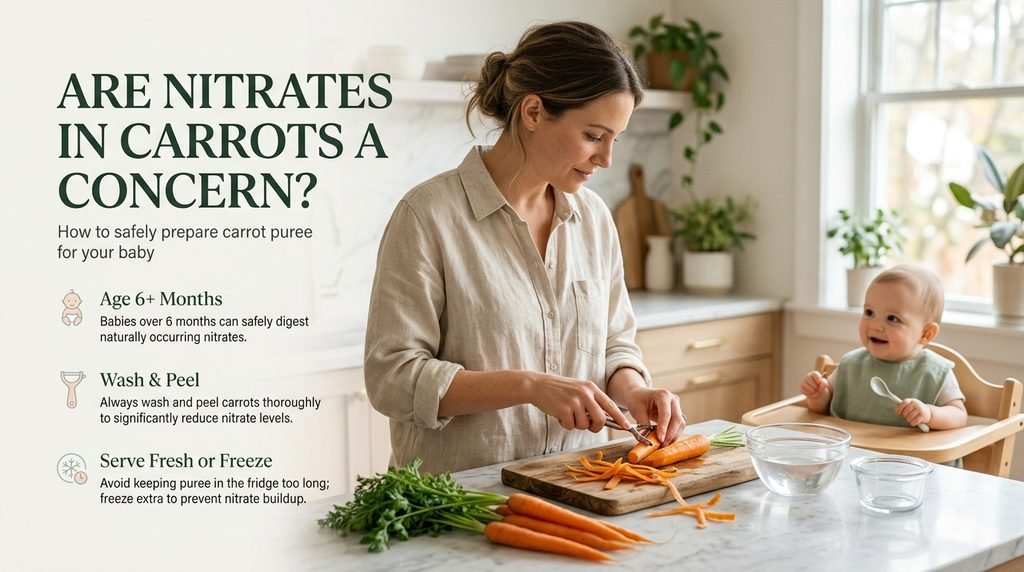
The reason is biology. A young baby’s stomach isn’t yet acidic enough to keep nitrate-converting bacteria in check, and that changes around 3 months. The same source notes that the serious blood condition linked to nitrates, methemoglobinemia, most often traces back to formula mixed with contaminated well water, not to homemade baby food.
Two simple habits keep exposure low, according to this nitrate explainer:
- Test well water if that’s what you use. It should contain less than 10 parts per million of nitrates.
- Freeze extra puree right away rather than leaving it in the fridge, since nitrate levels can rise with storage.
Heavy Metals and Root Vegetables: What Parents Should Know
Carrots can contain small amounts of lead because they grow in soil, and making your own baby food doesn’t automatically lower that. A HealthDay report on baby food contaminants quotes researchers saying the type of food matters more than who makes it.
The FDA is working on this through its Closer to Zero initiative. Its lead guidance sets a limit of 20 parts per billion for single-ingredient root vegetable products like carrots, compared with 10 parts per billion for most other fruits and vegetables, according to a Food Processing summary. Those limits apply to commercial products, but they show why variety helps.
You don’t need to avoid carrots. Just don’t serve them every day. Rotate carrots and other root vegetables with different vegetables across the week, and wash produce well before cooking.
How to Store, Freeze, and Reheat Carrot Puree
Homemade carrot puree keeps for 2 days in the refrigerator, and best quality in the freezer for about 1 month. Those numbers come from University of Illinois Extension’s storage guide. Some recipe sites list 3 to 4 days in the fridge and several months in the freezer, but we follow the more cautious university guidance for infant food.
| Storage | How long | Notes |
| Refrigerator | Up to 2 days | Airtight container with a tight lid |
| Freezer | About 1 month for best quality | Stays safe longer, but quality drops |
To freeze: Spoon the puree into silicone ice cube trays or drop 1 to 2 tablespoon portions onto a clean cookie sheet. Freeze until solid, move the cubes to a freezer bag, and label with the date.
To reheat: Thaw in the fridge, then warm on the stove over low heat, stirring often, until it reaches 165°F on a food thermometer. Let it cool, stir, and test the temperature before feeding. Never reheat baby food in a slow cooker.
Easy Carrot Combinations and Baby-Led Weaning
Once your baby has tried carrots alone for a few days with no reaction, you can mix them into other purees. Good partners include apple, banana, butternut squash, cauliflower, and mango. Pairing carrots with non-root vegetables like squash or cauliflower also helps with the variety we talked about above.
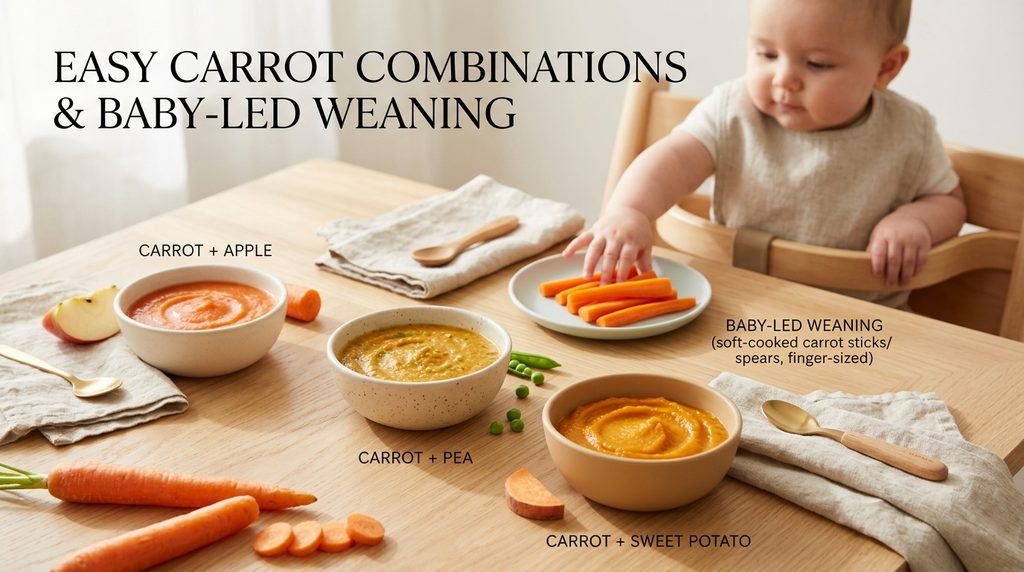
For baby-led weaning, cook carrots until they’re soft enough to mash between your fingers, then cut into sticks your baby can hold. Don’t serve raw carrot. University of Illinois Extension lists raw carrot among the vegetables that can cause choking.
Ready for the next food after carrots? Read our guide on how to introduce wheat to baby.
Carrot Puree for Baby: Your Questions Answered
When can I give my baby carrot puree?
Most babies can start carrot puree around 6 months, once they show all the readiness signs like steady head control and interest in food. Homemade carrot puree isn’t recommended before 3 months. Talk to your pediatrician if you’re unsure.
How long do you boil or steam carrots for baby food?
Steam carrot chunks for 15 to 20 minutes, or boil small pieces for 6 to 8 minutes. They’re ready when a fork slides in easily and the carrot starts to fall apart. Larger pieces take longer, so cut them evenly.
Can I use baby carrots or frozen carrots?
Yes, both work. Any carrot type makes a fine puree, including baby carrots. Frozen carrots are fine too, though they may taste a little less sweet than fresh. Freezing can also limit the nitrate increase that happens when fresh vegetables sit in storage.
Does carrot puree cause constipation?
Carrot puree isn’t a known cause of constipation, because carrots contain fiber. Every baby’s digestion is different, though, so constipation after carrots can’t be ruled out. If it happens, mention it to your pediatrician.
How long does homemade carrot puree last?
Homemade carrot puree lasts up to 2 days in the fridge and about 1 month in the freezer for best quality. Freeze it in single-serve cubes and label them with the date so you always know what’s what.
Final Takeaway
Now you know how to make carrot puree for baby: steam, blend, cool, and freeze the extras. Start around 6 months, keep the texture smooth, and rotate carrots with other vegetables through the week. Store it for 2 days in the fridge or freeze it in cubes.
Have you tried making carrot puree yet? Tell us in the comments how it went, and browse more guides in Baby Feeding & Nutrition.
This article offers general information and isn’t a substitute for professional medical advice. Talk to your pediatrician before starting solids or if your baby has allergies, reflux, or other health concerns.

One thought on “How to Make Carrot Puree for Baby: 3 Easy Methods”