It is 2 a.m., the bottle warmer is somewhere across the room, and your baby is already crying. In that moment, most parents ask the same question: can babies drink cold formula, or does it need to be warmed no matter what?
The short version is reassuring. Most healthy babies can drink formula straight from the fridge without any issue at all. But there are a handful of situations where warming still matters, plus a few practical things worth knowing before you make cold bottles your default. This guide covers all of it, without the vague reassurance some articles lean on instead of a real answer.
Can Babies Drink Cold Formula? Yes, Here’s the Short Answer
For most full-term, healthy infants, cold formula is perfectly safe. There is nothing in refrigerated formula that becomes harmful just because it has not been warmed, and pediatric sources consistently support skipping the bottle warmer when it is not convenient.
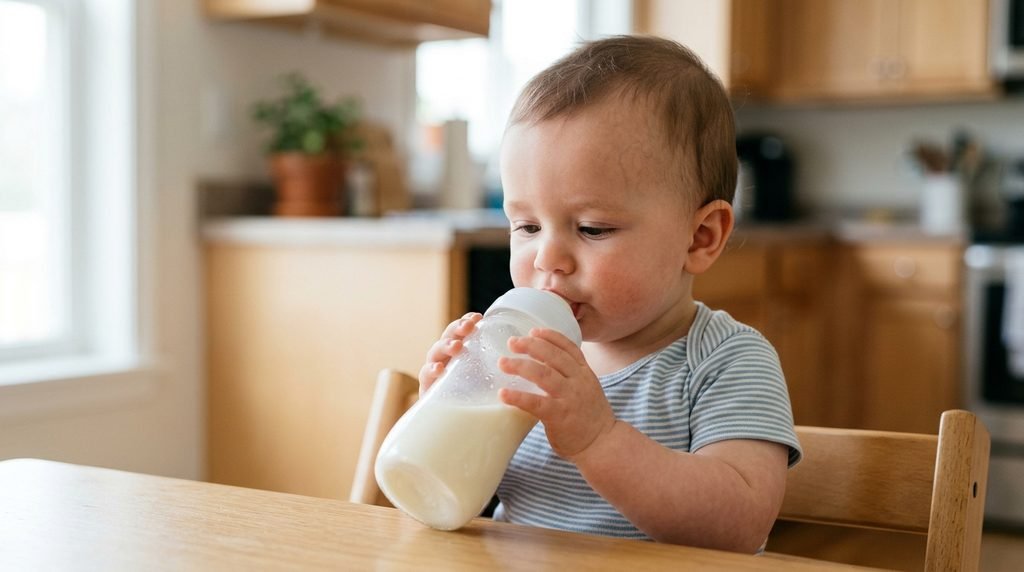
Temperature is mostly a comfort preference rather than a medical requirement. Some babies happily drink a bottle straight from the fridge, while others clearly prefer it warm. Neither preference means anything is wrong. It simply reflects what your baby is used to.
Parents often ask this question for the first time after a warmer breaks, a babysitter runs out of time, or a flight gets delayed. In nearly every one of those situations, the honest answer to can babies drink cold formula is the same reassuring yes, so it is worth knowing that ahead of time rather than scrambling to figure it out mid-feeding.
Does Formula Temperature Change Its Nutrition?
No, and this is worth clearing up because it trips up a lot of new parents. The proteins, fats, vitamins, and minerals in formula do not change based on whether the bottle is cold, room temperature, or warm. A cold bottle delivers exactly the same nutrition as a warm one.
The myth that formula must match body temperature to digest properly likely comes from breastfeeding, since breast milk is naturally warm. But formula is not breast milk, and there is no digestive requirement tied to its temperature. Warming a bottle is about comfort and habit, not nutrition or digestion.
When Warm Formula Actually Matters: Premature and Immunocompromised Babies
There is one meaningful exception, and it is worth taking seriously. According to Mayo Clinic, babies younger than 2 months, those born prematurely, or those with a weakened immune system face a higher risk from cronobacter bacteria, a rare but serious contaminant that can occasionally be present in powdered formula.
For these babies, the extra prep steps matter. That means using water that was boiled and cooled for five minutes before mixing, then cooling the prepared bottle to body temperature, around 98.6 degrees Fahrenheit, rather than serving it straight cold. It is not that cold formula itself is dangerous for these babies. It is that the sterilizing hot-water preparation step, followed by cooling to warm rather than cold, reduces bacterial risk during a period when their immune systems are especially vulnerable.
If your baby fits any of these categories, talk to your pediatrician about the right preparation method before defaulting to cold bottles. Outside of these specific situations, the general answer to can babies drink cold formula stays the same reassuring yes, since the added risk really is concentrated in these higher-vulnerability groups rather than spread evenly across all infants.
Never Microwave Formula (Here’s Why)
Whether you serve formula cold or warm, one method is consistently unsafe: the microwave. Microwaves heat unevenly, which creates hot spots inside the bottle that will not show up even if you test the outside temperature. A baby can be burned in the mouth or throat from a bottle that felt fine on your wrist.
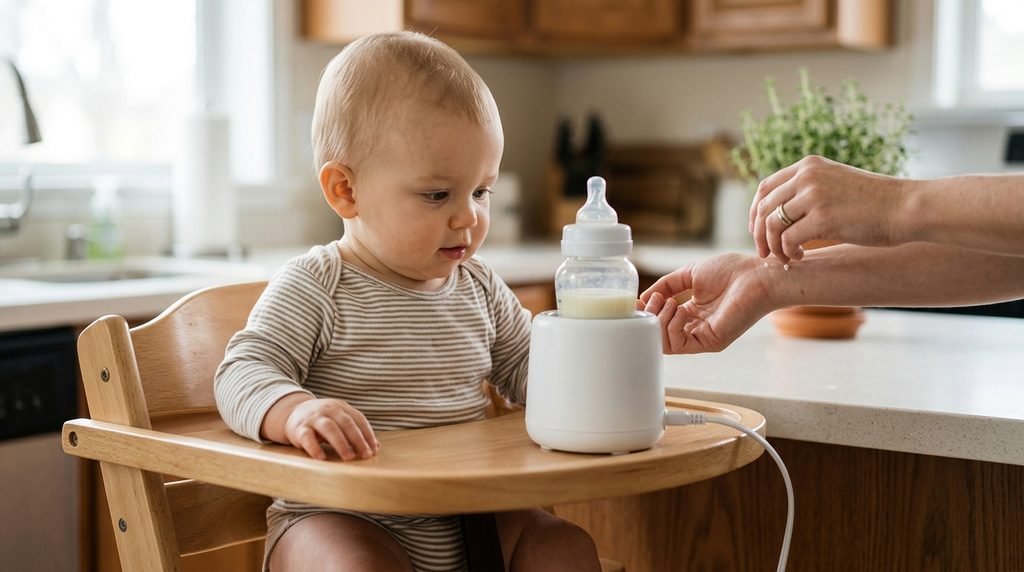
If you do want to warm a bottle, stick to a bottle warmer or a bowl of warm water instead. Both heat formula evenly and give you a temperature you can actually trust.
How to Warm a Bottle Safely, If You Want To
If your baby clearly prefers warm formula, there is nothing wrong with warming it. Just do it the right way.
- Place the filled bottle in a bowl of warm water, or run it under warm tap water for a few minutes.
- Swirl gently to distribute the heat evenly through the bottle.
- Test the temperature by putting a couple of drops on the inside of your wrist or the back of your hand. It should feel lukewarm, never hot.
- Feed within the safety window covered later in this guide, since warmed formula has a shorter safe window than an unopened cold bottle.
This process takes a few extra minutes, which is exactly why many parents eventually skip it once they realize their baby genuinely does not mind a cold bottle.
Cold Formula and Teething: Does It Really Help?
Many parents notice that a cold bottle seems to soothe a teething baby, and there is a reasonable explanation for why. Cold temperatures can numb sore gums, similar to a chilled teething ring. Some parents even freeze a small amount of formula in a mesh feeder for the same effect.
That said, it is worth being honest here: there is no clinical research confirming that cold formula specifically relieves teething pain. What exists is mostly parent-reported experience. If your teething baby seems to prefer a cold bottle, there is no harm in offering one, but do not expect it to work as a guaranteed fix if your baby is having a rough day regardless.
Possible Downsides: Gas and Feeding Refusal
Cold formula is not without a few practical downsides, and a good guide should not gloss over them.
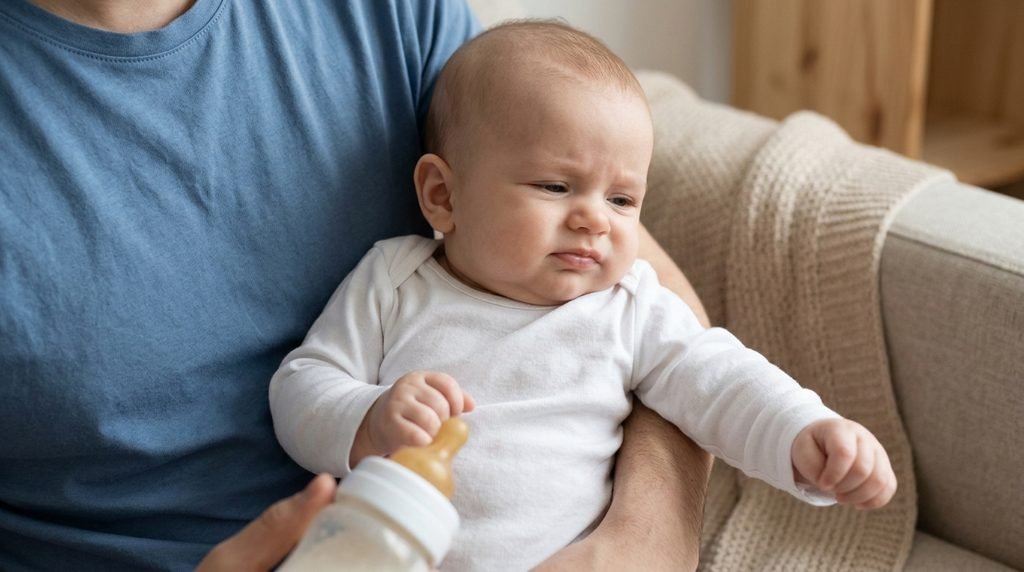
Some babies, not most, seem to get gassier when switched to cold formula, possibly because they swallow more air adjusting to the unfamiliar sensation. There is no strong research explaining exactly why this happens in some babies and not others, so if you notice more fussiness after a feeding, it is reasonable to try warming the next bottle and see if it makes a difference.
The bigger issue for many families is simple refusal. A baby who is used to warm bottles, especially one transitioning from breastfeeding, may flat out reject a cold one at first. This is not a medical problem. It is a preference, and preferences can shift with a little patience.
It also helps to rule out other causes before blaming the temperature entirely. A growth spurt, a new tooth coming in, or simple overtiredness can all look like formula refusal even when the bottle itself is not the actual problem. If your baby is otherwise gaining weight well and only pushes back on cold bottles specifically, that is a good sign it really is a temperature preference rather than something else going on.
How Long Can Formula Sit Out or Stay in the Fridge?
Since a lot of parents asking whether babies can drink cold formula are really asking about a bottle that has been sitting around, storage timing deserves its own section.
The Centers for Disease Control and Prevention lays out clear windows for prepared formula:
- Unused, unheated formula at room temperature: safe for up to 2 hours
- Formula your baby has started drinking from: use within 1 hour, then discard the rest
- Prepared formula stored in the fridge, untouched: safe for up to 24 hours
- Opened ready-to-feed formula, refrigerated: safe for up to 48 hours
Never put a partially finished bottle back in the fridge to save for later. Saliva mixes into the formula during feeding, and that combination can grow bacteria even under refrigeration. When in doubt, toss it rather than risk it.
Formula should also never be frozen. Freezing separates the fat and protein structure, which can leave the formula clumpy and altered in a way that does not reconstitute properly, even after thawing.
Helping a Reluctant Baby Accept Cold Formula
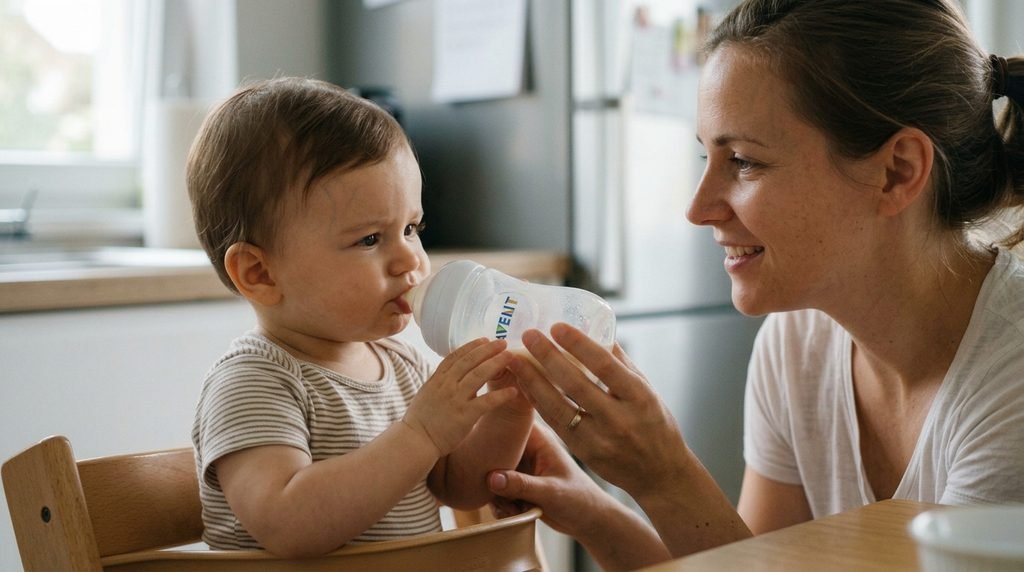
If you would like your baby to get comfortable with cold bottles, whether for convenience, travel, or daycare requirements, a gradual approach tends to work better than switching cold turkey.
- Start by offering a room temperature bottle instead of jumping straight to fridge-cold
- Try the switch during a calm feeding, not when your baby is already overtired or overhungry
- Keep everything else about the routine the same, so temperature is the only variable changing
- Expect a few attempts before your baby fully accepts it, and go back to warm if a particular feeding is not going well
Consistency helps more than persistence in a single sitting. A baby who refuses a cold bottle on Monday may take it without complaint by Thursday. If you are working on this transition specifically so cold formula becomes a reliable option for daycare or a caregiver, give yourself a week or two of practice runs before you actually need it to work, rather than testing it for the first time on the morning it matters.
When Cold Formula Actually Makes Life Easier
There is a practical reason so many parents search this question in the first place, and it usually is not really about safety. Many daycares require bottles to be sent in cold or at room temperature rather than pre-warmed, since a warm bottle sitting out all morning creates its own storage problem. Travel days, long car rides, and overnight feeds all get simpler once a cold bottle is genuinely an option rather than something you are talked into as a last resort.
If your baby tolerates it, training them early to accept cold or room temperature formula can remove one more logistical hurdle from an already busy season.
Frequently Asked Questions
Can I give my baby formula straight from the fridge?
Yes, for most healthy, full-term babies. Refrigerated formula that has been prepared and stored correctly is safe to feed straight from the fridge, with no need to warm it first unless your baby has a preference or falls into a higher-risk category.
Does cold formula cause colic?
There is no research linking cold formula to colic. Colic has multiple possible causes unrelated to temperature, and while a small number of babies seem gassier on cold formula, this is different from true colic.
Can I refreeze or freeze prepared formula?
No. Freezing changes the structure of formula, and thawing it does not reliably restore it to a safe or well-mixed state. Prepared formula should be used within the refrigerator or room-temperature windows, not frozen for later.
Is it okay to switch between warm and cold formula from feeding to feeding?
Generally yes, as long as your baby tolerates the change without discomfort. Some parents keep temperature consistent to avoid fussiness, while others switch freely based on convenience, and both approaches are fine for a healthy baby.
Conclusion
So, can babies drink cold formula safely? For the overwhelming majority of healthy babies, yes, with no nutritional downside and no real safety concern once storage guidelines are followed. The main exception is very young, premature, or immunocompromised infants, where your pediatrician’s specific preparation advice should take priority over convenience. Beyond that, whether your baby drinks formula warm or cold really comes down to preference, and it is worth finding out which one makes your routine easier rather than assuming warming is mandatory.
Related Post:
When to Stop Giving Baby Formula: The Complete Guide (2026)
How to Make Carrot Puree for Baby: Easy 2026 Recipe Guide
Why Do Some Babies Wear Helmets? 7 Simple, Essential Facts

One thought on “Can Babies Drink Cold Formula? The Honest Safety Guide”