Reaching for baby powder on a hot, sticky day is a habit many people grew up with, whether it was dusted on as a kid after a bath or kept in a gym bag to fight chafing. But does baby powder actually help with sweat, or is it just giving the appearance of dryness without doing much at all? The answer is a little more nuanced than a simple yes or no, and understanding how baby powder actually works can help you decide whether it’s the right choice for you or your baby. This guide breaks down exactly what baby powder does, where it falls short, and what alternatives might serve you better depending on your situation.
What Is Baby Powder Made Of?
Baby powder generally comes in two main forms: talc-based and cornstarch-based. Talc is a naturally occurring mineral that’s ground into a fine powder, and it has historically been the standard ingredient in most baby powders due to its excellent moisture-absorbing properties and silky texture. Cornstarch, on the other hand, is derived from corn and has become an increasingly popular alternative in recent years, largely due to growing safety concerns surrounding talc.
The shift toward cornstarch-based formulas isn’t just a trend. Many manufacturers have reformulated their products or introduced cornstarch versions specifically in response to concerns about talc’s safety profile, which we’ll get into in more detail further down.
How Baby Powder Works on Sweat
At its core, baby powder functions as a moisture absorber. Both talc and cornstarch have a fine, powdery texture that soaks up surface moisture on the skin, including sweat. When applied to areas where skin rubs together, like underarms, inner thighs, or the folds of a baby’s neck, the powder creates a drier surface, which in turn reduces the friction that leads to chafing and irritation.
This is really the key to understanding how baby powder interacts with sweat: it’s managing the moisture that’s already there rather than doing anything to stop it from being produced in the first place. The powder sits on top of the skin, absorbing sweat as it appears, which can make skin feel noticeably drier and more comfortable, especially in areas prone to rubbing.
Does Baby Powder Actually Reduce Sweating?
This is where a lot of confusion comes in. Absorbing sweat and reducing sweat are two very different things, and baby powder only does the former. Sweat glands continue producing sweat at the same rate whether or not powder is applied; the powder simply soaks up what’s already on the skin’s surface.
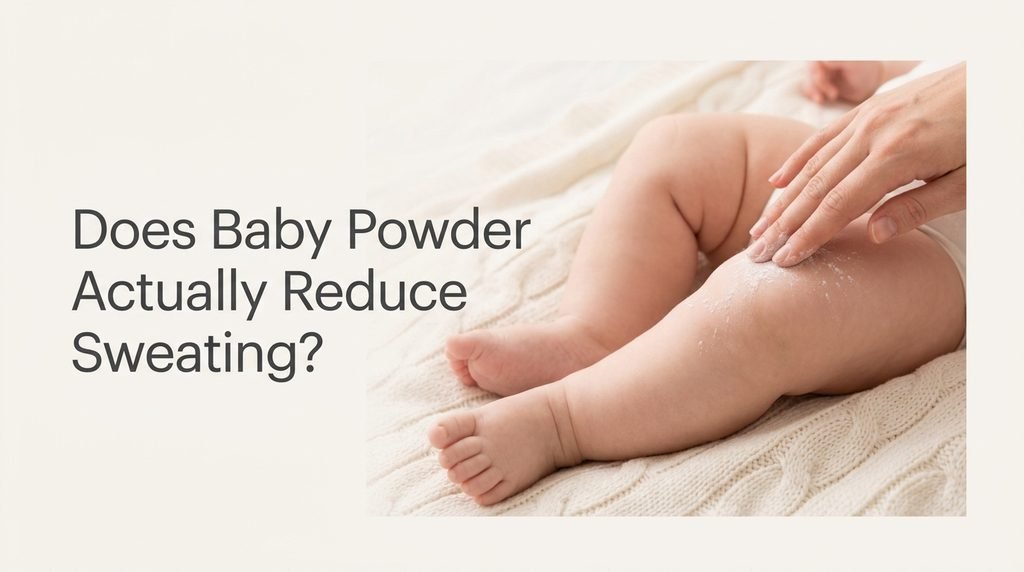
This is fundamentally different from how an antiperspirant works. Antiperspirants contain aluminum-based compounds that temporarily block sweat glands, physically reducing the amount of sweat that reaches the skin’s surface in the first place. Baby powder has no such mechanism. So while it can make sweaty skin feel drier and less sticky, it isn’t doing anything to change how much you actually sweat.
Baby Powder vs. Antiperspirant vs. Deodorant
Since these three products often get lumped together, it helps to see how they actually compare side by side.
| Product | Main Function | How It Works | Best Used For |
| Baby Powder | Absorbs moisture, reduces friction | Physically soaks up surface sweat | Chafing prevention, general comfort |
| Antiperspirant | Reduces sweat production | Blocks sweat glands temporarily | Controlling underarm wetness |
| Deodorant | Controls odor | Neutralizes bacteria that cause smell | Managing body odor, not sweat itself |
Understanding this distinction makes it easier to choose the right product for the right job. If your main concern is excess wetness under the arms, an antiperspirant is going to be far more effective than baby powder. If your concern is more about friction, stickiness, or general comfort in skin folds, baby powder can genuinely help.
Common Uses for Baby Powder and Sweat
Despite not reducing sweat production, baby powder remains genuinely useful in several everyday situations. Many people apply it to skin folds, like underarms, the area beneath the breasts, or inner thighs, specifically to prevent the raw, irritated skin that can result from sweat combined with constant friction.
During particularly hot weather, some people dust baby powder on before getting dressed simply to feel less sticky throughout the day, especially in areas covered by tighter clothing. Athletes have long used baby powder or similar products to cut down on chafing during long runs, workouts, or other activities where repetitive movement combined with sweat can quickly lead to sore, irritated skin.
For babies, powder has traditionally been used around the diaper area to help keep skin dry between changes, though this particular use now comes with some important caveats worth understanding before reaching for the powder puff.
Talc-Based Baby Powder: Safety Considerations
While talc has long been the go-to ingredient in baby powder, it comes with safety concerns that have led many parents and health professionals to reconsider its use, particularly around infants. One of the primary concerns is inhalation risk. Because talc particles are extremely fine, they can easily become airborne during application, and a baby’s small, developing lungs are especially vulnerable to irritation or, in more serious cases, respiratory distress if a significant amount is inhaled.
There have also been ongoing concerns and legal cases related to talc, particularly regarding long-term use in the genital area among adult women, with some studies raising questions about a possible link to certain cancers, though this research has focused primarily on adult use patterns rather than pediatric use.
Given these concerns, many pediatricians now advise against using talc-based baby powder altogether, especially for infants, and recommend alternative approaches to skin care that don’t carry the same inhalation risks.
Cornstarch-Based Alternatives
Cornstarch-based powders have become the more commonly recommended alternative, largely because they don’t carry the same inhalation and cancer-related concerns associated with talc. From a moisture-absorption standpoint, cornstarch performs a similar job, soaking up surface sweat and reducing friction in much the same way.
That said, cornstarch isn’t without its own considerations. In warm, moist environments, like a diaper area or deep skin folds, cornstarch can potentially contribute to fungal or bacterial growth if it becomes damp and isn’t managed properly, since starches can serve as a food source for certain organisms. This doesn’t mean cornstarch powder is unsafe, but it does mean thoughtful, moderate use matters regardless of which type of powder you choose.
When Baby Powder Might Make Things Worse
There are situations where baby powder can actually work against you rather than for you. In particularly humid conditions or areas with heavy sweating, powder can clump together with moisture and form a paste-like residue. Rather than keeping skin dry, this paste can sit in skin folds and potentially increase irritation rather than relieve it.
Overuse is another factor worth considering. Applying too much powder, too often, can contribute to clogged pores, particularly in areas already prone to breakouts. Some formulas also include added fragrances or other ingredients that can trigger irritation or allergic reactions in people with sensitive skin, so it’s worth checking ingredient lists if you or your baby have a history of skin sensitivity.
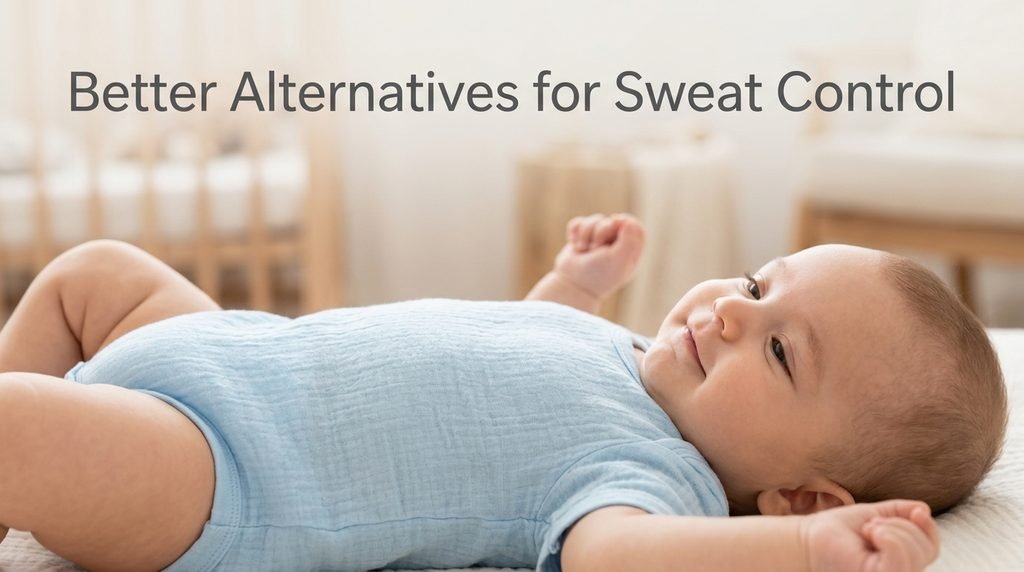
Better Alternatives for Sweat Control
If your main goal is actually reducing sweat rather than just managing it after the fact, there are more targeted options worth considering. Antiperspirants remain the most effective option for controlling underarm sweat specifically, since they work directly on the sweat glands rather than absorbing moisture after it appears on the skin.
Moisture-wicking fabrics have also become widely available and can make a noticeable difference, particularly for workouts or hot weather, by pulling sweat away from the skin and allowing it to evaporate more efficiently than regular cotton clothing. Some brands also offer cooling powders or sprays specifically formulated for sweat management, often combining moisture absorption with cooling agents like menthol for added comfort.
None of these alternatives replace good basic hygiene, though. Regular showering, breathable clothing choices, and keeping skin clean all play a foundational role in managing sweat and preventing the odor and irritation that can come along with it.
Using Baby Powder Safely (If You Choose To)
If you decide baby powder still has a place in your routine, a few simple habits can help you use it more safely. Apply it well away from the face to avoid inhalation, and consider applying it to your hands first before smoothing it onto the skin rather than shaking it directly out of the container, which reduces the amount of loose powder floating in the air.
Using powder sparingly, rather than in thick layers, helps avoid the clumping and pore-clogging issues mentioned earlier. Choosing a talc-free, cornstarch-based formula is generally considered a safer route, particularly around children. It’s also best to avoid applying any powder to broken, irritated, or actively rashy skin, since it can sometimes worsen irritation rather than soothe it.
Should You Use Baby Powder on a Baby for Sweat?
Given the safety questions around talc, many pediatricians today recommend against routine baby powder use, particularly talc-based versions, for infants. If a baby seems sweaty or uncomfortable in warmer weather, there are usually safer, equally effective ways to help, such as dressing them in lightweight, breathable fabrics, keeping the room at a comfortable temperature, and ensuring good air circulation.
It’s also worth being able to tell the difference between normal sweating and heat rash, which appears as small red bumps, usually in areas where sweat gets trapped, like the neck, armpits, or diaper area. Heat rash typically resolves on its own once the skin is kept cool and dry, and powder isn’t necessary or particularly recommended as a treatment for it.
Frequently Asked Questions
Does baby powder stop sweating completely?
No. Baby powder absorbs sweat that’s already on the skin, but it doesn’t reduce how much sweat your body actually produces.
Is cornstarch powder as effective as talc for managing sweat?
Yes, cornstarch-based powders generally absorb moisture just as well as talc-based ones, making them a comparably effective and often safer alternative.
Can baby powder cause skin problems if used daily?
It can, particularly with heavy or frequent application, since buildup may clog pores or combine with sweat to form a paste that irritates rather than soothes the skin.
Is baby powder safe to use on the face or genital area?
Generally, powder should be kept away from the face due to inhalation risk, and given ongoing safety questions around talc in the genital area, many experts recommend caution or choosing talc-free formulas for that use.
What’s a good alternative to baby powder for controlling sweat?
For sweat production specifically, antiperspirants and moisture-wicking fabrics tend to be more effective, while baby powder remains better suited to comfort and friction reduction rather than reducing sweat itself.
Conclusion
So, does baby powder help with sweat? In short, yes, but only in a limited sense. It absorbs surface moisture and reduces friction, making skin feel drier and more comfortable, but it doesn’t actually stop sweat production the way an antiperspirant does. Understanding this distinction, along with being mindful of safety considerations like talc exposure, can help you decide whether baby powder fits into your routine or whether one of the many available alternatives might serve you or your baby better.
Related Post:
How Long Does It Take Baby Villagers to Grow Up? Ultimate 2026 Guide
Do Babies Need Dental Insurance? 7 Proven Facts for 2026
Do Babies Open Their Eyes in the Womb?
When to Take Baby to Dentist? Complete Guide for New Parents
Why Do Babies Grunt in Their Sleep? A Complete Parent’s Guide
