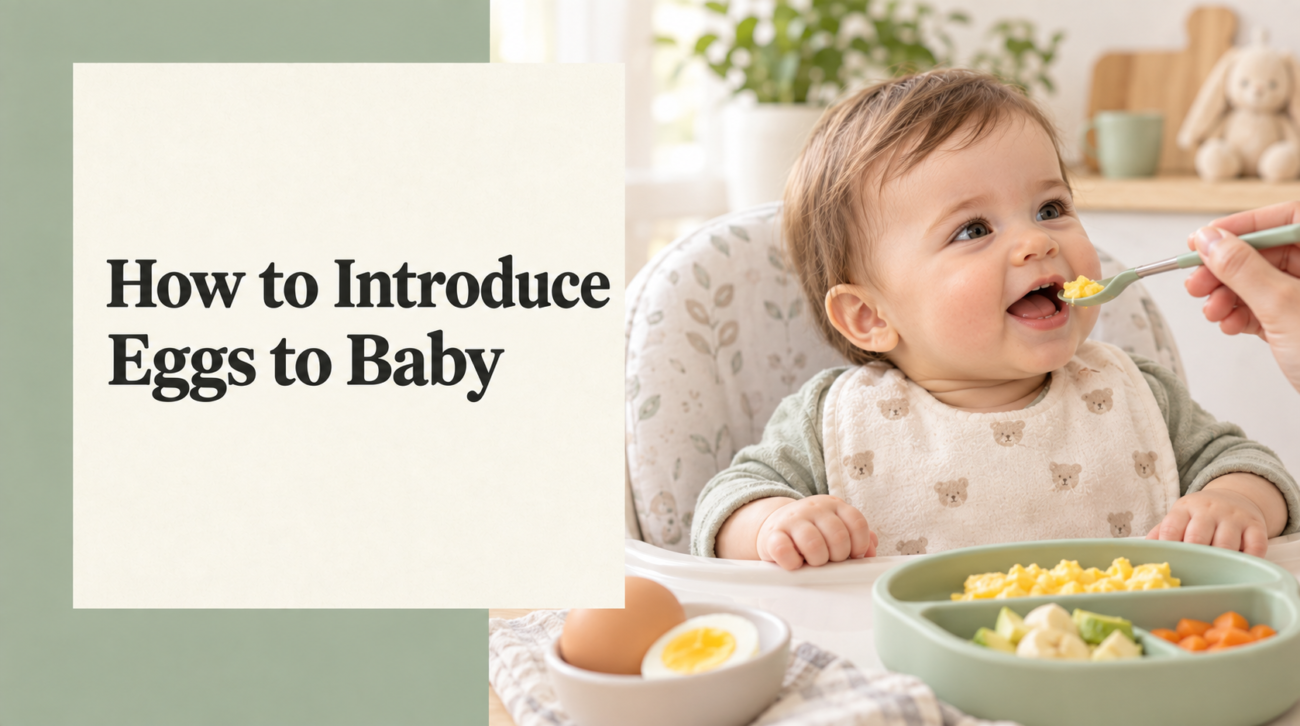
Eggs are one of the most nutrient-packed foods you can offer your baby, but starting solids for the first time can feel a little intimidating, especially with a food that’s also a known allergen. The good news is that current pediatric guidance actually encourages introducing eggs early, and doing so safely is much simpler than many parents expect. This guide covers everything you need to know about how to introduce eggs to baby, from timing and preparation to recognizing allergic reactions and keeping eggs in your baby’s regular diet once they’re comfortable eating them.
Why Eggs Are Important for Babies
Eggs are often called a nearly perfect first food, and for good reason. A single egg contains high-quality protein along with a wide range of nutrients that support a baby’s rapid growth and development. The yolk in particular is rich in choline, a nutrient that plays a major role in brain and memory development during infancy, a stage when the brain is growing faster than at almost any other point in life.
Beyond choline, eggs also provide healthy fats, vitamin D, vitamin B12, and iron, all of which are nutrients babies need in meaningful amounts but don’t always get enough of from other early foods. Because babies have small stomachs and can only eat limited quantities at each meal, nutrient-dense foods like eggs make every bite count.
When to Introduce Eggs
Most pediatric guidelines now recommend introducing eggs around six months of age, right around the same time babies typically start solid foods in general. This timing isn’t arbitrary. Research over the past decade has shifted the advice on allergenic foods considerably, and eggs are one of the clearest examples of that change.
Before starting any solid food, including eggs, it helps to check that your baby is showing general readiness signs: sitting up with good head control, showing interest in food, and being able to move food to the back of the mouth to swallow. Once those milestones are in place, there’s no need to hold off on eggs specifically, and in fact, delaying introduction is no longer considered protective against allergies.
Whole Egg vs. Egg Yolk Only
For years, many parents were told to start with egg yolk only and wait to introduce the white separately, since the white was thought to carry a higher allergy risk. Current guidance has moved away from this approach. Most pediatric nutrition experts now recommend offering the whole egg, both yolk and white together, right from the start.

The reasoning is straightforward: since the egg white contains the proteins most commonly associated with allergic reactions, introducing it early, in a controlled way, is now believed to help the immune system build tolerance rather than avoid it. Splitting the yolk and white apart doesn’t offer any real safety advantage and simply delays exposure to the part of the egg that matters most for allergy prevention.
How to Prepare Eggs for Babies by Age and Stage
The way you prepare eggs will naturally change as your baby grows and develops new feeding skills. Below is a general guide to help you match the texture to your baby’s current stage.
| Age | Suggested Texture | Example Preparation |
| 6 months | Smooth, thinned puree | Mashed hard-boiled egg mixed with breast milk, formula, or water |
| 6–7 months | Soft, slightly textured | Very soft scrambled egg, mashed with a fork |
| 7–9 months | Small soft pieces | Thin omelet cut into strips, soft scrambled egg |
| 9–12 months | Chopped, finger-food sized | Chopped hard-boiled egg, mini egg muffins |
At six months, most babies are still getting used to textures beyond breast milk or formula, so a smooth, well-mashed consistency is easiest to manage. As pincer grasp and chewing skills develop, usually somewhere between eight and ten months, you can gradually move toward small, soft finger-food pieces that your baby can pick up independently.
Safe Cooking Practices
Food safety matters just as much as nutrition when it comes to eggs. Always cook eggs thoroughly for babies, avoiding any runny or undercooked yolks and skipping raw egg entirely, since undercooked eggs carry a risk of bacterial contamination that’s especially concerning for young children with developing immune systems.
It’s also best to keep seasoning simple. Babies don’t need added salt, sugar, or pre-made seasoning blends, many of which contain more sodium than is appropriate for an infant’s diet. A plain scrambled egg or hard-boiled egg, prepared with nothing more than a splash of breast milk or formula for texture, is all you need in the early months.
Introducing Eggs Safely: A Step-by-Step Approach
When it’s time to actually offer eggs for the first time, a little planning can go a long way in making the process smooth and low-stress.
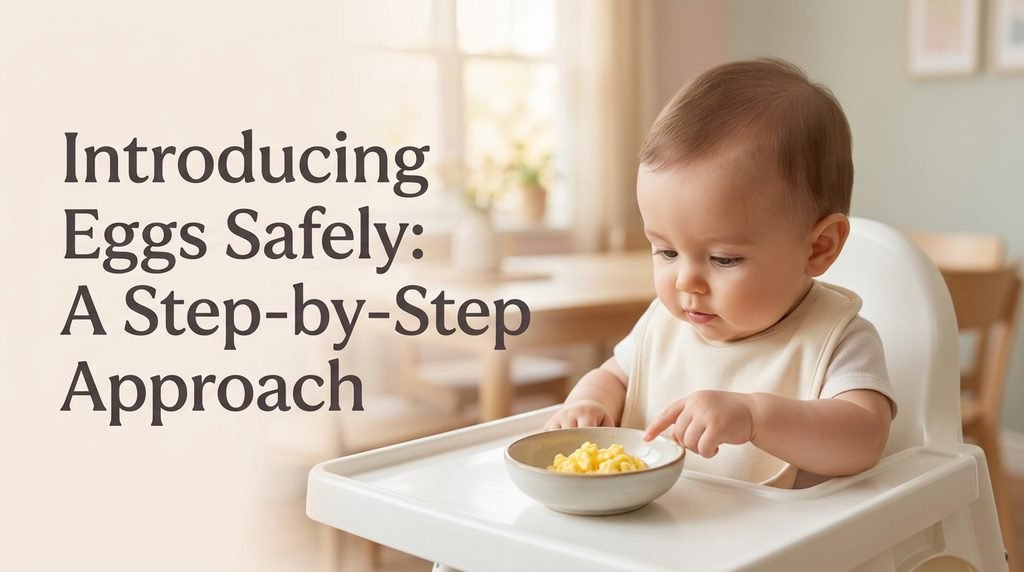
- Choose the right time of day. Morning or early afternoon is ideal, since it gives you the rest of the day to watch for any reaction rather than introducing a new food right before bedtime.
- Start small. Offer a small amount, roughly a teaspoon or two, rather than a full portion, especially on the very first try.
- Wait before adding other new foods. Give it three to five days before introducing another new allergenic food, so that if a reaction does occur, it’s easier to identify the cause.
- Watch closely after eating. Keep an eye on your baby for the following couple of hours, looking for any unusual symptoms around the mouth, skin, or breathing.
- Repeat regularly if tolerated. Once eggs are well tolerated, continue offering them as part of a varied, regular diet rather than treating them as an occasional food.
Recognizing an Allergic Reaction
Understanding what a reaction might look like helps take some of the anxiety out of introducing a new allergenic food. Reactions can range from mild to more serious, and knowing the difference matters.
Mild symptoms often include a rash or hives, particularly around the mouth or chin where the egg made contact with the skin. These mild reactions are usually manageable and worth mentioning to your pediatrician, but they aren’t typically an emergency on their own.
More concerning symptoms include vomiting, widespread hives, swelling of the face or lips, or any difficulty breathing. These signs call for prompt medical attention, and if breathing is affected in any way, it’s considered an emergency requiring immediate care.
Babies at Higher Risk for Egg Allergy
Some babies fall into a higher-risk category when it comes to food allergies in general, and eggs are no exception. Babies with moderate to severe eczema, those who already have a diagnosed food allergy, or those with a strong family history of egg allergy specifically may benefit from a more cautious, guided approach.
For these babies, it’s worth having a conversation with a pediatrician or allergist before introducing eggs at home. In some cases, they may recommend introducing the food in a clinical setting where a reaction, if it occurs, can be managed immediately and safely.
Maintaining Egg Tolerance Once Introduced
Introducing eggs successfully is really only the first step. Ongoing research suggests that regular, consistent exposure, generally a few times a week, plays an important role in helping the body maintain tolerance over time. Occasional or inconsistent exposure doesn’t appear to offer the same benefit as steady inclusion in the diet.
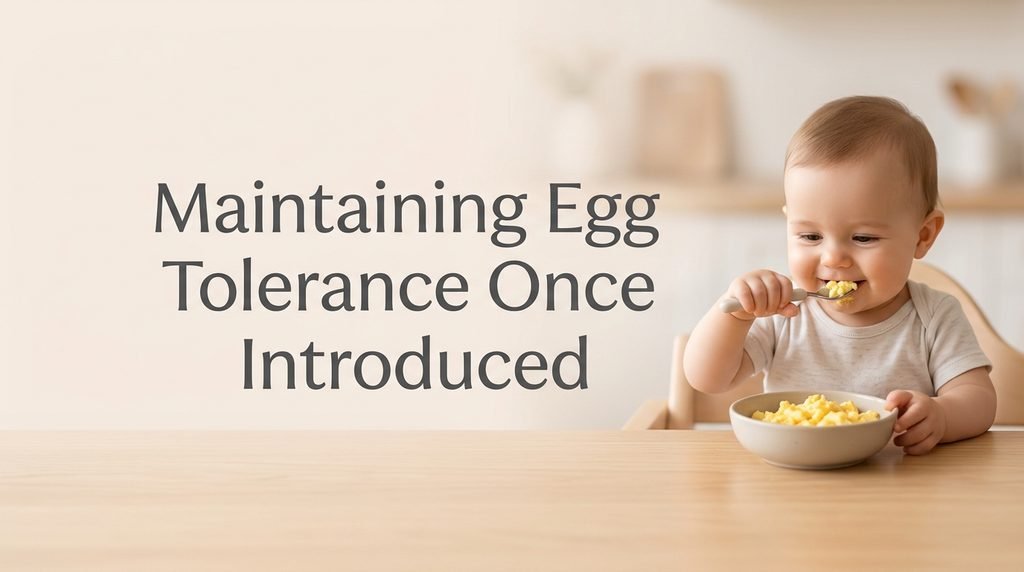
Once your baby has tried eggs a handful of times without any issues, it’s worth working them into your regular meal rotation. This doesn’t need to be complicated. Something as simple as scrambled eggs a couple of mornings a week or a hard-boiled egg mashed into a lunchtime meal is enough to keep exposure consistent.
Common Mistakes to Avoid
A few missteps tend to come up repeatedly when parents are figuring out how to introduce eggs to baby, and being aware of them can help the process go more smoothly.
- Splitting yolk and white unnecessarily. As mentioned earlier, current guidance favors the whole egg rather than isolating parts of it.
- Undercooking the egg. Runny yolks or soft-cooked eggs carry unnecessary food-safety risk for babies.
- Giving up after one refusal. A baby turning away from a new texture on the first try is common and doesn’t necessarily mean dislike or allergy; it often just takes repeated exposure.
- Introducing too many new foods at once. Doing so makes it harder to pinpoint the cause if a reaction does occur.
Egg Recipe Ideas for Babies
Once you’re ready to start offering eggs, a few simple recipes can make mealtime easier without requiring much prep work.
- Mashed hard-boiled egg: Boil an egg fully, mash it with a fork, and mix in a little breast milk or formula for a smoother, more familiar texture.
- Soft scrambled egg with veggies: Scramble an egg with a small amount of finely grated or mashed vegetable, like spinach or zucchini, cooked until soft.
- Mini egg muffins: Whisk eggs with soft-cooked, finely chopped vegetables, pour into a greased mini muffin tin, and bake until set, creating an easy grab-and-eat finger food for older babies.
- Egg and avocado mash: Combine mashed hard-boiled egg with ripe avocado for a creamy, nutrient-dense combination that’s easy to swallow.
Frequently Asked Questions
Can introducing eggs too early or too late affect allergy risk?
Current guidance suggests introducing eggs around six months, alongside other solids, and delaying introduction well past this window doesn’t appear to reduce allergy risk and may make it less likely for a baby to build tolerance.
Is it safe to give only egg yolk to a baby?
While yolk-only was once common advice, most current guidance recommends the whole egg, since the white contains the allergenic proteins that benefit most from early, controlled exposure.
How much egg can a baby eat in a day or week?
There’s no strict daily limit, but many parents offer eggs a few times a week as part of a varied diet rather than as the sole protein source at every meal.
What if my baby refuses eggs the first time?
This is completely normal. It can take multiple exposures, sometimes eight to ten tries, before a baby accepts a new food, so it’s worth offering eggs again in different forms rather than assuming dislike.
Can babies eat eggs every day?
Yes, daily egg consumption is generally considered safe for babies as part of a balanced diet, as long as portion sizes remain appropriate and other nutrient-rich foods are also included.
Conclusion
Learning how to introduce eggs to baby doesn’t need to be complicated or stressful. With the right timing, simple preparation methods, and a little attention after that first taste, eggs can become an easy, nutrient-packed staple in your baby’s diet. If you ever have concerns, especially with a family history of allergies, a quick conversation with your pediatrician can give you extra peace of mind as you move through this milestone together.
Related Post:
How Long Can Baby Sleep in a Bassinet? Complete Guide
Do Babies Need Dental Insurance? 7 Proven Facts for 2026
Do Babies Open Their Eyes in the Womb?
When to Take Baby to Dentist? Complete Guide for New Parents
Why Do Babies Grunt in Their Sleep? A Complete Parent’s Guide
