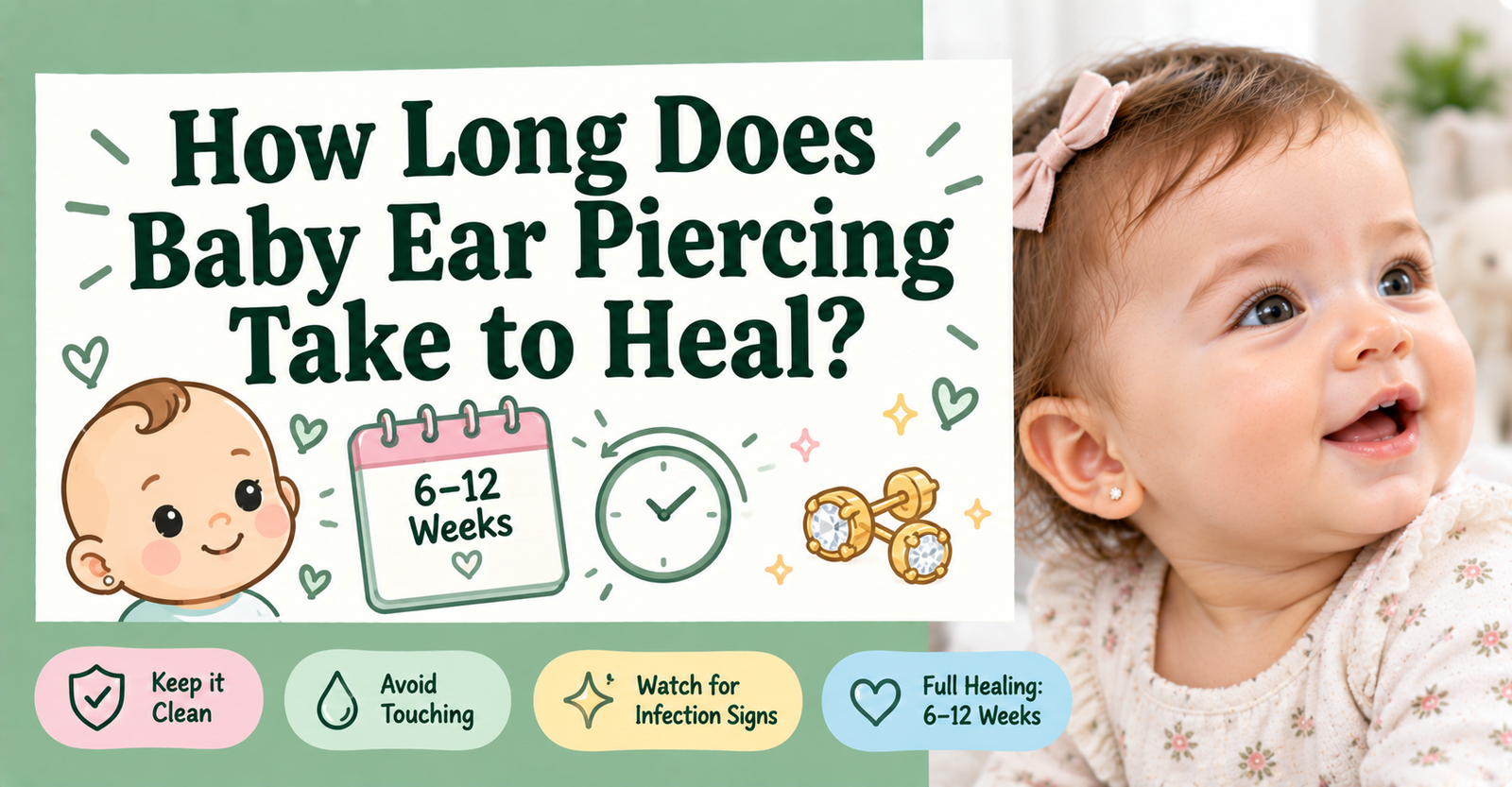
So you have decided to pierce your baby’s ears, or you already have. Now the questions start. How long does baby ear piercing take to heal? When is it safe to change the earrings? Is that little bit of crust normal?
Short answer: a baby’s earlobe piercing usually looks healed on the outside after about 6 to 8 weeks. The tiny tunnel of skin inside keeps getting stronger for roughly 4 to 6 months. Keep the starter earrings in for at least 6 weeks, or longer if your piercer or pediatrician says so.
This guide covers the full timeline, what is normal, which signs need a doctor, and how to keep your baby safe. The wording is simple on purpose, so you can read it quickly with a baby on your hip.
How Long Does Baby Ear Piercing Take to Heal? The Quick Timeline
Most earlobe piercings follow a predictable pattern. This table shows the big picture before we go into detail.
| Healing Stage | Typical Time | What It Means |
| Early healing | First 1 to 2 weeks | Mild pinkness, tenderness, and small crusts are common |
| Surface healing | 6 to 8 weeks | The outside skin looks calm and normal |
| Full healing (earlobe) | 4 to 6 months | The inner skin tunnel is strong and stable |
| Cartilage healing | 6 to 12 months or more | Much slower; not recommended for babies |
Keep in mind that “healed” can mean two different things. A piercing can look perfectly fine while the inside is still fragile. That is why experts ask for patience even after the redness is gone.
Timing varies from baby to baby. If your child heals a little faster or slower than the table shows, that alone is not a cause for worry.
Why Baby Ear Piercings Need Time to Heal
A piercing is a small, controlled wound. As soon as the needle passes through the earlobe, the body begins repair work. Extra blood flows to the area, which explains the pink color and mild puffiness in the first days.
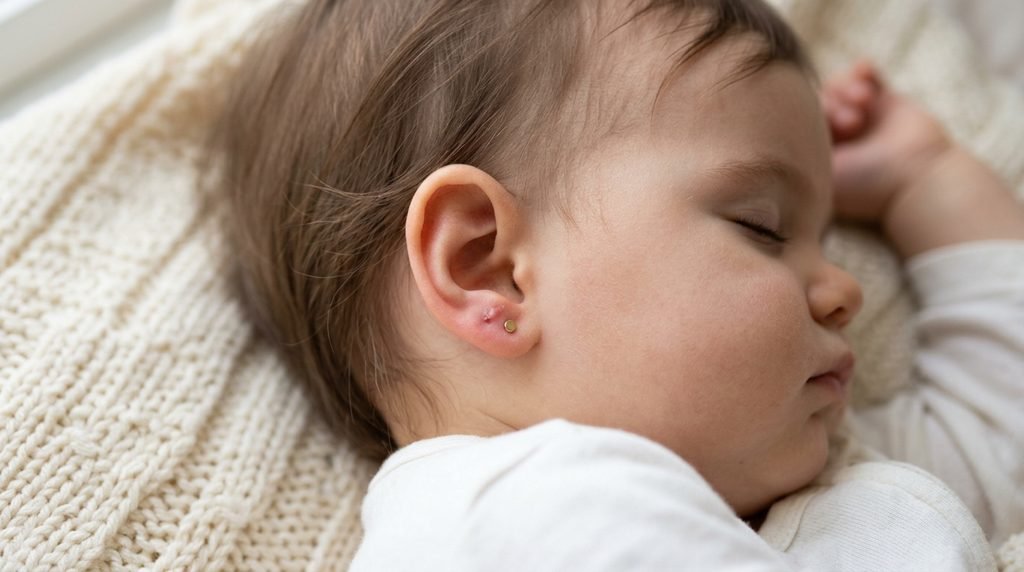
The body does not just close the hole. It builds a thin tube of new skin around the earring. At first this tube is delicate. Over the following weeks and months it thickens and toughens. This is the real reason that the answer to how long baby ear piercing takes to heal is a range of weeks and months, not a single date.
Earlobe vs. Cartilage Piercing
The soft earlobe has a good blood supply and heals fairly quickly. Cartilage, the firm part higher on the ear, gets less blood flow. It heals more slowly and is more prone to irritation and infection. For that reason, babies are almost always pierced in the earlobe only.
Baby Ear Piercing Healing Timeline, Week by Week
Here is what most parents can expect, stage by stage.
Days 1 to 3: Pink, Puffy, and Tender
Right after piercing, the lobe may look pink and slightly swollen. Your baby may be fussy for a short while. Keep the area clean and avoid touching it more than necessary.
Week 1: Small Crusts May Show Up
You may see tiny crusts around the earring. These are usually dried lymph fluid, a clear or pale yellow liquid the body makes while it heals. A small amount is a sign that repair is underway.
Weeks 2 to 4: Calmer and Less Sore
Redness and tenderness should be fading. Your baby may hardly notice the earrings. Do not remove them yet, because the inside is still very delicate.
Weeks 4 to 8: The Outside Looks Healed
The skin looks normal and crusting has stopped. Many piercers consider the first healing phase complete around this point.
Months 3 to 6: The Inside Fully Settles
Even when everything looks perfect, the inner tunnel is still strengthening. Keep up gentle care and check with your piercer before changing earrings.
| Timeframe | What You May See | What to Do |
| Days 1 to 3 | Pink skin, slight swelling | Wash hands, keep the area clean |
| Week 1 | Clear or pale yellow crust | Clean gently as advised |
| Weeks 2 to 4 | Less redness and tenderness | Continue daily care |
| Weeks 4 to 8 | Normal-looking skin | Leave the earrings in |
| Months 3 to 6 | Fully settled | Ask your piercer before changing earrings |
What Is Normal While a Baby’s Ear Piercing Heals?
New parents notice every small change, so it helps to know what is expected:
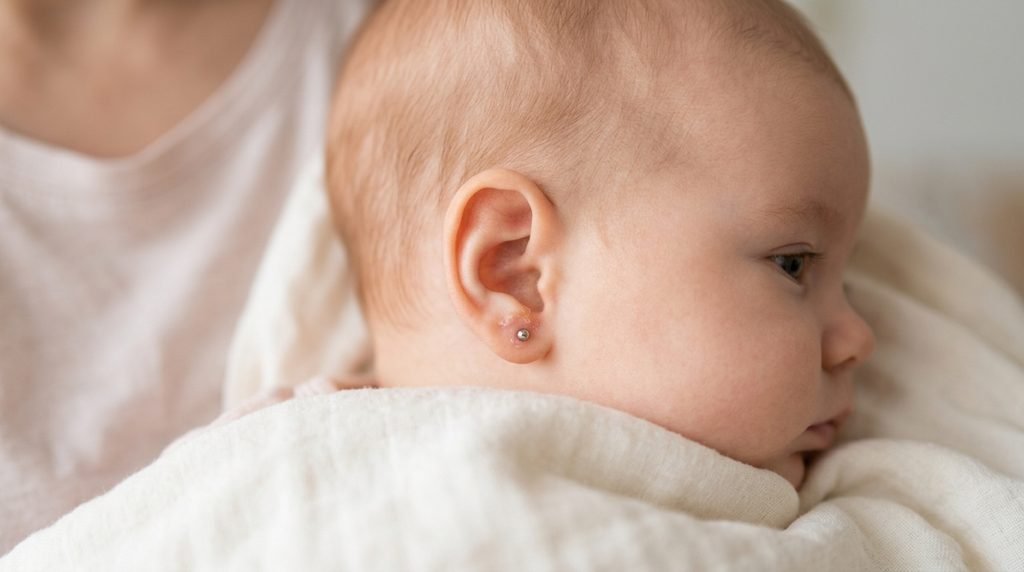
- Mild pinkness around the earring, mostly in the first week
- Light swelling that goes down within a few days
- Clear or pale yellow crust on the skin or earring
- Slight itching as the skin repairs
- Gentle tenderness if the ear is bumped
A healing piercing should feel a little better each week. If things are improving, healing is very likely on track.
Signs of Infection or Other Problems
Most baby ear piercings heal without trouble. Still, it is smart to know what to watch for.
Warning Signs of Infection
Call your pediatrician if you notice:
- Redness that spreads or gets darker
- Skin that feels hot
- Thick yellow or green discharge
- A bad smell from the piercing
- Swelling that grows instead of shrinking
- Fever or unusual fussiness
Normal Healing vs. Possible Infection
| Sign | Normal Healing | Possible Infection |
| Color | Light pink, fading | Deep red, spreading |
| Discharge | Clear or pale yellow, small amount | Thick, yellow or green, smelly |
| Temperature | Normal skin warmth | Hot to the touch |
| Pain | Mild and improving | Increasing or constant |
| Swelling | Slight, going down | Growing or hard |
| Baby’s mood | Mostly normal | Fever, crying, poor feeding |
Allergic Reactions
Some babies react to certain metals, especially nickel. An allergy may cause red, itchy, or blistery skin that does not improve with gentle cleaning. If you suspect one, ask your doctor or piercer about safer materials.
Other Possible Issues
Embedded earring backs. If the lobe swells, the back can sink into the skin. Check the backs often.
Keloids. These are raised scars that form in people who are prone to them. They are uncommon in babies, but mention it to your doctor if scarring runs in your family.
Migration or rejection. Rarely, the body slowly pushes the earring toward the skin surface.
When to Call the Pediatrician
Call if you see signs of infection, if your baby has a fever, or if you simply feel unsure. A fever in a very young infant should always be treated as urgent, so seek medical advice right away. Do not remove the earring yourself unless a doctor tells you to, since taking it out can trap an infection inside the closing hole.
How to Care for a New Baby Ear Piercing
Good aftercare is the best way to keep the healing timeline on track.
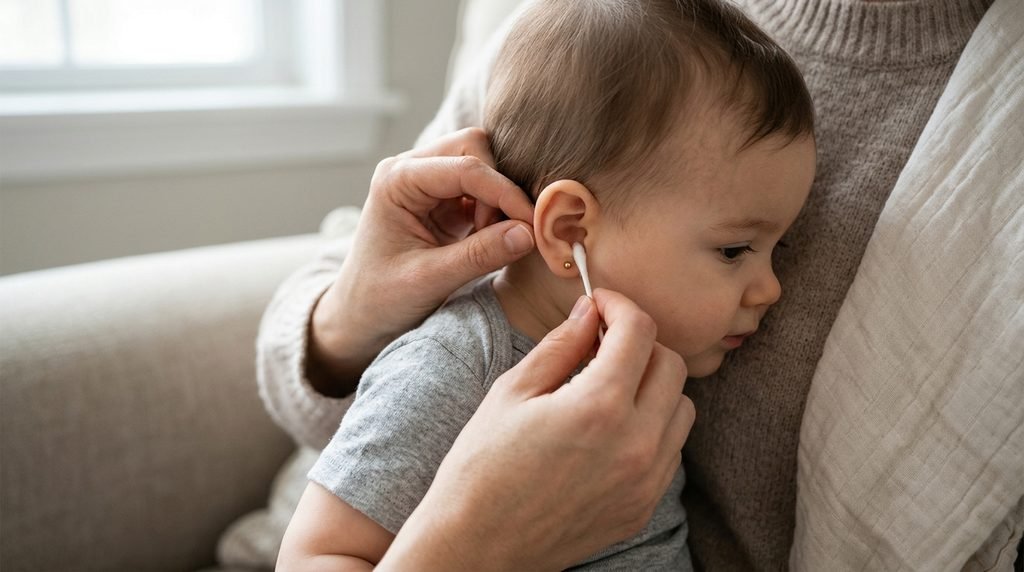
- Wash your hands first. Use soap and water before touching the earrings or earlobe. This one habit prevents most problems.
- Clean gently. Use sterile saline or the cleaner your piercer or doctor recommends. Dampen a clean cotton pad or gauze, wipe the front and back of the lobe, then pat dry with a soft, clean cloth.
- Follow a steady schedule. Many piercers suggest cleaning about twice a day in the first weeks. Stick to the plan you were given.
- Ask about turning the earrings. Older advice said to rotate them daily. Many modern piercers now say to leave them alone to avoid irritation. Follow the instructions from whoever did the piercing.
- Pat dry after baths. Trapped moisture around the earring can cause irritation.
What to Avoid
Skip rubbing alcohol and hydrogen peroxide, which can dry and irritate the skin. Avoid thick creams and ointments, which can trap germs. Never pick at crusts, and never touch the earrings with unwashed hands.
Everyday Safety Tips for Babies With Pierced Ears
Babies are curious, and shiny earrings are hard to ignore. A few habits keep things safe.
Watch clothing. Choose soft clothes with wide necklines. Be careful with hoods, hats, and scarves that can snag an earring.
Think about sleep and car seats. Flat-back earrings are more comfortable when your baby lies on one side. Make sure straps and headrests do not press on the ears.
Keep little hands busy. Babies grab and pull. Short nails and gentle distraction help.
Check the backs daily. A loose earring is a choking hazard. Screw-back or locking styles are safer for infants.
Choosing Safe Earrings for a Healing Piercing
The earring itself affects how smoothly healing goes.
| Material | Good for Babies? | Notes |
| Implant-grade surgical steel | Yes | Widely used and reliable |
| Titanium | Yes | Very gentle, good for sensitive skin |
| 14k or 18k gold | Yes | Choose nickel-free gold |
| Nickel-containing metals | No | A common cause of allergic reactions |
| Cheap costume jewelry | No | Often contains irritating metals |
Best styles: small studs with flat backs or screw backs. Avoid dangling earrings and hoops while the piercing is new.
When to change earrings: wait until the piercing has fully healed, at least 6 weeks and often several months. If unsure, ask your piercer to check the ear first.
What Changes How Long a Baby Ear Piercing Takes to Heal?
If a friend’s baby healed in six weeks and yours is taking longer, one of these factors may explain it:
- Aftercare habits. Gentle, regular cleaning helps. Over-cleaning or neglect can slow healing.
- Earring material. Safe metals cause less irritation.
- Skin sensitivity. Babies with eczema or sensitive skin may need extra care.
- Overall health. A healthy immune system supports repair.
- Piercing technique. A clean, skilled piercing causes less trauma to the skin.
- Accidental snags. Tugging or catching an earring can restart part of the healing process.
What Is the Right Age to Pierce a Baby’s Ears?
There is no single correct age. Some parents pierce in infancy for family or cultural reasons. Others wait until a child is old enough to help with cleaning and ask for earrings. Some pediatricians suggest waiting until your baby has had early vaccines, including tetanus protection, before piercing. Your pediatrician knows your baby’s skin and health, so it is worth asking.
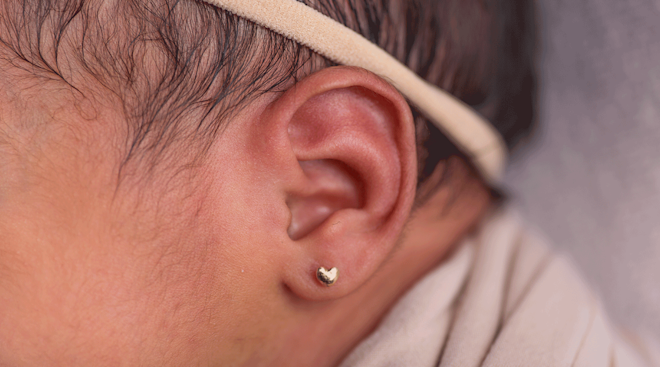
Reasons to pierce early: family or cultural tradition, and a baby who will not remember it.
Reasons to wait: the child can take part in the decision, help with cleaning, and is less likely to pull at the earrings.
Where and How to Get the Piercing Done Safely
You can have ears pierced at a pediatrician’s office, a jewelry store, or a professional piercing studio. Whichever you choose, prioritize cleanliness and experience with infants.
Many professional piercers prefer sterile, single-use needles because they are precise and easier to keep hygienic. Piercing guns can be harder to sterilize fully, so ask what method is used and why.
Hygiene checklist:
- Clean, tidy work area
- Single-use gloves and sterile equipment
- Sterile, hypoallergenic starter earrings
- Written aftercare instructions
Questions to ask before booking: How many babies have you pierced? What tools and earring materials do you use? What aftercare do you recommend? What should I do if the ear looks infected?
Common Mistakes Parents Make
- Removing the earrings too early. The hole can start closing within hours or days.
- Over-cleaning. Heavy scrubbing or harsh products slow healing.
- Touching with unwashed hands. Germs on fingers are a leading cause of infection.
- Ignoring early warning signs. A little redness is normal. Spreading redness or pus is not.
- Switching to unsafe earrings. Cheap or nickel-containing jewelry can set healing back.
Frequently Asked Questions
How long does baby ear piercing take to heal?
Most earlobe piercings look healed on the outside in 6 to 8 weeks. The inside usually finishes healing in 4 to 6 months.
How long before I can change my baby’s earrings?
Wait at least 6 weeks, and ideally until your piercer or doctor confirms the piercing is ready. Waiting longer is safer.
Can my baby sleep with earrings in?
Yes. Flat-back earrings are the most comfortable for sleep. Check the backs regularly.
Is it normal for the piercing to ooze or crust?
A small amount of clear or pale yellow fluid and crust is normal in the first couple of weeks. Thick, smelly, or green discharge is not.
Can I take the earrings out if the ear looks red?
Do not remove them on your own unless a doctor advises it. Call your pediatrician for guidance.
Does ear piercing hurt babies?
Babies feel a quick pinch and may cry briefly. Cuddling, feeding, or a pacifier usually settles them fast.
What if the hole starts to close?
Contact your piercer or doctor. Do not force the earring back in.
Can I pierce my baby’s ears if they have eczema or sensitive skin?
Ask your pediatrician first. Babies with sensitive skin may need extra caution and carefully chosen earrings.
When can my baby get a second piercing?
Usually after the first piercings have fully healed and your child is older. Ask your piercer or pediatrician.
Conclusion
So, how long does baby ear piercing take to heal? The outside usually heals in about 6 to 8 weeks, and the inside keeps strengthening for up to 6 months. Clean hands, gentle daily care, safe earrings, and patience are what most babies need.
Watch for spreading redness, thick discharge, or fever, and contact your pediatrician whenever something feels off. Every baby heals at their own pace, so try not to compare timelines.
Related Post:
When to Stop Giving Baby Formula: The Complete Guide (2026)
Does a Surrogate Mother Share Blood With the Baby? 5 Truths
Why Do Some Babies Wear Helmets? 7 Simple, Essential Facts

4 thoughts on “How Long Does Baby Ear Piercing Take to Heal? A Simple Parent’s Guide”