When can babies sleep with stuffed animals? For most families, the answer is after your baby’s first birthday. The American Academy of Pediatrics (AAP) recommends a sleep space with nothing in it but a firm mattress and a fitted sheet for the whole first year. That rule covers the sweet plush bunny from Grandma, too.
You’ve probably noticed how your baby stares at that bunny like it’s the best thing in the house. So it’s fair to wonder why it can’t come along at bedtime. This guide explains the rule, the reasons behind it, and what to do while you wait. You’ll also get seven tips for the day a stuffed animal finally moves into the crib.
When Can Babies Sleep With Stuffed Animals? The Short Answer
Babies can sleep with stuffed animals after 12 months. Before that, keep every plush toy out of the crib, bassinet, and play yard, for naps and for nighttime.
The AAP’s parent guidance says soft objects like stuffed toys can cause suffocation, and that they pose little risk to healthy babies once they pass the 12-month mark. You can read the full policy in the AAP’s 2022 safe sleep statement. Notice the words “healthy babies.” The guideline is built on risk, not on a magic date.
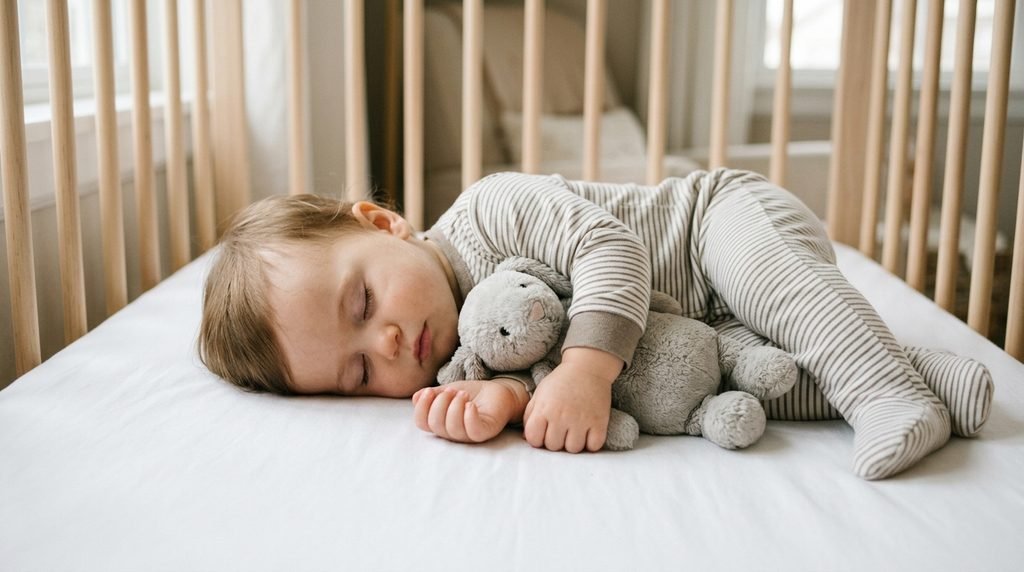
Some pediatricians will okay a tiny lovey a little earlier for a specific baby. Others prefer to wait until 18 months, especially for restless sleepers. Neither is wrong. The point is that this decision belongs in a conversation with your child’s doctor, not in a search bar at 2 a.m.
Awake time is a different story. A stuffed animal is perfectly fine during supervised play, story time, and cuddles. The danger is only about unsupervised sleep.
Why Stuffed Animals Are Risky in the First Year
Young babies can’t protect their own airway. If a soft object lands over the nose and mouth, they don’t have the strength or coordination to lift their head, roll away, or push it off.
That’s the core problem behind the rule on when can babies sleep with stuffed animals, and it comes in a few forms. A plush toy can cover the face and block breathing. It can also wedge between the baby and the crib slats or mattress edge, which is called entrapment. Ribbons, loose threads, and cords add a strangulation risk. Soft, thick toys can also trap heat close to the body.
You might be thinking, “But it’s such a small toy.” Size helps, but it doesn’t erase the risk. A small plush can still slide across a sheet and end up under a chin. Sleep-related infant deaths, including sudden infant death syndrome (SIDS), are most common in the first months of life, and soft objects in the sleep space are a known risk factor.
Here’s the way many pediatric nurses put it: waiting costs you almost nothing, while a mistake can’t be undone. A stuffed animal will still be adorable in six months. Your baby’s attachment won’t disappear either. For a refresher on the full safe sleep setup,
When Can Babies Sleep With Stuffed Animals, Age by Age
Use this table as your quick reference. It follows the AAP’s 12-month guideline and adds the extra caution many pediatricians suggest for the months after.
| Age | Stuffed animal in the sleep space? | What to do |
| 0 to 6 months | No | Keep the crib bare. Use a wearable blanket and offer a pacifier for sleep. |
| 6 to 12 months | No | Plush toys are fine while awake. Remove them before naps and bedtime. |
| 12 to 18 months | Yes, with care | Choose one small, plain, breathable toy. Watch how your baby handles it. |
| 18 to 24 months | Generally yes | Keep checking for loose seams and small parts. |
| 2 years and up | Yes | Most toddlers sleep fine with a favorite, but skip large piles. |
Think of the middle rows as the “practice zone.” Your baby is building the skills and the attachment. The crib just isn’t ready to host the toy yet.
Why You Keep Seeing Different Ages Online
Ask Google when can babies sleep with stuffed animals and you’ll find advice saying 3 months, 6 months, 9 months, 12 months, or even 24 months. It’s confusing, and it’s a big reason parents second-guess themselves.
Each number answers a different question. The 3-month figure comes from the fact that SIDS risk is highest earlier in infancy and then falls. That’s true, but it mixes up two things. Falling SIDS risk doesn’t make a soft toy safe, because suffocation and entrapment remain a concern all year. The 6-month figure usually points to rolling. Figures of 18 and 24 months reflect extra caution for kids who move a lot in their sleep.
The 12-month mark is the only one tied to a national pediatric policy. When you see a different age, ask what it’s based on. If the answer is “a blog said so,” go with the AAP or your pediatrician.
5 Signs Your Baby Is Ready
Age is the first gate when you’re deciding when can babies sleep with stuffed animals. Skills are the second. Even after the first birthday, look for these signs before you make the toy a nightly guest:
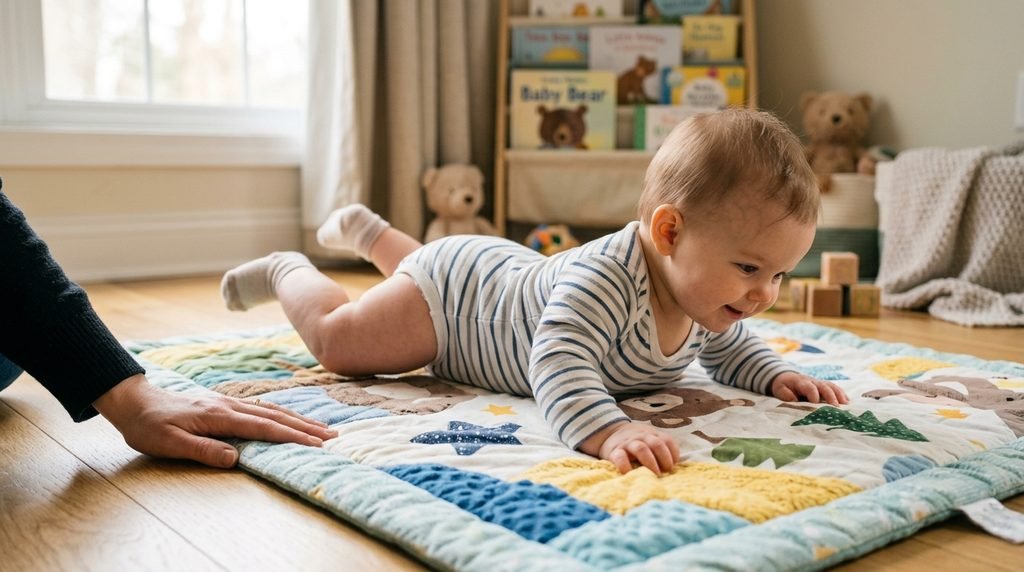
- Your baby rolls from back to front and front to back without help.
- They sit up on their own and can get back down again.
- They swat away a cloth or toy that lands on their face during floor play.
- You’ve seen them scoot, turn, or reposition in the crib without getting stuck.
- They cuddle and chew gently, rather than tearing or mouthing the toy hard.
Most babies pick up these skills somewhere between 6 and 12 months, and some take longer. If you’re curious about timing,
Here’s the catch, though. These signs are necessary, not sufficient. A 9-month-old who rolls like a champion still isn’t cleared by the guideline. Skills tell you your baby might be ready. The age rule tells you when it’s actually recommended.
Can Babies Have Stuffed Animals Before 12 Months?
Yes, for awake time. No, for sleep. That single line clears up most of the confusion around when can babies sleep with stuffed animals and when they simply play with them.
Between 6 and 12 months, many babies start choosing a favorite. Let them. Tuck the toy into playtime, hold it during a feeding, and read a story with it on your lap. That builds the bond, so the toy already feels familiar and safe by the time it joins the crib.
You can even bring it into your bedtime routine. Say goodnight to the bunny, give it a kiss, and then set it somewhere else in the room before your baby falls asleep. A high shelf or a chair across the room works well. Don’t hang it over the crib or clip it to the rails, and keep it out of reach. A steady sequence of steps helps a lot here.
Will there be a little protest at first? Probably. That’s normal. A consistent routine and a different comfort, like a pacifier, usually smooth it out within days.
How to Choose a Safe Stuffed Animal for Sleep
Pick a small, soft, plain toy with stitched features. Everything else on the list is a bonus.
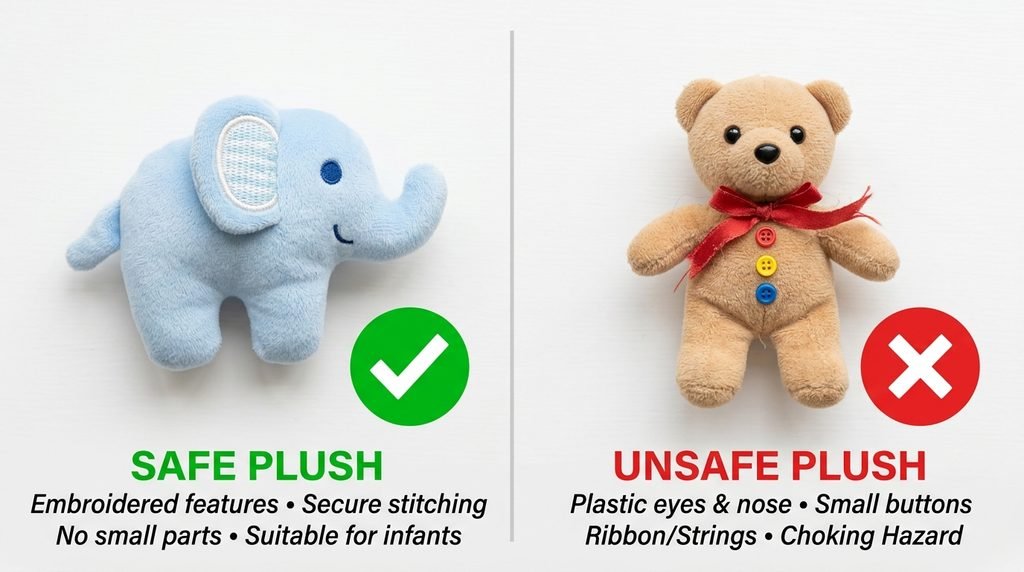
Size. A good rule of thumb is a toy smaller than your baby’s head. It should be too small to cover the face and too light to pin anything down.
Features. Look for embroidered eyes and noses, not plastic ones. Skip buttons, beads, bells, and anything with a ribbon or string. If a part could fit inside a toilet paper tube, it’s a choking hazard for young children.
Fabric and filling. Breathable, lightweight fabric is best. Check that the seams are tight, especially on toys filled with beads or pellets. Long, shaggy fur can shed fibers, so choose short pile.
No extras. Avoid toys with batteries, speakers, or lights. Weighted plush toys aren’t for babies either, since the AAP advises against weighted objects on or near a sleeping infant. Also skip any pacifier holder that attaches a pacifier to a stuffed animal, and be wary of “sleep buddy” gadgets that claim to lower SIDS risk. The AAP says commercial devices with those claims lack evidence.
Wash the toy before first use, following the care label. Then check the seams every week or so. A toy that’s fraying is a toy that needs to retire.
How to Introduce a Stuffed Animal at Bedtime: 7 Safe Tips
Once your baby is past 12 months and showing the signs above, you have your answer to when can babies sleep with stuffed animals. Now go slowly. These seven tips keep the first weeks calm and safe.
- Check with your pediatrician first. The 12-month checkup is a natural time to ask. Mention any concerns, like reflux, low muscle tone, or a history of prematurity.
- Start with just one toy. One is a comfort object. Five is a pillow fort, and that’s a risk you don’t want.
- Bond in the daytime. Let your baby carry it, cuddle it, and take it to story time. The toy should feel like a friend before it feels like a sleep cue.
- Buy a backup. Identical spares save you from a heartbreaking 3 a.m. search when the original gets lost or needs a wash. Rotate them so they wear evenly.
- Try a nap first. You’re awake and close by during the day, so you can peek in. A video monitor helps you see how your baby actually handles the toy.
- Place it to the side. Set the toy near the edge of the mattress, away from the face. Your baby can pull it in if they want it.
- Recheck often. Once toddlers start climbing, a big plush or a pile of toys can become a step stool out of the crib. Keep the toy small and reassess whenever your child hits a new skill.
Trust your read on your own child. If the toy seems to bother their sleep, or they burrow their face into it, take it out and try again in a month or two.
What to Use Instead Before 12 Months
You can still give your baby comfort. It just won’t have fur.
A wearable blanket. Sleep sacks replace loose blankets and keep your baby warm without covering the face. A good guideline from the AAP’s parent site is to dress your baby in about one more layer than you’re wearing. If you’re not sure which type to buy, see our comparison of best baby sleep sacks.
A pacifier. The AAP recommends offering one at nap time and bedtime because it’s linked with lower SIDS risk. Use a plain one, with nothing attached to it. If your baby spits it out once asleep, you don’t need to keep putting it back.
A steady routine. Bath, feeding, book, song, lights out. Do the same steps in the same order. Babies learn the pattern, and the pattern itself becomes the comfort.
Soft sound. Gentle white noise, played quietly and placed across the room, can help some babies settle.
You. Share a room, not a bed, for at least the first six months. A hand on the tummy, a quiet hum, or a few minutes of holding before you lay them down does more than any toy could.
Special Situations: Preemies, Daycare, Grandparents, and Travel
The basic rule is the same everywhere, but real life has wrinkles. When can babies sleep with stuffed animals if they were born early, or spend the day at childcare? Here are the four situations that come up most.
Premature babies. Doctors often judge development by corrected age, which counts from the original due date. If your baby was born early, ask your pediatrician which age to use for this decision. Don’t assume the calendar date is the right one.
Daycare. Many states require bare cribs for infants in licensed childcare. If a provider says no to a lovey, that’s usually a licensing rule, not a personal opinion. Ask about the policy before you pack a bag.
Grandparents and sitters. Older generations grew up with bumpers, quilts, and plush toys in the crib, and advice has changed a lot since then. A short, friendly note works better than a lecture. Try: “The doctor says the crib stays empty until his birthday. Here’s the one-page rule.”
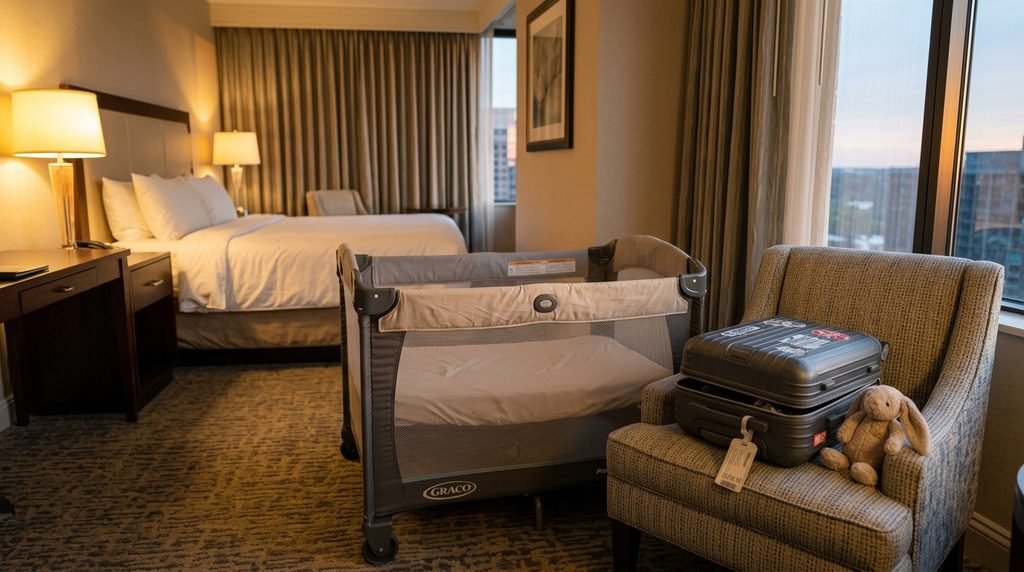
Travel. Hotel cribs and portable play yards follow the same bare rule. In the car seat or stroller, keep toys away from your baby’s face, and move them to a flat sleep surface when you arrive.
Why Babies Love Comfort Objects
Parents often ask when can babies sleep with stuffed animals because they’ve watched their baby fall in love with one. Somewhere between 6 and 12 months, many babies latch onto one special item. Psychologists call it a transitional object, a bridge between the comfort of a caregiver and the independence of sleeping alone.
A favorite toy can help your child settle after a bad dream, cope with separation, and handle new places. Attachment to one isn’t a sign of weakness or a bad habit. It’s a normal step in growing up.
There’s a balance, of course. Some toddlers become so attached that the toy must be with them everywhere. That’s usually fine, and most children grow out of it on their own. And if your baby isn’t interested in plush toys at all, that’s fine too. A muslin square held in your arms during feeding works for some families, and a different comfort item can be introduced after 12 months.
Frequently Asked Questions
Can a 9-month-old sleep with a stuffed animal?
No. The AAP recommends waiting until 12 months. Your 9-month-old can play and cuddle with a stuffed animal while awake, but it should leave the sleep space before naps and bedtime.
Can my baby nap with a stuffed animal?
Not before 12 months. Naps count as sleep, so the same bare-crib rule applies. After the first birthday, try the toy at a daytime nap first, when you can check on your baby easily.
Is it safe for a 1-year-old to sleep with a stuffed animal?
For most healthy babies, yes, if the toy is small, plain, and well made. Confirm with your pediatrician if your baby was premature or has a health condition that affects movement or breathing.
What if my baby cries without a stuffed animal?
Keep the toy in your bedtime routine, then set it aside before sleep. Add a pacifier, keep the routine steady, and expect a short adjustment period. The comfort of the routine builds up faster than most parents expect.
When can babies sleep with a blanket?
Similar timing: after 12 months, starting with a small, lightweight blanket. Pillows usually come later, and many pediatric sources suggest waiting until around 18 months. Until then, a wearable blanket is the safer choice.
Conclusion
So, when can babies sleep with stuffed animals? After 12 months, and only with a small, plain toy that passes the safety checks above. Until then, the bare crib is the safest gift you can give your baby, and daytime cuddles with their favorite plush still count.
Take a minute tonight to check your baby’s sleep space. If you spot a toy, a blanket, or a bumper, remove it. Then bookmark this page or share it with the grandparents so everyone follows the same plan. Have a question about your own baby’s timing? Ask your pediatrician at the next visit, and let us know in the comments which stuffed animal is waiting for its big day.
Related Post:
How Long Does Baby Ear Piercing Take to Heal? A Simple Parent’s Guide
Does a Surrogate Mother Share Blood With the Baby? 5 Truths
Why Do Some Babies Wear Helmets? 7 Simple, Essential Facts
