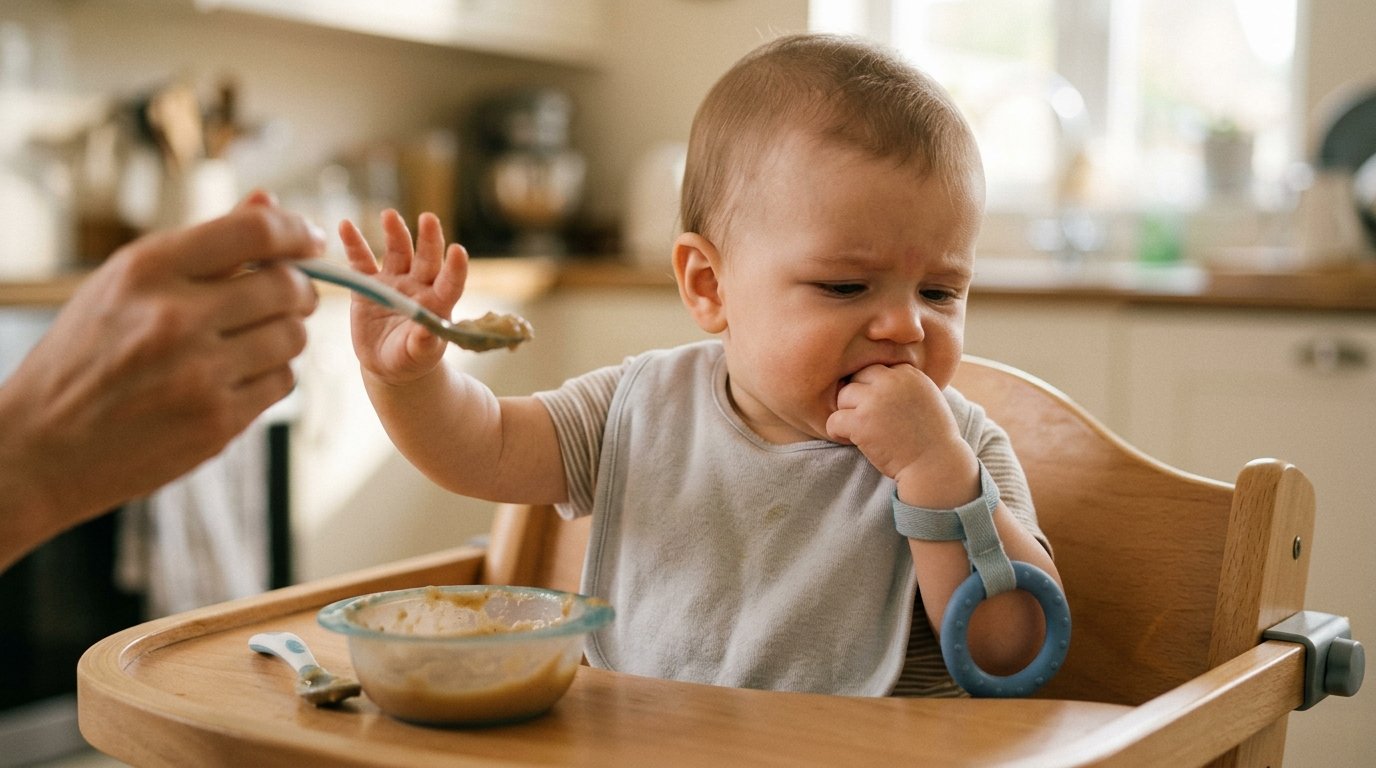
One week your baby is happily plowing through a bowl of mashed sweet potato, and the next they’re turning their head away from the spoon, pushing the bottle out with their tongue, or nursing for half the time they usually do. If a tiny white edge just appeared along their gum line, you’re probably not imagining the connection.
Do babies eat less when teething? For most babies, yes, at least for a few days around each new tooth. This guide walks through why that happens, how long it typically lasts, what actually helps, and the specific signs that mean something other than teething deserves a closer look.
The Short Answer: Yes, and Here’s Why
Most babies do eat somewhat less while a tooth is actively coming through the gum, and it’s a genuinely common, well-documented pattern rather than something unusual to your baby. The discomfort of swollen, tender gum tissue makes chewing, sucking, and sometimes even swallowing less appealing, so a baby who normally eats with enthusiasm may suddenly seem picky, slow, or outright uninterested at mealtimes.
This dip is usually mild and short-lived. Some babies barely slow down at all, while others skip a meal or two or take noticeably shorter feeds for several days. Both ends of that range are considered normal, since no two babies experience teething with the same intensity.
Why Sore Gums Reduce Appetite
The mechanism behind this is fairly straightforward once you picture what’s actually happening inside your baby’s mouth. As a tooth pushes upward, the gum tissue directly over it becomes inflamed, swollen, and sensitive to pressure. Anything that touches that spot, a nipple during nursing, a bottle’s silicone tip, a spoon delivering purée, or even your baby’s own tongue while swallowing, can trigger a jolt of discomfort in a tooth’s most active eruption window.
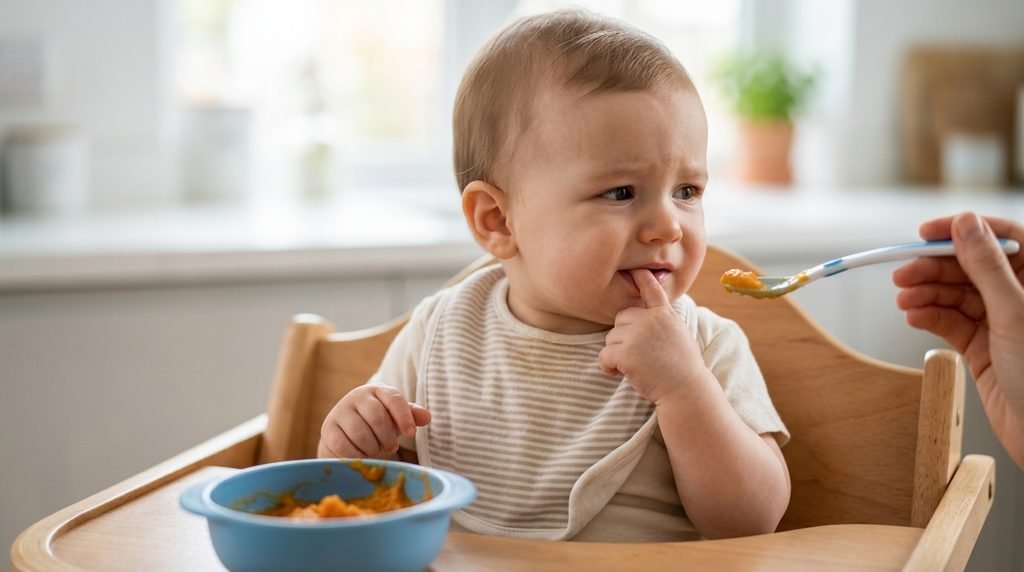
For a baby who can’t yet explain what hurts or why, the simplest response is often to avoid the activity causing the pain altogether. That’s why pulling away from the breast, refusing a bottle, or clamping their mouth shut against a spoon can all show up as the same underlying reaction to the same source of discomfort.
How Long the Appetite Dip Usually Lasts
For most babies, reduced appetite around a new tooth lasts only a few days, generally clustering around the couple of days right before the tooth breaks through the surface and easing up shortly after. Once the tooth has fully erupted and the surrounding gum tissue calms down, eating typically returns to normal on its own without any lasting effect on your baby’s overall appetite or growth.
Because babies usually get multiple teeth over the following months, it’s common to see this pattern repeat every few weeks as each new tooth works its way through. Knowing that a rough patch is temporary can make it easier to ride out a few uncomfortable days without much worry, as long as it stays within that short window.
Which Foods Get Refused First
When people ask do babies eat less when teething, they’re usually picturing solid food refusal specifically, and that’s exactly where the biggest hit tends to show up. Solid foods and anything with real texture tend to take the biggest hit during a teething flare-up, since chewing puts direct, repeated pressure on the exact spot that hurts most. A baby who’s normally happy to gnaw on a cracker or a soft piece of banana may suddenly refuse anything that requires real biting or grinding.
Breast and bottle feeding are affected less predictably. Some babies continue nursing or bottle-feeding just fine even while refusing solids entirely, since sucking doesn’t put the same kind of pressure on the gums that chewing does. Others take noticeably shorter feeds or seem to pull away mid-session, particularly if the sucking motion itself happens to irritate a tooth that’s especially close to the surface.
When Teething Typically Starts
Most babies get their first tooth somewhere between 4 and 7 months old, though the exact timing varies widely and isn’t a sign of anything being wrong either way.
| Age Range | What’s Typically Erupting | Common Symptoms |
| 4-7 months | Bottom front teeth (lower incisors) | Drooling, gum swelling, chewing on objects |
| 8-12 months | Top front teeth, lateral incisors | Irritability, disrupted sleep, appetite dips |
| 12-18 months | First molars | More intense discomfort, stronger appetite changes |
| 18-30 months | Canines, second molars | Similar pattern, usually final round of new teeth |
Molars tend to cause the most noticeable appetite changes of the bunch, since their broader surface means more gum tissue is involved in each eruption compared to the narrower front teeth.
Myths Worth Clearing Up: What Teething Does NOT Cause
Sore gums and a temporary drop in appetite are genuine, well-supported teething symptoms, but a few other things commonly blamed on teething actually aren’t caused by it at all. According to MedlinePlus, a service of the National Library of Medicine, teething does not cause fever or diarrhea, and a child who develops either one should be evaluated by their healthcare provider rather than assumed to just be teething.
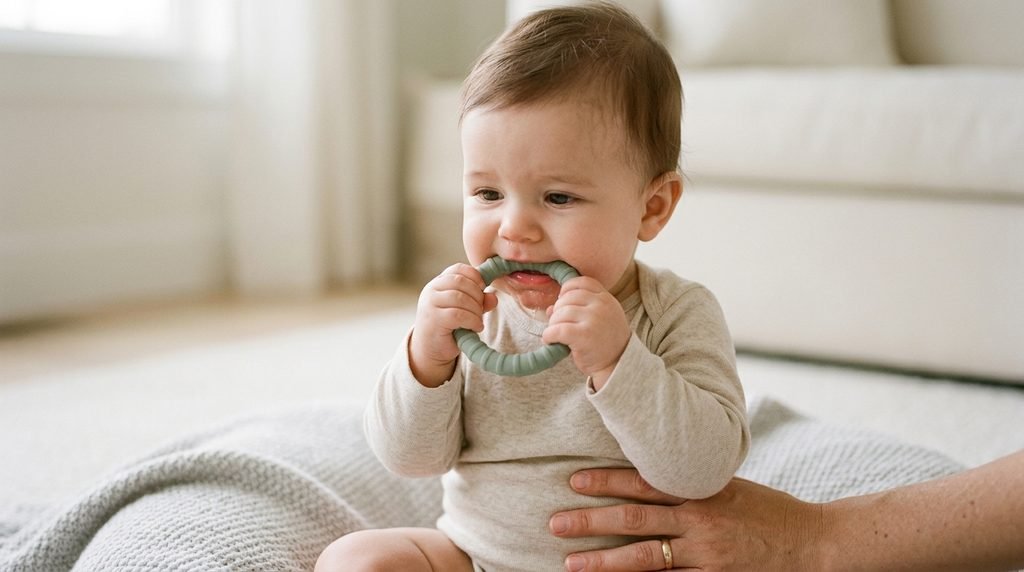
The myth persists largely because of timing. Teething often ramps up around the same months that a baby’s maternal antibodies, the protective immunity passed on before birth, start to fade, leaving them more vulnerable to the colds, ear infections, and stomach bugs that genuinely do cause fever and appetite loss. Because both things frequently happen close together, it’s easy to mistake one for the cause of the other when they’re really two separate, coincidentally overlapping events.
A Balanced Note: Don’t Blame Every Appetite Dip on Teething
It’s worth saying plainly that not every off day at the dinner table is actually teething, even during a stretch when a tooth happens to be coming in. Cleveland Clinic notes that teething babies are generally “little different from kids who are not teething,” with discomfort that should stay mild. Babies’ appetites naturally fluctuate day to day for all kinds of reasons, including minor illness, growth spurts, a disrupted routine, or simply not being in the mood, and it’s easy to pin a random bad eating day on whatever symptom is most visible at the time.
If your baby is refusing food along with other signs, like a true fever, diarrhea, unusual lethargy, or a rash, it’s worth considering that something other than teething might be going on rather than waiting it out. Keeping this in mind isn’t about dismissing teething as a real cause. It’s about not letting it become an automatic explanation that delays a closer look when one is actually needed.
How to Help a Teething Baby Eat Comfortably
A few practical adjustments can make mealtimes noticeably easier during a rough teething stretch, without forcing your baby to push through discomfort just to get calories in.
- Offer cold or chilled foods like yogurt, applesauce, or refrigerated purées, since the cold has a mild numbing effect on sore gums
- Stick to soft textures for a few days rather than pushing chunkier foods that require more chewing pressure
- Give your baby a chilled teething ring or a clean, cool washcloth to gnaw on about ten minutes before a meal to take the edge off first
- Offer smaller, more frequent feeds instead of a few large ones, since shorter sessions are easier to tolerate than a long one
- Try feeding when your baby is calm and freshly rested rather than already overtired or fussy, since discomfort is harder to push through when patience is already low
- Gently massage the gums with a clean finger right before offering food, which can briefly ease pressure in the sorest spot
If your baby is still drinking milk well even while refusing solids, don’t worry too much about a temporary dip in solid food intake specifically. Breastmilk or formula can cover their nutritional needs for a few days on its own while the discomfort passes.
When Reduced Eating Needs a Doctor’s Attention
Most teething-related appetite dips resolve within a few days without any intervention, but a handful of signs mean it’s time to check in with your pediatrician rather than wait it out. A true fever, meaning a temperature of 100.4°F (38°C) or higher, is not a normal teething symptom and points toward an infection that needs evaluation instead.
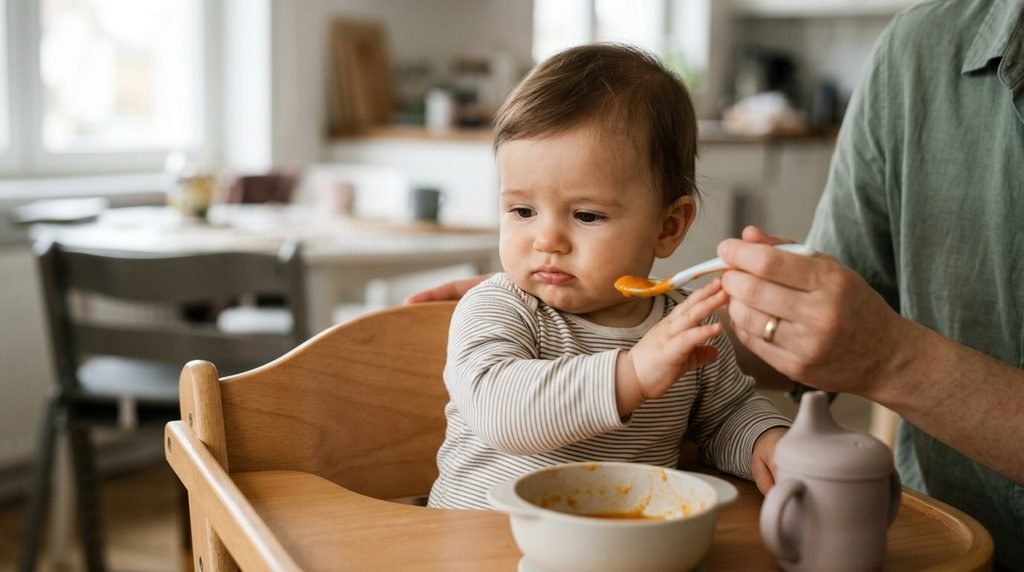
Contact your pediatrician if reduced eating lasts longer than about a week, if your baby shows signs of dehydration such as noticeably fewer wet diapers or no tears when crying, or if they seem unusually lethargic or difficult to rouse rather than simply fussy. Babies under 3 to 4 months old rarely have teething-related appetite changes at all, since most don’t get their first tooth until closer to 6 months, so reduced eating in a very young baby deserves its own evaluation regardless of any other teething signs present.
Frequently Asked Questions
How many days does teething appetite loss usually last?
Most babies experience a reduced appetite for a few days at most around each new tooth, often clustering right before it breaks through the gum and easing shortly after. If reduced eating stretches on for more than a week, it’s worth mentioning to your pediatrician rather than assuming teething is still the cause.
Can teething cause a baby to refuse milk too?
Yes, for some babies, though it’s less consistent than solid food refusal. Sucking doesn’t put the same direct pressure on the gums as chewing does, so many babies continue breastfeeding or bottle-feeding reasonably well even while refusing solids, though a shortened or fussier feed is still common.
Is it normal for a baby to lose weight while teething?
A brief plateau in weight gain during a short appetite dip generally isn’t a concern, since most babies make up for it once the discomfort passes and eating returns to normal. Actual weight loss, rather than just a slower gain, is worth flagging to your pediatrician rather than assuming teething alone explains it.
What foods are easiest for a teething baby?
Cold, soft foods tend to work best, including chilled yogurt, applesauce, mashed banana, or refrigerated purées, since the cold temperature helps numb sore gums while the soft texture avoids the chewing pressure that causes the most discomfort.
Conclusion
Do babies eat less when teething? For the large majority, yes, and it’s a normal, temporary response to genuinely sore gums rather than a sign of a bigger problem. The pattern usually resolves within a few days per tooth, responds well to cold and soft foods in the meantime, and doesn’t typically affect your baby’s overall growth if it stays within that short window.
The signs worth watching for are the ones teething genuinely doesn’t cause: a true fever, diarrhea, dehydration, or lethargy. If any of those show up alongside reduced eating, treat it as its own concern rather than folding it into the teething explanation, and check in with your pediatrician. Otherwise, a few soft, chilled meals and a little extra patience at the table are usually all it takes to get through it.
Related Post:
TOG Sleep Sack Guide: How to Choose the Right Warmth for Your Baby
When Should Babies Wear Shoes? 5 Safe, Essential Tips
Why Do Some Babies Wear Helmets? 7 Simple, Essential Facts
When Can You Find Out Baby Gender? Reveal Party Timing
Why Do Babies Grunt in Their Sleep? A Complete Parent’s Guide

4 thoughts on “Do Babies Eat Less When Teething? The Complete 2026 Guide”