If you’ve just watched your baby’s first tooth poke through, you’ve probably started wondering about the boring-but-important stuff: checkups, cavities, and cost. So let’s answer the question straight away do babies need dental insurance? For most families, the honest answer is: not right away, but it becomes worth considering once regular checkups start, usually around age one.
That short answer isn’t the whole story, though. Whether dental insurance for babies actually makes sense for your household depends on your state’s Medicaid rules, your existing health plan, and how often your baby will realistically need dental care in the first few years. This guide walks through the real numbers, so you’re not guessing.
We’ll cover what a first dental visit costs, what insurance typically pays for, when Medicaid already has you covered, and a simple checklist you can use to make the call yourself instead of relying on a generic yes-or-no answer that doesn’t fit your family. By the end, you’ll have a clear, personal answer to do babies need dental insurance rather than a one-size-fits-all rule.
When Should a Baby’s First Dental Visit Happen?
Pediatric dentists and the American Academy of Pediatric Dentistry both recommend a first dental visit by the time a baby turns one, or within six months of the first tooth coming in whichever happens first. That first visit is usually short and low-key. The dentist checks for early decay, talks to you about teething, and gives tips on brushing and bottle habits.
Some parents feel this is too early. A one-year-old with just a handful of teeth doesn’t seem like a dental emergency waiting to happen. But dentists push for this timeline because early decay is easy to miss at home, and catching it early is far cheaper and less stressful than catching it late. It’s around this first visit that most parents first start googling do babies need dental insurance in the first place.
This timing matters a lot for the insurance question. If your baby’s first visit is a simple, low-cost checkup, you may not need coverage yet. But if your dentist flags early cavities which happen more often than people expect, especially with bottle-feeding at night costs can climb fast. That’s exactly when parents start seriously asking whether do babies need dental insurance is a “yes” for their family.
What Baby Teeth Care Actually Costs Without Insurance
Here’s where most articles get vague. Let’s get specific, because real numbers make this decision much easier.
- A routine checkup and cleaning for a baby typically runs $50 to $150 out-of-pocket, depending on your city and the dentist’s practice fees.
- X-rays, if needed, add another $25 to $75 on top of the checkup.
- Treating a single baby cavity can cost $100 to $250 per tooth, depending on severity.
- More involved procedures, like a pulpotomy (a baby root canal) or a stainless-steel crown on a baby tooth, can run $300 to $600 per tooth.
For a baby with healthy teeth and no complications which is the scenario where do babies need dental insurance most often comes back as a no one or two visits a year without insurance might total under $300 annually. That’s manageable for a lot of families on a tight budget. But if cavities show up which is common with early bottle or sippy-cup habits costs rise quickly, and that’s usually the tipping point where insurance starts to actually pay for itself.
It’s also worth remembering these figures vary by region. Dental care in a major city can cost noticeably more than the same checkup in a smaller town, so use these numbers as a rough guide and confirm actual pricing with a local pediatric dentist.
This cost breakdown is really the starting point for answering do babies need dental insurance in dollar terms rather than in theory. Once you see the actual price of a filling versus a monthly premium, the decision often becomes much clearer.
What Dental Insurance for Babies Typically Covers
Before deciding do babies need dental insurance, it helps to know exactly what you’d be buying. Most family dental plans that include a baby as a dependent cover:
- Two preventive visits per year (exam, cleaning, fluoride treatment)
- X-rays when clinically needed, not just routinely
- A portion of restorative work like fillings, usually 50–80% after a deductible
- Emergency visits for trauma a fall that chips or knocks out a tooth is more common than parents expect once a baby starts walking and climbing
Premiums for adding a baby to an existing family dental plan usually range from $15 to $40 a month, though this varies a lot by state, insurer, and whether it’s through an employer or purchased individually. Standalone infant-only dental plans are rare most babies simply get added as a dependent to an existing family or employer plan instead.
Annual coverage maximums on basic plans tend to be modest, often between $1,000 and $1,500 per year. For a baby who just needs cleanings, that’s plenty. For a baby needing multiple restorative procedures, it might not stretch far enough, which is worth factoring in when you’re weighing whether dental insurance makes sense.
Knowing exactly what’s included in a typical plan helps answer do babies need dental insurance with real numbers on the table, instead of guessing at what you’d actually be paying for.
Do Babies Need Dental Insurance If They’re on Medicaid or CHIP?
This is the part most competing articles skip entirely, and it genuinely matters.
In the United States, Medicaid and the Children’s Health Insurance Program, better known as CHIP, are required to cover dental benefits for children, including infants, in every state. If your household qualifies based on income, your baby can get preventive and restorative dental care at little to no out-of-pocket cost — no separate dental insurance purchase needed.
So if you’re asking do babies need dental insurance and you already qualify for Medicaid or CHIP, the honest answer is usually no that coverage already includes dental benefits for your child. It’s still worth checking your specific state’s Medicaid dental benefits page, since covered services, provider networks, and reimbursement rates vary from state to state.
Some families assume Medicaid dental coverage is limited to “the basics” and won’t cover anything beyond a checkup. In reality, most state plans cover fillings, extractions when medically necessary, and even sedation for young children who can’t sit still for treatment. It’s more comprehensive than many parents expect, and it often fully answers do babies need dental insurance on its own.
How Baby Dental Coverage Differs From Adult Dental Plans
It helps to understand that a baby’s dental needs aren’t a miniature version of an adult’s. Babies don’t need root canals on permanent teeth, gum disease treatment, or orthodontic consultations in year one. Their dental risk profile is narrower: mostly cavity prevention, teething-related discomfort, and the occasional trauma from falls.
Because of that narrower risk profile, a lot of the “extras” bundled into adult dental plans things like coverage for crowns, bridges, or periodontal treatment simply don’t apply yet. This is one reason some financial advisors suggest holding off on separate dental insurance for babies specifically, since a chunk of what you’d be paying for goes unused for the first couple of years.
That said, once a child starts getting more teeth and eating more solid, sugary foods, the calculation can shift. Toddler and preschool years often bring more frequent visits and a higher chance of cavities, which is when many families reconsider the insurance question.
This narrower risk profile is another reason do babies need dental insurance doesn’t have a single universal answer for every age and stage. What makes sense at twelve months might look different by age three.
Pros and Cons of Adding a Baby to a Dental Plan
Weighing these pros and cons is really the heart of deciding do babies need dental insurance for your own household, since the right call depends on which side of the list matters more to your budget.
Pros:
- Predictable monthly costs instead of surprise bills
- Encourages regular preventive visits, which catch problems early and cheaply
- Covers a portion of emergency dental trauma, which is common once babies start cruising and walking
- Often bundled cheaply with an existing family plan, so the marginal cost is low
Cons:
- Monthly premiums add up over a year even if your baby rarely needs treatment
- Many plans have waiting periods, often three to twelve months, before restorative work is covered
- Annual maximums on basic plans are low, so a severe case can still cost real money out-of-pocket
- Some plans require in-network pediatric dentists, which can limit your choice of provider
For families with healthy babies and infrequent dental issues, premiums can genuinely outweigh the benefit. For families expecting more frequent visits — maybe due to a sibling’s dental history, early tooth crowding, or a pediatrician’s early concern — insurance often works out cheaper over the long run. This trade-off is really the crux of do babies need dental insurance for most households weighing the decision.
Cheaper Alternatives to Full Dental Insurance
If a full dental plan feels like overkill for one small mouth, a few alternatives are worth knowing about.
- Dental discount plans — not insurance, but a membership that gets you 10% to 60% off at participating dentists for a flat annual fee, often under $150 a year.
- Community health centers — many federally funded clinics offer sliding-scale pediatric dental care based on household income.
- University dental schools — student dentists, supervised closely by licensed faculty, often provide checkups and basic treatment at a fraction of private-practice prices.
- Paying cash and budgeting for two checkups a year — for a healthy baby with good habits, this is sometimes genuinely the cheapest and simplest route.
- Health Savings Accounts or Flexible Spending Accounts — if you already have one through work, dental expenses for a dependent baby usually qualify, effectively giving you a tax discount on out-of-pocket costs.
None of these fully replace insurance, but they show that do babies need dental insurance isn’t a strict either-or decision. There’s a whole middle ground between “buy a full plan” and “pay everything out of pocket.”
Real-Life Scenarios: Three Families, Three Different Answers
Scenario one: A family on Medicaid with a healthy one-year-old. Dental is already included in their coverage, so buying separate insurance would be paying twice for the same benefit. For this family, do babies need dental insurance clearly comes back as no.
Scenario two: A working family with an employer dental plan where adding a dependent costs $18 a month. Their baby has no known risk factors, but the low premium makes it an easy yes — cheaper than two out-of-pocket cleanings a year, with trauma coverage as a bonus.
Scenario three: A family without Medicaid, without employer dental, and a baby whose older sibling had frequent cavities. Given the family history and lack of existing coverage, a standalone family dental plan or a discount plan is likely worth the investment here, so do babies need dental insurance for this household is more clearly a yes.
These scenarios show why do babies need dental insurance doesn’t have one universal answer — it depends entirely on what coverage you already have and your baby’s individual risk factors.
A Simple Checklist: Should You Get Dental Insurance for Your Baby?
Ask yourself these questions honestly:
- Does your baby already have Medicaid or CHIP coverage that includes dental? → You likely don’t need separate insurance.
- Do you already have a family dental plan through work that’s cheap to add a dependent to? → Probably worth adding.
- Has your dentist flagged early decay, or is there a family history of frequent cavities? → Insurance or a discount plan is worth it.
- Are you comfortable budgeting under $300 a year and paying cash as issues come up? → You might skip insurance for now.
- Does your baby have any medical condition that increases dental risk, like a cleft palate or a genetic enamel condition? → Insurance is strongly worth considering.
Running through this list is often faster than reading a dozen articles about do babies need dental insurance, because it forces the decision down to your own actual numbers and circumstances.
Answering these honestly usually settles the do babies need dental insurance question for your specific household, rather than relying on a generic answer that ignores your actual circumstances.
Common Mistakes Parents Make With Baby Dental Care
Regardless of how you answer do babies need dental insurance, a few patterns show up again and again with new parents.
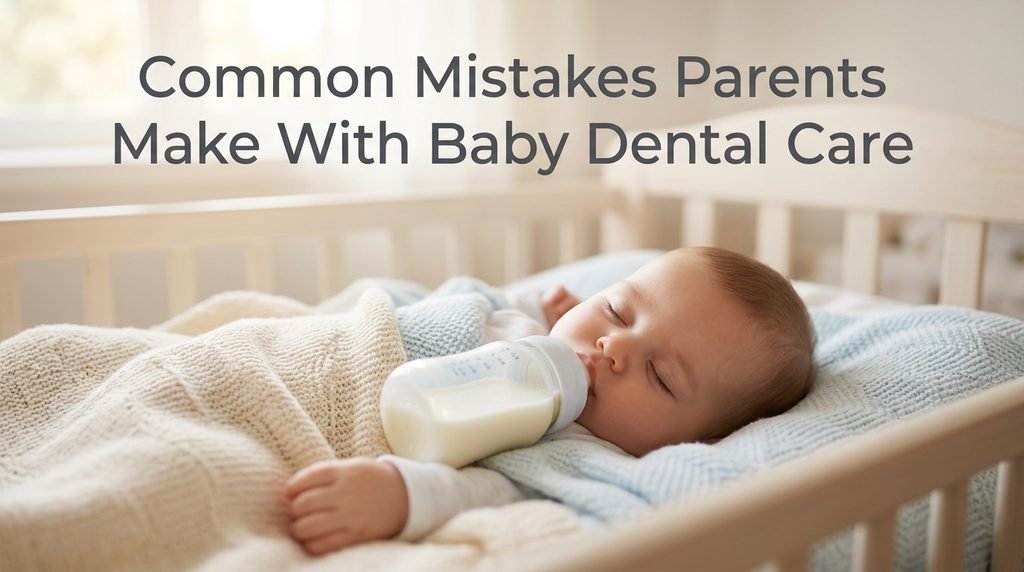
- Waiting too long for the first visit. Some parents wait until age two or three, missing the window to catch early decay cheaply and painlessly.
- Assuming baby teeth don’t matter since they’ll fall out anyway. Untreated cavities in baby teeth can affect the permanent teeth growing underneath and can cause real pain and infection in the meantime.
- Not checking existing coverage before buying a new plan. Some health insurance plans already bundle pediatric dental benefits for children under a certain age — always double-check before paying for a separate policy.
- Ignoring bottle habits. Letting a baby fall asleep with a bottle of milk or juice is one of the biggest drivers of early childhood cavities, and it’s completely free to fix.
- Skipping fluoride varnish because it seems unnecessary. This quick, painless treatment during checkups meaningfully lowers cavity risk and is usually covered even on basic plans.
Avoiding these mistakes matters regardless of how you eventually answer do babies need dental insurance for your own family, since good habits reduce risk either way.
Frequently Asked Questions
At what age should dental insurance start for a baby?
Most families consider it once regular checkups begin, around age one, or whenever an employer or marketplace plan makes adding a dependent inexpensive. This is usually the exact moment the question do babies need dental insurance starts to feel urgent instead of hypothetical.
Is baby dental care covered under regular health insurance?
Sometimes. A few health plans include limited pediatric dental benefits for young children, but many require a separate dental plan or rider to cover it fully.
Do babies really need dental insurance if their teeth look fine?
Not necessarily. If your baby has no risk factors and you’re comfortable paying cash for occasional checkups, insurance isn’t mandatory — it’s a financial choice, not a medical requirement.
Can I add my baby to my dental insurance anytime, or only during open enrollment?
Having a baby usually counts as a qualifying life event, which lets you add them to an existing plan outside the normal open enrollment window. Check with your provider for the exact deadline, since it’s often limited to 30 or 60 days.
Does dental insurance cover teething-related visits?
Teething itself usually doesn’t need a dental visit, and most plans don’t have a specific benefit for it. Routine checkups where a dentist reassures you about teething are typically bundled into a standard preventive visit.
Final Thoughts
So, do babies need dental insurance? Not automatically — but it’s a decision worth making on purpose rather than by default. If your baby already qualifies for Medicaid or CHIP, you’re likely covered without paying extra. If you have an affordable family dental plan available through work, adding your baby is often a smart, low-cost move. And if neither applies, paying cash for occasional checkups can work fine for a healthy baby with good habits and no risk factors.
The real answer isn’t one-size-fits-all. It comes down to your baby’s dental risk, the coverage you already have, and what you’re comfortable budgeting for surprises down the road. Whatever you decide, don’t skip that first dental visit around age one — it’s the cheapest, most effective step you can take either way, insurance or not.
If you take one thing away from this guide, let it be this: do babies need dental insurance is a question worth answering with your own numbers, not someone else’s generic advice.
Related Post:
How Long Does It Take Baby Villagers to Grow Up? Ultimate 2026 Guide

6 thoughts on “Do Babies Need Dental Insurance? 7 Proven Facts for 2026”