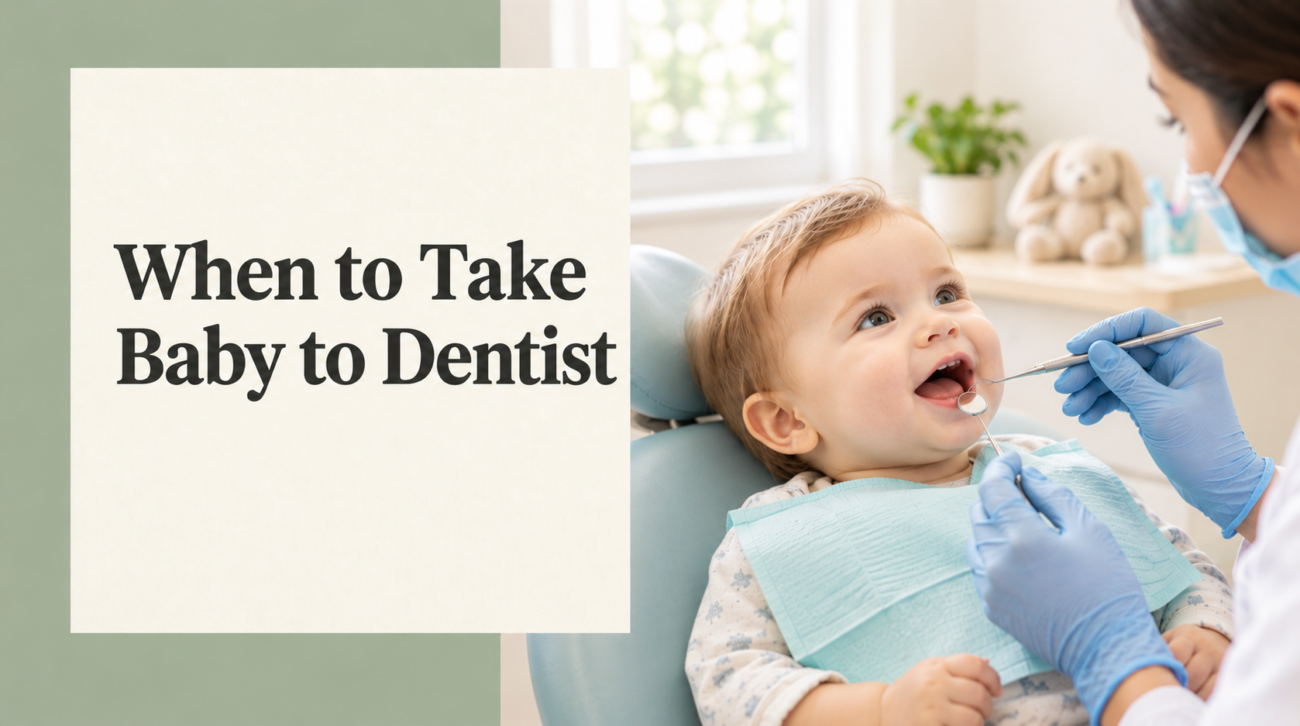
Becoming a parent comes with a long list of “firsts” to plan for, and one that often gets overlooked is the first dental visit. Many parents assume dental care only matters once a child has a full set of teeth, but that’s not quite true. Knowing exactly when to take baby to dentist can make a real difference in your child’s long-term oral health, comfort, and confidence around dental care. This guide walks you through everything you need to know, from the ideal timing of that first appointment to what actually happens once you’re in the dentist’s chair.
Quick Answer: The Best Time for Baby’s First Dental Visit
If you’re short on time, here’s the simple version. Most pediatric dentists and dental associations agree that the right time to take a baby to the dentist is by their first birthday, or within six months of their first tooth appearing, whichever happens first. This early timeline might surprise some parents, but it’s rooted in solid reasoning that we’ll explore throughout this article.
When Exactly Should the First Visit Happen
The general rule that most professionals follow is often called the “first tooth, first birthday” rule. In simple terms, as soon as your baby’s first tooth breaks through the gum line, a countdown of sorts begins. Within about six months of that moment, or by the time your child turns one, it’s a good idea to schedule that initial checkup.

Major dental organizations, including pediatric dental associations, support this early timeline. Their reasoning is straightforward: the earlier a dentist can look inside your baby’s mouth, the earlier they can catch potential problems, offer guidance, and help you build good habits before issues develop. Waiting until a child has all their baby teeth, or worse, until something looks wrong, often means missing the window where prevention is easiest.
Earlier visits also tend to be far less stressful than visits prompted by pain or a visible problem. A calm, low-pressure first appointment sets a completely different tone than an emergency visit for a toothache.
Signs Your Baby Is Ready for a Dental Visit
While the first-birthday guideline works for most babies, there are specific signs that can indicate it’s time to book that appointment, sometimes even sooner than expected.
- The first tooth has visibly broken through the gum
- Your baby is showing typical teething symptoms like drooling, gum irritation, or chewing on objects frequently
- You notice any discoloration, white spots, or unusual marks on the emerging teeth
- There’s swelling, redness, or signs of discomfort around the gums that don’t seem like ordinary teething
- Your baby’s feeding habits (bottle, breastfeeding, or pacifier use) have you wondering about their effect on oral development
If any of these apply, it’s worth reaching out to a pediatric dentist rather than waiting for a specific date on the calendar.
Why Early Dental Visits Are Important
It’s fair to ask why such a young child, often with just one or two teeth, needs to see a dentist at all. The answer comes down to prevention, monitoring, and habit-building.

Preventing early childhood cavities. Baby teeth are more vulnerable to decay than many parents realize, and early childhood cavities can form faster than expected, especially with frequent bottle use or sugary liquids at bedtime. A dentist can spot early warning signs long before a cavity becomes painful or requires more invasive treatment.
Monitoring jaw and teeth development. Every child’s mouth develops differently. Early visits let a dentist track how teeth are coming in, how the jaw is forming, and whether anything looks unusual compared to typical development patterns.
Building comfort and reducing dental anxiety. Children who start visiting the dentist early tend to view it as a normal, unremarkable part of life rather than something to fear. This familiarity often carries into later childhood and even adulthood, making future visits far smoother.
Educating parents on oral care habits. A first dental visit isn’t just about the baby, it’s also a chance for parents to ask questions. Dentists can offer personalized advice on brushing, feeding routines, pacifier use, and other daily habits that affect oral health.
What Happens During the First Dental Visit
First-time visits are usually short and gentle, designed to introduce your baby to the dental environment without overwhelming them. Here’s a general idea of what to expect.
| Step | What Happens |
| Check-in and settling in | Parents typically hold the baby during the exam for comfort and reassurance |
| Basic mouth exam | The dentist gently checks teeth, gums, and jaw alignment |
| Discussion of habits | Feeding routines, pacifier or thumb-sucking habits, and teething patterns are discussed |
| Brushing guidance | Parents receive tips on proper brushing technique and how much toothpaste to use |
| Q&A time | Parents can ask about anything from diet to fluoride to future visit scheduling |
The entire appointment usually takes no more than 30 minutes, and in many cases, it’s even shorter. There’s rarely any need for tools beyond a simple mirror and light, unless the dentist spots something that needs closer attention.
How to Prepare Your Baby (and Yourself) for the Visit
A little preparation goes a long way in making the first visit a positive experience.
- Choose a pediatric dentist who specializes in treating infants and young children, since their offices and approach are typically designed with little ones in mind
- Schedule during a good time of day, ideally when your baby is well-rested and not due for a nap or feeding right away
- Bring familiar comfort items like a favorite toy or blanket to help ease any nervousness
- Keep your own energy calm and relaxed, since babies often pick up on parental stress
- Bring a list of questions you’ve been wanting to ask about teething, brushing, or feeding habits
None of this needs to be complicated. The goal is simply a calm, unrushed first experience.
Oral Care Before the First Tooth Appears
Even before that first tooth shows up, oral care already matters. Bacteria can build up on baby’s gums just as it would on teeth, so starting a simple routine early sets a strong foundation.
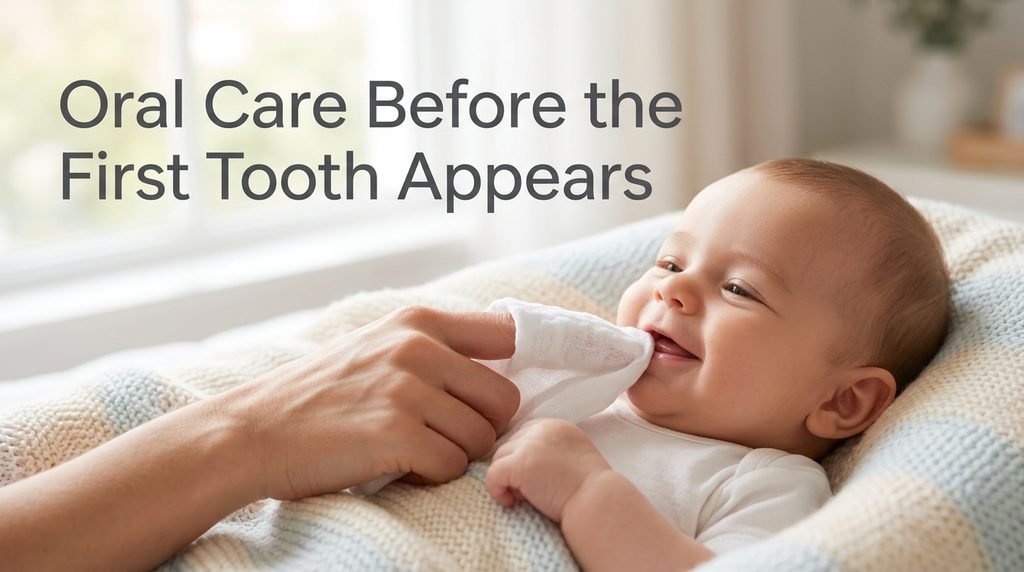
Gently wiping your baby’s gums with a soft, damp cloth after feedings helps remove residue and gets your little one used to having their mouth touched, which makes future toothbrushing much easier. It’s also wise to avoid letting your baby fall asleep with a bottle of milk or juice, since prolonged contact with sugary liquids is one of the leading causes of early tooth decay. As for fluoride, it’s best to discuss timing and appropriate amounts with your dentist, since recommendations can vary depending on your baby’s age and your local water supply.
Common Concerns Parents Have
Parents often come into that first dental visit with a mental list of worries, and it’s completely normal. A few of the most common questions include how to tell teething apart from an actual dental problem, since both can cause fussiness, drooling, and gum irritation, though true dental issues are usually accompanied by visible discoloration or swelling that doesn’t fade.
Thumb-sucking and pacifier use are also frequent topics of concern. In infancy, these habits are generally harmless and even soothing, but a dentist can advise on when and how to gently phase them out as your child grows older, since prolonged use past a certain age can sometimes affect the shape of the mouth and alignment of emerging teeth.
Another common worry is what happens if a cavity is found in a baby tooth. While it might seem like a small issue since baby teeth eventually fall out, cavities left untreated can cause pain, infection, and even affect the development of permanent teeth underneath. Fortunately, early detection through regular visits means most issues are caught and treated while still minor.
How Often Should Follow-Up Visits Happen
Once that first visit is complete, most dentists recommend a checkup schedule of roughly once every six months, similar to the standard for older children and adults. This keeps development on track and allows small issues to be addressed before they grow into bigger ones.

That said, certain situations call for earlier or more frequent visits, including visible signs of decay or damage, ongoing pain or discomfort that doesn’t match typical teething, unusual delays in tooth eruption, or specific guidance from your pediatrician or pediatric dentist based on your baby’s individual needs. If you’re ever unsure whether something warrants a visit sooner than scheduled, it’s always better to reach out and ask than to wait it out.
Frequently Asked Questions
Do you really need to take a baby with no teeth to the dentist?
Yes. Even without a visible tooth yet, the first-birthday dental visit still serves a purpose — checking gum health, tracking jaw and mouth development, and reviewing feeding habits that affect future tooth health.
What age do babies usually get their first tooth?
Most babies cut their first tooth somewhere between four and seven months old, typically starting with the lower front teeth. Some babies get an early tooth closer to three months, while others don’t show one until closer to their first birthday — both are within a normal range.
Can a pediatrician check baby’s teeth instead of a dentist?
A pediatrician’s basic visual check during a well-baby visit is a helpful supplement, but it isn’t a replacement for a full dental exam. Dentists have training specifically focused on identifying early decay and developmental issues that a general visual glance is unlikely to catch.
What if my baby cries the whole appointment?
Crying during a first visit is extremely common and nothing to be embarrassed about. Pediatric dental teams handle this constantly and are trained to work calmly and efficiently even with an upset baby, so the exam can typically still be completed without issue.
Is it normal to feel nervous about baby’s first dental visit?
Completely normal. Many parents feel some anxiety heading into their baby’s first dental appointment, especially if they’re unsure what to expect. Knowing the visit is short, low-intervention, and mostly observational tends to ease a lot of that worry once you’re actually in the chair.
Conclusion
Understanding when to take baby to dentist doesn’t need to be complicated. The simple guideline to remember is by the first birthday, or within six months of the first tooth, whichever comes first. Starting early helps prevent cavities, supports healthy jaw and teeth development, and helps your child feel comfortable with dental visits from the very beginning. Pairing that first appointment with simple daily habits, like gently cleaning gums and avoiding sugary bedtime bottles, gives your baby the best possible start toward a lifetime of healthy smiles.
Related Post:
How Long Does It Take Baby Villagers to Grow Up? Ultimate 2026 Guide

2 thoughts on “When to Take Baby to Dentist? Complete Guide for New Parents”