You do not need to wait for a special age or a perfect moment. Most babies can try wheat at about 6 months, once they are ready for solid foods and have started eating a few other foods. Offer a small amount of a plain, soft wheat food, watch your baby for the next couple of hours, and keep offering it if all goes well.
This guide explains how to introduce wheat to baby step by step, what to look for, and when to call a doctor. It also clears up a common myth: pediatric guidance does not support delaying wheat to prevent allergy.
How to Introduce Wheat to Baby: The Quick Answer
- Wait until your baby is ready for solids, usually around 6 months.
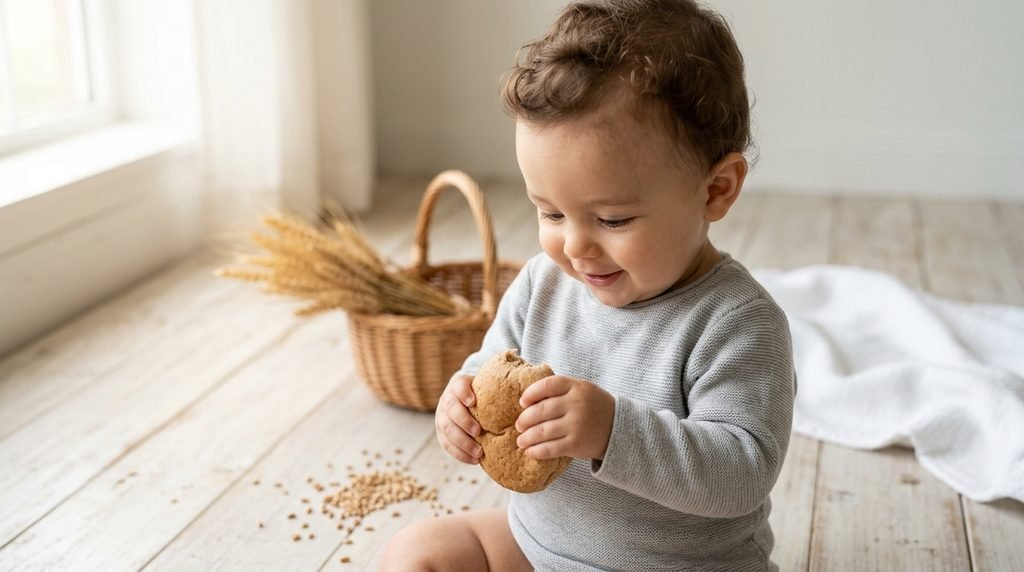
- Pick a plain wheat food such as wheat infant cereal, cream of wheat (farina), soft cooked pasta or lightly toasted bread.
- Offer a small amount first, such as a teaspoon or a few small bites, early in the day.
- Watch for reactions for at least two hours, and know the emergency signs.
- Keep offering wheat if there is no reaction, and widen the textures over time.
- Skip added sugar and honey, and make sure food is safe from choking and raw flour.
- Call your doctor first if your baby has severe eczema, a known food allergy, or a close relative with celiac disease.
When Can Babies Eat Wheat?
Around 6 months, when your baby is developmentally ready for solid foods. The CDC says the Dietary Guidelines for Americans and the American Academy of Pediatrics (AAP) recommend introducing foods other than breast milk or formula at about 6 months, and introducing foods before 4 months is not recommended.
The same CDC page advises introducing potentially allergenic foods along with other foods, and not saving them for later. Wheat is one of those foods. USDA’s WIC guidance lists wheat among the foods to introduce when you begin solids.
Signs Your Baby Is Ready for Solids
Look for development, not just the date on the calendar. Common signs include:
- Holding the head steady and sitting upright with support
- Opening the mouth when food comes near
- Bringing objects to the mouth
- Pushing food out less with the tongue and swallowing it instead
If you are unsure, ask your baby’s doctor. Breast milk or formula remains your baby’s main source of nutrition through the first year, according to USDA WIC.
Does Waiting Help? What the Evidence Says
Some recipe sites say to hold wheat until 8 or 9 months, or to avoid it as a first grain. The AAP’s HealthyChildren site takes a different position: it says there is no evidence that waiting beyond 4 to 6 months to introduce wheat, or other gluten-containing grains such as rye or barley, prevents food allergy or celiac disease.

My interpretation: if you want to start wheat later because your baby is not ready, or because your doctor suggested it, that is fine. But do not delay it believing it protects your baby.
Wheat Allergy, Celiac Disease and Gluten: Know the Difference
These conditions get mixed up, but they are not the same.
| Condition | What happens | Typical timing | What it means for feeding |
| Wheat allergy | The immune system reacts to proteins in wheat (an IgE-mediated allergy) | Symptoms usually appear within minutes to hours, per Mayo Clinic | Wheat must be avoided once diagnosed by a doctor or allergist |
| Celiac disease | An immune reaction to gluten (in wheat, barley and rye) that damages the small intestine; it is not a food allergy | Symptoms can be slow and digestive, and AAP notes it may show up after a first bowl of wheat-containing cereal | Requires lifelong avoidance of gluten after diagnosis |
| Eosinophilic esophagitis (EoE) | A chronic condition in which food proteins, including wheat, can inflame the esophagus | Can be gradual | Needs specialist care |
How common is wheat allergy? FARE says it may affect up to 1% of children in the US, and one study found that two-thirds of children with a wheat allergy outgrow it by age 12. Mayo Clinic notes that wheat allergy is most common in babies and toddlers. Some children keep the allergy into adulthood.
For celiac disease, FARE lists symptoms including diarrhea, constipation, weight loss, abdominal pain and bloating, along with skin rashes and signs of nutrient deficiency.
Talk to Your Doctor First If…
- Your baby has severe eczema, an existing food allergy, or has already had a reaction to another food. Several parent guides suggest checking with the pediatrician before introducing allergenic foods in these cases.
- A parent or sibling has celiac disease. I did not find a single guideline-level answer on exact timing for these families in my research. Parents with celiac disease in old forum threads reported hearing different timing advice from different specialists, which is anecdotal. Ask your pediatrician or a pediatric gastroenterologist for a plan.
- You are unsure whether an earlier reaction was an allergy.
Do not try to diagnose wheat allergy yourself or restrict your baby’s diet without professional advice.
How to Introduce Wheat to Baby Step by Step
These seven steps follow general pediatric guidance on allergenic foods and add practical details. Where sources disagree, I say so.
Step 1: Choose the Right Day and Time
Pick a day when your baby is well, rested and calm. Offer the new food earlier in the day, such as breakfast or lunch, rather than right before bed. Why? If a reaction does occur, you will be awake and able to watch. That timing tip is common in parent guides and is my interpretation, not an AAP requirement.
Do not introduce wheat for the first time when you are rushing out the door or when a daycare worker will be the only adult watching.
Step 2: Pick a First Wheat Food
Good starting options, from smooth to more textured:
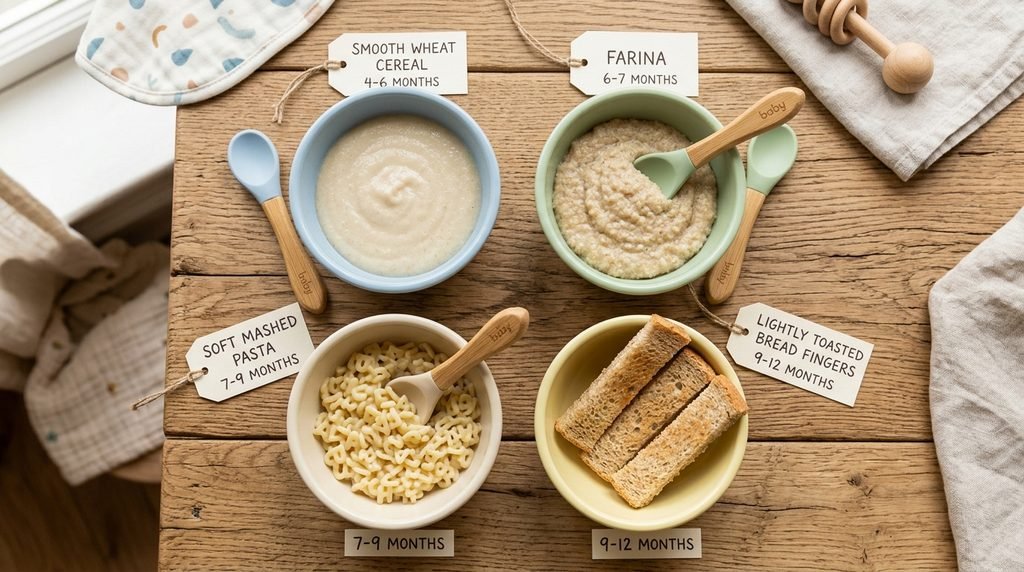
- Wheat or multigrain infant cereal. HealthyChildren notes that wheat is most commonly introduced as infant cereal, such as wheat or multigrain. Check that the label shows added iron.
- Cream of wheat (farina), prepared with breast milk or formula to a smooth, thin texture.
- Plain puffed wheat cereal, softened with milk. One parenting site suggests choosing a variety with only wheat as an ingredient.
- Soft-cooked pasta, well cooked and mashed or cut small.
- Lightly toasted bread strips (for older babies who can self-feed).
In many homes, other staples work too, such as broken wheat porridge (dalia) or semolina porridge. Use thin, smooth textures at first.
Step 3: Start Small
Begin with a taste. A common approach is a teaspoon or less, then slowly more if there is no reaction. One recipe site suggests 1 teaspoon on the first day for an older baby. I did not find an official amount in the sources I reviewed, so treat this as practical guidance and follow your doctor’s advice.
Keep it plain. Skip added sugar, and do not add honey, which should be avoided before 12 months, according to USDA WIC. I would also hold back added salt, although I did not verify that point in these sources, so check with your pediatrician.
Step 4: Watch for Reactions
Stay with your baby during and after the meal. Mayo Clinic says wheat allergy symptoms usually develop within minutes to hours, and one baby-health guide puts the window at minutes to about two hours.
| Level | Signs to watch for | What to do |
| Mild | Hives (red, itchy bumps), a new rash around the mouth, sudden vomiting | Stop the food and call your doctor |
| Severe (emergency) | Trouble breathing, swelling of the tongue or throat, limp or very weak baby | Call emergency services right away |
Not every rash is an allergy. Drooling, a new food touching the skin, or eczema flare-ups can also cause redness. But do not guess. If you are unsure, take a photo and call the doctor.
Step 5: Keep Offering It
If there is no reaction, keep wheat in your baby’s regular menu. Repeating foods helps babies accept them, and USDA WIC suggests offering foods more than once. Whether to give wheat every few days to maintain exposure is something I could not verify in my sources, so ask your doctor.
How long should you wait before the next brand-new allergenic food? Sources differ. One guide suggests waiting 3 to 5 days between new allergenic foods. A public health unit in Ontario says there is no need to wait 2 days. Ask your pediatrician which approach fits your baby, especially if there is any allergy risk.
Step 6: Build Up Textures
Once your baby handles smooth foods, move on to lumpier foods and soft finger foods. The CDC says you can introduce thicker, lumpier foods as eating skills develop. When your baby can pick up food and bring it to the mouth, offer soft finger foods cut into small pieces.
Step 7: Write It Down
Keep a short note: date, food, amount, time and any symptoms. This helps your doctor if a reaction ever happens and keeps you from guessing later.
Best First Wheat Foods by Age
Ages are approximate. Always match texture to your baby’s skills.
| Age | Wheat food ideas | Texture and safety notes |
| About 6 months | Wheat infant cereal, thin farina, thin dalia or semolina porridge | Smooth and spoon-fed. Mix with breast milk or formula. |
| 7 to 8 months | Thicker cereal, mashed soft pasta, toast strips softened with a topping like mashed avocado | Thicker and lumpier. Cut or mash any pasta. |
| 9 to 10 months | Puffed wheat cereal that dissolves, small pieces of soft pasta, soft cooked flatbread torn into pieces | Practice the pincer grasp with dissolvable foods. One source suggests puffed wheat from about 9 months. |
| 12 months and up | Toast, small muffins, noodles, chapati or roti pieces | Cut into small pieces. Watch for sticky or doughy textures. |
Bread deserves a note. Lightly toasting a slice makes it less likely to turn into a gummy ball in the mouth. That comes from one parenting site, and it matches the general advice to avoid sticky foods.
Safety: Choking, Raw Flour and Added Sugar
Choking and Gagging
Gagging is a normal reflex that helps babies protect themselves while learning to eat. It is noisy, with coughing or spitting. Choking is different, because the baby cannot make sound. Learn the difference and consider taking an infant CPR and choking class.
Prepare foods that dissolve easily or can be mashed between your fingers. Avoid sticky foods from a spoon, and cut soft finger foods small, as the CDC and local health guidance suggest. Always stay with your baby while they eat.
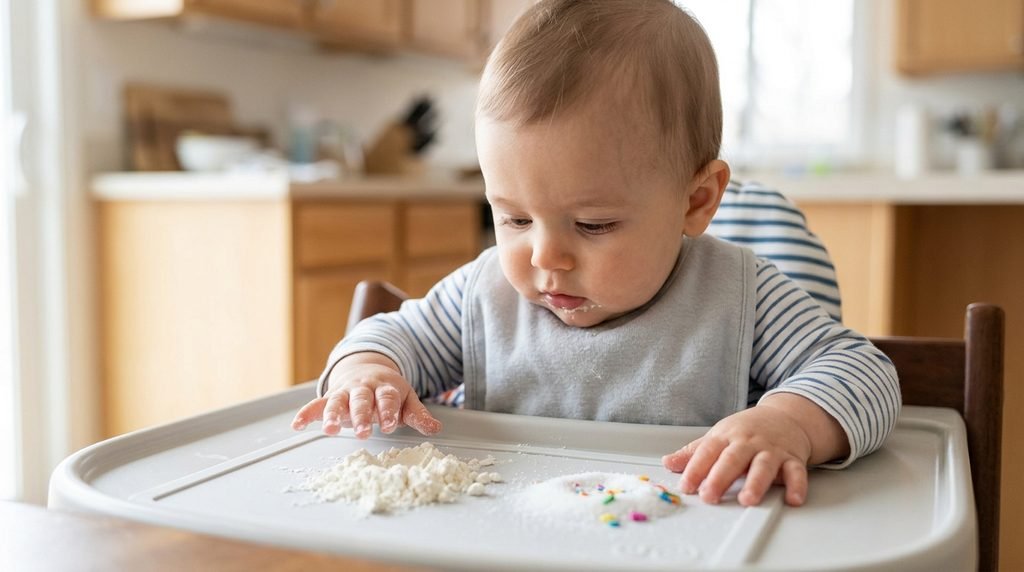
Raw Flour and Dough
The CDC warns that flour is usually not treated to kill germs, and raw flour can carry E. coli. It lists an outbreak linked to raw flour that made 63 people sick in 2016. The CDC says not to let children play with or eat raw dough, including dough for crafts.
If you bake or make chapati dough at home, keep your baby away from raw dough and flour, cook food fully, and wash hands and surfaces afterward.
Added Sugar and Honey
Skip sweetened cereals, cookies and sugary porridges as first wheat foods. Honey is not safe before 12 months. Interpretation: because baby foods set taste habits, plain is the best starting point.
A Sample 7-Day Wheat Introduction Plan
Illustrative plan, not a prescription. Adjust it with your pediatrician, especially if your baby has eczema or any allergy risk.
| Day | What to offer | Notes |
| 1 | 1 teaspoon of thin wheat cereal at breakfast | Watch for 2 hours. Offer a bit more if baby is happy. |
| 2 | Same cereal, a little more | Keep a note of any change. |
| 3 | Same cereal with a familiar mashed fruit | Use a fruit your baby already tolerates. |
| 4 | Rest day from wheat, or continue per your doctor | Pace depends on your doctor’s advice. |
| 5 | Try a new wheat food, such as thin farina | One new food at a time. |
| 6 | Mashed soft pasta (a few small bites) | Cut or mash. |
| 7 | Repeat your baby’s favorite wheat food | Review your log. |
Common Mistakes and Troubleshooting
- Waiting until 8 or 9 months “just in case.” The AAP does not support delaying for allergy prevention.
- Giving wheat before the baby is ready for solids. Introducing solids before 4 months is not recommended.
- Starting with a big serving. Begin with a taste.
- Introducing wheat with three other new foods. If a reaction happens, you will not know the cause.
- Using raw flour or dough as a “baby treat.” Raw flour can carry germs.
- Skipping the doctor when risk is higher. Severe eczema or a known allergy deserves a plan first.
- Adding sugar or honey to make it more appealing.
- Confusing gagging with choking.
If your baby refuses wheat: offer it again on another day, alone or mixed with a familiar flavor. USDA WIC notes foods often need repeated offers.
If you worry about constipation: one recipe site says wheat may worsen constipation in some babies and suggests pairing it with fruit. I could not confirm this in a medical source. If your baby seems uncomfortable or stools change a lot, ask your doctor, and offer breast milk or formula as usual.
FAQ
At what age can babies have wheat?
Around 6 months, when they show signs of readiness for solid foods. Introducing solids before 4 months is not recommended.
Should I wait until 8 months to give wheat?
No evidence supports waiting beyond 4 to 6 months to prevent allergy or celiac disease, according to the AAP. Some recipe sites still advise waiting, so follow your pediatrician if they say otherwise.
How to introduce wheat to baby with eczema or allergy risk?
Talk with your pediatrician before the first wheat food. They may suggest a particular timing or a supervised first exposure.
What is the best first wheat food for a baby?
Smooth wheat or multigrain infant cereal, or thin farina, is a common starting point. Prepare it with breast milk or formula.
What are the signs of a wheat allergy in a baby?
Hives, a rash around the mouth or sudden vomiting are mild signs. Trouble breathing, swelling of the tongue or throat, or a limp baby are emergencies. Symptoms usually appear within minutes to hours.
Is wheat allergy the same as celiac disease?
No. Wheat allergy is an immune reaction to wheat proteins. Celiac disease is an immune response to gluten that is not a food allergy. A baby with wheat allergy may tolerate barley and rye, while celiac requires avoiding all gluten.
Will my baby outgrow a wheat allergy?
Many children do. FARE cites a study in which two-thirds outgrew it by age 12, though some do not.
Can babies eat bread or roti?
Yes, once they can handle the texture. Lightly toast bread, tear flatbread into small soft pieces, and avoid doughy or sticky bites for young babies.
Final Takeaway
For how to introduce wheat to baby, start at about 6 months with a small amount of a plain, soft wheat food early in the day, watch for a couple of hours, and keep offering it if all goes well. Do not delay on the belief that waiting prevents allergy, and talk to your pediatrician first if your baby has severe eczema, a food allergy, or celiac disease runs in the family. If you see trouble breathing or swelling, call emergency services right away.
Related Post:
When to Send Out Baby Shower Invites: 6 Easy Timelines
Does a Surrogate Share DNA With the Baby? 7 Clear Facts
When to Move Baby Out of Bassinet: 6 Must-Know Signs

One thought on “How to Introduce Wheat to Baby: 7 Safe, Easy Steps”