Bone marrow has quietly become one of the most talked-about first foods in baby-led weaning circles. Once you see it prepared the right way, it’s easy to understand why. If you’re wondering exactly how to cook bone marrow for baby, the short answer is this: roast the bones until the marrow turns soft, scoop it out, then mash or whip it into a smooth, easy-to-swallow texture.
That said, “safely” is doing a lot of work in that sentence. It’s worth slowing down to get the details right. Marrow is rich in iron, zinc, selenium, and vitamins A, B12, E, and K. It also carries omega-3 fatty acids that support your baby’s rapidly growing brain. This is a food traditional cultures have fed to babies for generations, long before “baby-led weaning” was a phrase anyone used.
This guide walks through everything from picking the right bones to storing leftovers. It also pays close attention to the choking risks that make marrow different from a mashed banana or a steamed carrot. By the end, you’ll know exactly how to cook bone marrow for baby from start to finish, plus how to serve it safely at every stage.
Why Bone Marrow Is Worth the Effort
Long before pediatric guidelines and baby-led weaning charts existed, many cultures treated marrow as one of the most prized parts of the animal. Some families saved it specifically for the youngest and oldest members of the household. Hunter-gatherer communities cracked open long bones for the fat inside. Traditional diets in parts of Europe, Asia, and the Americas still include some version of marrow-based broth or spread for infants transitioning off milk.

That history lines up with what nutrition science says today. Babies have very high energy needs relative to their tiny stomach size. Fat is the most calorie-dense nutrient available, and marrow delivers a concentrated dose of it. It also carries fat-soluble vitamins A, E, and K, which need dietary fat to be absorbed properly. Put simply, it’s a genuinely practical food, not just a trendy one.
Is Bone Marrow Safe for Babies?
Yes, bone marrow is safe for most babies once they’re ready for solid foods. The American Academy of Pediatrics generally places that milestone around 6 months of age. Readiness matters more than the calendar, though. Look for a baby who can sit upright with minimal support, has decent head and neck control, and shows real interest in food, like leaning toward your plate or watching you eat.
Marrow isn’t considered one of the nine major food allergens, so allergic reactions are uncommon. Still, any new food carries a small chance of an unexpected reaction. Introduce it in a small amount at first, and watch for hives, swelling, or unusual fussiness afterward. If your baby has a known red meat allergy or alpha-gal syndrome in the family, mention marrow to your pediatrician before serving it. It comes from the same animal family as beef or lamb.
Every baby develops on a different timeline. Check with your pediatrician before adding marrow to the rotation, especially if your baby has reflux, a history of feeding difficulties, or was born prematurely.
Choosing the Right Bones for Baby
The bones you pick will make or break the whole process. Beef marrow bones are the most widely available and the easiest to work with. Lamb bones work fine too if that’s what your butcher carries. Ask for “marrow bones” or “soup bones” specifically, cut into rounds about 2 to 3 inches thick. That size exposes enough marrow to make the effort worthwhile.
Grass-fed and pasture-raised options tend to carry a richer nutrient profile and avoid antibiotic or hormone residue. Conventional bones are still nutritious, though, if that’s what’s available or affordable. Whatever you choose, the marrow inside should look pale yellow to cream colored. Skip any bones that smell off, look grayish, or have visible cracks running through them. Damaged bones are harder to clean thoroughly.
How to Cook Bone Marrow for Baby: Step by Step
Once you’ve got your bones, cooking them down is genuinely simple. Here’s how to cook bone marrow for baby using the oven-roasting method most parents rely on, plus a stovetop-free alternative below if your oven is already busy with dinner.
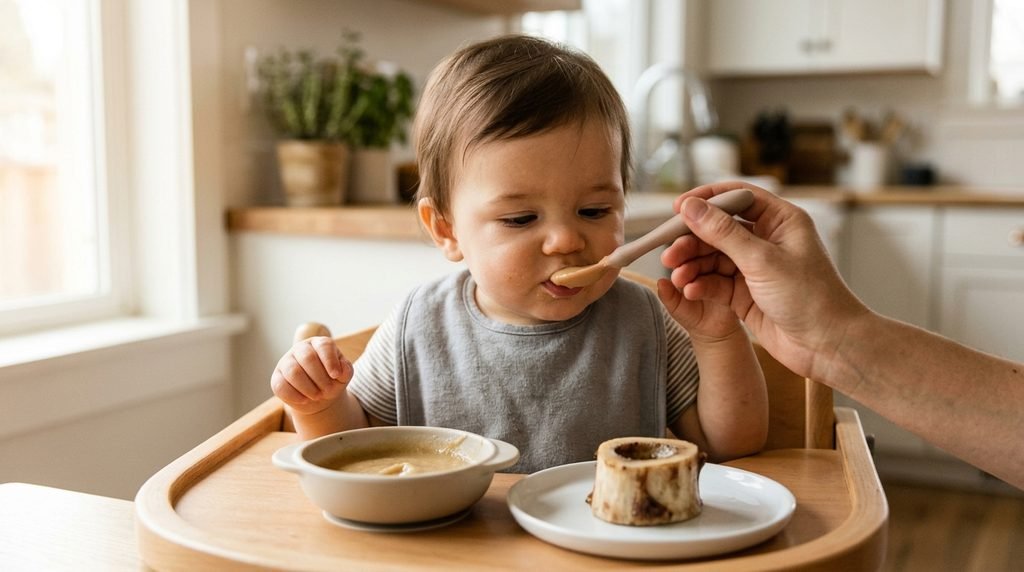
Step 1: Rinse and pat dry. Run the bones under cold water to clear off any bone dust or debris, then pat them dry with a paper towel.
Step 2: Roast. Place the bones cut side up on a parchment-lined baking sheet. Roast at 375°F to 425°F for 20 to 30 minutes. Thicker cuts or bones straight from the freezer may need closer to 40 minutes. The marrow is done when it looks soft and slightly jiggly, not browned or crisp at the edges.
Step 3: Cool slightly. Let the bones sit for 10 to 15 minutes so they’re safe to handle without burning your fingers.
Step 4: Scoop it out. Use a small spoon to scrape the marrow into a bowl. It should come out easily and look glossy, almost like softened butter.
Step 5: Mash or whip. For younger babies, mash the marrow with a fork until smooth. An immersion blender gives an even silkier texture. Some parents whip it with a hand mixer until pale and fluffy, similar to whipped butter. Many babies find that lighter, fluffier texture easier to spread and eat.
If your oven schedule is packed, a pressure cooker works as an alternative. Cover the bones with water, add a splash of apple cider vinegar to help draw out nutrients, and cook on high pressure for 45 to 60 minutes with a natural release. This method has a bonus: it also leaves you with a gelatin-rich broth you can use in soups or grain dishes later.
However you cook it, run a quick texture check before serving. Press a small amount of the mashed marrow between your fingers or against the roof of your mouth. If it squishes apart easily with no resistance, similar to a fully ripe avocado, it’s soft enough for a baby to manage. Any firm, rubbery bits mean unmelted fat. Mash it further or strain it out before serving.
Preparing Bone Marrow by Age and Stage
How you serve the marrow should change as your baby’s chewing and self-feeding skills develop.
6 to 9 months: Stick to a smooth, fully mashed or blended texture. Spread a thin layer on a strip of toast. Mix a small spoonful into mashed sweet potato or pumpkin. Or offer it on a preloaded spoon for your baby to bring to their mouth.
9 to 12 months: Babies at this stage often enjoy scooping marrow themselves. Offer a small spoon or a blunt spreader knife alongside a bowl of soft, whipped marrow. You can also let them explore the marrow directly inside a cooled bone half, with close supervision.
12 months and up: Toddlers can usually manage marrow spread thickly on toast fingers, stirred into rice or oatmeal, or used as a dip for soft roasted vegetables.
Choking Safety: What Makes Marrow Different
Marrow carries a specific choking risk that softer foods like avocado or banana don’t share. It often contains globs of fat that stay firm and become slippery once warmed. That combination of texture can catch in a baby’s throat if it isn’t broken down enough. Before serving, break up any visible chunks or streaks of fat until the whole batch looks uniformly smooth.
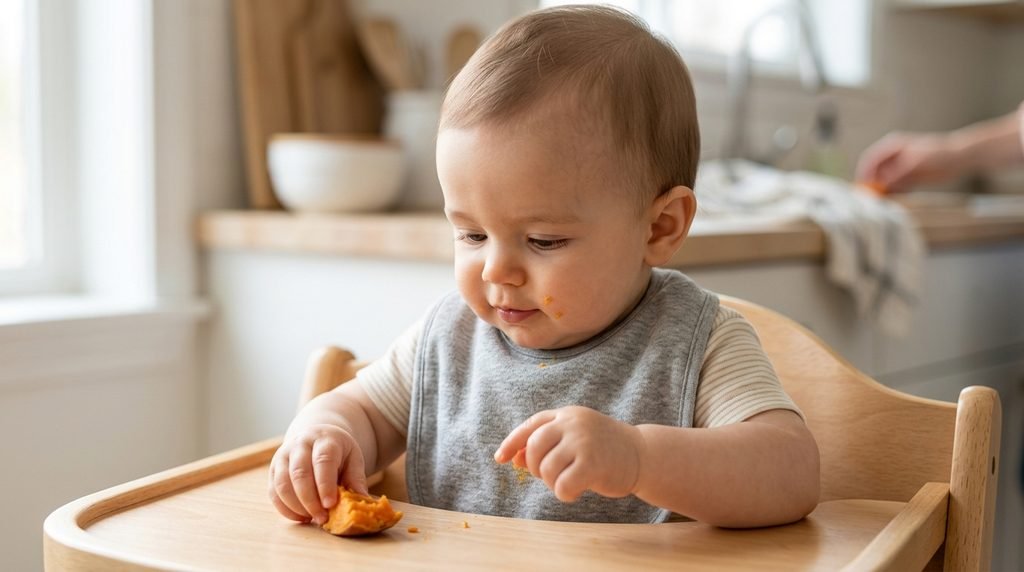
It also helps to know the difference between gagging and choking, since parents often confuse the two and panic unnecessarily. Gagging is loud. Your baby will cough, retch, or make noise, and it’s actually a protective reflex that pushes food forward, away from the airway. Choking is silent, because the airway is blocked and no air can pass to make sound. If your baby goes quiet and starts turning red or blue, that’s an emergency. Act immediately rather than waiting to see what happens.
A basic infant CPR class can give parents more confidence to act quickly in an emergency. It’s worth taking one before starting solids of any kind, not just marrow. The American Academy of Pediatrics recommends keeping your baby upright in a proper high chair, seated with the family. Stay within arm’s reach during meals, rather than feeding in a stroller, car seat, or in front of a screen.
Portion Sizes and How to Introduce It
Start small. A first serving of half a teaspoon to one teaspoon is plenty, since marrow is extremely rich and a little goes a long way for a small stomach. Watch for any reaction over the next day or two. Then gradually work up to one to two tablespoons per sitting as your baby gets used to it.
There’s no need to serve marrow every day. Two to three times a week is a reasonable rhythm for most families, layered in alongside other iron-rich foods and a variety of textures.
If your baby refuses it outright the first time, that’s completely normal. It doesn’t necessarily mean they dislike it. Babies often need to be offered a new food eight to ten times before accepting it, so keep marrow in the regular rotation for a few weeks rather than writing it off after one meal. Pairing it with a food your baby already loves, like a favorite mashed vegetable, can make the transition easier.
How to Store Leftover Bone Marrow
Cooked marrow keeps well, which makes it worth batch-cooking. Store it in an airtight container in the refrigerator for up to a week. For longer storage, spoon the mashed or whipped marrow into a silicone ice cube tray and freeze until solid. Transfer the cubes into a freezer bag, and they’ll keep for up to 6 months.
To thaw, move a cube to the fridge the night before, or warm it gently over low heat. Keep in mind that marrow behaves like butter. It firms up when chilled and turns soft and glossy again once it warms to room temperature.
Serving Ideas and Smart Pairings
Marrow is mild and slightly savory, which makes it easy to fold into almost anything your baby already eats. Try stirring it into mashed beans or lentils. Swirl it through warm oatmeal, spread it on rice cakes, or mix it into a vegetable puree in place of butter or oil.
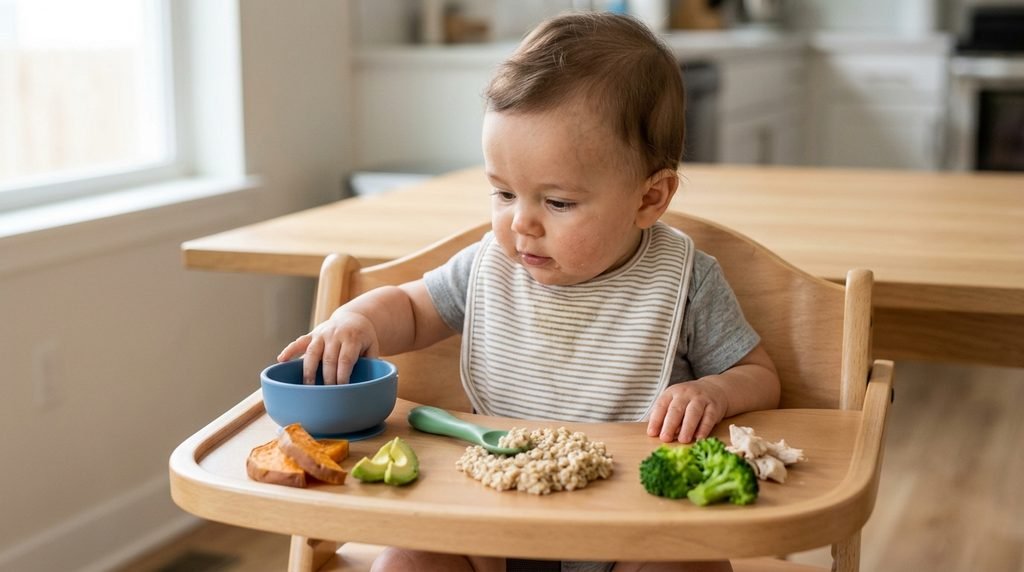
Here’s a detail worth knowing: marrow is often marketed as a major iron source for babies, but its iron content is actually fairly modest compared to foods like beef liver, ground beef, or sardines. According to the NIH Office of Dietary Supplements, infants 7 to 12 months old need about 11 mg of iron a day, among the highest requirements relative to body size of any age group. So it’s smart to treat marrow as a flavorful, fat-rich addition rather than your baby’s primary iron source. Pairing a spoonful of marrow with an iron-dense food, like ground lamb or minced liver, gives you the best of both nutritionally.
A Note on Equipment
You don’t need anything fancy to learn how to cook bone marrow for baby well. A rimmed baking sheet, a sheet of parchment paper, a small spoon for scooping, and either a fork or an immersion blender will get you through every step above. A silicone ice cube tray is the one extra worth buying if you plan to batch-cook and freeze portions, since it makes thawing single servings much easier than chipping pieces off a frozen block.
Common Myth: Is Bone Marrow Actually High in Iron?
Not as high as its reputation suggests. Marrow is genuinely valuable for its fat content, including omega-3s that support brain development, along with zinc, selenium, and vitamins A, B12, E, and K. But gram for gram, it doesn’t come close to organ meats or red meat when it comes to iron specifically. If your goal is boosting your baby’s iron intake, rotate in liver, beef, or fortified infant cereal alongside it rather than relying on marrow alone.
Frequently Asked Questions
What age can babies start eating bone marrow?
Most babies can try bone marrow around 6 months old, once they show signs of readiness for solids like sitting up with support and showing interest in food. Always confirm timing with your pediatrician first.
What type of bone is best for baby bone marrow?
Beef marrow bones cut into 2 to 3 inch rounds are the easiest to work with and most widely available. Lamb bones are a good alternative, and grass-fed options are a nice upgrade if you can find them.
Can you freeze bone marrow for later use?
Yes, cooked marrow freezes well for up to 6 months. Portion it into a silicone ice cube tray before freezing so you can thaw exactly the amount you need.
Is bone marrow a common food allergen for babies?
No, bone marrow is not one of the nine major allergens, though any food can trigger a reaction in rare cases. Introduce it in a small amount and watch for hives, swelling, or unusual fussiness.
Is bone marrow really high in iron?
Not especially. Marrow is rich in fat, zinc, and several vitamins, but its iron content is lower than foods like beef, liver, or sardines. Pair it with a more iron-dense food for a bigger nutritional boost.
How do I know if my baby is choking versus just gagging?
Gagging is loud, with coughing or retching sounds, and it’s a normal protective reflex. Choking is silent because the airway is blocked, and it requires immediate action. Learning basic infant CPR before starting solids is a smart precaution.
Can I cook bone marrow for baby in advance and reheat it?
Yes, this is actually the most practical approach for most families. Roast a full tray of bones at once, portion the mashed or whipped marrow into a tray, then thaw and gently rewarm single portions as needed throughout the week.
Conclusion
Bone marrow isn’t a complicated food to prepare, but it does reward a bit of care. From choosing solid bones to smoothing out every last streak of fat, the details matter. Once you’ve got the roasting and mashing routine down, it becomes one of the easier nutrient-dense foods to keep on hand for busy weeks. Try a small batch this week, freeze what you don’t use, and see how your baby takes to it. Now that you know how to cook bone marrow for baby safely, it’s an easy addition to a well-rounded first-foods routine.
Related Post:
When Do You Stop Burping a Baby? Signs & Timeline
How to Choose a Baby Stroller: A Complete Guide
When Can Babies Have Blankets? The Safe Sleep Timeline
When Can You Find Out Baby Gender? Reveal Party Timing
Why Do Babies Grunt in Their Sleep? A Complete Parent’s Guide
