
Somebody gifted you the softest little blanket at your baby shower, and now it’s sitting folded on the nursery shelf, mocking you a little. You want to tuck your baby in with it. You also read somewhere that blankets and cribs don’t mix. So which is it and when can babies have blankets without you lying awake worrying about it?
Here’s the short version, then we’ll walk through the reasoning, the exceptions, and exactly what to use in the meantime.
Quick answer: For sleep cribs, bassinets, naps, overnight wait until your baby is at least 12 months old before adding a loose blanket. That’s not the same as saying blankets are off-limits entirely: a blanket is perfectly fine during supervised, awake moments like tummy time, stroller rides, or cuddling on your lap, at any age. The line isn’t really about the blanket itself; it’s about whether your baby is asleep and unsupervised when it’s nearby.
So, When Can Babies Have Blankets? The Short Answer: 12 Months for the Crib
The American Academy of Pediatrics has one of the clearest, most consistent recommendations in all of infant care: no loose bedding in the sleep space until a baby’s first birthday. Their 2022 safe sleep policy statement is explicit about it, advising that soft objects and loose bedding including blankets, pillows, quilts, and comforters be kept away from a baby’s sleep area to reduce the risk of SIDS, suffocation, entrapment, and strangulation.
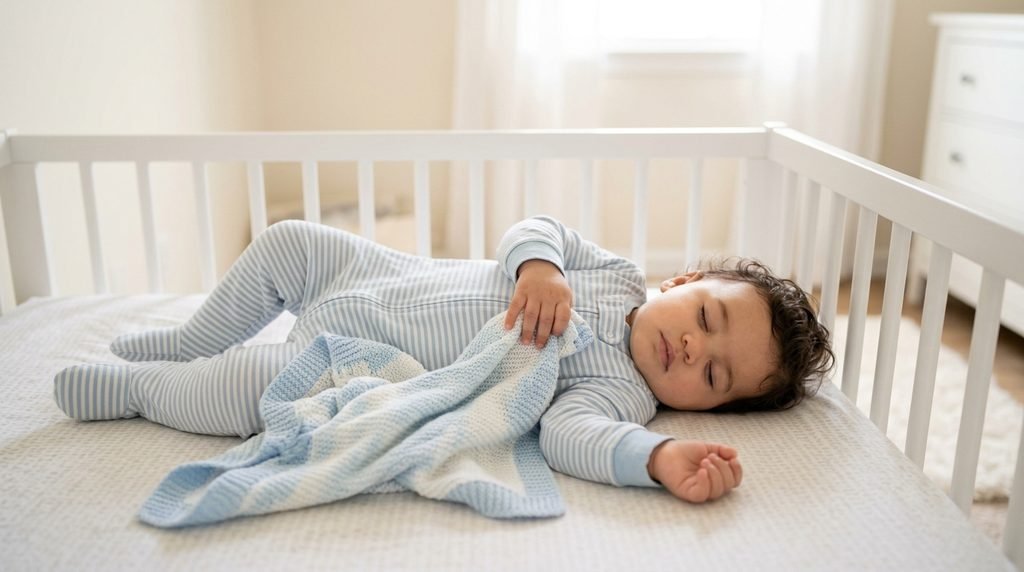
This isn’t a cautious guess. Roughly 3,500 infants die of sleep-related causes in the U.S. every year, and a large share of those deaths involve soft bedding in the sleep space. The recommendation exists because it’s tied directly to that data, not because pediatricians dislike cozy nurseries.
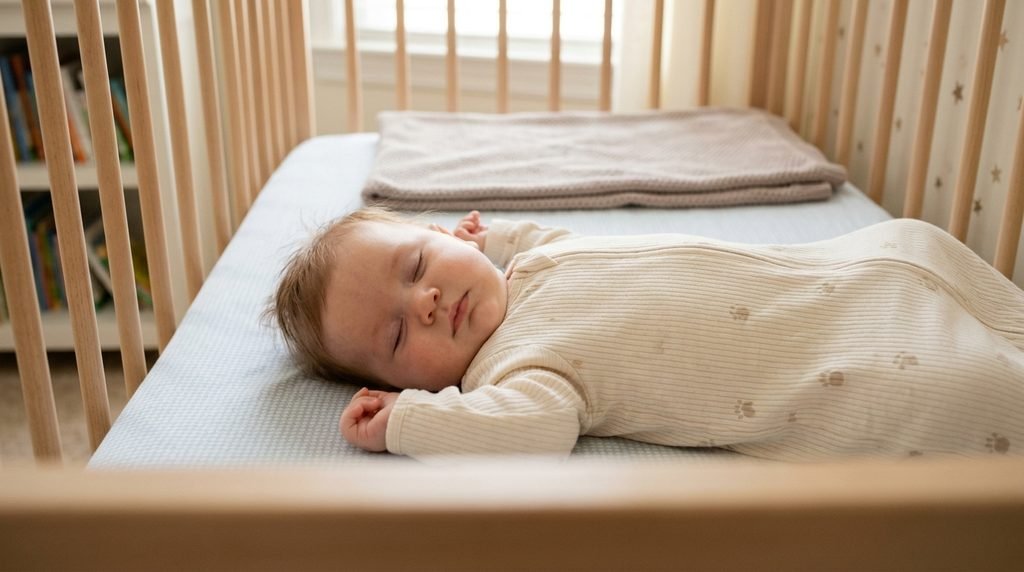
So the honest answer to when can babies have blankets in their crib is: not before 12 months, full stop, no exceptions for a “just this once” cold night. If you’re worried about warmth, there are safer ways to handle it more on that shortly.
Why Babies Can’t Safely Manage a Blanket Yet
It helps to understand what’s actually happening, rather than just following a rule blindly. Adults use blankets without thinking twice because we can shift position, push fabric away from our face, and regulate our own body temperature while half-asleep. None of that is automatic for a baby.
A newborn’s nervous system simply hasn’t developed the reflexes to reposition themselves or clear an obstruction from their airway mid-sleep. If a blanket shifts over their nose and mouth, they may not have the strength or coordination to push it away and because infants don’t rouse from sleep as easily as older children, they may not even wake up enough to try.
Temperature regulation is the other half of the problem. A young baby’s body isn’t yet efficient at managing heat the way yours is, so a heavy or trapped blanket can cause overheating faster than you’d expect, which is itself a separate risk factor tied to sleep-related infant deaths.
Put those two things together limited motor control plus immature thermoregulation and it’s easy to see why “just a light blanket” isn’t actually light-risk for a baby the way it would be for you.
But Wait — Blankets Aren’t Totally Off-Limits
Here’s the part a lot of parents don’t realize, because most safe-sleep guidance focuses almost entirely on the crib and skips right past it: a blanket is genuinely fine to use with your baby well before 12 months, as long as it’s during awake, supervised time.
Think about the moments this actually covers:
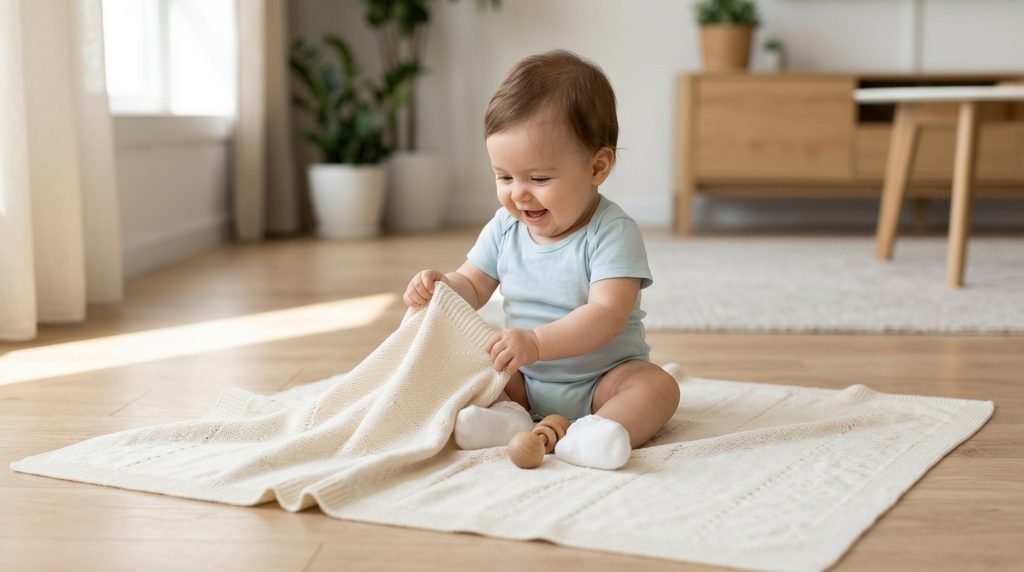
- Tummy time. Laying a thin blanket on the floor for your baby to practice pushing up and strengthening their neck is a completely normal, recommended setup NICHD’s Safe to Sleep guidance suggests spreading out a blanket for tummy time sessions.
- Stroller and pram rides. Tucking a blanket around your baby while you’re pushing the stroller and watching them the whole time is fine, as long as it stays clear of their face.
- Cuddling and skin-to-skin time. Wrapping a blanket around the two of you while you’re holding your baby is a bonding moment, not a hazard, because you’re right there.
- Story time and quiet lap time. Same logic an adult awake and present changes the entire risk picture.
The common thread in every one of these is supervision. The danger isn’t the blanket as an object; it’s a blanket left with a sleeping, unsupervised baby who can’t move it themselves. Once you separate those two situations in your head, the whole topic gets a lot less confusing.
What to Use Instead Before 12 Months
For actual sleep naps and nighttime you’ve got a few genuinely good, genuinely safe alternatives that solve the “but what if they’re cold” problem without any of the risk.
Swaddling works well for newborns who aren’t rolling yet. A snug swaddle keeps a baby warm and can even help with the startle reflex that disrupts sleep. The catch: stop swaddling the moment your baby shows signs of trying to roll over, usually somewhere around 3 to 4 months, sometimes earlier. A swaddled baby who rolls onto their stomach can’t use their arms to push themselves back up, which turns a helpful tool into a hazard almost overnight.
Wearable blankets and sleep sacks are the better long-term answer once swaddling is off the table. They give the same cozy, tucked-in feeling without any loose fabric that could shift over a baby’s face you can use them from the newborn stage straight through toddlerhood.
Layered clothing rounds it out. A footed sleeper plus a onesie underneath usually does the job on a cold night, and the general rule of thumb is one more layer than you’d wear yourself to be comfortable. Keeping the room around 68–72°F also goes a long way — checking the back of your baby’s neck (not their hands or feet, which run cooler naturally) is a simple way to gauge if they’re actually too warm or too cold.
Signs Your Baby Is Ready for a Blanket
Twelve months is a guideline, not a stopwatch that goes off at midnight on their birthday. A handful of developmental signs, alongside age, are what actually tell you your baby is ready:
- They’ve turned 12 months or are close to it
- They can roll both ways front to back and back to front reliably and quickly
- They can push objects away from their face with real strength, not just a weak swipe
- They can sit up independently without support
- They’re generally moving around a lot in their sleep, showing good overall mobility
If your baby hits their first birthday but is still a slow, sleepy roller, there’s no harm in waiting another few weeks or months and checking again. This is one of those areas where “wait a little longer than the minimum” costs you nothing and buys extra peace of mind.
Choosing a Safe Blanket Once You’re Ready
When the time comes, not every blanket is created equal. A few things worth checking:
- Size and weight. Smaller, lightweight blankets are safer than large, heavy ones even past 12 months, an oversized blanket increases entanglement risk simply by having more fabric to get tangled in.
- Fabric. Breathable materials like muslin or lightweight cotton are better than thick, quilted, or loose-weave fabrics, which pose more entanglement risk and trap heat less predictably.
- No strings, ribbons, or loose trim. Decorative edging can wrap around little fingers or a neck, so smooth, finished edges are the safer pick.
- Never a weighted blanket. Weighted blankets, weighted swaddles, and weighted sleep sacks are explicitly not recommended for infants by the AAP, regardless of age, because of how they can restrict movement and breathing.
It’s worth introducing the new blanket gradually rather than tossing it in the crib on night one and walking away. Start with supervised naps for the first few days, watch how your toddler handles it do they push it off, kick it to the end of the crib, or leave it bunched near their face? and only settle into a full routine once you’ve seen a pattern of them managing it well on their own. Every child moves through this at a slightly different pace, and there’s nothing wrong with taking an extra week or two to feel confident.
What About Security Blankets and Loveys?
The small, soft “lovey” many toddlers carry everywhere falls into a slightly different category. Because these are typically much smaller than a full bedding blanket, some parents introduce them earlier but the same sleep-safety logic still applies: they shouldn’t go into the crib for unsupervised sleep until after 12 months. Before that, a lovey is a supervised, awake-time comfort object only, the same way a regular blanket is.
Frequently Asked Questions
Can I use a blanket during naps if I’m sitting right there watching?
If your baby is genuinely awake and you’re actively present holding them, or watching closely during a supervised nap attempt a light blanket is fine. The risk applies to unsupervised sleep, not to every moment a baby has their eyes closed while you’re in the room.
Is a sleep sack the same thing as a blanket?
Not in terms of risk. A sleep sack or wearable blanket is worn like a garment, so it can’t shift over your baby’s face or become a loose object in the crib, which is exactly why it’s considered safe for sleep when a loose blanket isn’t.
What if my house gets really cold at night?
Layer clothing rather than adding blankets, and consider a room thermometer to confirm the nursery is staying in a comfortable range. A onesie under a footed sleeper handles most cold nights without needing anything loose in the crib.
Can I use an older sibling’s hand-me-down blanket?
Sure, as long as it still meets the same safety checks no frayed strings, no loose threads, no weighted inserts and you still follow the same age and supervision rules regardless of whose blanket it originally was.
Does daycare follow the same rule?
Licensed daycares in the U.S. are generally required to follow the same safe-sleep standards as the AAP recommends at home, so a reputable daycare should not be placing loose blankets in a crib with a baby under 12 months either. If you ever see this happening, it’s worth asking directly what their sleep policy is.
Conclusion
The honest, slightly less satisfying answer to when can babies have blankets is that it depends on what you mean by “have.” For sleep, the line is firm: wait until 12 months, and look for the rolling, sitting, and pushing-away signs that tell you your baby can actually manage a blanket safely. For everything else tummy time, stroller rides, cuddles on the couch a blanket has been fine all along, as long as you’re right there.
It’s a small distinction, but it’s the one that turns “no blankets, period” into something a lot more livable for the next several months. Are you working through a similar list of what’s safe and what can wait with your own baby? It gets easier to keep track of once you’ve got the sleep-versus-awake rule locked in.
Related Post:
How Long Is a Baby Shower? Typical Length & Timeline
Does Baby Oil Help You Tan? What Dermatologists Say
Do Babies Open Their Eyes in the Womb?
When to Take Baby to Dentist? Complete Guide for New Parents
Why Do Babies Grunt in Their Sleep? A Complete Parent’s Guide

4 thoughts on “When Can Babies Have Blankets? The Safe Sleep Timeline”