You’re staring down at your baby during a 3 a.m. feed, and there it is a tiny flicker at the corner of their mouth. Was that an actual smile, or did you just imagine it? If you’re wondering when do babies start smiling, and whether what you just saw counts, you’re asking one of the most common questions in the entire newborn stage.
True social smiles the kind that are a genuine response to you typically show up between 6 and 8 weeks old, with a normal range stretching from about 4 to 12 weeks. Before that, you may notice occasional reflex smiles, often during sleep, which are real but not yet intentional.
Reflex Smiles vs. Real Smiles
Here’s the part that surprises a lot of new parents: your baby’s very first smiles probably aren’t actually smiles in the way you’re picturing. Newborns can show fleeting, smile-like expressions from birth, often while sleeping, and these are reflexive a physical response rather than a genuine emotional one. Some researchers have even found evidence suggesting babies can make similar expressions in the womb.
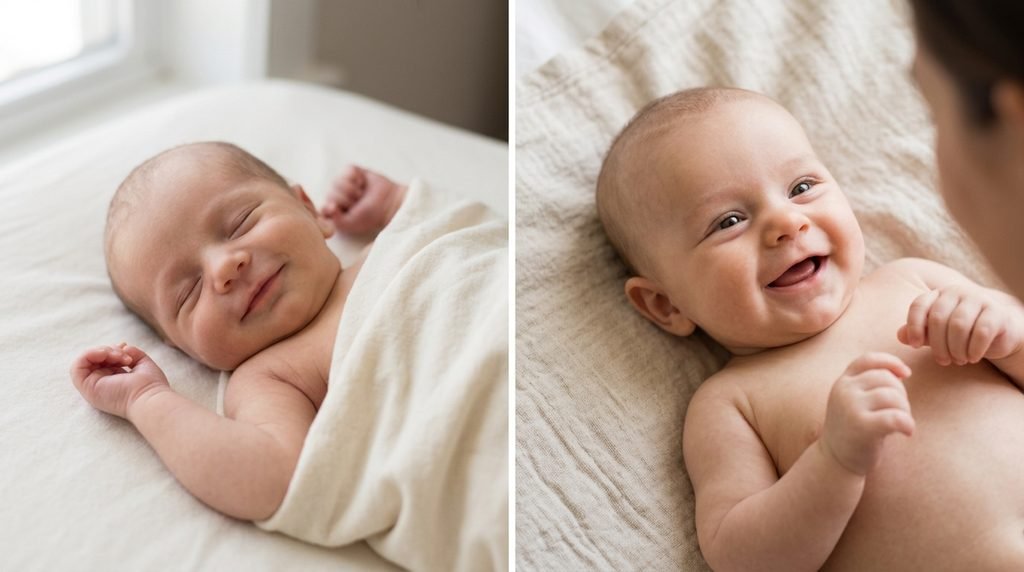
A true social smile is a different thing entirely. It’s intentional, it happens while your baby is awake and alert, and it’s a genuine response to something usually your face, your voice, or an interaction they enjoyed. This shift from reflex to social smiling reflects real developmental progress: your baby’s vision is sharpening enough to recognize faces, and the emotional and social parts of their brain are coming online in a new way.
Is It Really Just Gas?
You’ve probably already heard this one: “Aww, that’s not a real smile, that’s just gas.” It’s such a common thing to say to new parents that it’s worth addressing directly and the honest answer is, it depends on when you’re seeing it.
In the very early weeks, a fleeting, sleepy smile absolutely could be reflexive, sometimes tied to normal bodily sensations like passing gas. But once your baby starts reliably smiling while awake, in response to your face or voice, that’s not gas that’s real social engagement, and it deserves to be treated as such. Don’t let the gas joke talk you out of believing your baby is genuinely responding to you once those social smiles start showing up.
When Do Babies Start Smiling? The Real Timeline
Most babies show their first true social smile somewhere between 6 and 8 weeks old, though anywhere from 4 to 12 weeks is considered completely normal. Pediatricians and public health guidance both treat this as an expected milestone around the 2-month mark it’s actually one of the things your pediatrician will typically ask about at your baby’s 2-month checkup, precisely because it’s such a meaningful indicator of social and emotional development.
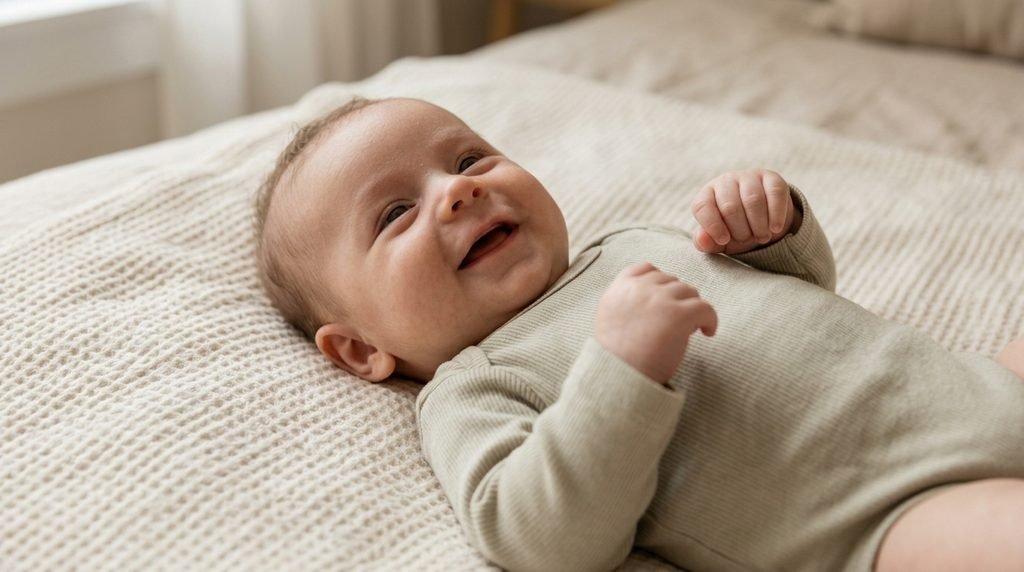
Why does it happen right around this window, rather than earlier? Two things are converging at once. Your baby’s visual acuity is improving enough for them to actually recognize your face clearly, and their brain’s social and emotional circuitry is developing to the point where a positive interaction your smile, a soothing voice, a familiar cuddle can trigger a genuine emotional response. Every time you smile back at your baby during this window, you’re reinforcing that connection, which helps build their confidence that they can meaningfully interact with the world around them.
What Comes Next — Laughing and Beyond
Once social smiling is established, it tends to become more frequent and easier to trigger over the following weeks. The next big milestone on this same trajectory is laughter, which most babies reach somewhere between 4 and 6 months old. Just like with smiling, laughter doesn’t arrive on a fixed schedule some babies are naturally easy to get a laugh out of, while others take more effort, and both are completely normal variations in personality rather than a sign of anything concerning.
When to Check In With Your Pediatrician
Most of the time, this milestone arrives right on its own schedule with nothing for you to do but enjoy it. But a few specific situations are worth mentioning to your pediatrician rather than just waiting it out.
No social smile by around 12 weeks is generally considered the point worth flagging, though it’s not an automatic cause for alarm on its own plenty of babies land a little later than average and are perfectly fine.
If your baby was born prematurely, adjust your expectations based on their due date rather than their birth date. A baby born six weeks early may reasonably reach this milestone six weeks later than a full-term baby would, and that’s not a delay at all once you account for the adjustment.
Look at the bigger picture, not smiling in isolation. If your baby is cooing, tracking your face with their eyes, calming down when you pick them up, and generally seems engaged with the world, a slightly later smile is far less concerning than if smiling is missing alongside several other social cues. If you notice several milestones lagging together, that combination is worth a conversation with your pediatrician sooner rather than later.
How to Encourage Those First Smiles
There’s no special trick required, but a few simple habits genuinely help:
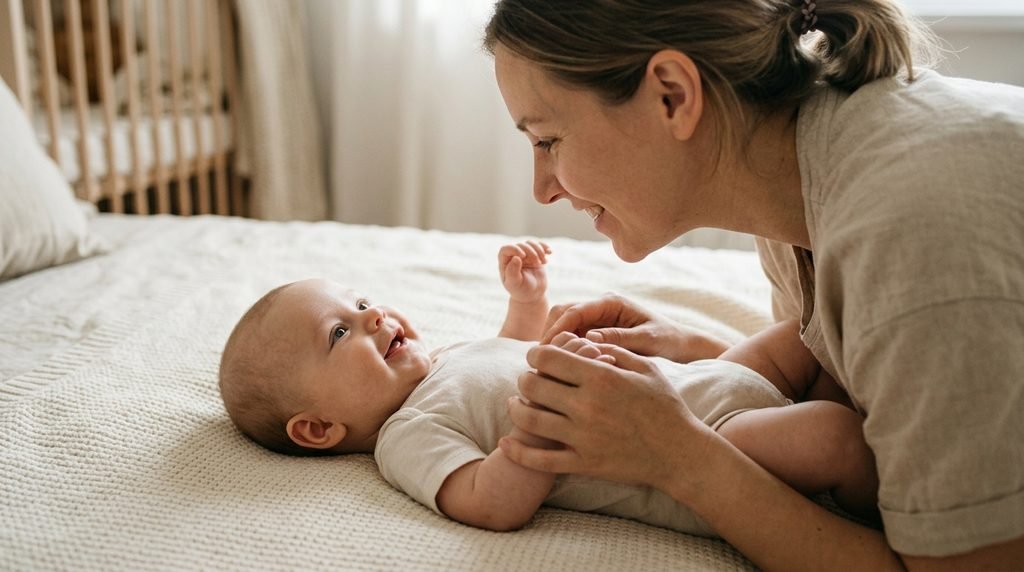
- Get face-to-face often during diaper changes, feedings, and quiet cuddle time. Babies are wired to study faces, and yours is their favorite one to look at.
- Mimic their expressions. If your baby opens their mouth wide or raises their eyebrows, do the same back. This back-and-forth mirroring helps them feel seen and encourages them to keep engaging.
- Use an animated, sing-song voice and exaggerate your expressions while you talk, narrate your day, or sing to them. Your voice is one of the most reliably engaging sounds in their world.
- Be patient with personality differences. Some babies smile easily and often; others need more consistent interaction before they warm up. Neither pattern says anything about how much your baby loves being with you.
Frequently Asked Questions
Can babies really smile in the womb?
Some prenatal imaging research suggests fetuses can make smile-like facial movements before birth, though these are reflexive rather than emotional responses not meaningfully different from the reflex smiles newborns show in the first weeks after birth.
Why does my baby smile more for some people than others?
This is usually just familiarity and comfort. Babies tend to smile more readily for the people they spend the most consistent time with, since recognition and a sense of security both play into how easily a social smile shows up.
Is it normal for my premature baby to smile later than other babies their age?
Yes use their adjusted age, based on their original due date, rather than their actual birth date when thinking about this milestone. A baby born early is simply on a timeline that started later, not a delayed one.
What if my baby smiles a lot but hasn’t started cooing yet?
Every baby develops these skills at a slightly different pace, and smiling reliably a bit ahead of cooing is common and not a cause for concern. If you’re ever unsure, mentioning it at a routine checkup is an easy way to get reassurance either way.
Conclusion
If you’re wondering when do babies start smiling for real, the honest answer is: somewhere between 6 and 8 weeks for most babies, with plenty of normal variation on either side. The early reflex smiles you might catch during sleep are real, just not yet intentional — the genuine, face-lighting, heart-melting version is still on its way, and it’s worth every bit of the wait.
Did your baby’s first real smile catch you off guard, or had you been waiting and watching for it? Either way, it’s one of those moments that tends to stick with you long after the newborn haze has faded.
Related Post:
What to Write in a Baby Shower Card: Ideas & Etiquette
Does Baby Oil Help You Tan? What Dermatologists Say
Why Do Babies Cry in Their Sleep? Causes & What to Do
When Can You Find Out Baby Gender? Reveal Party Timing
Why Do Babies Grunt in Their Sleep? A Complete Parent’s Guide

3 thoughts on “When Do Babies Start Smiling? The Real Timeline”