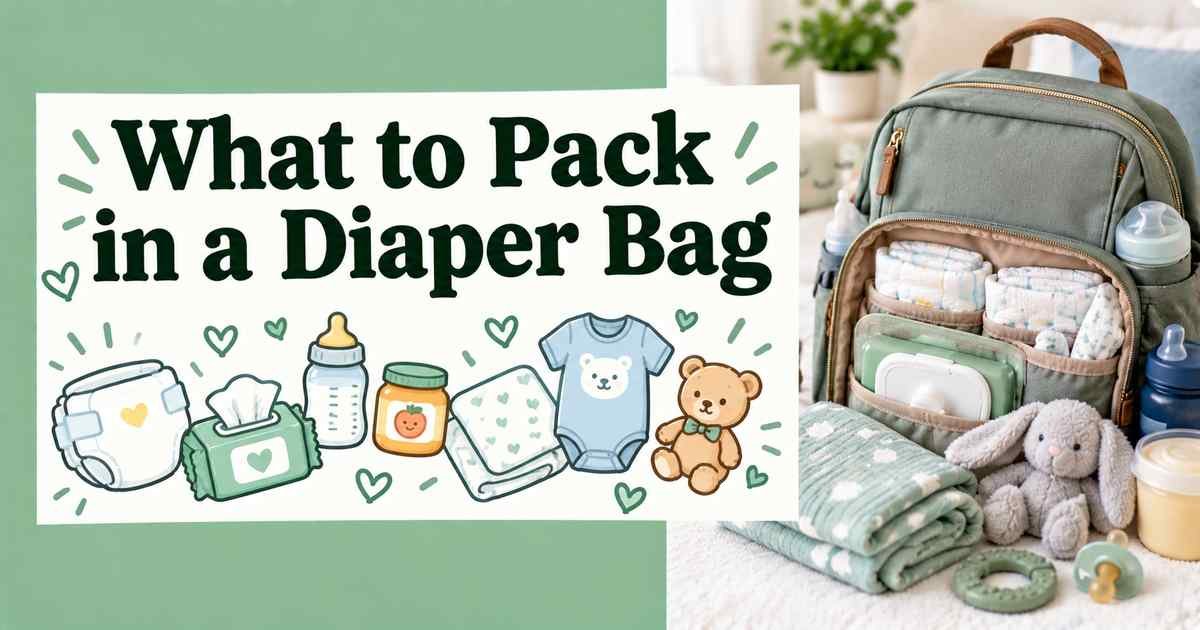
You’re halfway out the door, baby on your hip, and it hits you: did you actually grab the wipes, or are they still sitting on the changing table? Every parent has lived some version of this moment, usually at the worst possible time, in the parking lot of a restaurant or three exits from the nearest gas station.
Figuring out what to pack in a diaper bag doesn’t have to be a guessing game every time you leave the house. Once you build a system and stick to it, packing becomes something you do on autopilot instead of something that eats up ten stressful minutes before every outing. This guide walks through every category worth stocking, from the obvious diapering basics to the small extras experienced parents swear by, so you can build a bag that actually works for your family.
Why a Well-Packed Diaper Bag Matters
A diaper bag isn’t just a place to stash supplies. It’s the difference between handling a blowout calmly in a restroom and standing there with nothing to work with while your baby cries.
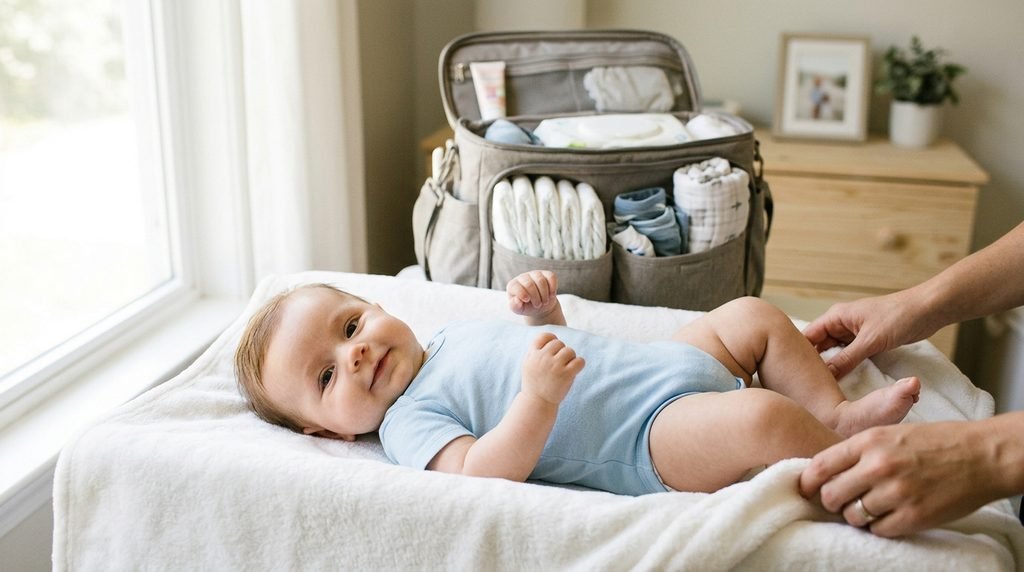
Babies are unpredictable by nature. They don’t wait for a convenient moment to need a feeding, a diaper change, or a fresh outfit, so the bag traveling with you has to be ready for whatever the outing throws at it. A thoughtfully packed bag also takes pressure off you. Instead of mentally scrambling through “what did I forget,” you can hand the bag to any caregiver, whether that’s a partner, a grandparent, or a babysitter, and trust that it’s stocked the same way every time.
Diapering Essentials
This is the category that gets used the most, so it deserves the most attention when you’re deciding what to pack in a diaper bag.
Diapers and How Many to Pack
A simple rule many parents use is one diaper for every one to two hours you expect to be out, plus a couple extra for insurance. For a half-day outing, that usually lands somewhere around five to eight diapers. Newborns go through diapers especially fast, sometimes needing a change every two to three hours, so err on the side of packing more rather than less until you know your baby’s rhythm.
Wipes
Pack a travel-size pack of unscented, fragrance-free wipes. Babies have sensitive skin, and scented wipes are one of the more common causes of irritation on the go. Wipes also pull double duty for sticky hands, spit-up on a sleeve, or a quick wipe-down of a shopping cart handle.
Diaper Rash Cream
A small travel tube of diaper rash ointment takes up almost no space and saves you from a painful surprise later. Skin that’s been sitting in a damp diaper for a few extra hours during a long outing is more prone to irritation, so having cream on hand lets you treat it immediately instead of waiting until you’re home.
Portable Changing Pad
Public changing stations are not always clean, and sometimes there isn’t one at all. A foldable, wipeable changing pad gives your baby a consistent, hygienic surface whether you’re in a restroom, the back seat of the car, or on a park bench. Following good hygiene habits during each change, including washing your hands before and after, is a routine the CDC recommends to help prevent the spread of germs at home just as much as it applies out and about.
Disposal Bags
Small scented or unscented plastic bags, or a reusable wet bag, keep a soiled diaper from turning your whole bag into a problem until you find a trash can. These are also handy for stashing a soiled outfit after a blowout.
Feeding Essentials
Whatever your feeding routine looks like, this part of the list is where knowing what to pack in a diaper bag really pays off, since a missed feeding item is the fastest way to turn a calm outing into a stressful one.
Bottles, Formula, or Breastmilk
If you’re formula feeding, pack pre-measured formula in a dispenser along with one or two clean bottles and water for mixing. If you’re using pumped breastmilk, an insulated pouch or small cooler pack keeps it at a safe temperature until feeding time. Breastfeeding parents may still want a lightweight cover or a spare bottle for backup, depending on personal preference.
Snacks and Water
For babies eating solids, a few mess-proof pouches or a small container of finger foods can rescue an outing that’s running longer than planned. Don’t forget water for yourself either; a full water bottle for the parent is one of those small items that’s easy to skip and hard to do without once you’re out and thirsty with your hands full.
Bibs and Burp Cloths
Two or three burp cloths handle spit-up, drool, and general mess without you having to dig for a napkin. A bib or two protects whatever outfit your baby is wearing, especially during solid-food feedings away from home.
Comfort and Backup Clothing
Messes happen fast with babies, so backup clothing earns its spot near the top of the list.
Extra Outfits
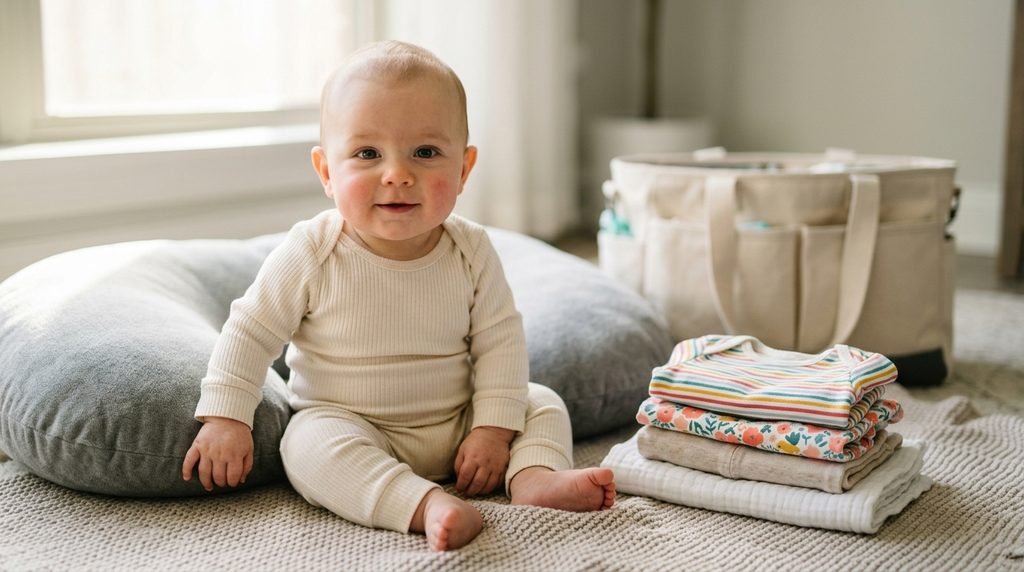
Pack one to two complete changes of clothes, including socks. Blowouts and spit-up rarely announce themselves in advance, and having a full outfit ready means you’re not stuck improvising with just a spare onesie. As your baby moves from newborn to toddler, this can shrink from full outfits down to a single spare top for smaller, more predictable messes.
Swaddle, Hat, and Socks
A lightweight swaddle or small blanket works for warmth, sun cover, or a makeshift changing surface in a pinch. A hat helps regulate temperature and, depending on the season, doubles as sun protection.
Health and Hygiene Items
These items don’t get used on every outing, but when you need them, nothing else will do.
Small First Aid Kit
A compact kit with adhesive bandages, antiseptic wipes, and any regularly prescribed medication covers the small bumps and scrapes that come with an increasingly mobile baby. Keep it small enough that it doesn’t eat up space you need elsewhere in the bag.
Hand Sanitizer
Public spaces mean public germs, and you won’t always be near a sink. A travel-size hand sanitizer clipped to the outside of the bag means it’s within reach the second you need it, whether that’s before a feeding or right after a diaper change.
Nasal Aspirator
For younger babies especially, a nasal aspirator or nose sucker can be a lifesaver if congestion hits mid-outing, letting you clear their nose enough to keep them comfortable until you’re back home.
Extras Worth the Space
Once the essentials are covered, a few extras make outings noticeably smoother, and they’re often the items new parents forget to consider when first working out what to pack in a diaper bag.
- Pacifier: One clean pacifier, kept in its own small case, can settle a fussy baby faster than almost anything else in the bag.
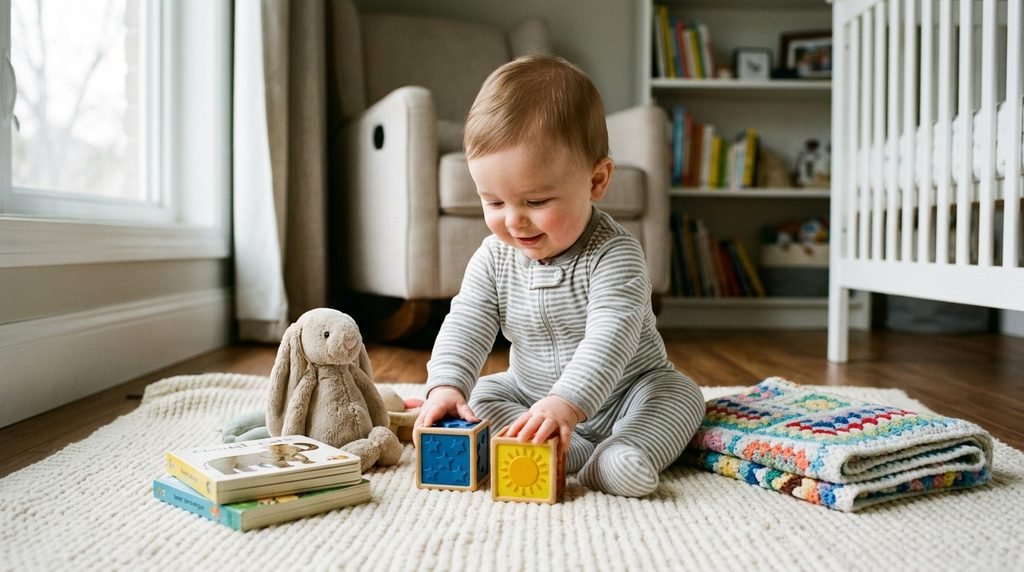
- Toys or teethers: A single small toy or teether goes a long way toward keeping an older baby occupied during a longer wait, such as a pediatrician’s office or a delayed flight.
- Sunscreen: For babies over six months, a travel-size sunscreen is worth packing for outdoor time. For infants younger than six months, the FDA and the American Academy of Pediatrics recommend keeping babies out of direct sunlight rather than relying on sunscreen, so lean on shade, a stroller canopy, and lightweight covering clothing instead.
Don’t Forget These for Yourself
It’s easy to pack everything for the baby and forget that you’re going to need a few things too. Your phone, wallet, keys, and a form of ID or insurance card belong in the bag, along with a small snack for yourself. Long outings with a baby have a way of running past mealtimes without warning, and a granola bar tucked in a side pocket can keep you functioning until you can sit down properly.
Choosing and Organizing the Bag Itself
What you pack matters, but so does the bag holding it all.
Tote vs. Backpack
Totes offer wide-open access, which some parents prefer for fast, one-handed digging. Backpacks distribute weight across both shoulders, which becomes more valuable the longer and heavier your outings get, especially once you’re also carrying a toddler. Neither style is objectively better; it comes down to how you move through your day.
Using Pouches and Restocking
Small zippered pouches inside the main bag turn a chaotic jumble into organized categories, one for diapering, one for feeding, one for extras. This also means you can find what you need one-handed while holding a squirming baby with the other. A habit worth building early is restocking the bag as soon as you get home from an outing, not the night before your next one. Doing it immediately, while the bag is already open and the depleted items are fresh in your mind, means you’re never caught off guard by a bag that’s quietly been running low for a week.
How the List Changes: Newborn vs. Toddler
What to pack in a diaper bag for a newborn and what to pack for a toddler look noticeably different, even though the underlying categories stay mostly the same.
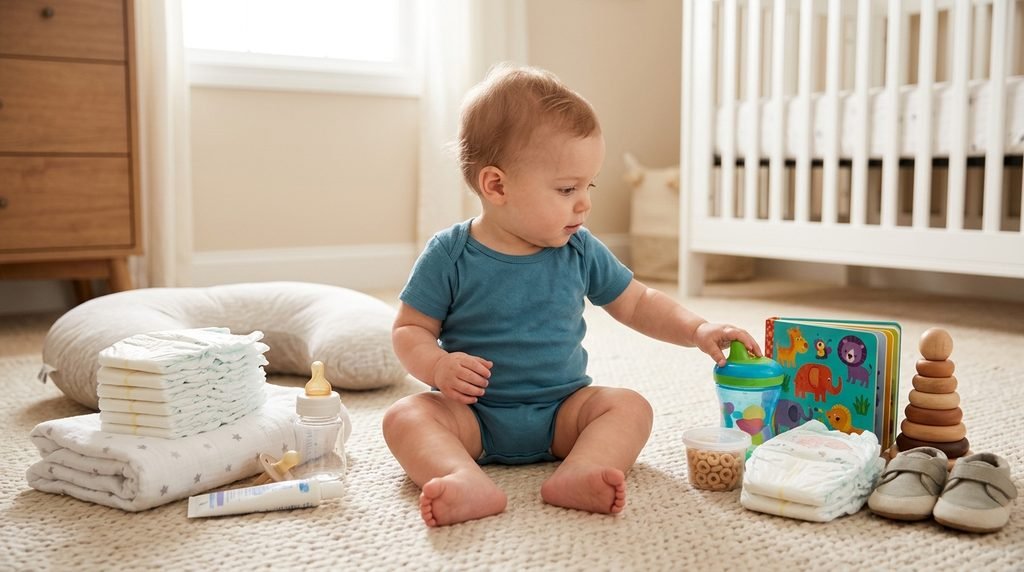
Newborns need more frequent diaper and outfit changes, smaller diaper sizes, and feeding supplies packed for shorter, more frequent feeds. As your baby grows into the toddler stage, you’ll likely swap some of that space for snacks, a favorite small toy, and fewer full outfit changes since toddlers are generally more predictable with messes than newborns. The list also shifts seasonally. Summer months call for sunscreen (for babies over six months) and a light hat, while colder months mean swapping in an extra warm layer and skipping the sunscreen altogether.
Frequently Asked Questions
How many diapers should I pack in a diaper bag?
A good starting point is one diaper per hour or two you’ll be out, plus two extras for unexpected delays. For a typical half-day outing, that usually works out to five to eight diapers, with newborns needing more frequent changes than older babies.
What’s the difference between a diaper bag and a hospital bag?
A hospital bag is packed once for the delivery stay and includes items for both parent and baby during those first days. A diaper bag is a reusable, everyday bag restocked continuously for outings after you’re home, focused specifically on diapering, feeding, and quick-response supplies.
Do I still need a diaper bag if my stroller has storage?
Yes. Stroller storage is convenient but limited, and you’ll want your essentials organized and accessible even when you’re not using the stroller, such as in a car, at a restaurant table, or during a quick errand where you’re carrying your baby instead of pushing them.
How often should I restock my diaper bag?
Right after every outing, rather than right before the next one. Restocking immediately, while the depleted items are still fresh in your mind, is what actually prevents that sinking feeling of reaching for wipes that aren’t there.
Conclusion
Once you know what to pack in a diaper bag, the whole routine comes down to covering four areas every single time: diapering, feeding, backup clothing, and a handful of health and comfort extras. Once you’ve built your own version of this list and packed it a few times, it stops feeling like a chore and starts feeling like second nature, the same way grabbing your own keys and wallet does before you leave the house.
Start with the categories above, adjust the quantities to match your baby’s age and your typical outing length, and restock right after each trip so you’re always ready for the next one. What’s the one item you can’t leave the house without? You’ll probably find it’s already somewhere on this list.
Related Post:
TOG Sleep Sack Guide: How to Choose the Right Warmth for Your Baby
When Should Babies Wear Shoes? 5 Safe, Essential Tips
Why Do Some Babies Wear Helmets? 7 Simple, Essential Facts
When Can You Find Out Baby Gender? Reveal Party Timing
Why Do Babies Grunt in Their Sleep? A Complete Parent’s Guide
