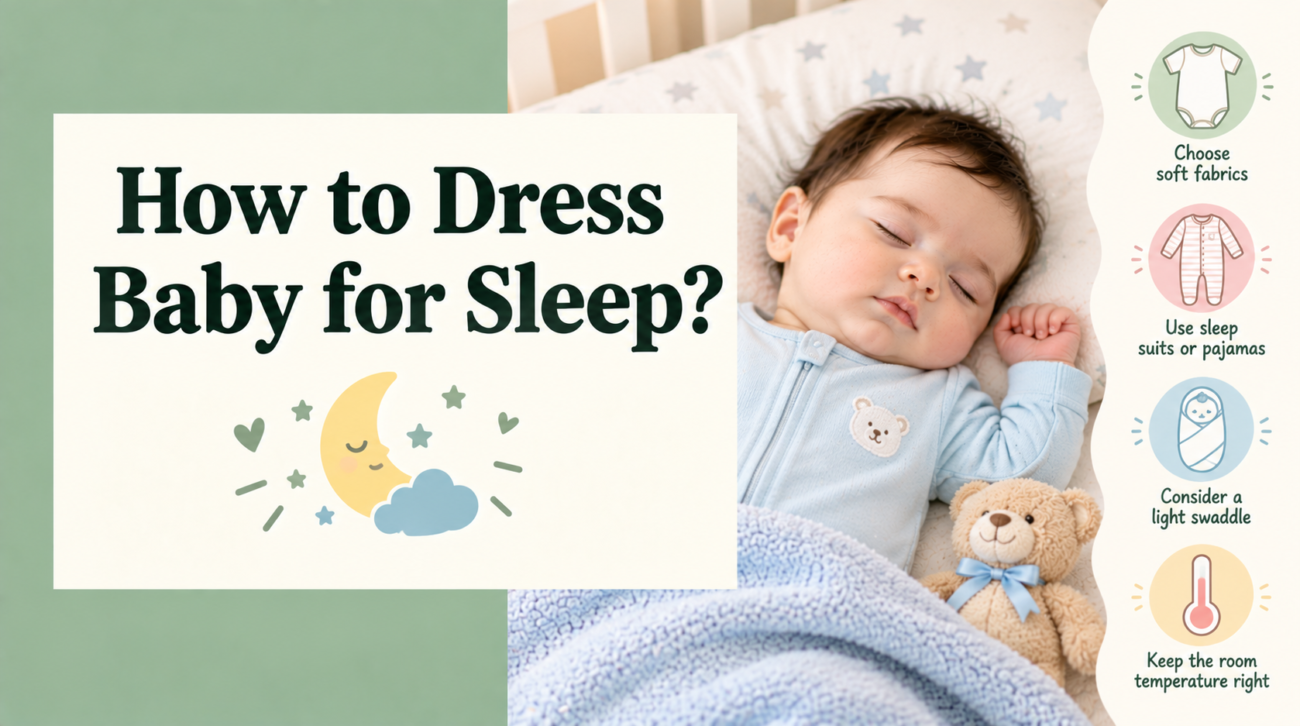
You’re standing in a dark nursery at 9 p.m., onesie in one hand, footed sleeper in the other, genuinely unsure which one is right for tonight. It’s a strangely common moment figuring out how to dress baby for sleep feels like it should be simple, right up until you’re the one making the call in real time with a tired baby waiting.
Here’s the short version, and then we’ll get into the specifics that make it easy to stop second-guessing yourself.
Quick answer:
Dress your baby in about one more layer than you’d need to be comfortable in that same room nothing more. Check their chest, neck, or back (not their hands or feet) to confirm they’re warm but not sweaty, skip anything loose like blankets, hats, or hoods, and lean toward a wearable sleep sack or swaddle instead of layering with loose bedding.
The One Rule That Covers Most Nights
If you remember nothing else from this guide, remember this: dress your baby the way you’d dress yourself for that room, plus one light layer. If you’d be comfortable in a t-shirt and use a sheet, your baby is probably comfortable in a onesie under a lightweight swaddle or sleep sack. If you’d want a long-sleeve shirt and a blanket, your baby’s version is a long-sleeve onesie, footed pajamas, and a slightly warmer sleep sack.
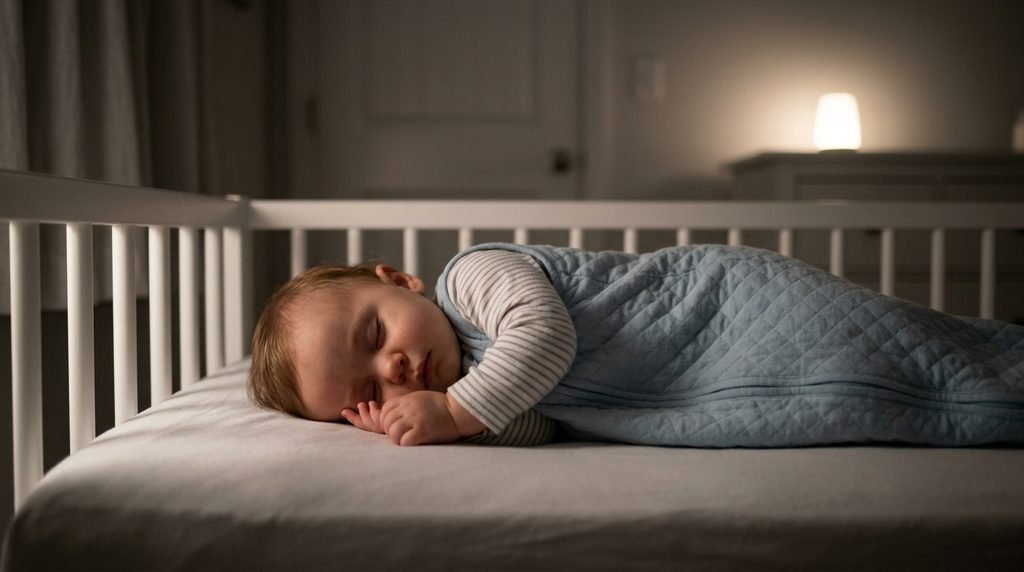
This rule works because it forces you to actually think about the room, rather than guessing based on the calendar. A nursery that runs warm in January doesn’t need winter-weight sleepwear just because it’s winter outside, and a room with air conditioning running hard in July might need more than you’d expect for summer.
What TOG Means and Why It’s Worth Knowing
If you’ve shopped for a sleep sack recently, you’ve probably noticed a number followed by “TOG” on the label. TOG stands for Thermal Overall Grade, and it’s simply a measure of how much warmth a piece of sleepwear provides the higher the number, the warmer the fabric.
Matching the TOG rating to your actual room temperature takes most of the guesswork out of dressing your baby for sleep. Here’s a general reference:
| Room Temperature | TOG Rating | What to Add Underneath |
| Above 75°F | 0.2–0.5 TOG | Diaper only, or a light onesie |
| 72–75°F | 0.5–1.0 TOG | Short-sleeve onesie |
| 68–72°F | 1.0–2.5 TOG | Long-sleeve onesie or lightweight pajamas |
| 64–68°F | 2.5 TOG | Long-sleeve onesie plus footed pajamas |
| Below 64°F | 3.5 TOG | Footed pajamas plus long-sleeve onesie underneath |
The general target range for a baby’s room is 68–72°F, which keeps most babies comfortable in a mid-weight sleep sack without much fuss. If your nursery runs consistently warmer or cooler than that, adjusting the TOG rating is a much better solution than piling on extra loose layers or blankets.
The Two-Step Overheating Check
Overheating is worth taking seriously NICHD’s Safe to Sleep guidance notes that overheated babies face a higher risk of SIDS and heat-related death so it’s worth having a quick, reliable way to check rather than guessing.
Step one: touch the core, not the extremities. Feel your baby’s chest, neck, or back. Hands and feet run naturally cooler than the rest of the body and aren’t a reliable indicator either way, so use them as a last resort, not your main check.
Step two: look for the visible signs. A sweaty neck or damp hair, flushed cheeks, or a chest that feels clammy or hot to the touch are all signs your baby has a layer too many. If you spot any of these, remove a layer or switch to a lower TOG option rather than waiting it out.
Get into the habit of doing this check once at bedtime and again if you happen to peek in later, and you’ll rarely be caught off guard either way.
Safety Rules for Sleep Clothing
Beyond warmth, a few rules exist specifically because of how they affect a baby’s safety during sleep, not just comfort.
- No hats or headbands indoors. Babies lose a lot of body heat through their head, so a hat that’s fine outdoors in the cold can push them toward overheating once they’re back in a warm nursery.
- Skip anything with strings, ties, or hoods. These pose an entanglement risk in the crib, even on sleepwear that seems otherwise harmless.
- No bibs or teething necklaces during sleep. Both are choking and strangulation hazards once your baby is unsupervised in the crib.
- Never use weighted sleepwear, weighted sleep sacks, or weighted swaddles. These aren’t recommended for infants at all, regardless of the marketing around “calming” weighted products.
According to HealthyChildren.org, the official parenting site of the American Academy of Pediatrics, overheating is directly linked to an increased risk of SIDS, and dressing your baby in clothing layers or a wearable blanket rather than loose bedding is one of the more effective ways to reduce that risk.
Swaddle, Sleep Sack, or Just Pajamas?
Which category your baby falls into changes what “dressed for sleep” actually looks like.
Newborns who aren’t rolling yet often sleep better swaddled, since it can help ease the startle reflex that tends to wake very young babies. A cotton or muslin swaddle works well precisely because it’s breathable and easy to adjust for warmth.
The moment your baby shows signs of trying to roll over — usually somewhere around 3 to 4 months it’s time to stop swaddling. A swaddled baby who rolls onto their stomach loses the use of their arms to push themselves back up, which turns a helpful sleep tool into a genuine hazard almost overnight.
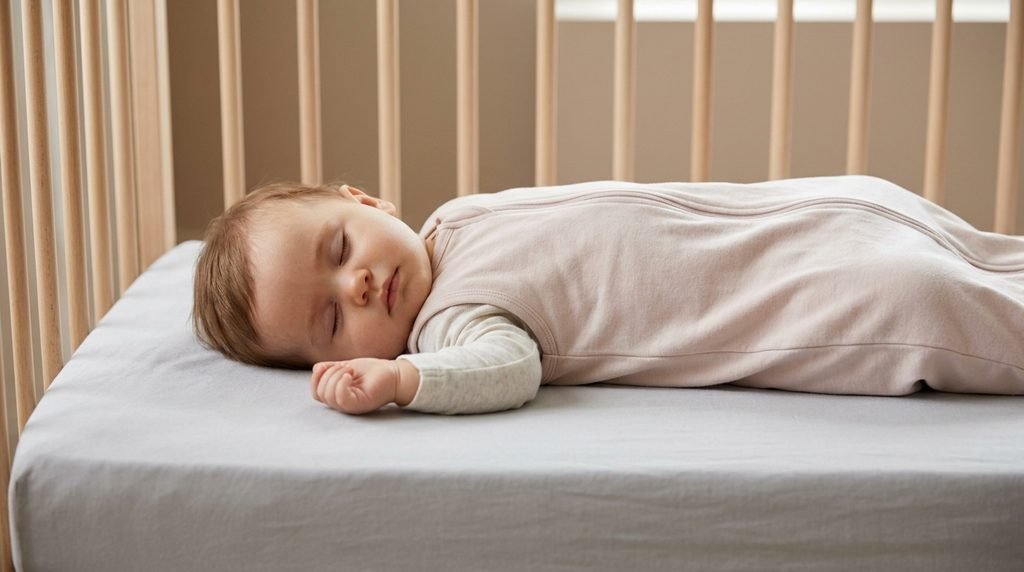
From there, a wearable blanket or sleep sack takes over and can realistically be used from the newborn stage all the way through toddlerhood. It gives the same tucked-in, cozy feeling as a blanket without any loose fabric that could shift over your baby’s face.
Underneath either option, a simple onesie, footed sleeper, or open-bottom baby gown does the job gowns are especially handy in the very early weeks, since they make middle-of-the-night diaper changes a lot faster.
How to Dress Baby for Sleep During a Fever
This is the situation that catches a lot of parents off guard, because the instinct when a baby feels hot is almost always to bundle them up more. Do the opposite. On a feverish night, dress your baby in a single light, breathable layer a diaper and a lightweight cotton onesie, or a low-TOG sleep sack rather than adding extra clothing to “sweat it out.”
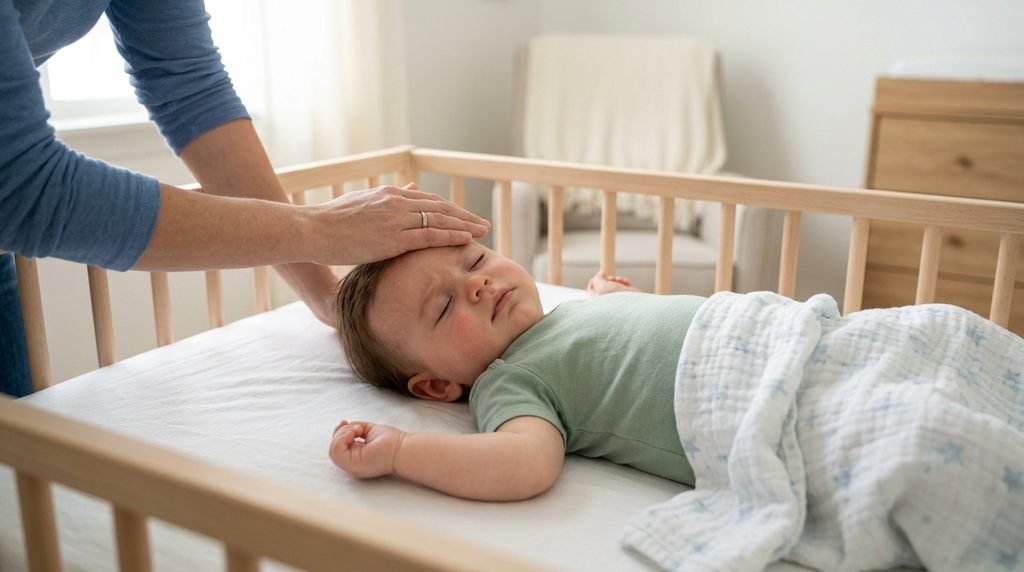
Extra layers trap heat a feverish body is already struggling to release, which can push the fever higher rather than helping it break. At the same time, don’t strip your baby down to nothing either a sudden drop in skin temperature can trigger shivering, which paradoxically drives body temperature back up. One light layer, adjusted based on the room rather than the number on the thermometer, is the safest middle ground.
If your baby is under 3 months old and has any fever at all, or an older baby has a high or persistent fever alongside other symptoms, that’s a call to your pediatrician rather than a clothing decision to handle solo.
Frequently Asked Questions
Should I put a hat on my baby to sleep, even in a cold nursery?
No hats are meant for outdoor cold, not indoor sleep. A baby’s room should already be kept in a comfortable range, and a hat indoors risks pushing them toward overheating rather than protecting them from cold.
What if my baby’s hands or feet feel cold at night?
That’s usually normal and not a reliable sign of anything. Circulation naturally runs cooler in the extremities, so check the chest, neck, or back instead before deciding your baby needs another layer.
Can I use a regular blanket once my baby is older?
Wait until at least 12 months, and look for developmental signs like rolling both ways and pushing objects away with real strength before introducing one. Before that, a wearable blanket or sleep sack does the same job more safely.
Do the same rules apply for daycare naps?
Yes a good daycare should be following the same safe-sleep guidance for naps as you use at home, including no loose blankets, hats, or weighted sleepwear for babies under 12 months. It’s worth asking directly what their nap-time policy is if you’re ever unsure.
Conclusion
Once you’ve got the basics down, how to dress baby for sleep stops being a nightly guessing game. Aim for one layer more than you’d wear, match the TOG rating to the actual room temperature rather than the season, check the chest and neck instead of the hands, and skip anything loose, weighted, or accessory-like in the crib. On a feverish night, resist the instinct to bundle up and go lighter instead. Get that routine down, and the dark-nursery, onesie-in-one-hand moment stops feeling like a decision at all.
What’s your go-to setup for your baby’s nursery swaddle, sleep sack, or something in between? It’s one of those small routines that tends to change a few times before it finally sticks.
Related Post:
When Can Babies Breathe Through Their Mouth? A Parent’s Timeline
Does Baby Oil Help You Tan? What Dermatologists Say
When Can Babies Have Blankets? The Safe Sleep Timeline

2 thoughts on “How to Dress Baby for Sleep: Layers, TOG & Safety”