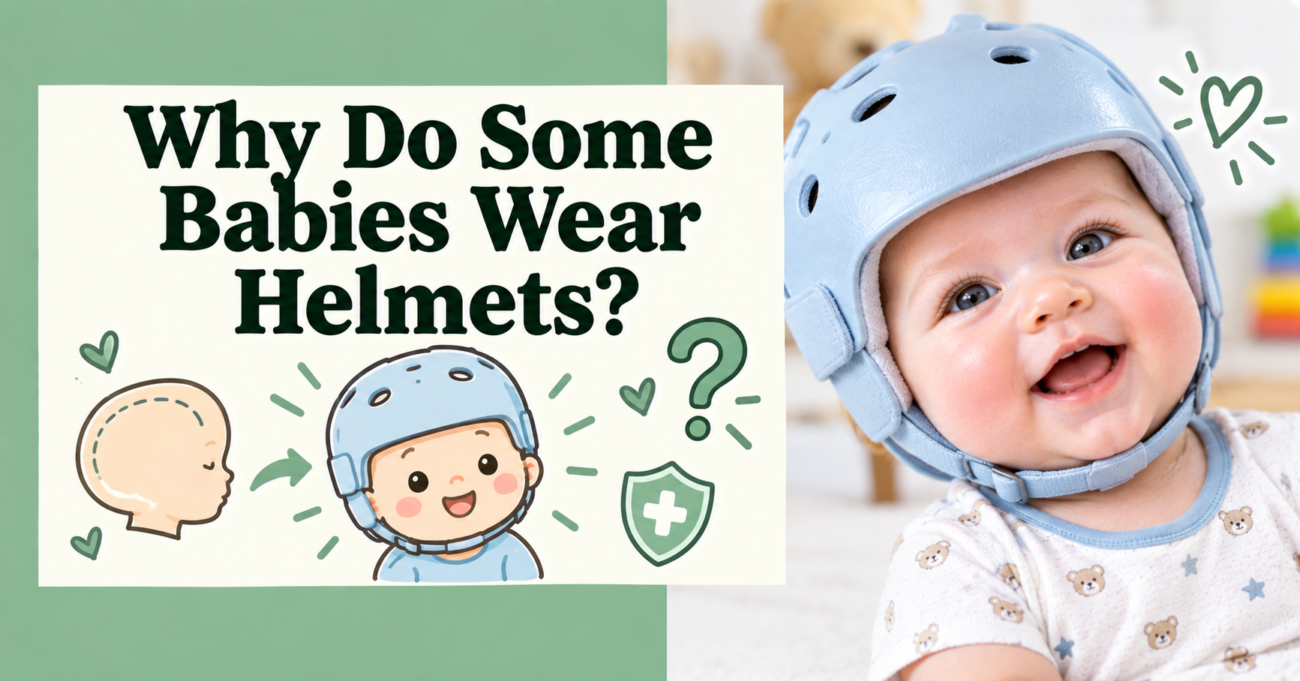
Why do some babies wear helmets? If you’ve ever spotted an infant in a small, sleek shell at the grocery store, you’ve probably wondered the same thing. Babies can’t ride bikes or play contact sports, so crash protection isn’t the point.
The real answer is more interesting. These are custom medical devices called cranial orthoses. They guide the shape of a baby’s head while the skull is still soft and growing fast. Most often the reason is a flat spot. Less often, it’s a condition where the skull bones join too early.
If a doctor just used the word “helmet” about your own baby, take a breath. Flat spots are common, and small ones are normal. Many parents blame themselves, but head shape has many causes, and few of them are anyone’s fault.
In this guide from Zayapol, you’ll learn what helmets treat, how therapy works, what it costs, and how to decide alongside your pediatrician.
Quick Takeaways
- A baby helmet reshapes the head. It doesn’t protect against falls.
- Most helmets treat flat head syndrome, and a smaller number follow surgery for craniosynostosis.
- Many flat spots improve with repositioning and tummy time, so a helmet is often a choice rather than a given.
- The usual window is about 4 to 8 months, with roughly 23 hours of wear a day for a few months.
- Costs and insurance coverage vary widely, so ask before you commit.
Why Do Some Babies Wear Helmets? The Short Answer
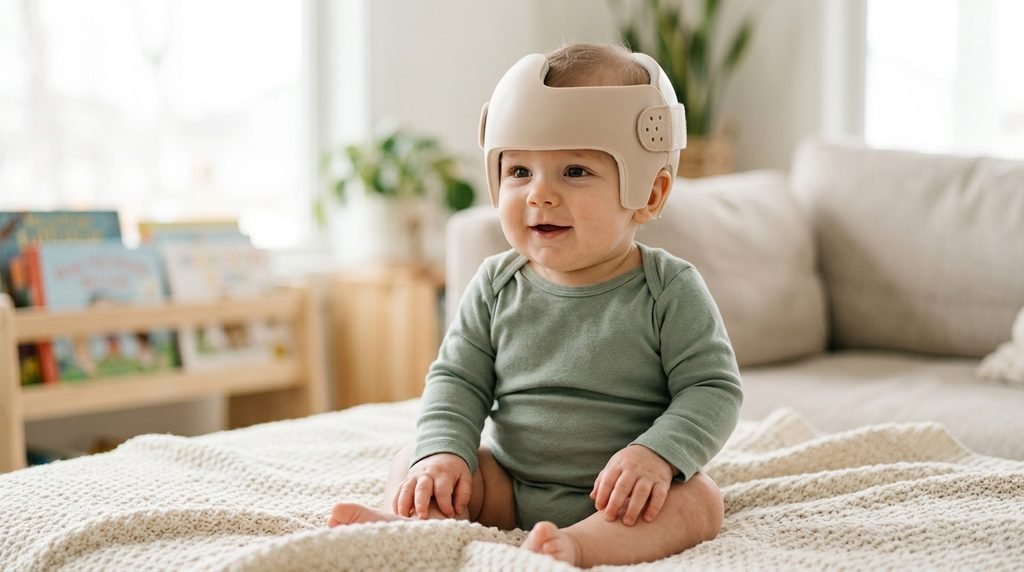
Some babies wear helmets because their heads have become flattened or uneven. A custom-made band or helmet can steer growth toward a rounder, more even shape. Doctors call this helmet therapy or cranial orthosis. It’s a treatment for head shape, not a safety accessory.
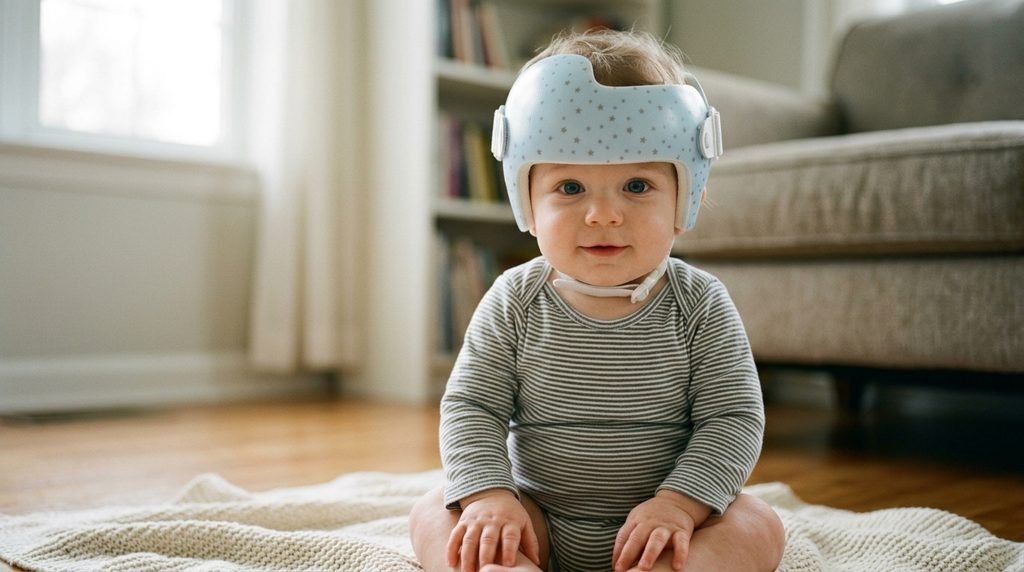
To see why it works, start with the skull itself. A newborn’s skull isn’t one solid bone. It’s a set of flexible plates joined by seams called sutures, with a soft spot called a fontanel where several plates meet. That flexibility helps a baby pass through the birth canal, and it leaves space for the brain, which grows quickly during the first year. The trade-off is that a soft skull can be shaped by steady pressure, such as lying on one spot for hours.
A baby’s helmet looks nothing like a bicycle helmet on the inside. Inside, you’ll find a hard outer shell and a foam lining, and a scan or mold of your baby’s own head guides its shape. The helmet leaves extra room over flat areas and fits snugly over rounder ones, so growth flows toward the empty space. It won’t cushion a fall. So why do some babies wear helmets if not for protection? For shape, and only for shape.
Here’s the part parents most want to hear. Cleveland Clinic says the goal is to improve appearance. The American Academy of Pediatrics adds that a positional skull deformity doesn’t affect a child’s brain development. The main exception is craniosynostosis, which we’ll cover next.
The Conditions Behind Baby Helmets
So why do some babies wear helmets for one condition and not another? Two groups explain most cases. Positional skull deformities are common and usually cosmetic, while craniosynostosis is rarer and medical. Knowing which one applies changes the whole plan.
Positional plagiocephaly and brachycephaly
Positional plagiocephaly, often called flat head syndrome, means one side of the back of the head is flatter than the other. The forehead may look more prominent on one side, and the ears can look uneven. Brachycephaly is the wider version. The whole back of the head is flat, so the head looks broad and short. A third pattern, dolichocephaly, gives a long, narrow head.
All three come from pressure, not disease. A baby who spends hours in one position, whether asleep, in a car seat, or in a swing, can develop a flat area. The condition usually causes no pain and no symptoms beyond the shape itself.
Craniosynostosis and helmets after surgery
Craniosynostosis means one or more skull sutures close too early. Because the skull can’t expand normally, the head takes on an unusual shape as the brain grows. In some cases, brain growth is affected too. Doctors watch for a raised, hard ridge along a suture, a missing or unusual soft spot, or head growth that looks off.
This condition typically needs surgery, and some babies wear a helmet afterward to fine-tune head shape. A helmet alone doesn’t fix it. If you notice a firm ridge, slowing head growth, vomiting, or developmental worries, ask your pediatrician for an exam promptly.
Torticollis and tight neck muscles
Torticollis means the neck muscles are tight or shortened, so a baby prefers to turn the head one way. As a result, the same patch of skull takes more pressure. Pediatricians usually spot it in the first weeks of life.
Treatment starts with physical therapy, not a helmet. Cleveland Clinic notes that some babies with torticollis see a physical therapist for much of their first year. That protects both movement and head shape.
Why More Babies Wear Helmets Than Ever
Why do some babies wear helmets now when few did a generation ago? Mostly because more babies sleep on their backs, and that’s a good thing. Since the early 1990s, pediatric guidance has been to place infants on their backs to sleep. That lowers the risk of sudden infant death syndrome (SIDS). The campaign is now called Safe to Sleep, and pediatricians still stand behind it. The side effect is more pressure on the back of the head, so flat spots became more common.
Please keep following safe sleep advice. Don’t turn your baby onto the side or stomach to prevent a flat spot, because the SIDS risk matters far more. Instead, change head position while your baby is awake and supervised. Our guide to safe sleep basics covers the essentials.
Awareness plays a part too. Flat head syndrome gets diagnosed more often now, and tools like 3D scanning have made helmet therapy easier to access. As a result, more families get an evaluation. One children’s hospital blog credits both for some of the rise.
Other factors raise the odds. A tight space in the womb, a difficult delivery, prematurity, twins, or a breech position can all lead to an uneven head. It may show at birth or soon after. Premature babies have softer skulls and often spend more time lying down in the hospital.
Estimates of how common flat spots are vary widely. One report puts it at roughly one in five babies under 6 months, while others say nearly half of young infants. Treat any single number with caution.
Does Every Flat Spot Need a Helmet?
No. Then why do some babies wear helmets while others with similar flat spots don’t? The difference comes down to severity, age, and how the head responds to simpler steps. Hospital guidance consistently puts those simpler steps first.
They’re easy to start at home. Change which end of the crib your baby’s head rests at, so your baby looks toward different sides. Offer supervised tummy time while awake, and check out our tummy time guide for ideas. Limit long stretches in swings and bouncers, and use a carrier or your arms for extra holding. Of course, always use the car seat for travel.
A helmet enters the picture when the flattening is moderate to severe, or when position changes and physical therapy haven’t helped. The American Academy of Pediatrics also lists an older baby among the reasons a doctor may prescribe one. That’s where timing matters as much as severity. Here’s a simple way to picture it, based on patterns pediatric sources describe. Your baby’s doctor makes the actual call.
| Baby’s age | What usually happens | What to know |
| Birth to about 3 months | Repositioning, tummy time while awake, physical therapy if the neck is tight | Most guidance says this is too young for a helmet |
| About 3 to 4 months | Simple steps continue while your pediatrician tracks progress | Helmets are generally still too early |
| About 4 to 8 months | Prime window if flattening is moderate to severe and not improving | The skull grows fast, so results tend to come sooner |
| About 8 to 12 months | Still possible, but treatment often takes longer | Talk to your provider promptly |
| After about 12 months | Head growth has slowed a lot | A helmet no longer meaningfully changes head shape |
So do helmets work? For some babies, yes, with caveats. A 2026 systematic review of helmet therapy found it linked to faster early correction of skull asymmetry, especially in moderate to severe cases. However, it didn’t show a clear long-term advantage over conservative care.
A Dutch randomized trial went further. It followed 84 babies, and half wore custom helmets for about six months. After two years, head shape didn’t differ significantly between the groups. Helmet makers questioned the result, pointing out that many helmets shifted on babies’ heads, and fit matters a great deal.
Other studies are more upbeat. In a Japanese study of 224 infants, asymmetry improved in every severity group. Babies who started before 7 months improved more than later starters. Severity still matters. In a Korean study, a near-full correction happened in about 41 percent of moderate cases but only about 8 percent of severe ones.
What does this mean for your family? A helmet is a reasonable option for moderate to severe flattening that isn’t improving, and it’s a choice, not an obligation. CHOC’s neurosurgery team stresses that helmet therapy is never mandatory, and head shape often gets better with or without one. Appearance is a legitimate reason to choose it, as long as the decision is informed.
What Helmet Therapy Looks Like Day to Day
Why do some babies wear helmets around the clock? Because reshaping only works with steady contact. In practice, that means a custom helmet worn about 23 hours a day for a few months, with regular visits to adjust the fit.
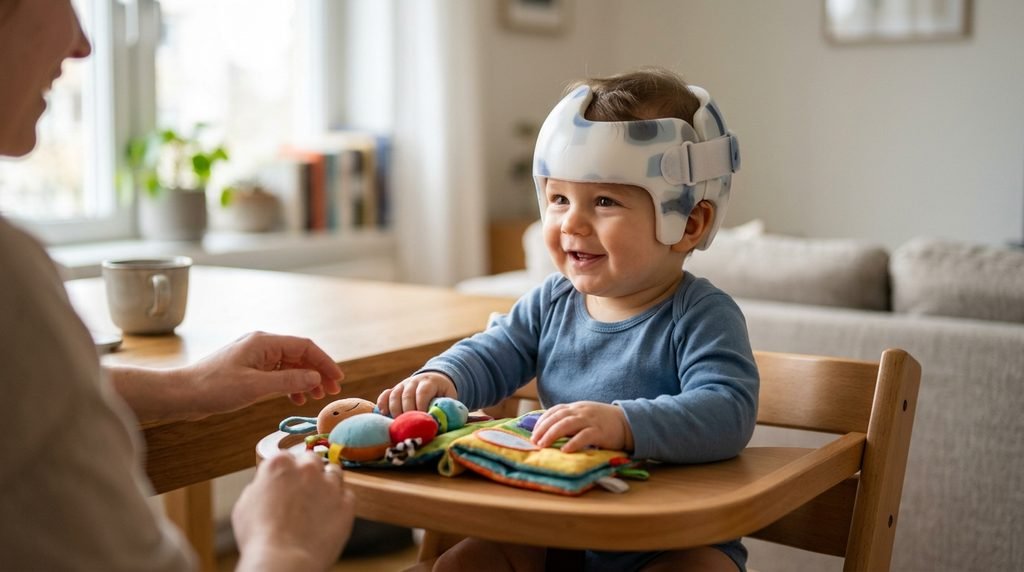
It starts with an orthotist, a specialist trained to measure and fit these devices. They scan your baby’s head in 3D or take a mold, and the helmet arrives with a hard shell and foam lining. Follow-up visits usually come every 3 to 6 weeks, and some babies need a second helmet as they grow.
Nobody expects a baby to wear it all day on the first day. Most schedules begin with an hour or two and add time each day over about a week. Soon your baby wears it through naps and nights, and it comes off for a bath and cleaning. One hospital handout notes that sleep time matters most, since your baby no longer has a flat spot to rest on. Swimming and sand play call for taking it off too.
How long does it take? Sources give different averages, from about three months to four to six months, and severe cases or late starts can run longer. A Korean study summarizing earlier research puts moderate cases at about 6 months and severe ones at nearly 8.
Is it comfortable? It shouldn’t hurt. The lining is soft, the fit is custom, and most babies settle in within a day or two. Some sweat more at first. Wipe the helmet clean daily as your orthotist instructs. One hospital handout suggests a cloth with 70 percent rubbing alcohol. It also says no powders or lotions inside, and the helmet must be fully dry before it goes back on.
Check your baby’s scalp every day. Mild marks that fade within minutes of removing the helmet are normal, but lasting redness isn’t. During bath time, when the helmet is off, take a quick look, and our baby bath tips can make the routine smoother.
Call your orthotist right away for persistent redness, sores, swelling, or a foul smell. The same goes for a helmet that shifts, pinches, or leaves pressure marks. Call as well if your baby cries a lot, refuses to eat, or stops sleeping while wearing it. Fever needs care too. The helmet doesn’t cause fever, but one children’s hospital advises removing it when a baby’s temperature tops 100°F.
There’s a bright side. Many families decorate helmets with stickers or decals, which makes the device feel a little more personal. Later, a rounder head can also help eyeglasses and bike helmets fit better, according to Cleveland Clinic.
Cost, Insurance, and Questions to Ask First
In the United States, helmet therapy often costs somewhere between $1,300 and $4,000, and insurance coverage varies, so ask before you commit. One parent writing for a local news outlet described roughly $2,000 to $3,000 without insurance. Her insurer paid in full but waited about two months to see whether the head would correct on its own.
Why do some babies wear helmets that cost this much? Each one is custom-made, and Cleveland Clinic notes that the price also reflects follow-up visits for adjustments. It advises asking the orthotics company about out-of-pocket costs and whether it’s in your insurance network. Prices change, so treat these numbers as a starting point.
Helmet treatment has also grown into a sizeable business. Parents who’ve written about the experience describe clinics that make and sell the helmet they recommend. A second opinion from a doctor who doesn’t sell helmets is therefore reasonable. Consumer Reports quotes a physician who discourages buying a helmet straight from a store or website without a clinician involved.
Bring these questions to your first orthotist visit:
- What is my baby’s diagnosis and severity, expressed in numbers such as cranial vault asymmetry?
- What could we expect from another month or two of repositioning and tummy time?
- Given my baby’s age and severity, what result is realistic?
- How often will you re-measure, and will you share the numbers at each visit?
- What is the total cost, including adjustments, follow-ups, and a possible second helmet?
- Is your clinic in our insurance network, and who handles the paperwork?
Clear, numeric answers are a good sign. Vague ones are worth a second opinion.
Seeing a Baby in a Helmet: What to Say and Skip
If you see a baby in a helmet, a warm smile is plenty, and a compliment on the stickers is even better. Parents notice stares, and a friendly face makes a big difference.
Skip questions that sound like diagnoses. Asking what’s wrong, guessing why it happened, or remarking that the baby doesn’t look sick can sting. Many parents already wrestle with guilt. One mom described replaying every choice, wondering whether more holding or more tummy time would have changed things, even though she’d done everything right.
Unsolicited advice, like “Have you tried tummy time?”, carries the same hint of blame. If the parent wants to talk, they’ll bring it up. A simple “What a cool helmet” does more good than any tip.
If a child asks, keep it short and kind. You can say the baby has a special helmet that helps their head grow round, and it doesn’t hurt. Then let curiosity turn into an ordinary conversation, not a stare.
Frequently Asked Questions About Baby Helmets
Is a baby helmet painful?
No. When it fits well, helmet therapy shouldn’t hurt. The helmet is custom-made with a soft foam lining, and most babies adjust within days. Ask your orthotist for an adjustment if you see irritation, lasting redness, or unusual fussiness.
Can babies sleep in their helmets?
Yes, and sleep is when the helmet does much of its work. Babies typically wear it about 23 hours a day, including naps and nights, and take it off for baths. Keep following safe sleep rules, with your baby on their back.
How long do babies wear a helmet?
Most babies wear one for roughly 3 to 6 months. Earlier starts tend to finish sooner, while severe cases or later starts can take longer. Your orthotist will measure progress at each follow-up visit.
Why do some babies wear helmets while others with flat spots do not?
The difference usually comes down to severity, age, and response to simpler steps. Mild flat spots often improve with repositioning, tummy time, or physical therapy, so most never need a helmet. Babies with moderate to severe flattening that isn’t improving, or with craniosynostosis after surgery, are fitted most often.
Can an older baby or toddler still get a helmet?
Helmets work best in the first year, while the skull is growing fast. After about 12 months, they no longer change head shape in a meaningful way. If you’re worried, talk to your pediatrician early.
If a helmet doesn’t affect the brain, why do some babies wear helmets?
They wear them to improve head shape, not to change development. A positional flat spot doesn’t harm the brain. Craniosynostosis is different, so doctors examine any unusual ridge, slow head growth, or missing soft spot promptly.
Does insurance cover baby helmets?
Sometimes. Coverage varies by plan, and some insurers want proof that simpler steps didn’t work first. Before you start, ask whether the orthotist is in your network and what you’d owe out of pocket.
Conclusion: What to Remember About Baby Helmets
So, why do some babies wear helmets? To reshape the head, not to protect it. Most are treating a positional flat spot, a few follow craniosynostosis surgery, and many babies with mild flattening never need one. Timing, severity, and honest measurements guide the decision.
If you’re worried about your baby’s head shape, ask your pediatrician to check it at the next well visit. Don’t wait too long, because the window is only a few months wide. For more calm, practical guidance, browse our baby development milestones posts.
Did your baby wear a helmet, or did you see one and wonder? Tell us in the comments what surprised you most.
This article is for general information and doesn’t replace advice from your child’s doctor.
Related Post:
Can Babies Have Allergies? 7 Essential Signs and Safe Steps
When Do Babies Start Smiling? The Real Timeline
Baby’s Skin Is Mottled: Causes and When to Worry
When Can You Find Out Baby Gender? Reveal Party Timing
Why Do Babies Grunt in Their Sleep? A Complete Parent’s Guide

2 thoughts on “Why Do Some Babies Wear Helmets? 7 Simple, Essential Facts”