What age can babies sleep with a blanket? If you’ve ever touched your baby’s cool little toes at night and reached for a blanket, you’re not alone. It’s one of the most common questions new parents ask, and the answer surprises many people.
Here’s the short version. The American Academy of Pediatrics (AAP) says to keep blankets out of your baby’s sleep area during the first year. Most experts agree they pose little risk to healthy babies after 12 months.
In this guide from Zayapol, you’ll learn why blankets are risky early on and five safe ways to keep your baby warm. You’ll also see how to introduce a blanket after the first birthday, plus tips for car seats, strollers, and daycare.
Quick Answer
- The short answer to “what age can babies sleep with a blanket” is not until about 12 months.
- The AAP prefers layers of clothing or a wearable blanket for warmth in the first year.
- Many experts and brands suggest waiting until 12 to 18 months, based on your child’s development.
- Start with a thin, breathable blanket, and try it during supervised naps first.
- Never use weighted blankets, and keep the rest of the crib bare.
What Age Can Babies Sleep With a Blanket? The Short Answer
Babies shouldn’t sleep with a loose blanket in the first year. The AAP recommends keeping soft objects and loose bedding, including blankets, out of the sleep area. That advice covers naps as well as nights.
After 12 months, the picture changes. The AAP’s patient guidance admits that research hasn’t shown exactly when these items become 100% safe. It adds that most experts agree they pose little risk to healthy babies after 12 months.

Is 12 months a magic number for “what age can babies sleep with a blanket”? Not quite. Many sleep experts and brands suggest waiting until 12 to 18 months, and some say closer to 18 months or even later. They’re thinking about motor skills, not just the birthday. A toddler who can roll, sit, and pull up can also push a blanket away from their face.
Why does the line sit at the first birthday? SIDS most often affects babies between birth and 6 months, but deaths can still happen up to 12 months. As babies grow stronger and more mobile, the risk from loose bedding falls. That’s why the AAP’s caution centers on the first year.
Readiness matters more than the calendar. One sign is confident movement in the crib, such as rolling both ways and pulling up. Another is the ability to push things away during play. If your baby still sleeps very still or tends to burrow, wait a little longer.
Until then, your baby won’t be cold. Clothing layers and wearable blankets do the job safely. Our safe sleep guide covers the wider setup.
Why Blankets Are Risky in the First Year
What age can babies sleep with a blanket safely? To answer that, it helps to know what goes wrong early on.
Young babies can’t reliably move a blanket away from their face. The AAP’s 2022 safe sleep policy says soft objects and loose bedding can block a baby’s nose and mouth. Blankets and nonfitted sheets are examples. It also says airway obstruction from these items is the most common way accidental suffocation happens.
Loose bedding includes more than blankets. Pillows, quilts, comforters, and nonfitted sheets all count. Bumper pads count too, and they aren’t recommended because they’ve been linked to suffocation, entrapment, and strangulation.
Movement is the other piece. Babies need to move freely to avoid rebreathing air or getting stuck under fabric. A blanket that looks harmless can ride up during sleep, and a young baby may not be able to fix it. Even a blanket folded in half can add warmth, so it counts as two layers for heat.
The AAP’s bare-crib rule also covers the mattress. Use a tight-fitting sheet made for your crib, and don’t put blankets or pillows between the mattress and the sheet.
Heat is the second concern. Overheating can raise the risk of SIDS, and heavy bedding can add to it. The AAP also advises against hats on babies indoors after the first hours of life, since they can cause overheating.
Weighted blankets, sleepers, and swaddles are a firm no. The AAP doesn’t recommend any weighted object on or near a sleeping infant.
You’ll still see different ages online. Here’s why.
| Source | What it says | Why it differs |
| American Academy of Pediatrics | No loose blankets in the first year, and little risk for healthy babies after 12 months, though research hasn’t fixed an exact age | It bases advice on suffocation and SIDS evidence and admits the limits of the research |
| Sleep brands and sleep coaches | Wait until 12 months, often 12 to 18, sometimes closer to 18 | They add a margin for motor skills and promote wearable blankets |
| Some experts | 18 months to 2 years for full nights | They focus on whether a child can move a blanket away and replace it |
| UK Lullaby Trust | Under 12 months, a sheet or blanket may be tucked in no higher than the shoulders | UK guidance takes a different approach |
If your baby was born early or has a medical condition, ask your pediatrician about the best sleep setup. Some babies need extra caution.
For families in the US, the AAP guidance is the baseline. The tucked-in approach doesn’t match it, and layers or a wearable blanket are simpler and just as warm.
5 Essential Tips to Keep Baby Warm Without a Blanket
So what age can babies sleep with a blanket if they seem cold right now? Not yet, but these five habits keep them warm and safe.
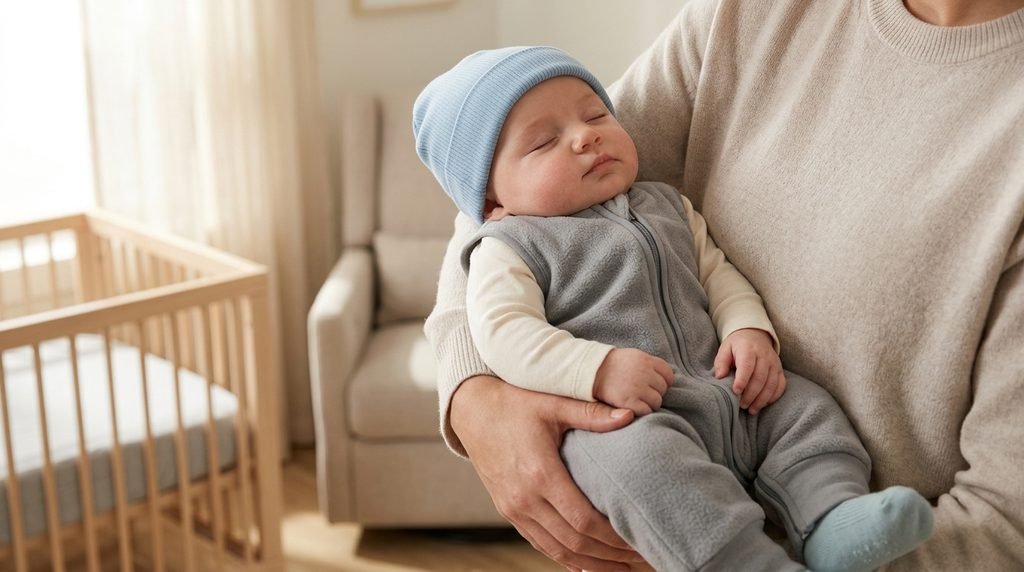
1. Dress your baby in layers
The AAP prefers layers of clothing to blankets, because layers stay on the body and can’t cover the face. A good rule is one more layer than you’d wear in the same room. A long-sleeve bodysuit and footed pajamas cover most nights, and the feet stay warm too.
2. Use a wearable blanket that fits
Wearable blankets, also called sleep sacks, are an AAP-approved option. A 2019 analysis found they’re as safe as, if not safer than, other bedding for preventing SIDS. Look for a snug neck and armholes so the fabric can’t ride up over the face. Roomy legs let the hips move. Skip hoods and weighted versions. Also don’t add a loose blanket on top of a wearable blanket. If your baby seems cool, add a layer underneath or choose a warmer sack. Our sleep sack guide explains sizing.
3. Keep the room comfortable and skip indoor hats
Overheating raises SIDS risk, so aim for a room that feels comfortable to a lightly dressed adult. Many sleep guides suggest about 68 to 72 degrees Fahrenheit. That range comes from sleep-product brands, not the AAP, so treat it as a starting point. Leave hats off indoors. A simple room thermometer takes the guesswork out.
4. Swaddle safely, and stop early
Swaddling is fine for newborns when your baby is on their back, the swaddle isn’t too tight, and the hips can move. Stop as soon as your baby shows signs of rolling. Some babies try as early as 2 months, so watch closely. Then move to an arms-free wearable blanket. The arms stay free so your baby can push up if they roll. Our swaddling guide has the steps.
5. Check the chest, not the hands
Cool hands and feet are normal and don’t mean your baby is cold. Many pediatric guides suggest feeling the chest or the back of the neck instead. It should feel warm and dry, not hot or sweaty. If it feels damp or hot, remove a layer. If it feels cool, add one, or switch to a warmer wearable blanket.
Use this table as a general starting point. It isn’t AAP guidance, so always follow the label on your wearable blanket.
| Room feels | What baby wears | Notes |
| Warm | A short-sleeve bodysuit and a light wearable blanket | Watch for sweating |
| Comfortable | A long-sleeve bodysuit or light pajamas and a standard wearable blanket | The most common setup |
| Cool | Footed pajamas and a warmer wearable blanket | Choose a warmer sack instead of a loose blanket |
| Very cold | Warm the room if you can | Piling on layers raises overheating risk |
How to Introduce a Blanket After 12 Months
Once you’ve answered “what age can babies sleep with a blanket,” the next step is doing it gently. After the first birthday, a blanket becomes an option, not a must.
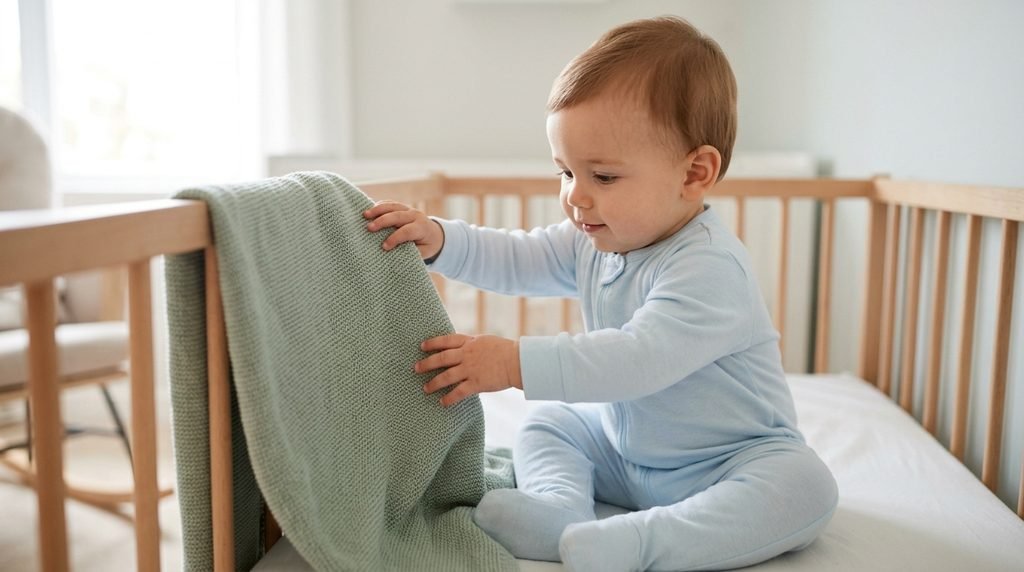
First, check three things. Is your child past 12 months? Can they roll both ways, sit, and pull up with confidence? Can they push or pull things away from their face during play? Three yes answers mean you can start. One expert quoted by a parenting site offers a simple test. If your child can throw a blanket out of the crib on their own, they’re likely coordinated enough to sleep with it. If you’re not there yet, wait a few weeks. Many families wait until 15 to 18 months.
Then follow these five steps.
- Pick thin fabric. Choose a small, lightweight blanket in muslin or thin cotton. A light fabric is easier for a toddler to move than a thick fleece or quilt. Skip comforters and anything weighted.
- Try supervised naps first. Start with naps you can watch, so you see how your child handles the blanket before nighttime.
- Keep the crib otherwise bare. Leave out pillows, quilts, and piles of stuffed animals. The blanket should be the only new item.
- Keep it low. Place the blanket around the legs and lower body, away from the face.
- Watch for a few nights. See whether your child uses it for warmth, plays with it, or bunches it in a corner. Check for sweating too. If the blanket ends up over your child’s face, or they seem unsettled, pause and try again in a few weeks. There’s no prize for going fast.
Loveys follow the same timing. Many children pick a comfort object between 8 and 12 months, according to the AAP’s guidance on transitional objects. Let your baby cuddle it while awake, and wait until after 12 months to put it in the crib. Choose one with no small detachable parts, and make sure it can’t become a step for climbing out. Small is safer here. A lovey-sized square is easier for a toddler to manage than a full crib blanket.
Blankets in Car Seats, Strollers, and Daycare
Parents who ask “what age can babies sleep with a blanket” often forget the car seat, stroller, and daycare. The rules there are different.
In a car seat, bulky clothing and blankets shouldn’t go under the harness. In a crash, fluffy padding flattens and leaves slack, so a child can slip through the straps. The AAP suggests buckling your child in first, then laying a blanket or coat over the harness. Remove any thick coat before buckling. Try the pinch test, too. If you can pinch the strap webbing at your child’s collarbone, tighten it. Use covers that go over the seat, not ones that add padding under your child. Watch for overheating once the car warms up. Our winter car seat safety post has more tips.
Car seats and strollers aren’t safe places for regular sleep. If your baby falls asleep in one, move them to a firm, flat surface as soon as you can. Avoid draping a blanket over a stroller, since it hides your baby’s face and traps heat.
Childcare follows safe sleep rules too. Some programs don’t allow blankets or soft toys in the crib until 12 months. Ask your provider about their policy, and mention your baby’s needs, such as a wearable blanket. Grandparents and sitters may reach for a blanket out of habit, so a quick reminder helps. A short written note works well: back to sleep, bare crib, wearable blanket, no loose items.
Age-by-Age Guide: What Baby Sleeps In
This table shows where the answer to “what age can babies sleep with a blanket” fits in the bigger picture. Treat it as a guide, since babies vary.
| Age | What baby sleeps in | What to know |
| Newborn to about 2 to 4 months | Clothing layers, or a swaddle with arms in | Stop swaddling at the first signs of rolling |
| About 3 to 12 months | Layers plus an arms-free wearable blanket | Bare crib, firm mattress, fitted sheet only |
| 12 to 18 months | A wearable blanket, plus a thin blanket or small lovey once ready | Start with supervised naps |
| 18 to 24 months | A wearable blanket or a thin blanket | Some experts prefer to wait until this window for full nights |
| Toddler bed stage | A thin blanket and a small lovey | Check with your pediatrician if you’re unsure |
Many parents keep a wearable blanket until 12 to 18 months or longer. It doubles as a bedtime cue and keeps little feet from catching in the crib slats. There’s no rush to give it up.
Many families move to a toddler bed around this stage. Our toddler bed transition guide covers that step.
Frequently Asked Questions About Babies and Blankets
Here are quick answers to the questions parents ask right after “what age can babies sleep with a blanket.”
Can a newborn sleep with a blanket?
No. The AAP advises keeping blankets out of the sleep area, because they can block a baby’s nose and mouth. Use layers of clothing or a wearable blanket, and swaddle only until your baby shows signs of rolling.
Is a swaddle a blanket, and when should I stop?
A swaddle is a blanket wrapped around your baby, so it needs extra care. It’s fine for newborns on their back if it isn’t too tight. Stop as soon as your baby looks like they’re trying to roll, which can happen as early as 2 months. Then switch to an arms-free wearable blanket.
Are sleep sacks safe?
Yes, when they fit well. A 2019 analysis found sleep sacks are as safe as, if not safer than, other bedding for preventing SIDS. Choose a snug neck and armholes, roomy legs, no hood, and no added weight. The roomy legs also give hips space to move.
Can my baby sleep with a lovey or stuffed animal?
Not before 12 months. Most experts agree these items pose little risk to healthy babies after that. Let your baby cuddle a lovey while awake, and wait until after the first birthday for the crib. Pick one without small detachable parts, and skip anything with ribbons or loose threads.
What if my baby’s hands and feet feel cold?
That’s normal, and it doesn’t mean your baby is cold. Check the chest or the back of the neck instead. It should feel warm and dry. If it feels cool, add a layer or choose a warmer wearable blanket.
Is a muslin or breathable blanket safe before 12 months?
No. A breathable fabric doesn’t change the risk of a loose item covering the face, so the AAP advice still applies. Save muslin for after 12 months, and use it for awake-time cuddles in the meantime. Light cotton is still a loose item.
Are weighted blankets or weighted sleep sacks safe?
No. The AAP doesn’t recommend any weighted blankets, sleepers, or swaddles on or near a sleeping infant. Safety groups also warn that they can press on a baby’s chest and add to overheating risk.
Conclusion: What to Remember About Babies and Blankets
So, what age can babies sleep with a blanket? Not before about 12 months, and only when your child is ready. Until then, layers and a well-fitting wearable blanket keep your baby warm. Start thin, go slowly, and keep the crib simple. Every child reaches readiness at a different pace, so follow your child’s skills rather than a fixed date.
Feel your baby’s chest, not their hands, and check with your pediatrician if you’re unsure. For more calm, practical guidance, explore our other safe sleep guides on Zayapol.
When did your baby first sleep with a blanket or lovey, and how did the change go? Tell us in the comments.
This article is for general information and doesn’t replace advice from your child’s doctor.
Related Post:
Are Baby Showers for Women Only? 5 Surprising Truths
When Do Babies Start Smiling? The Real Timeline
Baby’s Skin Is Mottled: Causes and When to Worry
When Can You Find Out Baby Gender? Reveal Party Timing
Why Do Babies Grunt in Their Sleep? A Complete Parent’s Guide
