
Short answer: no. Are baby showers for women only? That question has a changing answer, and today the honest reply is “not necessarily.” Historically, yes. Baby showers grew out of a tradition built almost entirely around women. But the last couple of decades have pushed that tradition wide open. Co-ed showers, “Jack and Jill” celebrations, and even dad-focused parties have all become genuinely normal in a lot of circles.
Maybe you’re planning a shower. Maybe you’ve just been invited to one and are wondering why your partner wasn’t included. Either way, this guide walks through where the women-only tradition came from, how it’s changed, and how different cultures handle it today. It also covers the honest debate around whether excluding men is actually a problem, since that question comes up more than you’d think.
Where the “Women Only” Tradition Came From
The word “shower” for this kind of party actually traces back to the older tradition of bridal showers. According to Wikipedia’s history of the baby shower, the term may have come from a 19th-century custom of tucking wedding gifts inside a parasol. Opening the parasol would “shower” the bride with gifts. Baby showers borrowed that name and the gift-giving format, then applied both to expecting mothers instead.
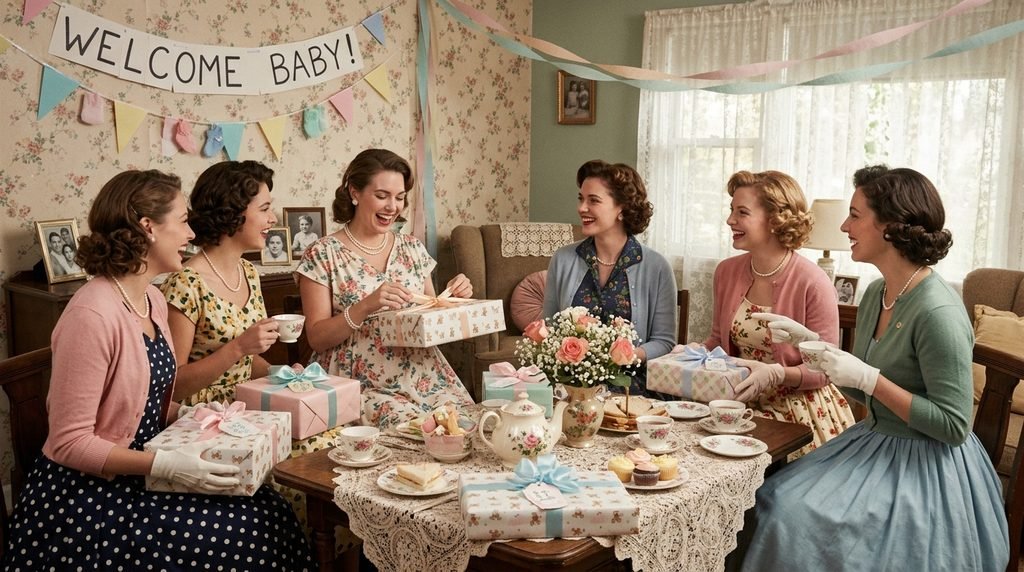
The modern American version took shape in the late 1940s and 1950s, right alongside the postwar baby boom. Young mothers needed practical items for a new baby. The shower became a way for a community of women to help stock a nursery together. For most of the 20th century, that community was assumed to be entirely female, without much question.
Part of the reason was simple discomfort. Conversations about pregnancy, labor, and postpartum recovery were considered private, even a little indelicate, to have in front of men. Childcare itself was seen as women’s work by default. So it made sense, by the standards of the time, that a party celebrating an upcoming baby would be a women’s event too.
Are Baby Showers for Women Only Today? What’s Actually Changed
Not anymore, at least not as a hard rule. Baby showers have shifted noticeably toward mixed company over the past twenty years. Etiquette experts now treat co-ed showers as completely normal, not just a passing trend. Lizzie Post, co-president of the Emily Post Institute, has pointed out that “Jack and Jill” style showers happen all the time now. Her view is simple: every parent is entitled to whatever kind of celebration actually fits their family.
Part of this shift tracks a bigger change in parenting itself. Fathers today are far more hands-on than earlier generations, from diaper duty to school pickup. Many simply want to be part of celebrating their own child from the very start. That said, the shift hasn’t erased every gap between how mothers and fathers experience parenthood. Pew Research Center’s 2023 survey on gender and parenting found that mothers are still notably more likely than fathers to describe parenting as tiring or stressful most of the time. So while more dads are showing up to baby showers these days, moms are often still carrying a heavier day-to-day load once the baby actually arrives.
Traditional vs. Modern Baby Showers at a Glance
Seeing the two side by side makes the shift easier to picture.
| Traditional Shower | Modern Co-Ed Shower | |
| Guest list | Close female friends, family, and coworkers | Both partners’ friends and family, any gender |
| Decor | Pastels, florals, storks | Neutral or theme-based, less pastel-heavy |
| Food | Finger sandwiches, tea, light bites | Heartier menu, sometimes a full meal |
| Games | Diaper pins, guess-the-belly-size | Gender-neutral games, sometimes competitive |
| Tone | Quiet, intimate, focused on the mother | Louder, more party-like, shared celebration |
Neither version is inherently better. It really comes down to what the parents-to-be actually want, and what feels comfortable to the people hosting.
Jack and Jill Baby Showers Explained
A “Jack and Jill” baby shower is simply the catchy name for a co-ed shower. The phrase itself is an old, generic stand-in for a boy-and-girl pair, long before the nursery rhyme made it famous. Both expectant parents invite their own friends and family. The whole group then celebrates together, rather than splitting into a separate “her shower” and “his shower.”
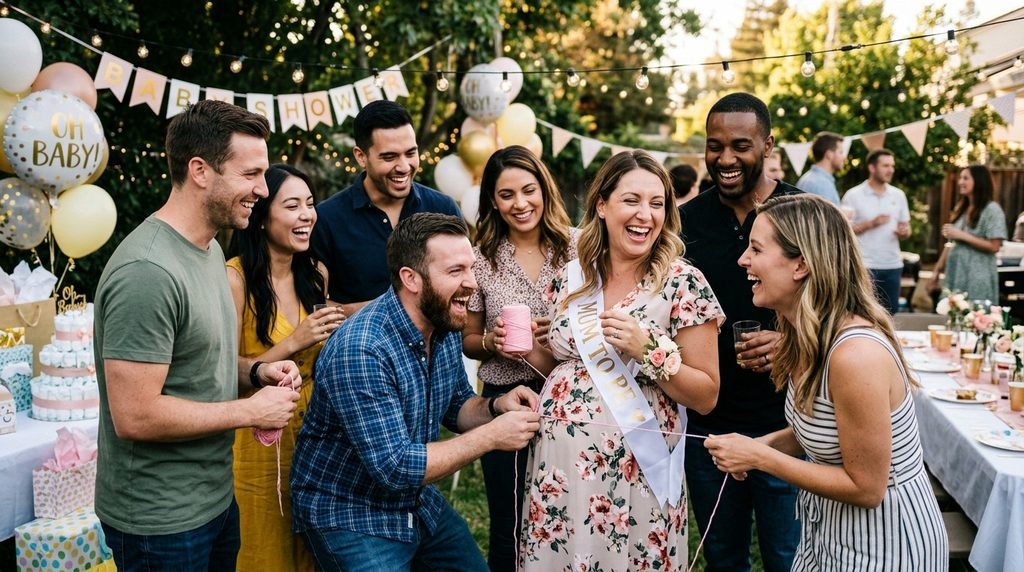
Etiquette for these events tends to loosen up a bit compared to a traditional shower. Themes lean toward something both partners will enjoy, like sports or a travel motif, instead of an all-pink or all-blue color scheme. Food portions usually go up too. A room full of adults of any gender tends to eat more than a smaller, all-female guest list ever would.
Why Some Women Still Prefer a Women-Only Shower
Plenty of women genuinely want a shower that stays women-only. It’s worth taking that preference seriously instead of writing it off as old-fashioned. Some simply want a space that feels like theirs, separate from a mixed crowd. Others have noticed that adding men to the guest list quietly changes the whole event. Juice and baby games can turn into cocktails and general party chatter, and that shift isn’t the vibe every mom-to-be is actually after.
There’s also a cultural or generational layer to this. Older relatives in particular sometimes assume a women-only shower is simply how it’s done, with no deeper motive behind it at all. A widely read Slate advice column on this exact question put it well. Choosing a women-only shower isn’t secretly propping up outdated gender roles. More often, it’s just a mother-to-be creating a space for herself and the people she feels most comfortable celebrating with.
Is It Sexist to Have a Women-Only Baby Shower?
Not inherently, no. There’s a meaningful difference between two very different reasons for the same guest list. One is excluding men because “childcare isn’t a man’s job,” which reflects an old and outdated assumption. The other is an event that’s women-only simply because the mother-to-be wants to celebrate with a specific group of people. The first framing genuinely hasn’t aged well. The second is just a personal preference, the same as any host choosing their own guest list for any kind of party.
Where it gets more complicated is when the mother-to-be actually wants a mixed shower and someone else overrides that wish. This often happens when a mother or mother-in-law is hosting the event and insists on women-only anyway. That situation is less about tradition and more about whose preference gets to win. It’s a fair thing for a host and a parent-to-be to talk through honestly before invitations go out, rather than after.
Baby Shower Traditions Around the World
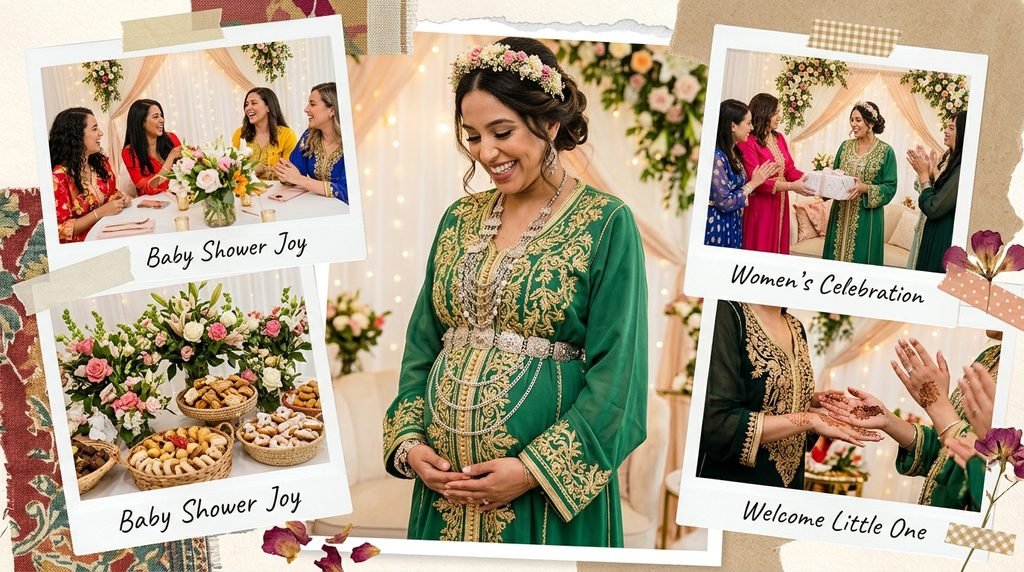
The strict “women only” framing is much more of a US and Canadian norm than a global one. Once you look at how other cultures celebrate an upcoming or recent baby, the picture gets a lot more varied. Here’s a sampling of how different traditions handle it.
- Armenia: A celebration called “qarasunq” happens 40 days after birth and is a mixed party for relatives and friends of any gender.
- China: The tradition of “manyue,” or full-month celebration, is held one month after the baby arrives and typically includes extended family.
- Hmong culture: A ceremony called “Puv Hli” takes place a month after birth, often hosted by the paternal grandparents or the father himself, with a ritual tying white yarn around the baby’s wrist.
- India: Celebrations like “Valaikaappu” focus heavily on the mother-to-be, with traditional clothing, bangles, and blessings from both sides of the family.
- Costa Rica: A “té de canastilla,” or basket tea, is held before birth, often with multiple smaller gatherings for family, coworkers, and friends.
- Brazil: A “chá de bebê,” or baby tea, follows a similar format before the baby arrives.
Notice that several of these traditions are explicitly built around extended family rather than a women-only guest list. That’s a useful reminder. The strict gender split many Americans assume is standard is really just one regional custom, not a universal rule for how families welcome a new baby.
What About Dads? Diaper Parties and Other Alternatives
Some fathers-to-be skip the co-ed route entirely and throw their own separate event instead, often nicknamed a “diaper party” or “dadchelor party.” These tend to look less like a traditional shower and more like a low-key get-together with friends. The focus is often on stocking up on diapers rather than decorating a nursery. It’s a nice option for dads who want to mark the occasion without feeling like a guest at someone else’s party.
There’s no single right answer here. Some couples prefer one shared, co-ed celebration. Others like having two separate gatherings that each match the vibe their own friend group actually wants. Both are completely normal, and neither one is more “correct” than the other.
How to Decide What’s Right for Your Shower
If you’re the one planning or hosting, a few honest questions can settle most of the back-and-forth before it turns into a full family disagreement. Working through these before the guest list goes out saves everyone a headache later.
- What does the mother-to-be actually want? Her preference should carry the most weight, even if it differs from how previous showers in the family were run.
- Does the father want to be included, and does the mother want him there?
- How many guests can the venue and budget realistically handle, since adding a whole second guest list roughly doubles the headcount?
- Are there strong cultural or family expectations at play that are worth honoring, even if they weren’t your first instinct?
- Would a hybrid work better, like a short women-only portion followed by a co-ed dinner later in the day?
There’s rarely a universally “correct” format for this kind of event. The version that actually respects the parents-to-be is the right one, whatever it ends up looking like.
What to Say If You Disagree With the Guest List
If you’re a guest wondering why you weren’t invited, or a partner left off the list entirely, it helps to remember that a shower’s guest list usually reflects the host’s comfort level as much as the parents’ wishes. Before assuming the worst, it’s worth simply asking the parent-to-be what they’d prefer, since they may not even know how the invitations were decided.
If you’re the parent-to-be and you’d rather have a different format than what’s being planned, say so early and directly. A quick conversation like “we’d actually love to have both of our friend groups there” is usually all it takes. Most hosts, especially family members, genuinely want to get this right and just default to whatever tradition they grew up with unless someone tells them otherwise.
Frequently Asked Questions
The short answer to are baby showers for women only keeps coming up in slightly different forms, so here are the specific questions people ask most.
Are baby showers for women only by tradition?
Yes, historically most American baby showers were women-only events, especially through the mid-20th century. That norm has loosened significantly over the past couple of decades.
What is a Jack and Jill baby shower?
It’s a co-ed baby shower where both expectant parents invite their own friends and family to celebrate together, rather than holding separate women-only and men-only events.
Is it rude to have a women-only baby shower?
Not inherently. It becomes an etiquette issue mainly when the mother-to-be actually wants a co-ed shower but someone else overrides that preference while hosting.
Do all cultures have women-only baby celebrations?
No. Many traditions around the world, including celebrations in Armenia, China, and among Hmong communities, are built around mixed-gender family gatherings rather than a strictly female guest list.
Can fathers throw their own version of a baby shower?
Yes, some dads host a separate “diaper party” or informal gathering with friends instead of joining a traditional shower, and this has become a fairly common alternative.
Is it old-fashioned to still want a women-only shower?
Not necessarily. Wanting a women-only shower for personal comfort or bonding reasons is different from excluding men because of outdated assumptions about who “belongs” at a baby-related event.
Conclusion
So, are baby showers for women only? Not as a rule anymore, though plenty of families still choose that format because it genuinely fits them best. The bigger shift is that it’s now a real choice, not a default anyone has to accept without asking. Whether you end up planning a traditional women-only shower, a full Jack and Jill celebration, or something in between, the format that respects what the parents-to-be actually want is always the one worth choosing. That’s true whether you’re hosting your third co-ed shower this year or planning your very first one.
Related Post:
When Do You Stop Burping a Baby? Signs & Timeline
How to Choose a Baby Stroller: A Complete Guide
When Can Babies Have Blankets? The Safe Sleep Timeline
When Can You Find Out Baby Gender? Reveal Party Timing
Why Do Babies Grunt in Their Sleep? A Complete Parent’s Guide

One thought on “Are Baby Showers for Women Only? 5 Surprising Truths”