When should babies wear shoes? Those tiny sneakers and sandals are hard to resist, and it’s easy to assume every baby needs a pair. The surprising answer from most pediatric sources is that babies don’t need shoes until they start walking outdoors.
Here’s the short version. Barefoot is best for developing feet, and socks or soft booties can handle cold toes. Shoes are mainly for protection outside. When you do buy a pair, flexible soles and roomy toes matter more than style.
In this guide from Zayapol, you’ll learn why barefoot is usually best, when shoes make sense, and five safe tips for a first pair. You’ll also get a simple fit check and an age-by-age guide.
Quick Answer
- The short answer to “when should babies wear shoes” is once they walk outdoors.
- Barefoot is best indoors, and non-skid socks handle cold floors.
- Choose flexible, lightweight, breathable shoes with a wide toe box.
- Skip arch support, since babies’ arches develop over time.
- Check the fit often, because little feet grow fast.
When Should Babies Wear Shoes? The Short Answer
Most babies don’t need shoes until they walk outdoors. Nemours KidsHealth advises holding off on that first pair until your baby is walking, since shoes mainly protect feet outside. Until then, bare feet and non-skid socks do the job.
Putting shoes on early won’t help your baby walk sooner or better. Nemours notes that hard, inflexible soles can actually make learning harder, because they restrict natural foot movement.
How soon is that? Most babies take their first steps between 9 and 18 months, and about 13 months is the average. Crawling, pulling up, and cruising along furniture come first. Our first steps milestone post explains the stages.
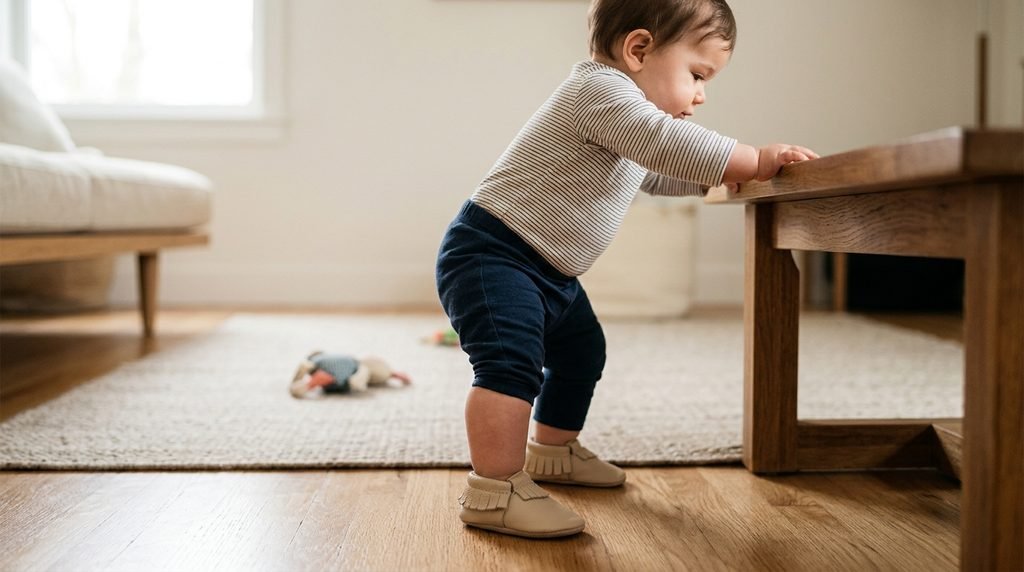
Not every source agrees. A podiatrist at Henry Ford Health says babies are typically ready for a first pair between 8 and 12 months. That’s once they’re pulling up or cruising. Many shoe brands say something similar. Most other sources still prefer barefoot until walking. The difference comes down to what shoes are for.
How do you know your baby is ready? Look for steady walking, not just a few wobbly steps. Then ask where your baby will walk. A living room floor doesn’t call for shoes, but a sidewalk, a playground, or a rocky yard does.
Think of it this way. Before walking, shoes are mostly decoration. Once your baby walks outside, shoes protect against rough, hot, cold, or sharp ground. That’s the real trigger.
Why Barefoot Is Usually Best for Babies
So when should babies wear shoes if barefoot is best? To answer that, it helps to know what bare feet actually do.
Feet learn from the ground. A pediatric physical therapy practice notes that walking barefoot increases the sensory input to a child’s feet and builds muscle strength. The UK’s NCT says it also helps develop balance and coordination. Shoes act as a barrier, so bare feet get more information.
Arches take time. Most children are naturally flat-footed until preschool age. A pediatric clinic says arches don’t start to develop until age 2 or 3, which is why early walkers don’t need special arch support.
Bare feet also meet different textures, such as carpet, grass, and tile. One pediatric physical therapist says this is great for sensory processing.
Here’s the balanced view, though. One pediatrician says the effect of shoes on foot development has been shown to be minimal. A review of footwear guidelines also found that many recommendations rest on thin evidence. So this isn’t about shoes being harmful. It’s about them being unnecessary until your baby needs protection.
Some babies are the exception. A physical therapist notes that a baby with poor alignment or very flexible joints may benefit from a shoe in moderation. That applies while practicing to stand and walk. Advice to skip shoes may also not apply to children with foot or ankle problems. If you suspect one, talk to your pediatrician.
Sources give different timing, and here’s why.
| Source | What it says | Why it differs |
| Nemours KidsHealth | Wait until your baby walks. Barefoot is best, and non-skid socks or booties are fine for cold toes | It focuses on foot development and outdoor protection |
| Mayo Clinic, as reported by a parenting magazine, and NCT | No shoes until walking outside, and heavy socks in cold weather | They treat shoes as protection only |
| A podiatrist at Henry Ford Health | First pair at 8 to 12 months, when pulling up or cruising, with a supportive sole | The focus is stability and protecting toes from stubbing |
| Many shoe brands | Think about shoes when crawling or pulling up | They sell pre-walker and first-walker shoes |
| American Podiatric Medical Association (APMA) | Barefoot is best for younger children, or light shoes with flexible soles | It favors natural foot movement |
How should you read all this? Match the advice to your situation. If your baby cruises on carpet at home, barefoot is fine. If your baby is cruising across a rough patio and stubbing toes, a light shoe for that outing makes sense.
Notice the one real disagreement. The podiatrist prefers a supportive sole, while most other sources want flexible soles that let feet move. When in doubt, ask your pediatrician.
When Shoes Make Sense
So when should babies wear shoes for real? Shoes make sense once the ground needs keeping off their feet. They protect against sharp objects, dirt, and hot or rough surfaces. They also keep toes warm in cold weather.
For babies who aren’t walking, socks or soft booties do the same job. Mayo Clinic experts, as reported by a parenting magazine, say heavy socks are fine for cold outings. Nemours agrees that non-skid socks or booties work for chilly toes. A physical therapist adds that soft-soled shoes on pre-walkers are mostly decorative, and socks can replace them.
Think about how your child gets around, too. If your baby is carried or pushed in a stroller, there’s no ground contact, so shoes add little. Save them for the times your child actually walks.
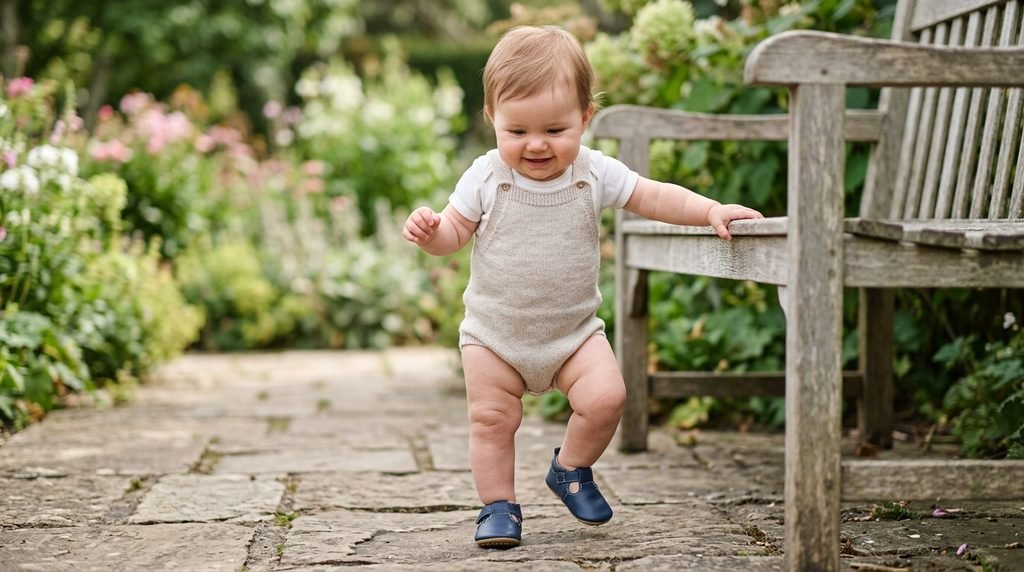
If your baby wears soft-soled shoes, take them off once your baby starts cruising or walking. That way, balance isn’t affected.
On sunny days, test pavement and sand with the back of your hand first. If it feels too hot for your hand, it’s too hot for tiny feet. The NCT notes that sand can get very hot in sunny weather.
Watch the temperature, too. The NCT notes that a baby is safer slightly cool than too hot. Keep foot coverings light, and take off extra layers when you’re indoors or in a warm car.
Here’s a quick guide to the most common situations.
| Situation | Best choice | Why |
| Indoors on a warm, clean floor | Bare feet | Feet feel the ground and build strength |
| Indoors on a cold or slippery floor | Non-skid socks or soft booties | Warmth and grip without stiffness |
| Grass or sand, with supervision | Bare feet | Soft surfaces are safe, though sand can get very hot |
| Pavement, gravel, or hot ground | Shoes | They protect against heat, sharp objects, and dirt |
| Playground or park | Shoes | They guard against stubbed toes and rough spots |
| Cold weather outdoors | Warm socks or booties, and shoes once walking | Keep feet warm without overheating |
| Stroller or carrier | Socks or soft booties | Your baby isn’t walking, so protection isn’t the goal |
5 Safe Tips for Choosing Your Baby’s First Shoes
Once you’ve answered “when should babies wear shoes” for your family, use these five tips to pick a good pair. The American Podiatric Medical Association’s footwear guidance backs up most of them. Its Seal of Acceptance database can also help, since it lists products recognized for foot health.
Shoes should also feel comfortable right away. The APMA advises skipping any pair that needs a break-in period. If you can, take your child along when you shop, so they can help choose and try walking in them.
1. Pick a flexible sole with grip
The sole should bend easily at the ball of the foot. One pediatric physical therapist suggests a shoe you can fold in half. Choose rubber with light grooves so your baby doesn’t slip, and skip smooth or stiff soles. Research on how to measure flexibility is thin, so the bend test is a practical rule of thumb, not a lab standard.
2. Choose lightweight, breathable materials
The APMA recommends breathable materials such as mesh and leather, since babies’ feet sweat a lot and non-breathable synthetics can irritate skin. Heavy shoes make walking harder. Canvas, soft leather, and cloth are good choices because they bend and breathe. Shoes made entirely of plastic or rubber tend to be stiff and can make feet sweat. Keep socks and shoes dry, too, because damp feet can lead to infections like athlete’s foot.
3. Look for a wide toe box and room to grow
Toes need space to spread and grip. The APMA says to aim for about 10 to 15 millimeters of room in front of the longest toe. The toe box should also be at least as wide as the widest part of the foot. Narrow, tapered shoes aren’t recommended.
4. Use a secure closure and a stable heel
Laces or Velcro help prevent clawing of the toes and instability, according to the APMA. Velcro is easiest for small hands and quick changes. A snug heel keeps the shoe from slipping off, and it shouldn’t feel rigid.
5. Skip arch support and built-in heels
Babies are born with flat-looking feet, and arches develop as muscles grow stronger. Pediatric physical therapists note that most children don’t need arch support, and stiff inserts can get in the way of that process. Flat, lightweight soles work best.
How to Check Fit and When to Size Up
Knowing “when should babies wear shoes” is only half the job. A good fit matters just as much, since shoes that are too small can cause blisters and cramped, sore feet. Try this 60-second check.
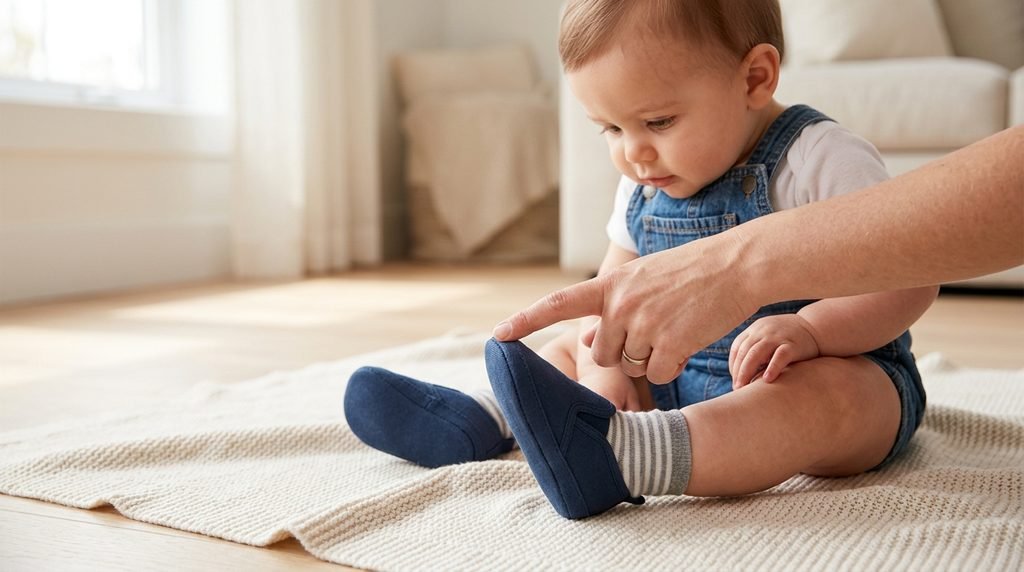
- Measure both feet. Feet are seldom the same size, so buy for the larger one. Measure at the end of the day, when feet are slightly swollen.
- Use the right socks. Try shoes on with the socks your baby will wear.
- Check the toe room. Look for about 10 to 15 millimeters in front of the longest toe, or roughly a finger’s width.
- Check the width. Toes should lie flat and spread, not squeeze together at the sides.
- Check the heel and closure. The heel should stay snug and the closure secure, but not tight. Skip shoes that need a break-in period.
- Watch your baby walk. Look for limping, dragging, or tripping.
If shoes keep slipping off, don’t assume the size is wrong. Check the heel fit and the closure first. A shoe that’s too loose can make walking harder, just as a tight one can.
How often should you recheck? Sources differ. The APMA suggests every 4 to 6 months. A parenting magazine says every couple of months, and one shoe brand says every 6 to 8 weeks. Babies grow fast, so more often is safer than less.
Babies can’t tell you when shoes pinch. The APMA’s older guidance notes that a lack of complaints isn’t a reliable sign. Flexible young bones can be twisted without a child noticing. Watch for red marks, blisters, curled toes, or a baby who keeps pulling shoes off.
Also look at the wear pattern. Children often wear through soles before they outgrow shoes, and uneven wear on the toe or heel can point to a foot problem. Talk to a podiatrist or your pediatrician if you see it, or if your child toes in, toes out, or walks oddly.
When you shop, a store that measures feet is worth seeking out. The NCT suggests going to a trusted shoe shop, where staff should be happy to measure your child’s feet at any time.
Two more tips help. Skip hand-me-down shoes, since a size that fits one child may fit another differently. And check footed sleepers, because the NCT warns that they can squeeze growing toes. Move up a size when they feel snug. Our baby clothing sizes guide can help.
Age-by-Age Guide: Feet and Footwear
Here’s how the answer to “when should babies wear shoes” changes with age. Treat it as a guide, since every baby is different.
| Age | Feet and footwear | What to know |
| Birth to about 6 months | Bare feet or soft socks | Feet are soft, and shoes aren’t needed |
| 6 to 12 months (crawling, pulling up, cruising) | Bare feet or non-skid socks | Skip stiff shoes, since pre-walker shoes are mostly for warmth or style |
| About 9 to 18 months (first steps) | Barefoot at home, and light, flexible shoes outdoors | Most babies walk within this window |
| 18 to 36 months | Flexible, flat, lightweight shoes outside, and barefoot indoors | Arches begin to show around age 2 or 3, and no arch support is needed |
Toddlers need a little more. As your child walks and runs more, look for a lightweight shoe with a flat sole and a secure closure. Many children outgrow their very first walking pair within a few months, so plan to size up as your child becomes a confident walker.
Crawling and cruising are big steps on the way. Our crawling and cruising guide covers what to expect, and our baby gear essentials list has other items worth a look. For outdoor time, our outdoor safety tips help too.
Frequently Asked Questions About Baby Shoes
Here are quick answers to the questions parents ask right after “when should babies wear shoes.”
Do newborns and crawling babies need shoes?
No. Bare feet or soft socks are best, and non-skid socks help on cold or slippery floors. Nemours says shoes aren’t needed until your baby walks.
Do babies need shoes to learn to walk?
No. Shoes won’t help a baby learn faster, and hard, stiff soles can get in the way. Let your baby practice barefoot at home, and save shoes for outdoor protection. Bare feet let your baby feel the floor and build balance.
Are soft-soled booties or sock shoes okay?
Yes, for warmth and grip. They’re mostly for keeping feet cozy, not for support. Take them off once your baby starts cruising or walking so balance isn’t affected. Choose ones that stay on, with a snug fit at the ankle.
Do babies need ankle support or arch support?
Most don’t. Babies have naturally flat feet, and arches develop over time. Look for flexible, lightweight shoes instead. If you’re unsure, or if your child has a diagnosed foot problem, a podiatrist can check your child’s feet and advise on footwear.
Are flat feet normal in babies?
Yes. Most children are naturally flat-footed until preschool age. Talk to your pediatrician or a podiatrist if you notice foot pain, toe walking, or toes pointing strongly in or out.
How often should I check shoe size?
More often than you’d expect. The APMA suggests every 4 to 6 months, while a parenting magazine suggests every couple of months. Babies grow fast, so lean toward more often. Recheck sooner if you see red marks or your baby pulls the shoes off.
What if my baby hates wearing shoes?
That’s common. Offer barefoot time at home, and use shoes only when you need outdoor protection. Try short stretches at first, and let your baby get used to them gradually.
Conclusion: What to Remember About Baby Shoes
So, when should babies wear shoes? Once they walk outdoors, and usually not before. Until then, bare feet and non-skid socks are best. When the time comes, choose a flexible, lightweight, breathable shoe with a wide toe box.
Trust your baby’s cues, and remember that every child starts walking on their own schedule. Check the fit often, skip arch support, and ask your pediatrician or a podiatrist if you notice anything unusual about your baby’s walk. For more calm, practical guidance, explore our other baby milestone guides on Zayapol.
When did your baby get their first pair of shoes, and what surprised you most? Tell us in the comments.
This article is for general information and doesn’t replace advice from your child’s doctor.
Related Post:
Should I Remove Pacifier When Baby Is Sleeping? 5 Safe Tips
When Can Baby Sit in Stroller? 5 Safe, Essential Signs
When Can Babies Have Blankets? The Safe Sleep Timeline
Can Babies Have Allergies? 7 Essential Signs and Safe Steps
Why Do Babies Grunt in Their Sleep? A Complete Parent’s Guide

3 thoughts on “When Should Babies Wear Shoes? 5 Safe, Essential Tips”