You gave your baby a dose of infant Tylenol for a fever or a rough teething night, and now they are out cold on your shoulder. It is natural to wonder: does Tylenol make babies sleepy, or is something else going on?
The short answer is that plain acetaminophen, the active ingredient in regular Infant and Children’s Tylenol, is not actually known for causing drowsiness. What is really happening is usually simpler, and a little more reassuring, than it looks. This guide covers what is typical, what is worth a second look, and the one common mix-up that genuinely matters for safety.
Does Tylenol Make Babies Sleepy? The Short Answer
On its own, acetaminophen is not considered a sedating medication. According to WebMD, Tylenol does not usually cause sleepiness, and unusual tiredness after a dose is actually flagged as something to check with a doctor about, since it can occasionally signal a problem rather than a normal reaction.
That said, “not sedating” does not mean “never associated with sleepiness at all.” A small number of babies may seem a bit drowsier after a dose, and there is a very ordinary explanation for why parents so often ask does Tylenol make babies sleepy after watching their own baby drift off shortly after a dose.
The Real Reason Babies Often Nap After Tylenol
Here is the piece that gets missed in a lot of quick answers to this question. Acetaminophen does not put babies to sleep. What it does is relieve pain and lower fever, and a baby who was uncomfortable, achy, or running hot is often exhausted from that discomfort in the first place.
Think about how hard it is for anyone to relax while in pain or running a fever. Once that discomfort eases, usually within 30 to 60 minutes of a dose, a baby who has been fighting through teething pain or a feverish night finally gets the chance to actually rest. What looks like “Tylenol making my baby sleepy” is frequently just relief making sleep possible again. This is comfort-driven sleep, not drug-induced sedation, and it is one of the most reassuring things a tired parent can understand about this whole question.
When Mild Drowsiness Is a Normal Side Effect
It is worth being fully accurate here rather than pretending drowsiness never happens. Some pediatric sources do list mild drowsiness or dizziness as an occasional, uncommon side effect of infant Tylenol, alongside things like mild stomach upset or changes in bowel habits. This kind of drowsiness tends to be subtle and short-lived, resolving within a normal window after the dose wears off.
If your baby takes a dose, naps a bit more heavily than usual once, and wakes up acting completely normal, that generally falls within the range of ordinary variation. Babies nap differently from day to day for all kinds of reasons, and a mildly sleepier afternoon after medicine is not automatically cause for alarm.
When Sleepiness Is a Warning Sign Instead
This is the distinction that actually matters for safety. Extreme, unusual, or hard-to-wake sleepiness after Tylenol is different from a slightly heavier nap, and it deserves prompt attention rather than a wait-and-see approach.
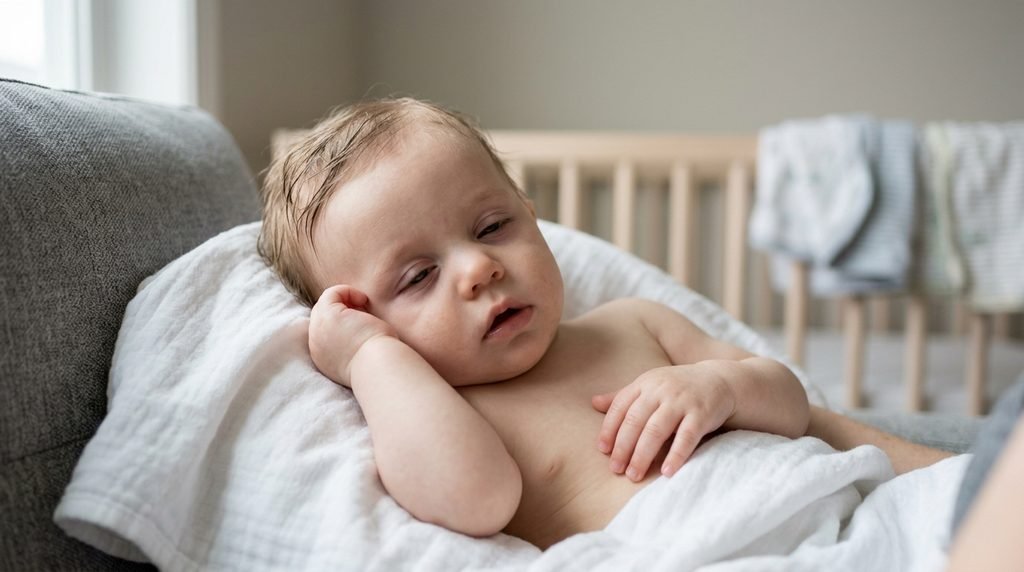
According to pediatric guidance on acetaminophen dosing, signs of possible overdose can include:
- Extreme sleepiness or difficulty waking
- Vomiting or nausea
- Poor feeding
- Pain in the upper right side of the belly
- A yellow tint to the skin or the whites of the eyes (jaundice)
Early overdose often shows no symptoms at all, which is exactly why sticking to the correct weight-based dose matters so much, rather than relying on symptoms to tell you something went wrong. If your baby seems unusually difficult to wake, is vomiting, or shows any of these signs after a dose, contact your pediatrician or poison control right away rather than waiting to see if it passes.
How Tylenol Dosing Works for Babies
Getting the dose right is the single biggest factor in avoiding the kind of sleepiness that is actually a warning sign rather than normal comfort. A few key points to keep in mind:
- Dosing is based on weight, not age. A chart based on your baby’s actual weight, checked against the label or your pediatrician’s guidance, is more accurate than an age-based estimate.
- Do not give Tylenol to a baby under 3 months old without your pediatrician’s direction first, since fever in very young infants often needs medical evaluation regardless of medication.
- It typically starts working within 30 to 60 minutes and effects generally last a few hours, so there is rarely a reason to redose quickly if the first dose has not fully kicked in yet.
- Always use the measuring device that comes with the product, not a kitchen spoon, since dosing accuracy really does matter for a medication metabolized by the liver.
If you are ever unsure about the right amount for your baby’s current weight, a quick call to your pediatrician’s office or pharmacist is faster and safer than guessing.
It also helps to know that liquid infant acetaminophen concentrations were standardized industry-wide back in 2011, after some caregivers accidentally gave babies a much stronger dose by confusing older infant and children’s formulas. Every current product now uses the same concentration, with dosing based on weight rather than a separate infant-strength bottle, which removes one common source of dosing error. Still, always read the label on whatever bottle is actually in your medicine cabinet, since formulations and instructions can be updated.
Watch Out: “Nighttime” and “PM” Tylenol Are Not for Babies
This is the mix-up that genuinely causes real drowsiness, and it has nothing to do with plain infant Tylenol. Some Tylenol products marketed for nighttime use or labeled “PM” contain a completely different ingredient called diphenhydramine, an antihistamine that is specifically included because it causes drowsiness, entirely separate from the acetaminophen in the same bottle.
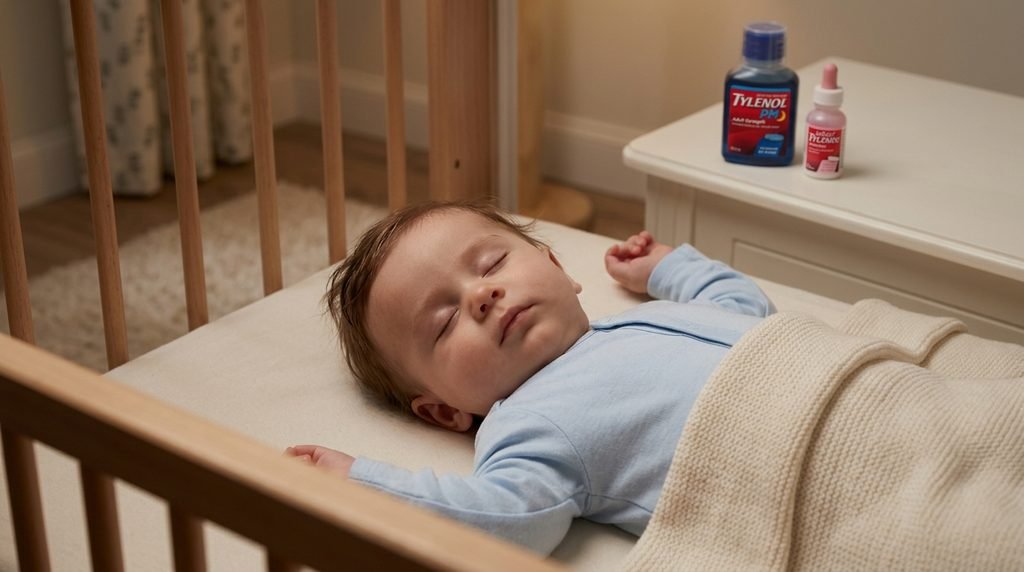
These combination sleep-aid and nighttime cold and flu products are intended for ages 12 and up, not infants or young children. If a caregiver ever reaches for the wrong bottle in a medicine cabinet, thinking any “Tylenol” product is interchangeable, the drowsiness that follows would come from an inappropriate medication for a baby’s age, not from standard infant acetaminophen. Always double-check that what you are giving your baby is labeled specifically for infants, and never substitute an adult nighttime or multi-symptom product.
When to Call Your Pediatrician
Reach out to your pediatrician if your baby is under 3 months old and has a fever, if a fever does not respond to an appropriate dose of Tylenol, or if you notice any of the overdose warning signs covered above. It is also worth calling if your baby seems unusually fussy, is refusing to eat, or simply does not seem like themselves after a dose, even if nothing specific stands out. Trusting your instincts as a parent is reasonable here, and a quick call is always easier than waiting through uncertainty.
It is also worth mentioning any other medications your baby is taking, since acetaminophen shows up as an ingredient in a surprising number of combination cold and flu products, and doubling up without realizing it is one of the more common ways babies end up getting more than the intended dose. Reading every label carefully, even for products that seem unrelated to fever or pain, is a simple habit that goes a long way toward keeping dosing accurate.
Frequently Asked Questions
Is it okay to give Tylenol before bed for teething discomfort?
Yes, this is a common and generally accepted approach. Many pediatric sources note that giving a dose about an hour before bedtime, timed so it takes effect by the time your baby is settling down, can help ease teething discomfort through the night. Check the correct weight-based dose first.
How long should a baby sleep after taking Tylenol?
There is no fixed expected nap length. A baby who was uncomfortable before the dose may sleep more soundly for a normal nap or nighttime stretch simply because they finally feel better. If sleep seems unusually deep or your baby is difficult to rouse, that is worth checking with a doctor rather than assuming it is expected.
Can Tylenol make a baby hyper instead of sleepy?
It is not typical for plain acetaminophen to cause excitability, though some combination cold and allergy products with antihistamines can occasionally cause the opposite effect in young children. If you notice unusual energy or agitation after any medication, mention it to your pediatrician.
What should I do if I think my baby got too much Tylenol?
Contact your pediatrician or poison control immediately rather than waiting for symptoms to appear, since early acetaminophen overdose often shows no obvious signs at first. Have the product label and your baby’s weight on hand when you call, since that information helps guide next steps quickly.
Conclusion
So, does Tylenol make babies sleepy? On its own, acetaminophen is not a sedating medication, and most of the drowsiness parents notice comes from a baby finally getting comfortable enough to rest after pain or fever eased. Mild drowsiness on occasion falls within normal variation, but extreme or hard-to-wake sleepiness is different and deserves prompt medical attention. As long as dosing stays weight-based and accurate, and nighttime or PM combination products stay far away from your baby’s medicine routine, standard infant Tylenol remains one of the more predictable, well-understood medications parents reach for.
Related Post:
When to Stop Giving Baby Formula: The Complete Guide (2026)
How Much Expressed Milk to Feed Baby Calculator: A Complete Weight-Based Guide
Why Do Some Babies Wear Helmets? 7 Simple, Essential Facts

One thought on “Does Tylenol Make Babies Sleepy? The Real Answer (2026)”