
It’s 2 a.m., your baby is snuffling like a tiny freight train, and when you peek up their nose with your phone flashlight, you spot it: a hard, crusty little blockage that isn’t going anywhere on its own. If you’ve ever tried to figure out how to get dried boogers out of baby’s nose without waking the whole house (or making things worse), you’re not alone. Because babies can’t blow their own noses, that job falls entirely to you, and a dried booger stuck in a nostril the size of a pea can genuinely disrupt feeding and sleep.
The good news is that removing dried boogers from a baby’s nose is almost always a simple, at-home fix once you know the order of operations: soften first, then remove never scrape or dig. This guide walks through exactly how to get dried boogers out of a baby’s nose safely, which tools actually help, what to avoid, and the specific signs that mean it’s time to call your pediatrician instead.
Why Babies Get Dried Boogers in the First Place
A baby’s nostrils are roughly the width of a coffee stirrer, so even a small amount of dried mucus can feel like a major blockage. Several everyday factors turn ordinary snot into stubborn, crusty boogers:

- A cold, RSV, or other respiratory virus thickening mucus production
- Dry indoor air, especially with heating or air conditioning running
- Milk or formula reflux irritating the nasal passages
- Frequent wiping, which can dry out mucus faster than it clears
- Simple dehydration, since babies lose fluid quickly
None of this means something is wrong with your baby. Newborns are naturally more congested than older infants because their nasal passages are still narrow and adjusting to breathing air for the first time.
Before You Start: Check What You’re Actually Dealing With
Not every crusty bit needs intervention, and trying to get dried boogers out of a baby’s nose that would’ve flaked off on its own isn’t necessary. Run a dry tissue or clean fingertip gently across the rim of your baby’s nostril if flakes come away easily, that’s loose debris you can often leave alone or wipe away with a warm washcloth. If it feels hard, stuck to the nasal lining, and doesn’t budge, that’s a true dried booger that needs the softening steps below.
Also pay attention to why you’re checking. A booger or two rarely bothers a baby. Step in when you notice noisy or whistling breathing, trouble latching or sucking during feeds, or a baby who seems generally fussier than usual these are the moments clearing the nose actually helps.
How to Get Dried Boogers Out of Baby’s Nose: Step-by-Step
Follow these five steps in order. Rushing to suction or picking before softening the mucus is the single biggest reason parents end up frustrated or accidentally push the booger in deeper.
- Lay your baby on their back with their head tilted slightly. A changing table or your lap both work. Keep one hand steady on their forehead so a sudden head turn doesn’t catch you off guard.
- Apply 1–2 drops of sterile, preservative-free saline into the nostril. Skip anything medicated — plain saline is all a baby’s nose needs. Wait 30 to 60 seconds so the salt water can soak into the crust.
- Give it a beat longer if the booger feels especially hard. For very stubborn dried mucus, a second round of saline or a few minutes in a steamy bathroom (more on that below) softens things further before you touch the nose again.
- Remove the loosened mucus with gentle suction or a nasal picker tool. A bulb syringe (squeezed before insertion, then released to draw mucus out) or a soft-tipped nasal picker both work just don’t insert either past the point where you can see it.
- Wipe the outer nostril with a soft cloth or saline wipe. This clears any residue and keeps the skin around the nose from getting irritated or chapped.
If the booger still won’t budge after two gentle attempts, stop. Give it a break, try again after a bath or humidifier session, and never force it the tissue lining a baby’s nose is delicate and bleeds easily.
Softening Methods Compared
Different situations call for different softening approaches. Here’s how the main options stack up:
| Method | Best for | How long it takes |
| Saline drops | Everyday dried boogers, quick fixes before feeds | 30–60 seconds to work |
| Saline spray/mist | Babies who resist drops, misty distribution | 30–60 seconds to work |
| Warm bath or shower steam | Very hard, deeply stuck crusts | 10–15 minutes |
| Cool-mist humidifier | Ongoing prevention overnight, dry-air seasons | Works passively over hours |
Saline is the fastest go-to for a single stubborn booger, while steam and humidifiers are better suited to widespread congestion or a run of dry-air nights.
Tools That Help (and How to Use Them Safely)
You don’t need a drawer full of gadgets to get dried boogers out of your baby’s nose — just a couple of the right tools make this job noticeably easier:

- Bulb syringe: The classic option. Squeeze the air out before placing the tip in the nostril, then release slowly to create suction. Clean thoroughly after every use so mold doesn’t build up inside the bulb.
- Nasal picker tools: Designed with a stopper to prevent going in too far, these have a scoop end built specifically for dried, flaky mucus that suction alone won’t grab.
- Electric or manual tube aspirators: These offer more controlled suction than a bulb and work well for babies who tolerate a slower, gentler approach.
- Saline wipes: Pre-moistened with saline, these are handy for dissolving crusted mucus around the outside of the nostril, especially on the go.
Whichever tool you choose, using it once or twice a day is plenty for most situations. According to pediatric guidance on infant nasal congestion, overusing a suction device can make a baby’s nose swell and actually worsen congestion, so reach for it only when it’s genuinely bothering feeding, breathing, or sleep — not as a routine habit.
What NOT to Do
A few instincts feel helpful but tend to backfire:
- Don’t use your fingernail or a bare finger. It’s easy to scratch the delicate nasal lining, and nails carry germs.
- Don’t use cotton swabs. They’re hard to control and can push mucus deeper or injure the nose.
- Don’t dry-pick. Removing a booger before it’s softened is how small nosebleeds happen.
- Don’t suction more than a few times a day. As noted above, overuse irritates the nose and can make congestion worse, not better.
- Don’t tilt your baby’s head back for sleep to “drain” congestion. This isn’t a safe-sleep position; keep sleep flat, on the back, with nothing propped underneath.
Preventing Dried Boogers Before They Start
A little prevention goes a long way toward fewer 2 a.m. sessions trying to get dried boogers out of your baby’s nose:
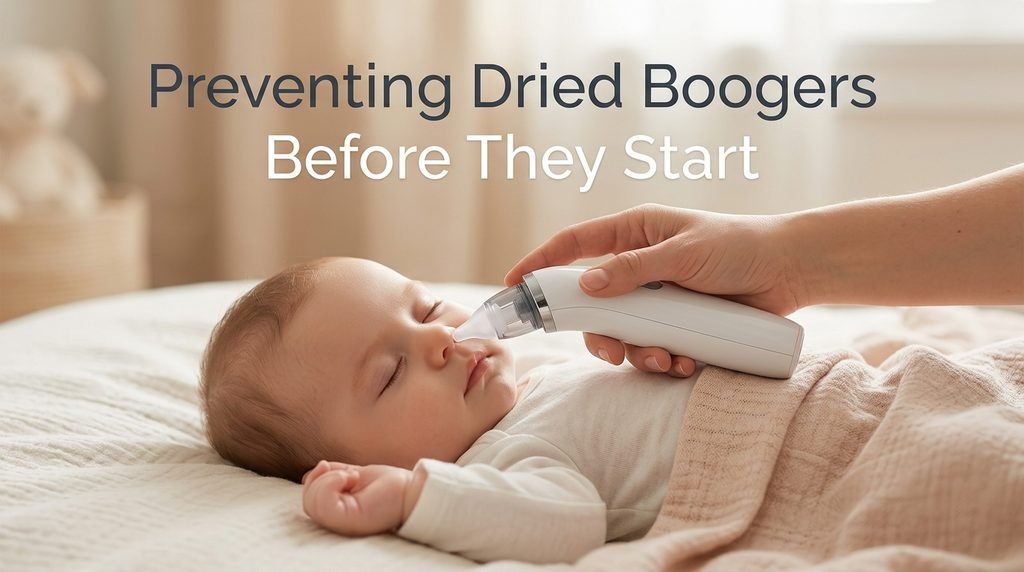
- Run a cool-mist humidifier in the nursery, cleaning the tank daily to prevent mold buildup.
- Keep your baby well-hydrated with regular breast milk, formula, or (for older infants) water as approved by your pediatrician.
- Do a quick saline-and-wipe routine once a day during cold or dry-air season, rather than waiting for a hard crust to form.
- Avoid smoke, strong fragrances, and other airborne irritants near your baby’s sleep space.
When to Call the Doctor
Most dried boogers are a nuisance, not a medical problem, and knowing how to get dried boogers out of a baby’s nose safely resolves almost every case at home — but a few signs mean it’s time to loop in your pediatrician rather than keep trying home remedies:
- Nosebleeds that don’t stop quickly or happen repeatedly
- Congestion paired with a fever, especially in a baby under three months old
- Visible difficulty breathing, flaring nostrils, or a caved-in chest with each breath
- Trouble feeding because of blocked nasal passages
- Congestion that lasts longer than three weeks without improving
As the American Academy of Pediatrics’ HealthyChildren.org notes, saline paired with gentle suction from a bulb syringe or nasal aspirator is the standard first-line approach pediatricians recommend before reaching for anything else, so if that combination genuinely isn’t helping, it’s worth a call rather than trying something stronger on your own.
FAQ
How often can I use saline and suction on my baby’s nose?
A couple of times a day is generally enough. More frequent suctioning can irritate the nasal lining and make congestion worse instead of better.
Is it safe to use my finger to get a booger out?
No fingers and fingernails can scratch the nasal lining and introduce germs. Stick to saline, a bulb syringe, or a purpose-made nasal picker tool instead.
Can I use a cotton swab on my baby’s nose?
It’s not recommended. Cotton swabs are hard to control at that scale and can push mucus further in or injure delicate tissue.
Why does my baby seem to have so many boogers lately?
Dry indoor air, a mild cold, or even reflux can all thicken mucus production. If it’s paired with fever or feeding trouble, check in with your pediatrician.
Do saline drops expire or go bad?
Yes check the bottle’s expiration date, and toss opened saline once it’s past that date or if the liquid looks cloudy or discolored.
Conclusion
Clearing dried boogers out of your baby’s nose comes down to one simple rule: soften before you remove. Saline drops or spray, a little patience, and the right gentle tool handle the vast majority of cases without any drama. Keep a humidifier running during dry seasons, watch for the handful of warning signs that call for a pediatrician, and you’ll have this down to a quick, no-fuss part of your routine in no time.
Related Post:
How to Help a Teething Baby Sleep: A Complete Guide for Exhausted Parents
Does Baby Oil Help You Tan? What Dermatologists Say
Do Babies Open Their Eyes in the Womb?
When to Take Baby to Dentist? Complete Guide for New Parents
Why Do Babies Grunt in Their Sleep? A Complete Parent’s Guide

3 thoughts on “How to Get Dried Boogers Out of Baby: 5 Safe Steps”