
You’re standing over the crib at 2 a.m., certain you heard crying, but your baby’s eyes are closed and their chest is rising and falling peacefully. Then it happens again a whimper, maybe even a full cry, coming from a baby who is, as far as you can tell, completely asleep. If you’re wondering why do babies cry in their sleep, you’ve just discovered one of the stranger and more common parts of newborn life.
Quick answer:
Most sleep-crying comes down to active sleep, the lighter, more physically restless stage babies spend a lot of their sleep time in. It’s usually completely normal and doesn’t require you to do anything at all. The exception is when a cry keeps escalating rather than settling back down that’s your cue it might be a real need, not just noisy sleep.
Active Sleep: The Most Common Reason Babies Cry in Their Sleep
Babies don’t sleep the way adults do. Newborns spend roughly half their total sleep time in active sleep, a lighter stage similar to REM sleep in adults, where brain activity stays high even though the body is resting. During active sleep, you’ll often see fluttering eyelids, twitching hands or feet, sucking motions, and yes whimpering or brief crying, all without your baby ever actually waking up.
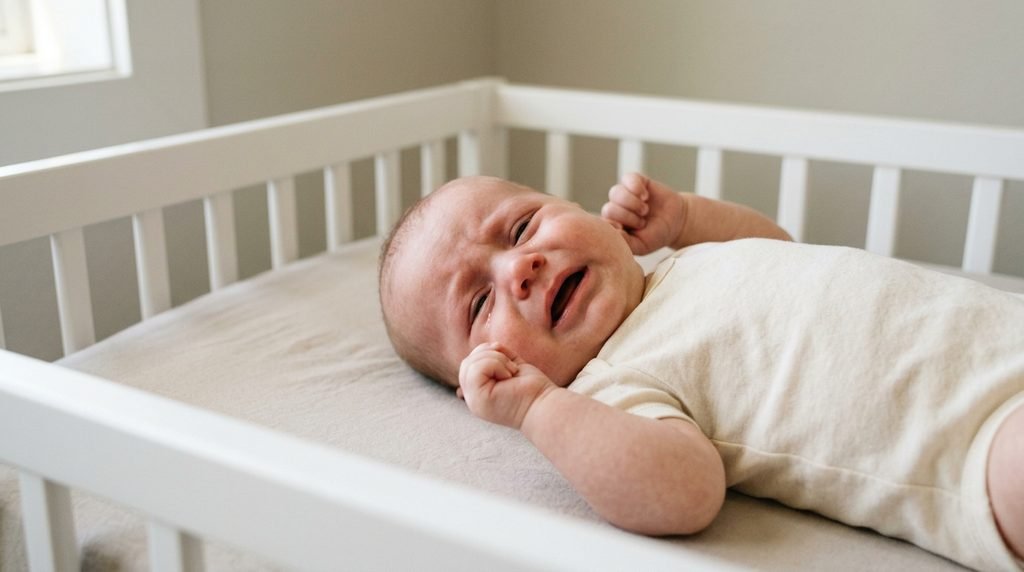
Newborn sleep cycles are also much shorter than yours, typically running about 45 to 50 minutes before looping back into another active phase. That means the crying you’re hearing at midnight and again at 1 a.m. isn’t two separate problems it’s often just the same normal cycle repeating itself, over and over, all night long.
The Moro Reflex and Other Involuntary Triggers
Newborns are also working with a nervous system that’s still very much under construction, which shows up as a handful of involuntary reflexes. The most noticeable one is the Moro reflex, sometimes called the startle reflex a sudden flailing of the arms and legs that can happen in response to a small sound, a shift in position, or even just the sensation of falling asleep itself. It often comes with a short, sharp cry, and it’s completely normal. The good news: this particular reflex typically fades on its own somewhere between 3 and 6 months of age.
Hunger, Comfort, and Basic Needs
Sometimes the explanation is simpler than a sleep-stage science lesson: your baby is hungry. Newborn tummies are tiny, and breastfed babies often need to eat every 2 to 3 hours, even overnight, while formula-fed babies typically go a bit longer, around 3 to 4 hours. Since crying is essentially your baby’s only tool for communication, a hunger cry during sleep is often just an early, half-asleep version of “I need to eat,” even before they’re fully awake.
A pacifier falling out mid-sleep is another surprisingly common trigger, especially for babies who rely on sucking to stay settled. And it’s always worth a quick temperature check a baby who’s dressed too warm or too cool for the room can cry in their sleep simply because they’re uncomfortable. A good general rule is one layer more than you’d wear yourself in that same room (see our full guide on how to dress your baby for sleep for a room-by-room breakdown).
Growth Spurts and Developmental Leaps
During periods of rapid growth or new-skill development learning to roll, starting to babble, recognizing faces more clearly a baby’s sleep can get temporarily lighter and more fragmented.
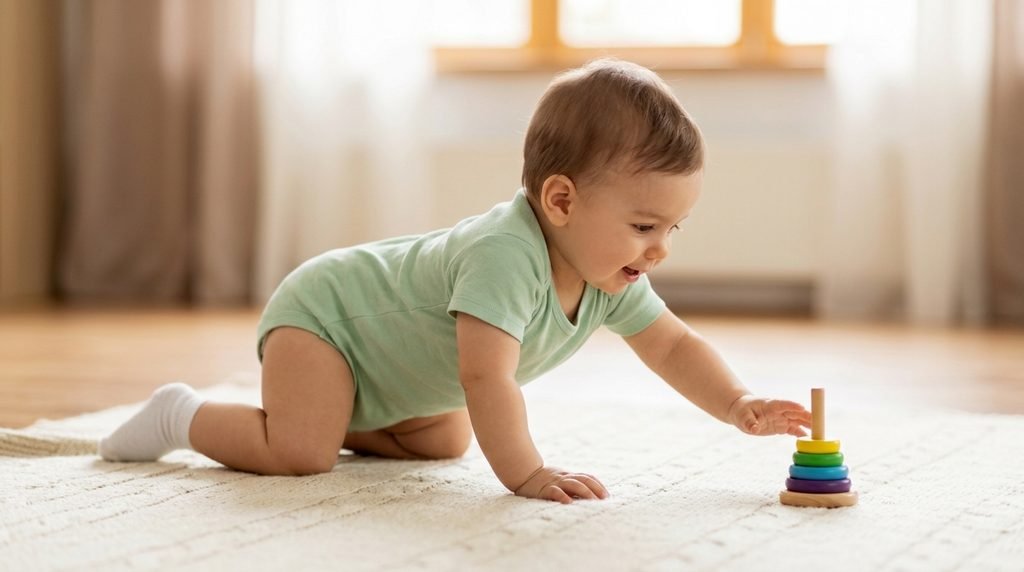
It can feel like a step backward if your previously solid sleeper suddenly starts crying out more at night, but it’s usually a normal, temporary side effect of their brain doing a lot of new work. These stretches typically pass on their own once the developmental phase settles.
Is It a Nightmare or a Night Terror?
Parents often worry their baby is having a bad dream, but the reality is a little more nuanced than that, and the two possibilities aren’t the same thing.
True nightmares the kind involving a story or a scary image the child can later describe are genuinely rare in babies and very young infants. Nightmares depend on a level of narrative dreaming and memory that mostly develops later, closer to toddlerhood, so what looks like a “bad dream” in a young baby is far more likely to be one of the causes above rather than an actual nightmare.
Night terrors are a different phenomenon, and while they’re more common in older toddlers and preschoolers, they can occasionally start showing up from around 6 months onward. Unlike active-sleep whimpering, a night terror can look more intense sudden, loud crying or even screaming, sometimes with eyes open, and importantly, your baby won’t be responsive to comforting the way they normally would, because they’re still in deep sleep rather than actually awake. Night terrors are usually brief and are typically forgotten entirely by the baby afterward. If they happen, the best approach is to make sure your baby is safe and simply wait for it to pass, rather than trying to fully wake them.
Is This Real Distress or Just Noisy Sleep?
Here’s the genuinely useful part: you don’t need to guess in the moment. A few reliable clues tell you which situation you’re in.
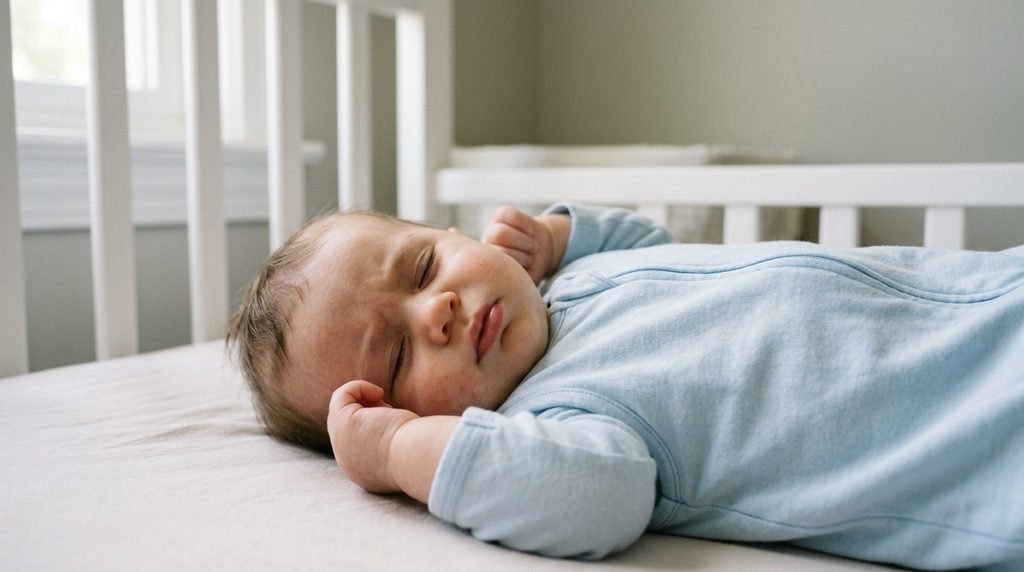
Probably just noisy sleep — wait and watch:
- The cry is brief, then quiets down on its own within a minute or two
- Your baby’s breathing stays steady and calm
- There’s twitching or fluttering eyelids alongside the sound
- The cry doesn’t escalate in volume or intensity
Probably a real need — worth responding to:
- The cry keeps building rather than settling back down
- It’s been a while since the last feed
- Your baby seems genuinely distressed once you check not just twitchy or restless
- Something practical seems off (a wet diaper, an obviously uncomfortable temperature, a lost pacifier)
Most of the time, a brief whimper or cry that fades back into quiet within a minute or two doesn’t need any response from you at all and rushing in can actually interrupt a sleep cycle that was about to settle on its own anyway.
What to Actually Do
If you’ve watched and waited and the crying keeps building, respond calmly and quietly rather than turning on bright lights or picking your baby up dramatically. Check the obvious things first diaper, temperature, whether it’s been long enough since the last feed — and handle whatever’s needed with as little stimulation as possible, since the goal is helping your baby settle back into sleep, not fully waking them up if you don’t have to.
If it turns out to be nothing specific and your baby settles again once you’re nearby, that’s completely fine too. Over time, you’ll get a feel for your own baby’s particular sleep sounds, and the guesswork gets a lot easier.
Frequently Asked Questions
Is it okay to let my baby cry it out during sleep?
For brief, self-settling whimpers during active sleep, yes that’s different from formal sleep training and doesn’t require any deliberate “crying it out” decision on your part. If the crying is escalating and points to a real need like hunger or discomfort, that’s not the moment to wait it out; respond as you normally would.
At what age does this get better?
Most of the active-sleep crying eases up as babies spend more time in deeper sleep stages, often noticeably calming down by 4 to 6 months. The Moro reflex specifically tends to fade by 3 to 6 months, which removes one of the more dramatic sleep-crying triggers on its own.
Can babies actually dream?
It’s likely, though researchers can’t say for certain what infant dreams involve, since babies can’t describe them. What’s clearer is that true narrative nightmares — the kind involving a memorable scary story are uncommon before toddlerhood, so most infant sleep-crying isn’t dream-related in the way people often assume.
Should I wake my baby if they’re crying in their sleep?
Generally, no. Waking a baby who’s mid-cycle in active sleep can actually make it harder for them to settle back down than if you’d simply waited it out. Save waking them for situations where something genuinely needs attention, like a feed that’s overdue or a diaper change.
Conclusion
The short answer to why do babies cry in their sleep is: most of the time, it’s just active sleep doing exactly what it’s supposed to do twitching, whimpering, briefly crying out, all without your baby ever truly waking. Reflexes, hunger, growth spurts, and the occasional night terror round out the rest of the list. Learn to tell a settling-back whimper from a genuinely escalating cry, and you’ll spend a lot less time hovering anxiously over the crib at 2 a.m. wondering what to do next.
Have you noticed a pattern in when your baby tends to cry out in their sleep right at bedtime, in the middle of the night, or somewhere in between? It’s often one of the first clues to what’s actually going on.
Related Post:
When Can Babies Breathe Through Their Mouth? A Parent’s Timeline
Does Baby Oil Help You Tan? What Dermatologists Say
When Can Babies Have Blankets? The Safe Sleep Timeline
