When can baby face forward in carrier? If your little one keeps craning past your shoulder to watch the dog, the ceiling fan, and every stranger in line, you’re probably wondering the same thing. That wide-eyed curiosity is a great sign. It also raises a fair question: is your baby ready to see the world instead of your shirt?
Here’s the short version. Most carrier makers say around 5 to 6 months, once your baby has strong head, neck, and trunk control. Hip specialists lean more cautious, and safety agencies focus on the airway. Age alone never settles it.
In this guide from Zayapol, you’ll learn what the experts agree on, where they differ, and five signs of readiness. You’ll also get a safe way to try it, plus better options for a curious baby who isn’t quite ready.
Quick Answer
- The short answer to “when can baby face forward in carrier” is about 5 to 6 months, though some makers start at 4.
- Head, neck, and trunk control matter more than the birthday.
- The International Hip Dysplasia Institute recommends inward-facing for the first 6 months.
- Keep forward-facing sessions short, about 10 to 20 minutes, and never let your baby sleep that way.
- Hip carry and back carry give a view with fewer trade-offs.
When Can Baby Face Forward in Carrier? The Short Answer
Most babies can try facing forward at about 5 to 6 months, when their head and neck are steady and their trunk stays upright. Some makers start at 4 months, while others wait until 6. Before that, keep your baby facing you.
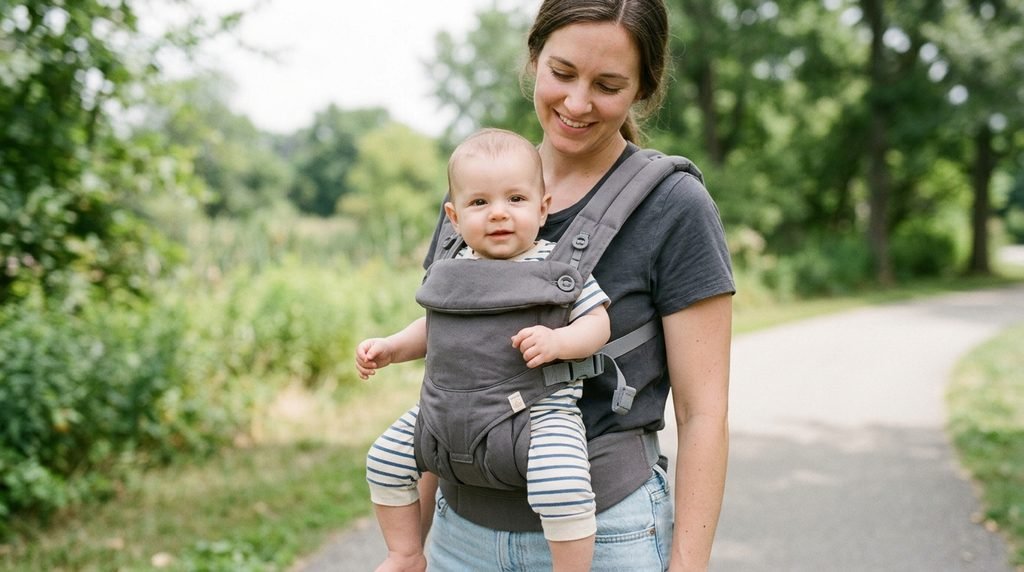
Ask ten makers “when can baby face forward in carrier” and you’ll hear a spread. One says around 5 to 6 months. Another says 4 to 6. A third suggests inward-facing through about the first five months, and a fourth points to 6 months. Read that range as a window, not a target. A baby at the early end needs every readiness sign, and a baby at the late end still might not be ready.
Why such a range? Readiness comes from development, not weight or a birthday. Car seats work by age and weight, but carrier positions don’t. A 6-month-old can still lack the trunk strength to sit tall, and an early bloomer at 5 months might be ready. Age gives you a starting line, not a green light.
Newborns and babies under 4 months always face inward. Their neck muscles can’t hold the head steady, so the chin can drop toward the chest and narrow the airway. The soft carrier safety standard names babies under 4 months, along with preemies, as the highest suffocation risk. If you’re still stocking up, our newborn essentials list can help.
Hip health adds another layer. The International Hip Dysplasia Institute recommends inward-facing carrying for the first six months, because the hips develop fastest then. It also says outward-facing may not be harmful. That’s a more cautious timeline than most manufacturers give, and the next section explains why.
<!– IMAGE 1 –>
Why Sources Disagree: Who Says What
When can baby face forward in carrier? That depends on whom you ask, because each group looks at a different risk. Here’s how the main voices compare.
| Source | What they typically say | Main reason |
| Carrier makers | About 4 to 6 months, with strong head and neck control, in short sessions | They focus on neck control and on stimulation |
| International Hip Dysplasia Institute | Inward-facing for the first 6 months, with possible added benefit to age 1 | Hips develop fastest early on, and facing you lets babies grip with their inner thighs |
| Safety agencies and standards | Under 4 months is the highest risk. Keep the face visible, and never let baby sleep in a carrier | They focus on airway and falls, not on which way baby faces |
| Some carrier brands and educators | Face inward longer, or skip forward-facing entirely | Concerns about leg support, overstimulation, and strain on the wearer |
Some brands go further and design carriers without a forward-facing option at all. Their reasoning adds two points to the hip argument. Facing out makes it harder to spot subtle signs of fatigue, and a baby facing away can slump forward or tilt back.
The gaps are real, but they aren’t huge. Everyone agrees that young babies face inward and that head control comes first. The disagreement is about how much extra time inward-facing deserves.
Here’s the honest take on hips. The institute says short, occasional carrier use is unlikely to affect hip development. Its concern is many hours a day in less hip-friendly positions during the first six months. Parenting health sources also note that no clear evidence shows harm from facing out. They add that there’s no strong reason to do it unless your baby insists. So the choice isn’t about panic. It’s about weighing a small unknown against a benefit that is mostly a better view.
5 Signs Your Baby Is Ready to Face Forward
So when can baby face forward in carrier for real? When all five signs below show up together, and your carrier allows it.

1. Steady head control
Your baby holds the head steady while upright, even when excited, tired, or jostled. The bobblehead stage is over. If the head still wobbles or drops when you walk, wait. Our head control milestones guide shows what to expect.
2. Upright trunk control
Neck strength isn’t enough. Your baby also needs a back and core that hold them upright without slumping to one side. Some makers ask for sitting without help, so check your manual. Our sitting up milestone post covers the timeline.
3. A chin that clears the carrier
When your baby faces forward, nothing supports the head from behind. The chin should sit clear of the carrier panel with room to move. You should also see the whole face at all times.
4. Real curiosity
Around 6 months, many babies shift from studying your face to wanting the whole room. They twist, push off your chest, or protest when you face them. That’s interest, not distress. Younger babies mostly want your face, and they take comfort from it.
5. Calm in a short trial
Try a few minutes at home. A ready baby stays relaxed, looks around, and reaches out. A baby who goes stiff, cries, or turns away isn’t ready today, and that’s fine.
Before your first trial, run this quick at-home check. It isn’t a medical test, so ask your pediatrician if you’re unsure. First, hold your baby upright against your chest and let go of extra head support. Does the head stay steady for a full minute, even when your baby turns or gets excited? Second, sit your baby on your lap with your hands only at the hips. Does the back stay upright without folding forward or slumping sideways?
Two yes answers mean you can move on to a trial. Any no means wait a few weeks and check again.
Watch for signs that your baby needs more time. Maybe the head bobs or drops when you walk, or the back slumps to one side. Perhaps the chin sinks toward the chest. Some babies cry or go rigid when turned outward. Others get drowsy fast, and a sleepy baby facing out has nowhere to rest the head. None of this is a problem. It just means more time facing you.
Two more gates matter. Your carrier must allow the position, since many carriers only support inward-facing and some brands leave forward-facing out on purpose. Premature babies also often reach milestones later by calendar age, so ask your pediatrician whether to go by corrected age.
Is Facing Forward Safe? Hips, Airway, and Overstimulation
Short forward-facing sessions are widely accepted once a baby is ready, but they carry trade-offs that inward-facing doesn’t. Parents who search “when can baby face forward in carrier” usually worry about three things, so let’s take each in turn.
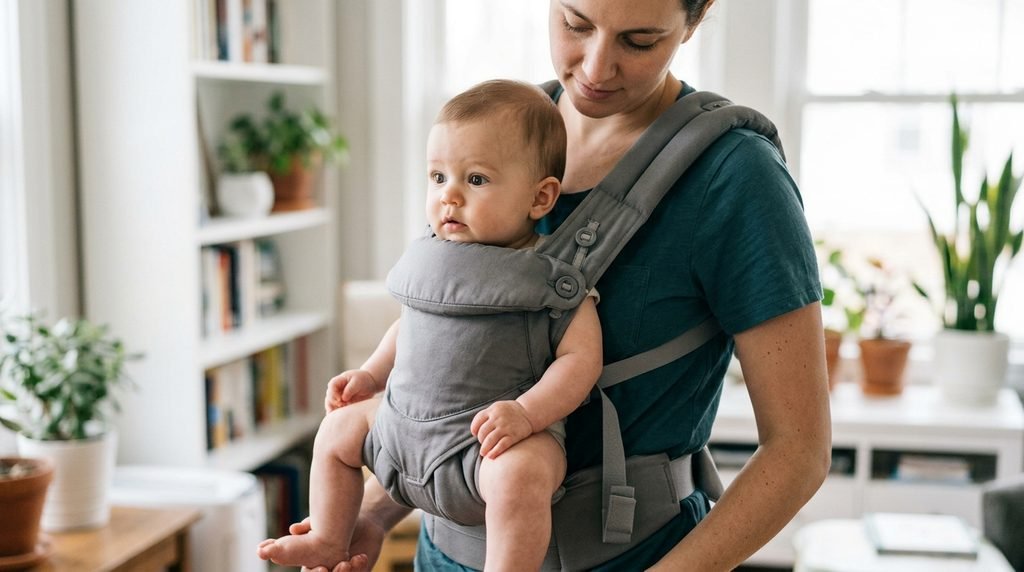
Start with hips. Healthy hips sit in the M-position, with the thighs supported and spread and the knees slightly higher than the bottom. Many forward-facing designs use a narrow seat, so the legs dangle instead. The institute notes that when a baby faces you, the inner thigh muscles grip your torso, which encourages good hip development. Facing out gives up that grip.
Your baby’s history matters too. The institute lists a family history of hip dysplasia, breech position, being a firstborn, and being a larger baby among the risk factors. If any of those apply, talk with your doctor before choosing to face out.
Next comes the airway. Facing forward gives your baby nothing to rest the head against. The chin can drop or the head can tilt, and it’s harder for you to read the face. The U.S. Consumer Product Safety Commission tells caregivers to keep the face clearly visible and never let babies sleep in carriers. Health Canada adds that a sleeping baby belongs in a crib, cradle, or bassinet. Our safe sleep guide explains why.
Overstimulation is the third worry. Facing out floods a young baby with sights, sounds, and motion, and your face isn’t there for comfort. Watch for fussing, eye rubbing, or turning the head away. Crowds and unfamiliar places make it harder.
Facing out also makes cues harder to read. When your baby faces away, you lose the quick glance that says tired, hungry, or upset. Inward-facing keeps the face and breathing in easy sight, which is one reason many educators favor it for longer.
There’s a cost for you, too. Facing out shifts your baby’s weight forward, so your shoulders and lower back can work harder, even in a well-made carrier.
It also helps to know what the research can’t tell us. Direct research on outward-facing carrying appears limited, so most guidance comes from how the hips develop and from airway safety, not from head-to-head trials. That’s why the advice leans careful instead of absolute.
Balance is the key. Short sessions with a ready baby and a supportive carrier are widely accepted. Nothing requires you to do it, though, and the options below give your baby a view with fewer trade-offs.
How to Face Forward Safely: A First-Try Protocol
Knowing “when can baby face forward in carrier” is only half the job. How you try it matters just as much. Follow these steps in order.
- Read your manual. Confirm the carrier allows outward-facing, and check the age, weight, and milestone limits it lists. Our baby carrier buying guide explains what to look for.
- Check the seat. Your baby’s thighs should be supported, with the knees above the bottom and the legs spread in an M shape. Adjust the leg openings to fit snugly.
- Pick a quiet spot. Start at home or in the backyard, not at a busy market.
- Try five minutes. Stay close, talk to your baby, and hold a hand or touch a foot.
- Watch the cues. Fussing, eye rubbing, or turning away means switch back to facing you.
- Set a ceiling. Most makers suggest about 10 to 20 minutes at a time. Shorter is smarter for something new.
- Stay safe. Keep the whole face visible, dress for the weather, and treat the carrier as an extra layer. Skip cooking, driving, and running. If your baby dozes off, stop, then turn them inward or move them to a flat sleep surface.
A good first trial looks boring, and that’s the goal. Your baby looks around with relaxed shoulders, open hands, and an easy expression. Then they get quiet, or start to fuss, and you head back inward before it turns into a meltdown. Ending on a calm note makes the next try easier.
Don’t improvise with a carrier that wasn’t built for this. Outward-facing depends on the carrier’s shape and seat, so use only the positions your manual shows. When a session ends, turn your baby inward and hold them close for a few calm minutes. Babies often need a quiet reset after a lot to look at.
Repeat short sessions over several days. Most babies work up gradually, and many decide they prefer a hip or back carry anyway.
Better Options When Baby Wants a View
If your baby wants a view but isn’t ready, a few options help. They also work when facing out overwhelms your baby. In other words, “when can baby face forward in carrier” isn’t the only way to give your baby a look at the world.
A hip carry lets your baby sit on your hip, look around, and rest the head when tired. A back carry works like a piggyback ride. It suits a baby with solid head control who can sit without help, in a carrier made for it. One study from Malawi linked back-carrying with lower hip dysplasia rates, though the institute calls that finding still controversial.
For either one, look for a carrier designed for the position, with a seat that supports both thighs. Back carrying also asks more of you. Practice over a soft surface like a bed, with a helper nearby, before you head out.
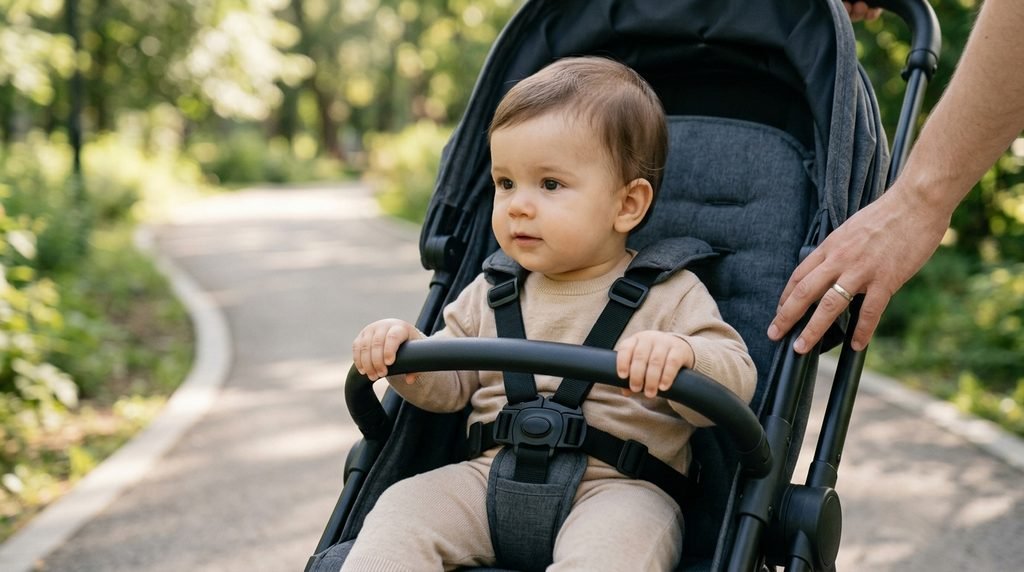
Inward-facing still has perks. An older baby with steady head control can turn to peek over the carrier’s edge while staying close to you. A stroller works too, since it gives a wide view and gives you a break.
Here’s a simple way to match position to age. Treat it as a guide, since babies vary and your carrier manual comes first.
| Baby’s age | Best positions | Notes |
| Birth to 3 months | Inward-facing front carry only | Keep the chin off the chest and the face visible. Forward-facing isn’t appropriate. |
| 4 to 5 months | Inward-facing front carry | Some makers allow a short forward trial near 5 months, only if every readiness sign is present. |
| 6 to 8 months | Inward-facing, short forward sessions, hip carry, or back carry once baby sits without help | Keep forward sessions to 10 to 20 minutes. Hips still develop, though more slowly. |
| 9 to 12+ months | Hip carry, back carry, or inward-facing | The institute sees possible added hip benefit from inward-facing up to age one. |
Frequently Asked Questions About Facing Forward in a Carrier
Here are quick answers to the questions parents ask right after “when can baby face forward in carrier.”
Can a 3-month-old face forward in a carrier?
Not yet. Most 3-month-olds lack the head, neck, and trunk control for it, so inward-facing is the recommended position. Makers generally start at 4 to 6 months, and safety standards flag babies under 4 months as the highest suffocation risk. Wait for real readiness signs.
How long can baby stay facing forward?
Keep it short, usually about 10 to 20 minutes at a time. Stop sooner if your baby fusses, rubs their eyes, or turns away, and switch back to facing you. Newer, busier places call for even shorter stretches.
Is a forward-facing carrier bad for a baby’s hips?
Occasional short use is unlikely to affect hips, according to the International Hip Dysplasia Institute. The institute still recommends inward-facing for the first six months. If you do face out, pick a carrier that supports the thighs and keeps the knees above the bottom.
Can my baby sleep facing outward?
No. Facing out leaves nowhere to rest the head, so the chin can drop and block the airway. If your baby falls asleep, stop, then turn them inward or move them to a flat sleep surface.
Does my baby need to sit up on their own first?
Steady upright trunk control is essential, though not every maker requires fully independent sitting. Some brands do list it, so check your manual and ask your pediatrician if you’re unsure.
Do all carriers allow facing forward?
No. Many carriers only support inward-facing, and some brands leave forward-facing out on purpose. Use the position only if your manual approves it and the seat supports your baby’s thighs.
What if my baby hates facing forward?
Turn them back inward. Some babies find the view overwhelming, and that’s normal. Try again in a few weeks, or use a hip carry instead. Following your baby’s lead is always the right call.
Conclusion: What to Remember About Facing Forward
So, when can baby face forward in carrier? Usually around 5 to 6 months, and only when every readiness sign lines up. Readiness beats the calendar, so trust your baby’s cues over any birthday. Short sessions in a supportive carrier work best. Inward-facing is always a fine choice, especially for hip health in the first six months.
Check your carrier manual, and ask your pediatrician at your next visit if you’re unsure. For more calm, practical guidance, explore our other babywearing and baby gear guides on Zayapol.
When did your baby first face forward, and how did it go? Tell us in the comments.
This article is for general information and doesn’t replace advice from your child’s doctor.
Related Post:
When Do You Stop Burping a Baby? Signs & Timeline
How to Choose a Baby Stroller: A Complete Guide
When Can Babies Have Blankets? The Safe Sleep Timeline
Can Babies Have Allergies? 7 Essential Signs and Safe Steps
Why Do Babies Grunt in Their Sleep? A Complete Parent’s GuideEdit

2 thoughts on “When Can Baby Face Forward in Carrier? 5 Essential Signs”