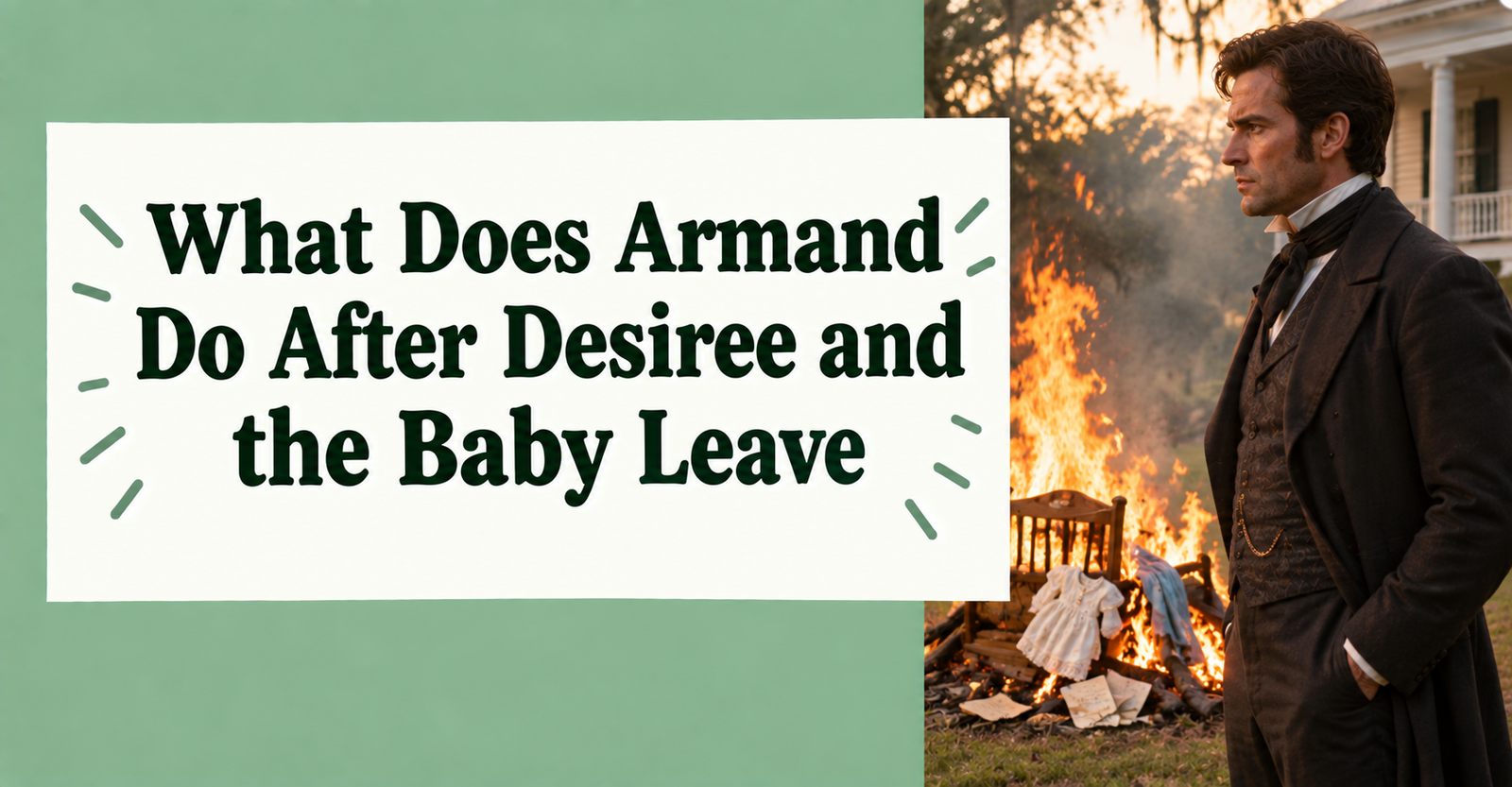
Kate Chopin’s story takes only a few minutes to read, yet its last paragraphs stay with readers for years. Most people reach the final line and ask the same thing: what does Armand do after Desiree and the baby leave?
Quick Answer: After Désirée walks away with the baby, Armand has a large bonfire built in the yard. He burns the cradle, the baby’s clothes, and Désirée’s belongings, including letters. Near the end of the burning, he finds an old letter his mother wrote to his father. It reveals that his mother had African ancestry, which means Armand himself does too.
This guide explains the ending step by step. It also covers the story’s background, what the fire may symbolize, why the twist works, and how the last scene changes the way we see Armand. The wording is simple, so it suits students, teachers, and first-time readers.
Quick Summary: What Armand Does at a Glance
If you only need the facts, this table has them.
| Order | What Happens | Why It Matters |
| 1 | Désirée leaves with her baby after Armand tells her to go | His cruelty drives her out of her own home |
| 2 | Armand orders a large fire built in the yard | He wants every trace of his wife and child gone |
| 3 | The cradle, baby clothes, gifts, and letters are burned | The destruction is deliberate and complete |
| 4 | He comes across a few old papers among the things to burn | These are the last items left |
| 5 | He reads his mother’s letter to his father | It reveals his own hidden ancestry |
Story Background: A Quick Recap of “Désirée’s Baby”
Kate Chopin published the story in 1893. It is set in Louisiana before the Civil War, when slavery shaped daily life and a person’s race could decide their rights, safety, and social standing.

Désirée was found as a small child asleep near a gate at the Valmondé plantation. Madame Valmondé, who had no children of her own, raised her with deep love. No one knew who Désirée’s birth parents were.
Armand Aubigny is a wealthy young plantation owner from a family proud of its name. He falls in love with Désirée almost at first sight and marries her quickly, without worrying about her unknown background. When their son is born, Armand is happier and treats the people he enslaves less harshly.
Then the baby grows, and his features begin to suggest African ancestry. Armand grows cold, then cruel, and he decides that Désirée must be the reason.
What Happens Right Before Désirée and the Baby Leave
To understand Armand’s actions at the end, it helps to see how he behaves just before Désirée goes.
Armand stops speaking to his wife and avoids her. Désirée becomes frightened. One day she notices how much her baby looks like the child of an enslaved woman on the plantation, and she asks Armand what is happening. He tells her the child is not white, and that this means she is not white either.
Désirée writes to Madame Valmondé for help. The answer is short and loving: come home, and bring your child. Désirée shows the reply to Armand and waits for him to speak. He never asks her to stay. When she asks whether she should leave, he says yes.
Désirée walks away holding her baby. She is never seen again.
What Does Armand Do After Desiree and the Baby Leave? Step by Step
From here, the story stays with Armand, not Désirée. This is where the real ending begins.

The Bonfire in the Yard
Armand has a big fire built in the yard. The scale matters. He is not quietly clearing out a room. He is putting on a display of anger and control, and the enslaved workers on the plantation are the ones who carry out the work.
What Gets Burned
Everything tied to Désirée and the baby goes into the flames. This includes the cradle, the baby’s clothes and fine bedding, gifts he once gave his wife, and her letters. Chopin’s description makes clear that he wants no reminder left behind.
The Last Papers
Near the end, Armand finds a small bundle of old papers among the things meant for the fire. Among them is one letter that is not what he expects. It is in his mother’s handwriting and is addressed to his father.
The Letter That Changes Everything
In the letter, Armand’s mother thanks God that her son will never learn that she belonged to the “race that is cursed with the brand of slavery.” In plain terms, she had hidden her ancestry from him his whole life.
Armand had been told that his mother died far away in France, and he has always seen himself as a member of the proud, white Aubigny family. The story ends on this discovery. Chopin gives us no reaction, no speech, and no final scene.
The Twist Ending Explained
This is one of the best-known surprise endings in American short fiction. It works because it reverses the whole story in a single paragraph.
Who Is Really the Source?
For most of the story, Armand blames Désirée. Her birth family is unknown, so he treats her as the “problem.” The mother’s letter shows that the ancestry he feared and despised is part of his own family. He drove out his wife and child over a false accusation.
The Irony
The irony is sharp. Armand takes great pride in the Aubigny name, which the story calls one of the oldest and proudest in Louisiana. Yet that name has been hiding the very truth he treats as shameful. He rejects Désirée for a “fault” that, in his own world’s logic, belongs to him.
Why Chopin Stops So Suddenly
Chopin ends the story at the moment of discovery. We do not see Armand’s shock, anger, or guilt. Because she leaves that blank, readers fill it in themselves, and many find the silence more powerful than any explanation.
Why Armand Burns Everything: Possible Meanings
The story does not explain his motives, so these are common readings of the fire, not certainties.

Erasing the past. By burning every reminder, Armand may hope to pretend the marriage never happened.
Anger and shame. The fire can be seen as his rage made visible. It may also reflect his belief that his family has been dishonored.
Destruction and denial. Fire destroys, and in many stories it also suggests cleansing. Armand may think that burning her things will cleanse his home. Instead, he finds the real truth in the pile.
Irony. He sets out to destroy what he thinks proves his wife’s “shame” and instead uncovers what exposes his own.
What Happens to Désirée and the Baby?
The story never says. The last time we see Désirée, she is walking away from the house with her child, heading toward the fields and the bayou. After that, she vanishes from the story.
Many readers believe she and the baby die, and the setting strongly suggests a tragic end. Others treat the ending as open. Either way, Chopin leaves the question unanswered on purpose. Désirée has no proven family, no protector, and no home to return to except one she is told to leave.
Understanding Armand’s Character
Armand is not a simple villain, and that is part of why the story lingers.
- He is proud. His family name and social position matter enormously to him.
- He does love Désirée at first. His early happiness feels real. That makes his sudden coldness even harder to read.
- He is shaped by a cruel system. Armand lives in a society built on slavery and racial hierarchy, and his beliefs come from it. That does not excuse him, because he still chooses to send his wife and child away.
- The ending changes how we see him. After the letter, he becomes tragic as well as cruel. He is undone by the same prejudice he acted on.
Major Themes Connected to the Ending
| Theme | How It Shows Up in the Ending |
| Race and identity | Armand learns his own background is not what he believed |
| Prejudice and hypocrisy | He punishes Désirée for something he himself carries |
| Gender and power | Désirée cannot defend herself, while Armand decides everything |
| Appearance vs. truth | The baby’s looks lead Armand to a false conclusion |
| Irony | The accused is innocent, and the accuser is the source |
Symbols and Literary Devices in the Final Scene

- Fire. It stands for anger, destruction, and denial. It is also what brings the truth into view.
- The cradle. Burning it is one of the story’s most painful images. It shows a father destroying the place where his child slept.
- The two letters. A useful way to read the ending is to notice that two letters drive the story. Désirée’s mother figure writes a loving letter that offers her a way home. Armand’s mother writes a secret letter that destroys his sense of himself. One offers shelter, and the other exposes a lie.
- Foreshadowing. Earlier details, such as descriptions of Armand’s dark, handsome face, quietly prepare readers for the twist.
- Situational irony. What Armand expects to find and what he actually finds are opposites.
Key Moments to Reread in the Original Text
The story is in the public domain and free to read online. For an essay, look closely at three passages: Armand telling Désirée to go, the description of the bonfire, and the final paragraph with his mother’s letter. Short quotations from these will strengthen any analysis.
Common Questions and Misunderstandings
- Does Armand know about his ancestry before the letter? The story suggests he does not. His mother’s letter says she hoped he would never learn the truth.
- Does Armand show guilt at the end? Chopin does not tell us. The story stops at the discovery.
- Is Désirée’s ancestry ever revealed? No. Her background stays unknown. The story’s point is that Armand blamed her without proof.
- Did Armand look for the letter? No. He comes across it while destroying Désirée’s belongings, which adds to the irony.
Frequently Asked Questions
What does Armand do after Desiree and the baby leave?
He has a large bonfire built and burns the cradle, baby clothes, gifts, and letters. He then finds his mother’s letter, which reveals his own ancestry.
What does Armand burn?
He burns the baby’s cradle and clothes, Désirée’s belongings and gifts, and her letters.
What is in the letter Armand finds?
It is his mother’s letter to his father. She thanks God that Armand will never know she belonged to a race marked by slavery.
Why does Armand burn the cradle?
He wants to erase every reminder of Désirée and the child. Readers usually see it as an act of anger, shame, and denial.
Does Désirée die at the end?
The story does not say. She walks away with the baby and disappears, and many readers assume she does not survive.
What is the theme of “Désirée’s Baby”?
Major themes include racial prejudice, identity, hypocrisy, and the powerlessness of women in a rigid society.
Why is the ending ironic?
Armand blames his wife for the baby’s appearance, but the letter shows the ancestry comes from his own family.
Who is really to blame for the baby’s appearance?
Ancestry is not a fault, so no one deserves blame. In the story’s logic, the letter shows Armand’s accusation was false.
Conclusion
So, what does Armand do after Desiree and the baby leave? He burns nearly everything connected to them, and in the pile he uncovers the truth about himself. That one moment turns the story upside down and shows prejudice to be both cruel and foolish.
The ending stays powerful because Chopin says so little. There is no speech, no apology, and no scene of consequences. There is only a letter, a fire, and a man who destroyed his family over a lie.
Related Post:
When to Stop Giving Baby Formula: The Complete Guide (2026)
How Much Expressed Milk to Feed Baby Calculator: A Complete Weight-Based Guide
Why Do Some Babies Wear Helmets? 7 Simple, Essential Facts
