You spotted a brown patch or a tiny hole on your child’s tooth, and you would rather not jump straight to drills and fillings. Fair. Here is the honest answer up front.
How to treat cavities in baby teeth naturally depends on how far the decay has gone. A chalky white spot can sometimes stop and harden again with fluoride toothpaste, fewer sugar exposures and thorough brushing. A true hole will not heal on its own, and no oil, herb or special diet will rebuild it.
That does not leave you with only the drill. Pediatric dentists now use gentle options such as fluoride varnish and silver diamine fluoride that stop decay without needles or drilling. This guide covers what works at home, how strong the evidence is for popular remedies, and when to stop experimenting and book a visit.
What Natural Care Can and Cannot Do for Baby Tooth Decay
Natural care can help stop the earliest stage of decay, but it cannot rebuild a tooth once a hole has formed.
Tooth decay (dental caries) happens when bacteria in plaque turn sugars into acid. The acid pulls minerals out of enamel.Early on, saliva and fluoride can return some of those minerals, a process called remineralization. The American Dental Association (ADA) notes that fluoride strengthens teeth and remineralizes enamel in the early stages of decay.

Once the enamel surface breaks down into a hole, there is nothing left for minerals to rebuild on. That is an interpretation based on how the disease works, and it matches pediatric sources, which say a cavity will not go away on its own.
The Four Stages and What Each One Needs
| What you see | What it likely means | What home care can do | Dentist needed? |
| Chalky white band or spot near the gumline | Early mineral loss in enamel | Fluoride toothpaste, fewer sugar exposures, careful brushing may help stop it | Yes, soon, to confirm and add fluoride |
| Light brown spot or rough patch | Decay may be active | Same habits, but do not wait and watch alone | Yes |
| Dark brown or black spot, visible pit | Cavity has reached the softer layer under the enamel | Habits can slow it, not repair it | Yes |
| Pain, swelling, a bump on the gum, fever | Possible infection | Not a home-care situation | Urgent |
Why Baby Teeth Decay Faster
Cavities form faster in baby teeth than in adult teeth, and the enamel on baby teeth is thinner, so acid reaches the inner layers sooner. Nationwide Children’s Hospital also notes that the upper front teeth and first molars tend to be damaged first. Doctors now call this problem early childhood caries (ECC), the modern term for what used to be called baby bottle tooth decay.
It is also common. The ADA says roughly one in four children has had a cavity before starting kindergarten. If your child has one, you are far from alone.
How to Spot Cavities in Baby Teeth Before They Hurt
Early decay is usually painless, so you have to look for it. Many children show no symptoms until the damage is advanced.
Once a day during brushing, lift the upper lip and check the front teeth along the gumline. Then look at the chewing surfaces of the back teeth in good light. A phone flashlight helps.
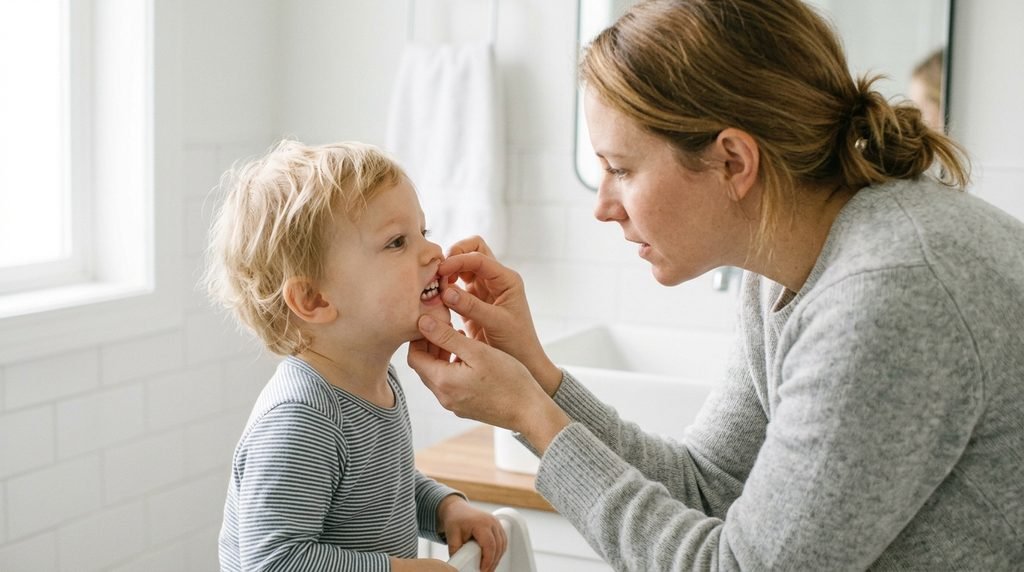
Signs to watch for:
- A white, chalky band or spot (the earliest visible sign)
- A light brown patch, which may darken to dark brown or black over time
- A rough spot you can feel with a clean fingertip or the brush
- Food that keeps catching in one place
- Your child avoiding cold, sweet or chewy foods
What this looks like in practice (illustrative example, not a real case): A parent notices a white line along the gumline of the top front teeth after a toddler’s night bottle habit. At the dental visit, the dentist confirms early decay and recommends fluoride varnish, ending the bedtime bottle and a brushing change. At the next check, the area is hard and no longer spreading. That outcome is possible when decay is caught at this stage. It is not guaranteed.
How to Treat Cavities in Baby Teeth Naturally: 7 Steps With Real Evidence
In this guide, “natural” means non-drilling, habit-based and mineral-based care. These seven steps are the ones backed by pediatric dental organizations. They work best for prevention and for stopping the earliest stage. They support, but do not replace, a dentist’s exam.
Step 1: Brush Twice a Day With the Right Amount of Fluoride Toothpaste
Brushing should start when the first tooth appears. The CDC’s guidance, echoed by the ADA, American Academy of Pediatrics (AAP) and American Academy of Pediatric Dentistry (AAPD), is a smear of fluoride toothpaste about the size of a grain of rice for children under 3, and a pea-sized amount from ages 3 to 6.
Adults should do the brushing and make sure the child spits rather than swallows. Do the last brush right before bed, then offer nothing but water.
Is fluoride “natural”? It is a naturally occurring mineral. One health-education source reporting on ADA guidance states plainly that fluoride-free toothpaste will not help prevent cavities, and that a rice-sized smear is safe even if a child swallows it. If you are uneasy about fluoride, raise it with your dentist. I did not find guideline-level support for fluoride-free pastes as a substitute for treating decay in baby teeth.
Step 2: Cut How Often Sugar and Acid Touch the Teeth
Teeth do best when sugar exposure is short and predictable. Each snack, sip or lick of a sweet drink gives bacteria a fresh meal and starts another acid wave. Frequency often matters more than total amount. That point is an interpretation of how the disease works, supported by the AAPD’s focus on frequent sugar and carbohydrate intake.
Practical changes:
- Aim for set meals and one or two planned snacks, rather than grazing.
- Serve sweet foods with meals instead of alone.
- Avoid added sugars for children under 2, as the AAPD advises.
- If you serve juice at ages 1 to 3, keep 100% juice to no more than 4 ounces a day, per the AAPD.
- Watch sticky snacks (gummies, fruit leather, dried fruit) and starchy ones (crackers, chips) that cling to teeth.
Illustrative example: A cup of juice sipped over the whole afternoon exposes teeth to sugar for hours. The same cup finished with lunch exposes them for minutes. The sugar is identical. The damage is not.
“Natural” sugar still counts. Honey, maple syrup and fruit concentrates feed the same bacteria. Honey should also never be given to babies under 12 months because of botulism risk.
Step 3: Fix Bottle, Sippy Cup and Night-Feed Habits
Nationwide Children’s advises not putting a baby to bed with a bottle and weaning from bottle to cup by 12 months. The AAPD recommends avoiding on-demand or night-time bottle feeding and breastfeeding beyond 12 months of age. Night bottles with juice and constant use of a sippy cup are named risk factors in the AAPD’s dietary policy.
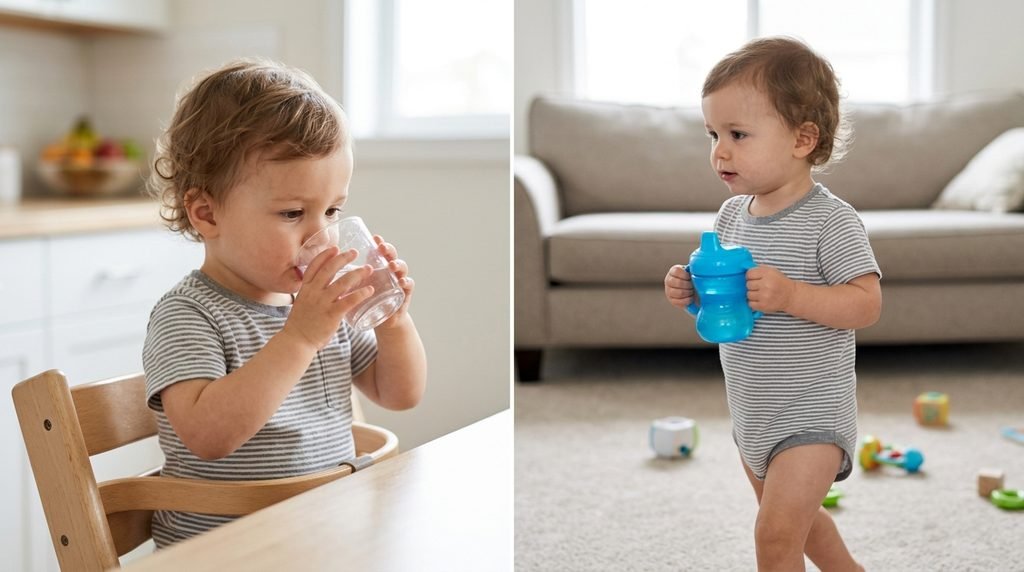
Breastfeeding deserves a careful word. AAPD materials say breastfeeding up to 12 months was linked with lower caries risk, while night-time or very frequent breastfeeding after 12 months was linked with higher risk in studies. That is an association, not proof that breastfeeding caused any one child’s decay. This is not a reason for guilt. If your toddler nurses at night, ask your dentist how to fit tooth-cleaning into your routine.
Step 4: Make Water the Default Drink
The AAPD supports introducing plain fluoridated water from 6 months and calls fluoridated water the preferred drink for children. Between meals, offer water, not juice, flavored milk or sports drinks. Water rinses the mouth and keeps saliva flowing.
Fluoride levels in tap water differ by country and even by town. Ask your dentist or local health authority what your water contains. If it has little fluoride, your dentist may suggest extra protection, such as varnish.
Step 5: Clean Between Teeth That Touch
Plaque hides where toothbrush bristles cannot reach. Once two baby teeth touch (often around age 2 to 3, but it varies), clean between them once a day with a floss pick or floss. Do it at bedtime before the final brush.
Use a gentle sawing motion and hug the tooth surface rather than snapping floss into the gum. If your child squirms, do just the back teeth first, where food traps most.
Step 6: Limit Bacteria Sharing and Protect Saliva
A dentist quoted in Romper notes that sharing spoons or cleaning a pacifier in your own mouth can pass bacteria to a baby. The effect on any one child is hard to measure, so treat this as a small helper, not a main lever. Fluoride and sugar timing matter more.
Saliva is your child’s built-in defense, because it buffers acid and delivers minerals. Water, regular meals and a nose-breathing, well-hydrated child all support it.
Also check medicines. The AAPD notes that sugar-sweetened medications have been tied to higher caries rates in chronically ill children. Do not stop any medicine on your own. Ask your pharmacist or doctor whether a sugar-free form exists, and rinse with water afterward.
Step 7: Book the First Dental Visit and Ask About Varnish
The AAPD recommends a dental home within 6 months of the first tooth and no later than 12 months, and professional fluoride varnish for children at higher risk of ECC. A dentist can tell a white spot from a stain, check how fast things are moving, and choose treatment that fits.
If your child already has a spot, book now. Do not wait until the next routine visit.
Natural Remedies Parents Ask About: Do They Work?
Here is a plain-language check of popular options. “Not verified” means I did not find authoritative pediatric guidance supporting the claim.
| Remedy | What the evidence suggests | Verdict |
| Xylitol (gum, mints, wipes) | A Cochrane review found low-quality evidence that a fluoride toothpaste with 10% xylitol reduced caries by about 13% versus fluoride-only toothpaste over 2.5 to 3 years, in the permanent teeth of children. Evidence for other xylitol products was too weak to judge. | Possible small add-on for older children. Not proven for baby teeth. Gum is a choking risk for toddlers. |
| Oil pulling / coconut oil | Not verified by pediatric dental bodies. It cannot fill a hole. Toddlers cannot swish and spit safely. | Skip for young children. |
| Clove oil | Not verified as a cavity treatment. Concentrated essential oils can be harmful if swallowed or applied to small mouths. | Avoid in young children. Ask a pharmacist or doctor about pain relief. |
| Salt water rinse | Not verified for decay. Young children usually cannot rinse and spit. | Not useful for toddlers. |
| Probiotics | Not verified in the pediatric dental guidance I reviewed. | Unproven. |
| Calcium-rich foods (dairy, leafy greens) | Part of a normal healthy diet. Not shown to repair existing cavities. | Fine for nutrition, not a cavity cure. |
| Remineralizing pastes (CPP-ACP, hydroxyapatite) | Dentists sometimes use or recommend them. CPP-ACP products contain a milk protein. I did not verify pediatric guideline endorsement for hydroxyapatite. | Ask your dentist first. Do not use to replace fluoride unless advised. |
| Fluoride-free “natural” toothpaste | ADA-aligned sources say fluoride-free paste will not prevent cavities. | Not a treatment. |
| Honey or “natural” sweeteners | Still sugar to bacteria. Honey is unsafe under 12 months. | Avoid as a remedy. |
Gentle Dentist Treatments That Avoid the Drill
For many parents, the closest thing to “natural” is a treatment that skips needles and drilling. These are the main ones.
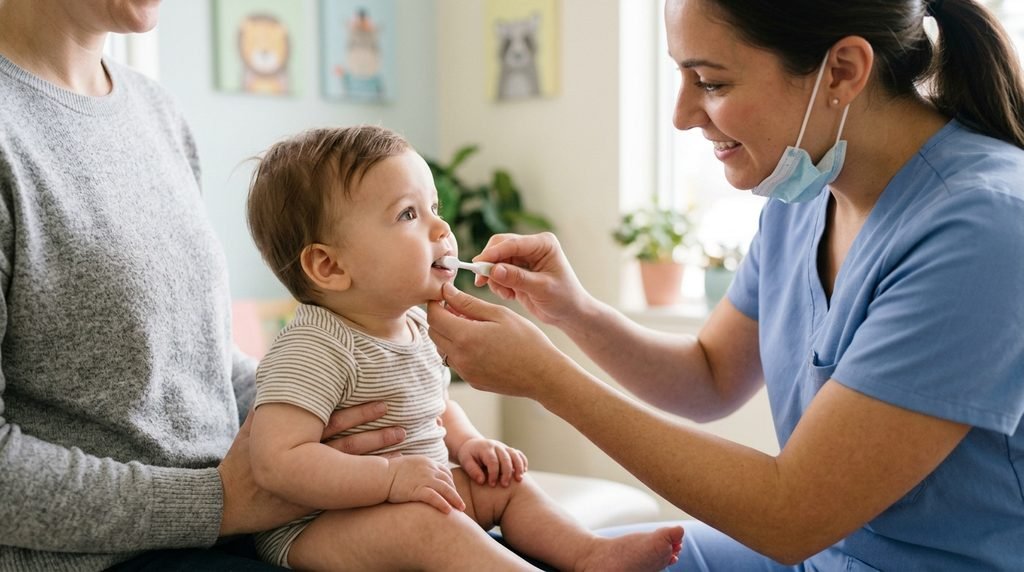
Fluoride Varnish
A dentist paints a concentrated fluoride coating on the teeth in a minute or two. It is used to protect at-risk teeth and can help early lesions. The AAPD supports it for children at risk of ECC.
Silver Diamine Fluoride (SDF)
SDF is a liquid painted onto a cavity. The silver kills bacteria, and the fluoride helps harden the tooth. In the United States the available product is 38% SDF, which contains 5% fluoride. Silver products have been used in Japan for more than 40 years.
What the evidence says:
- The AAPD issued a conditional recommendation for SDF to arrest cavitated lesions in baby teeth. In the study with the longest follow-up (30 months), SDF had a 48% higher success rate in stopping lesions than controls.
- An AAPD-affiliated source says roughly 20 to 30% of cavities do not respond to a single application, so children need follow-up.
- Children with silver allergies, and cavities that have reached the nerve, are not good candidates.
- SDF stains the treated area dark brown or black. This matters most on front teeth.
- The ADA’s summary notes that caries arrest is an off-label use and that the AAPD reports no known serious or systemic adverse effects when used as directed. The fluoride dose from SDF on a tooth is lower than that of a varnish application.
SDF can be a good fit for young children who cannot sit for fillings, but it is not right for every tooth. A dentist should decide.
Fillings, Crowns and Extractions
When decay is large or close to the nerve, a filling, crown or nerve treatment may be needed. Extraction is a last resort, because losing a baby tooth early can let neighboring teeth drift. Your dentist may suggest a space maintainer in that case.
“They Will Fall Out Anyway”: Why Baby Tooth Cavities Still Matter
Baby teeth hold space for adult teeth, and children with cavities in baby teeth are more likely to develop cavities in adult teeth, according to Healthline’s pediatric dental summary. Decay can also reach the tooth bud below.
Timing matters too. A dentist quoted by Romper points out that some baby teeth do not fall out until around age 12 or later. A tooth that has to last that long needs to stay healthy.
Untreated decay can bring pain, trouble eating and infection. Not every baby tooth cavity needs a filling, but every one needs a professional opinion.
Warning Signs That Need a Dentist or Doctor Quickly
Call a dentist the same day, or seek urgent medical care, if you see:
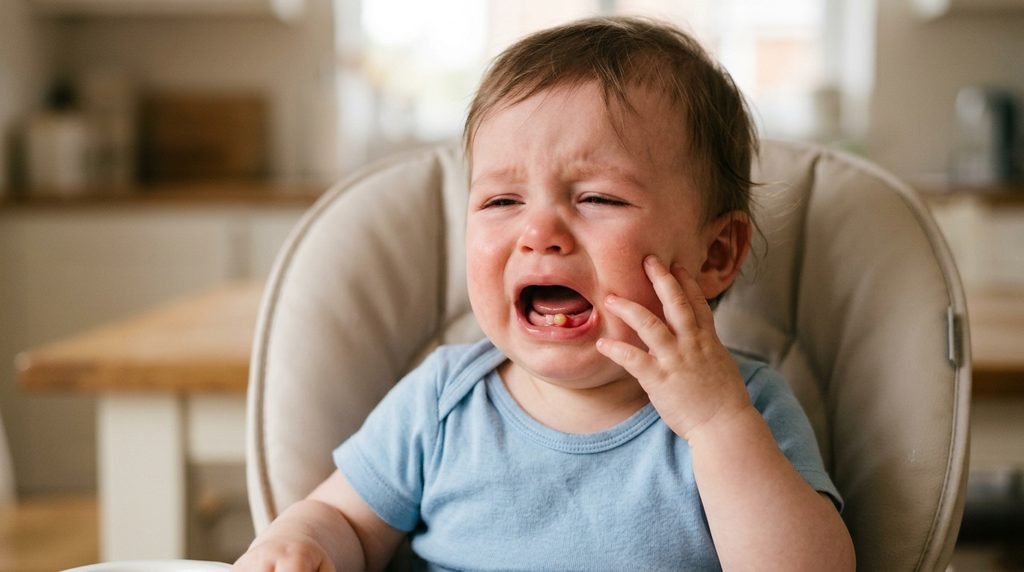
- Swelling of the face, jaw or gum
- A pimple-like bump on the gum
- Fever with tooth pain
- Pain that keeps your child from eating or sleeping
- Trouble swallowing or breathing (this is an emergency; go to emergency services)
Do not try to treat these at home. Infections can spread.
Common Mistakes When Treating Cavities at Home
- Waiting to see if it goes away. Cavities do not heal on their own.
- Switching to fluoride-free paste. This removes the main proven protection.
- Relying on a remedy with no evidence, such as oil pulling, while decay advances.
- Treating pain at home and ignoring the cause. Pain relief does not stop decay.
- Cutting sugar amounts but not frequency. Constant sipping is the bigger problem.
- Using too much toothpaste. A rice-sized smear is the right amount under age 3.
- Feeling guilty and hiding it. Dentists see this daily. Early honesty gets the best options.
A 30-Day Plan for How to Treat Cavities in Baby Teeth Naturally Until the Dentist Visit
Book the appointment first. Use this plan for the days while you wait and to build lasting habits.
| Week | Focus | What to do |
| 1 | Book and baseline | Call a dentist (a pediatric dentist if you can). Start rice-sized fluoride toothpaste twice daily. Write down everything your child eats and drinks for three days. |
| 2 | Sugar timing | Move sweets to mealtimes. Replace between-meal drinks with water. Stop night bottles or sweet drinks in bed, with your dentist’s guidance for night feeds. |
| 3 | Cleaning routine | Add daily flossing where teeth touch. Move to an open cup. Brush last thing at night, then water only. |
| 4 | Follow-up | Re-check the spot in good light. Take notes to the dentist. Ask about varnish or SDF, and when to re-check. |
Questions to Ask the Dentist
- Is this spot a white spot, early decay or a stain?
- Is it active, or has it stopped?
- Would fluoride varnish or SDF fit this tooth? What are the trade-offs, including staining?
- Does my water contain enough fluoride?
- How often should we re-check?
- Is there a sugar-free form of any medicine my child takes?
- What should I do for night feeds?
FAQ
Can cavities in baby teeth heal on their own?
A true cavity will not heal by itself. Only the earliest white-spot stage can harden again, usually with fluoride and better habits, and a dentist should confirm which stage it is.
How to treat cavities in baby teeth naturally at home without a dentist?
You can support the process with fluoride toothpaste in the right amount, fewer sugar exposures, water-only habits and good cleaning. You cannot safely skip the dentist, because only an exam shows whether the decay is still reversible.
Can I reverse a cavity in my toddler’s tooth with diet alone?
Diet helps by lowering the acid attacks, but no diet rebuilds a hole in a tooth. Pair diet changes with fluoride and a dental exam.
Does coconut oil pulling heal cavities in kids?
No authoritative pediatric source I reviewed supports it. It cannot fill a hole, and toddlers cannot swish and spit safely.
Is fluoride toothpaste safe for a toddler?
Yes, in the right amount. Use a rice-sized smear under age 3 and a pea-sized amount from 3 to 6, with an adult supervising so the child spits.
Is silver diamine fluoride safe for children?
The AAPD reports no known serious systemic side effects when SDF is used as directed. It stains the treated area dark and is not suitable for children with a silver allergy. Your dentist can explain whether it fits.
Do all cavities in baby teeth need fillings?
Not always. Depending on size, location and the child’s age, a dentist may use varnish, SDF, a filling, a crown or careful monitoring.
What is the best toothpaste for baby teeth cavities?
A fluoride toothpaste, ideally one with the ADA Seal of Acceptance, used in the age-appropriate amount. Ask your dentist before using a remineralizing paste on top of it.
Final Takeaway
The honest answer on how to treat cavities in baby teeth naturally is this: natural habits can stop the earliest white-spot stage, and they protect every other tooth, but they cannot repair a hole. Brush twice a day with a rice-sized smear of fluoride toothpaste, keep sugar to mealtimes, make water the default drink, clean between teeth that touch, and book a dental visit now. Ask about varnish or silver diamine fluoride if your child cannot sit for a filling.
Related Post:
Moses Basket for Baby: 7 Essential Checks Before You Buy
When Can You Take a Baby to the Beach? 7 Essential Steps
When Do Babies Start Breathing Out of Their Mouth? 7 Key Facts
