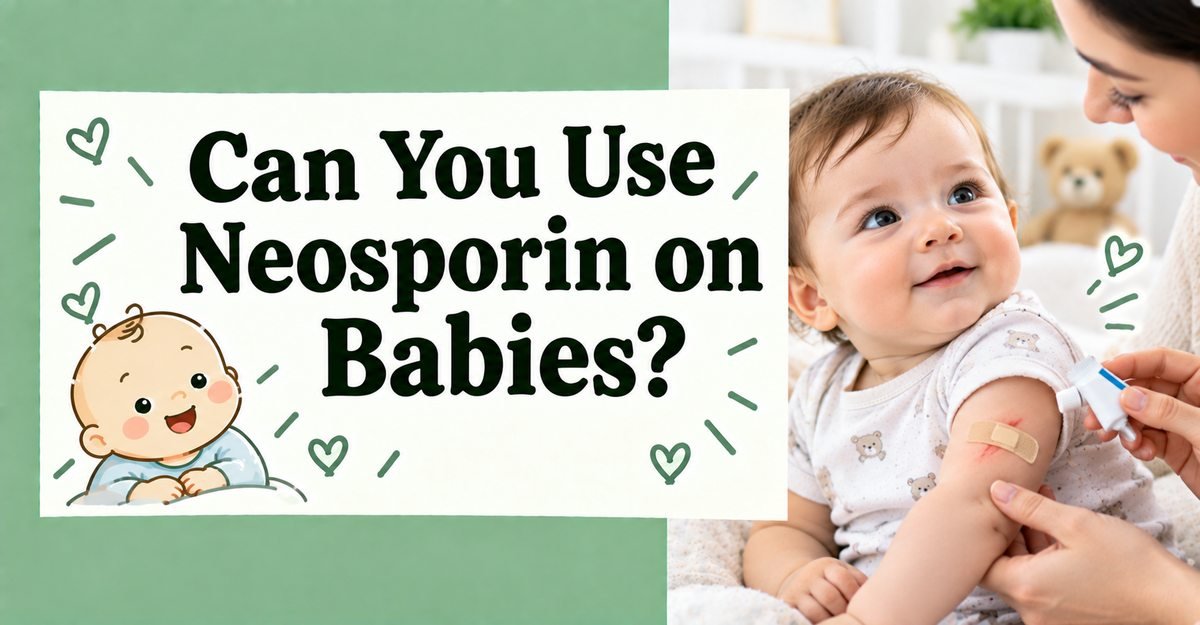
Can you use Neosporin on babies? Not on your own. The maker’s label says its products are for children 2 years and older, and it tells parents of younger children to ask a doctor first.
That surprises a lot of people. A tube of Neosporin, the triple antibiotic ointment made with bacitracin, neomycin and polymyxin B, sits in nearly every family medicine cabinet. So when a newborn scratches their cheek with a sharp little nail, reaching for it feels natural. The trouble is that a baby’s skin is still building its barrier, so it absorbs and reacts more easily. And neomycin, one of the three antibiotics, is a common cause of skin allergy.
This guide covers what the label and doctors say, why online advice conflicts, and what to do if you already used it. You’ll also get six safe swaps for baby cuts and scrapes. A spot-by-spot guide covers the diaper area, belly button, scalp, ears and face. And you’ll learn the signs that mean it’s time to call the pediatrician.
Quick Takeaways
So, can you use Neosporin on babies? Here’s the short version.
- The label says ages 2 and up. Under 2, ask a doctor first.
- The main risk is contact allergy, mostly linked to neomycin. One accidental dab rarely causes trouble.
- For most minor baby scrapes, gentle soap and water plus a thin layer of plain petroleum jelly is enough.
- If an antibiotic is truly needed, pediatricians often choose bacitracin alone, but ask before using it.
- Never use it on diaper rash. Call the doctor for signs of infection or any reaction.
Can You Use Neosporin on Babies? What the Label and Doctors Say
Not without medical advice. Neosporin’s own FAQ says its antibiotic products are indicated for children 2 years and above. For anyone younger, it recommends contacting a physician. Drug reference sites such as Drugs.com repeat the same rule for the triple antibiotic combination.
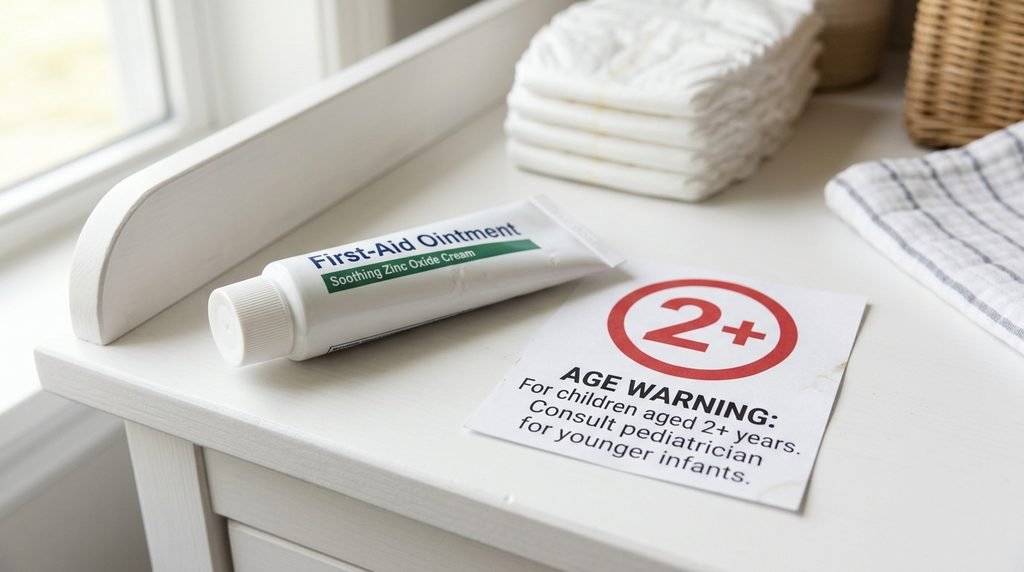
The label sets the minimum, though, and some doctors go further. In an older article for The Healthy, dermatologist Rachel Nazarian, MD, said her practice almost never recommends Neosporin or other antibiotics for babies, because contact allergy is a real risk. She pointed parents toward Aquaphor for keeping small injuries clean instead.
Pediatrician Mona Amin, who shares wound-care tips online, gave similar advice to The Bump. Skip the triple antibiotic, she said, and use a thin layer of Vaseline or Aquaphor under a bandage. If an antibiotic ointment is needed, she suggests bacitracin, or a call to your child’s clinician for a prescription.
In practice, “ask a doctor” is often a quick call. Most pediatric offices have a nurse line, and a two-minute question about your baby’s age, the wound and the product on hand can settle it. Can you use Neosporin on babies once the pediatrician’s office says yes? Yes, for that baby and that spot. That’s very different from a general green light.
Why the Advice You Read Online Doesn’t Match
Search this question and you’ll see at least three different age cutoffs. The label says 2 years. WebMD’s baby medicine cabinet guide suggests checking with your pediatrician before using any first-aid cream on a baby under 6 months. And some question-and-answer pages mention “under 2 months” with no source at all.
These aren’t three rival rules. They answer different questions. The label is what the manufacturer will stand behind. A pediatrician’s caution is advice for one specific baby. A number on an unsourced forum page is just a number.
Even doctors on Q&A platforms disagree. On HealthTap, one physician called Neosporin safe but not preferred for a 2-month-old’s scratched ear and suggested bacitracin instead. Another said yes with caution for a scalp lesion, as long as it wasn’t an open sore. So can you use Neosporin on babies if one doctor says yes? The safest reading of all this is to follow the strictest guidance and ask before using it on any baby under 2.
What’s Inside Neosporin and Why Neomycin Is the Concern
Original Neosporin is a triple antibiotic ointment. Each gram holds 400 units of bacitracin zinc, 3.5 mg of neomycin sulfate and 5,000 units of polymyxin B sulfate. The National Library of Medicine’s MedlinePlus drug information page lists it as an over-the-counter ointment for minor skin injuries. It also asks users to tell their doctor or pharmacist about any allergy to its ingredients.
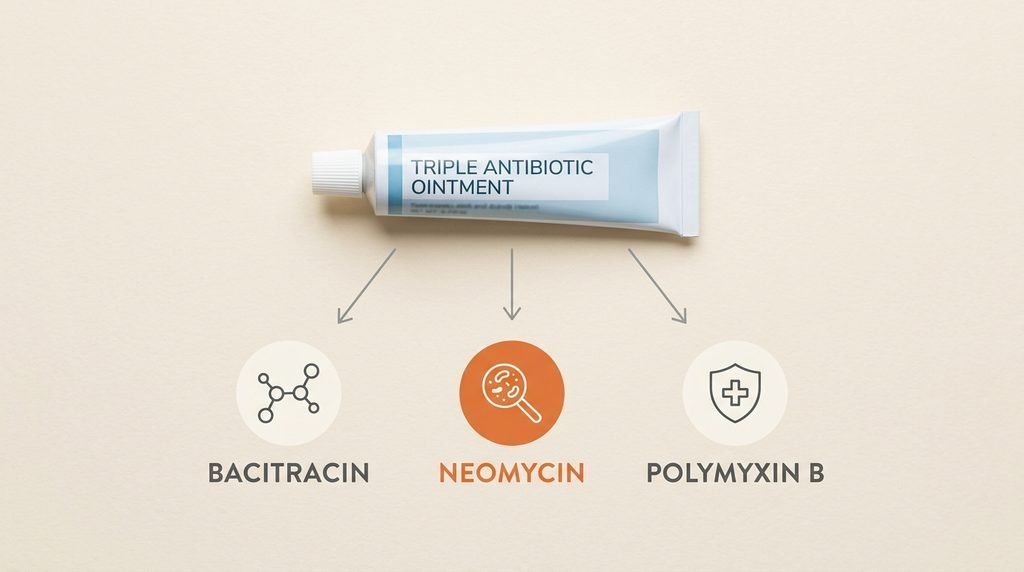
Neomycin is the ingredient that worries doctors most. Pediatric sources point to it as the usual culprit when a reaction happens. Wikipedia’s entry on the triple antibiotic ointment notes that it can cause contact dermatitis in some cases, and bacitracin-only ointments skip neomycin entirely.
Babies are also easier to over-expose. They have more skin surface for their body weight than adults do, and their skin barrier is still maturing. That’s one reason pediatric advice leans cautious.
This is an allergy, not poisoning. The immune system flags an ingredient and inflames the skin where it touched, often a day or two later. Here’s the catch: the itchy red patch looks a lot like an infected scratch. A worried parent sees redness and adds more ointment, which makes the reaction worse. One HealthTap doctor described exactly this problem, since a local reaction makes it hard to tell whether the redness comes from the ointment, the scratch or an infection.
Neosporin vs Polysporin vs Bacitracin
The three products get mixed up all the time. This table shows what each one contains and what to know for a baby.
| Product | Antibiotics inside | Contains neomycin? | Baby note |
| Neosporin Original | Bacitracin, neomycin, polymyxin B | Yes | Label says ages 2 and up. Ask a doctor for younger children. |
| Polysporin | Bacitracin, polymyxin B | No | Drug references say to get medical advice before giving it to a child. |
| Bacitracin alone | Bacitracin | No | Often the pick if an antibiotic is needed. Still check with your pediatrician for an infant. |
Pharmacy reference sites note that no head-to-head trial directly compares bacitracin with Neosporin. So the preference for bacitracin rests on allergy risk, not on proof that it heals better.
Check Your Tube: “Kids” and “Pain Relief” Versions
Neosporin + Pain Relief Cream for Kids sounds made for babies. It isn’t. It’s labeled for children 2 and older, and the directions say to ask a doctor for anyone younger. The regular Pain Relief ointments carry the same warning.
These products still contain neomycin and polymyxin B, so the allergy concern doesn’t go away. Store-brand tubes marked “compare to Neosporin” share the active ingredients too. Read the age line on the box before you buy.
Signs of an Allergic Reaction in Babies
A mild reaction looks like redness, itching, a rash, swelling or small blisters right where the ointment touched the skin. A serious reaction affects the whole body and needs emergency care.
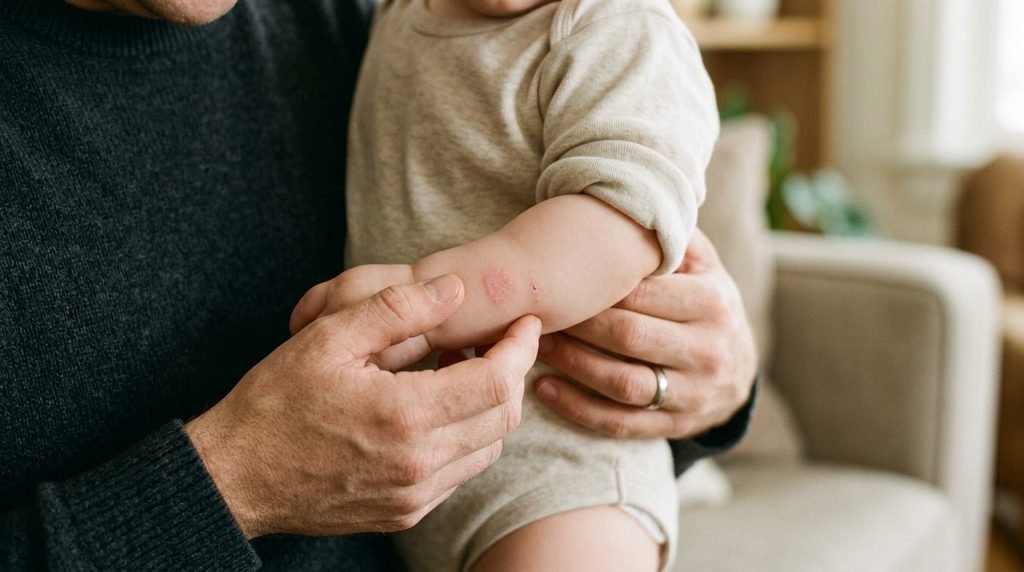
In a baby, itching often shows up as fussing, rubbing the spot or crying when it’s touched. The skin may look pink or red beyond the edge of the scratch, or turn dry, scaly, swollen, blistered or peeling. Timing varies. Mild reactions often appear within a day or two of first use, and sometimes take as long as a week. That delay is why parents miss the connection.
Call 911 for hives that spread, swelling of the face, lips, tongue or throat, wheezing, hoarseness, or trouble breathing or swallowing. Drug references list these as the signs of a serious allergic reaction.
If your baby does react, write it down. Neomycin belongs to a family of antibiotics called aminoglycosides, and MedlinePlus asks patients to mention allergies to neomycin and related antibiotics. Future doctors will want to know.
How do you tell a reaction from an infection? A reaction tends to itch and stay where the ointment touched the skin. An infection tends to hurt, feel warm, spread outward and sometimes ooze pus. When you can’t tell, call the pediatrician instead of guessing.
Redness on the face that appears without any ointment can have other causes. Our guide on why a baby’s cheeks turn red covers the common ones. Babies with eczema or very sensitive skin have even more reason to keep the routine simple, and our post on caring for sensitive baby skin explains how.
I Already Put Neosporin on My Baby. Now What?
Stay calm. One small dab on healthy skin usually causes no problem, because serious reactions are uncommon. Still, clean it off and watch closely.
- Wipe the area gently with warm water and a little mild soap, then pat it dry.
- Keep your baby’s hands away from the spot so ointment doesn’t reach the mouth or eyes.
- Don’t apply more. A thin layer of plain petroleum jelly can protect the scrape instead.
- Watch the skin over the next few days, and stay alert for up to a week. New itching, spreading redness or a rash means stop and call.
- Call your pediatrician the same day if your baby is a newborn, if you used a lot, or if ointment got near the eyes or mouth.
If your baby swallowed some, call Poison Help at 1-800-222-1222 in the US. For hives, facial swelling or breathing trouble, call 911.
What to Use on Baby Cuts and Scrapes Instead (6 Safe Swaps)
If the answer to can you use Neosporin on babies is “not yet,” you still have good options. For a clean, shallow scrape, most pediatric sources agree that keeping the wound clean, moist and protected works well without an antibiotic. These six swaps do exactly that.
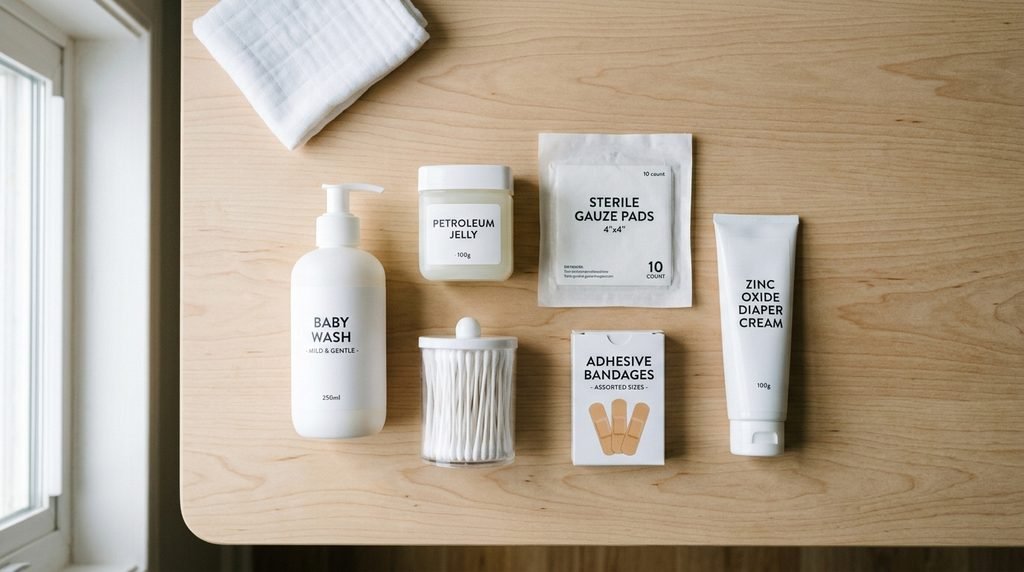
1. Gentle Soap and Water
Cleaning does most of the work. Rinse the scrape under lukewarm running water, wash around it with a mild baby cleanser, and pat it dry with a clean cloth. If it bleeds, press a clean gauze pad on it for a few minutes. Most tiny scratches need nothing more than this.
2. Plain Petroleum Jelly
A thin layer of plain, unscented petroleum jelly keeps a scrape moist and protected while the skin closes. The pediatrician quoted by The Bump recommends exactly this. Use a clean cotton swab or a fresh fingertip. Don’t dip a used finger back into the jar, since that’s how germs get into the tub.
3. A Petrolatum Healing Ointment for Babies
Petrolatum-based healing ointments made for babies work the same way. Both the dermatologist and the pediatrician mentioned earlier name Aquaphor. Pick a fragrance-free product and check the ingredient list. If your baby has eczema or reacts easily to new products, try a small patch first.
4. A Bandage, Only Where It Stays Put
Covering a scrape keeps out dirt and reminds you not to fuss with it. On a knee or a shin, a small bandage is fine. On hands, fingers and faces, though, a pulled-off bandage can end up in a baby’s mouth. In those spots, a thin layer of ointment without a cover is usually the safer choice, and you can check it often.
5. Bacitracin, but Only If Your Pediatrician Says So
If a wound truly needs an antibiotic, bacitracin alone is the one several pediatric sources prefer, because it skips neomycin. WebMD’s newborn supply list names it as a good option. That same list also says to check with the pediatrician before using any first-aid cream on a baby under 6 months.
So treat bacitracin as a doctor-approved step, not a default. It isn’t meant for deep wounds or bites either.
6. Zinc Oxide Cream for the Diaper Area
Diaper rash needs a different tool. Neosporin’s maker says plainly not to use its products on diaper rash, and it points to a diaper rash ointment instead. A zinc oxide diaper cream forms a barrier against moisture, which is what irritated skin needs. Change diapers often and give the skin some air time between changes.
Prevent the Next Scratch
Most baby scrapes start with tiny, sharp nails. File them smooth after a bath, when they’re soft, and use scratch mittens on newborns while they sleep. Fewer scratches means fewer decisions about ointment.
Diaper Rash, Belly Button, Scalp, Ears and Face
Can you use Neosporin on babies in one spot but not another? In general, no. Still, the location changes what you do next. This guide covers the common trouble spots.
| Spot | Neosporin? | What to do instead | Call the doctor if |
| Diaper area | No. The maker says not to use it on diaper rash. | Zinc oxide diaper cream, frequent changes, some air time | The rash has blisters, pus or bright red dots, or it lasts more than a few days |
| Belly button after the cord falls off | Not needed | Keep it clean and dry and fold the diaper below it | You see spreading redness, pus, a bad smell or fever |
| Scalp | Not for flaky or crusty skin | Plain petroleum jelly on scratches, and ask about cradle cap | The skin oozes, crusts or turns red and spreads |
| Ears | Ask first | Soap and water, then a thin layer of petroleum jelly | You see swelling, warmth or any discharge |
| Face and mouth area | Avoid. Babies’ hands go to their mouths, and labels say to keep it out of eyes, nose and mouth. | A thin layer of petroleum jelly, kept away from the eyes | A scratch sits near the eye, or an animal caused it |
Doctors do sometimes recommend a specific ointment for a specific baby, and that’s different from grabbing the tube on your own. If your pediatrician gives you an instruction, follow it.
For more on rash care, see our diaper rash guide. For cord stump care, read our newborn belly button care post.
Signs of Infection and When to Call the Pediatrician
Most minor scrapes heal in a few days to a week. Call your pediatrician if you see redness spreading past the edge of the scrape, warmth, swelling, pus or yellow crusting, red streaks, or a baby who cries when the spot is touched. Drug references give a similar list: severe redness, swelling, pus and oozing.
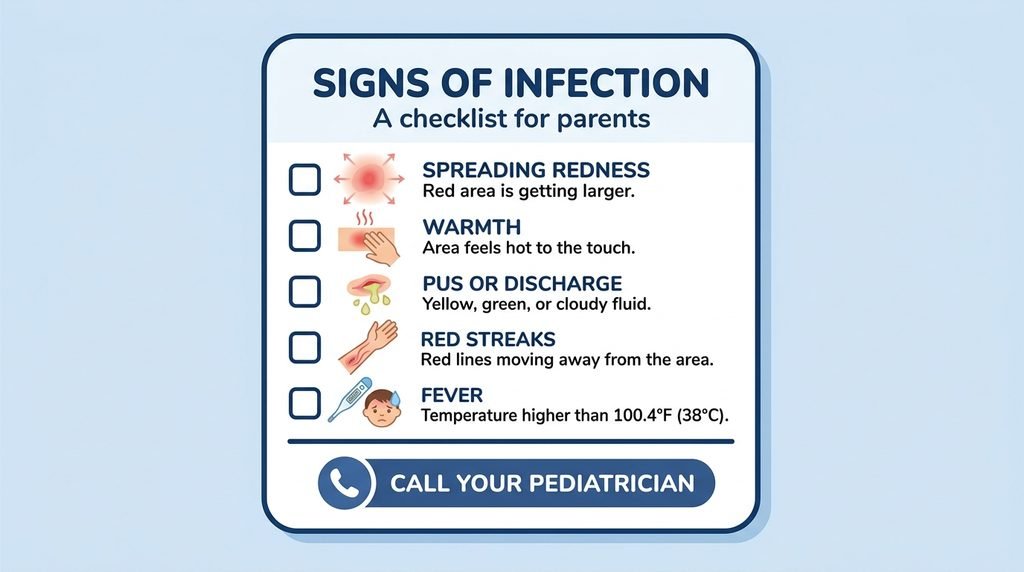
Fever raises the urgency. In a baby younger than 3 months, a rectal temperature of 100.4°F (38°C) or higher needs a call to the doctor right away.
Some injuries shouldn’t wait for home care at all. Get same-day medical advice for bleeding that doesn’t stop after 10 minutes of firm pressure, deep or gaping cuts, puncture wounds, animal bites, wounds full of dirt, and anything near the eye.
Antibiotic ointment is meant to prevent infection in minor wounds. On a clean, shallow scrape, though, routine use adds allergy risk and often little benefit, which is why doctors keep steering parents toward simpler care. So can you use Neosporin on babies when a wound does look infected? That’s a call for the pediatrician, who may choose a different antibiotic altogether.
Three Questions to Ask Your Pediatrician
If you’d like a doctor’s guidance, these three questions get you a clear answer fast.
- Is any antibiotic ointment appropriate for my baby’s age, and which one?
- Where and for how long should I use it, and where should I avoid it?
- What signs would make you want to see this wound in person?
Bring the tube or a photo of the label so the doctor can see the exact ingredients. Mention any family history of skin allergies or eczema too.
Frequently Asked Questions
Is Neosporin safe for a newborn?
Not without a doctor’s okay. The label covers children 2 years and older, and WebMD advises checking with your pediatrician before using any first-aid cream on a baby under 6 months. For a newborn, gentle soap and water plus petroleum jelly is the usual starting point.
Can you use Neosporin on babies after the umbilical cord falls off?
Usually no. A healing belly button typically needs to stay clean and dry, not covered in antibiotic ointment. Call the pediatrician if you see spreading redness, pus, a bad smell or fever.
Can you use Neosporin on babies with a diaper rash?
No. Neosporin’s maker says not to use it on diaper rash. Use a diaper rash cream such as zinc oxide instead, and call the doctor if the rash has blisters or pus, or if it lasts more than a few days.
Is bacitracin safer than Neosporin for babies?
It often carries less allergy risk because it has no neomycin, and several pediatric sources prefer it when an antibiotic is needed. No head-to-head trial shows it works better, though. Ask your pediatrician first.
What if my baby swallowed or licked Neosporin?
The product is for skin only, so call Poison Help at 1-800-222-1222 in the US for guidance, and keep the tube handy. Call 911 for trouble breathing or swelling of the face or lips.
Can you use Neosporin on babies if the tube says “Kids”?
No. Kids versions such as Neosporin + Pain Relief Cream for Kids are labeled for ages 2 and up, and they say to ask a doctor for anyone younger.
The Takeaway: Keep Baby Skin Care Simple
So, can you use Neosporin on babies? Only with a doctor’s guidance. The label stops at age 2, and neomycin makes the classic tube a poor guess for delicate skin. For most baby cuts and scrapes, clean skin, a thin layer of petroleum jelly and a watchful eye do the job. Save bacitracin for the times your pediatrician asks for it, and call quickly if you see spreading redness, pus, fever or any sign of a reaction.
Take five minutes today to build a baby-safe first-aid kit: mild soap, gauze, petroleum jelly, a zinc oxide diaper cream and your pediatrician’s number. Our baby first-aid kit checklist can help you stock it. Got a scratch story or a question? Share it in the comments.
This article offers general information and doesn’t replace advice from your child’s doctor.
Related Post:
When Do Babies Start Using High Chairs? 7 Essential Signs
Moses Basket for Baby: 7 Essential Checks Before You Buy
When Can You Take a Baby to the Beach? 7 Essential Steps
