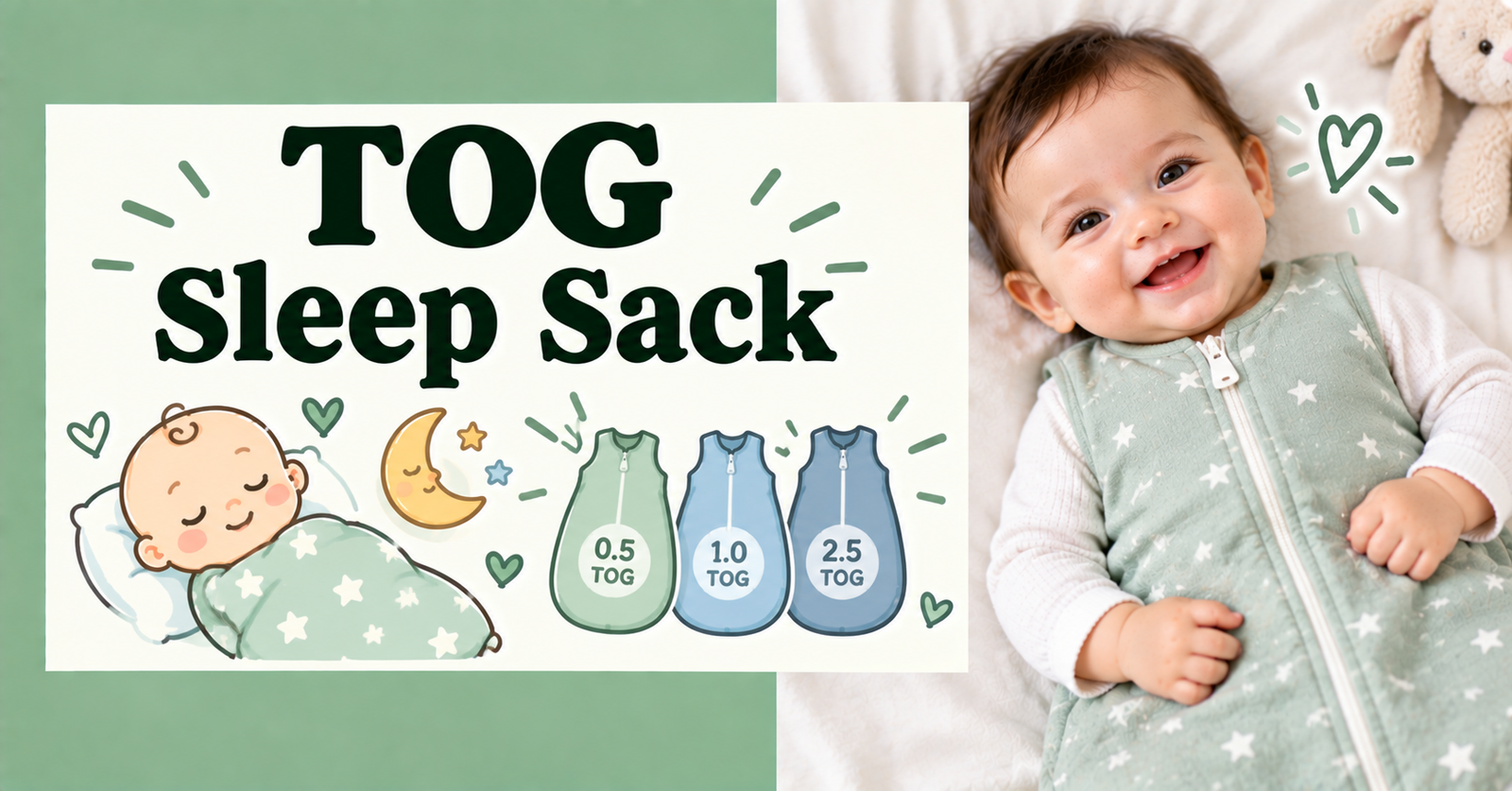
Every new parent eventually runs into the same puzzling label on a baby’s sleepwear box: a small number followed by the letters “TOG.” At first glance it looks like a code only insiders understand, but once you know what it stands for, choosing a tog sleep sack becomes one of the easiest parts of nursery shopping instead of one of the most confusing.
This guide breaks the whole topic down in plain language. You will learn what a tog sleep sack rating actually measures, why it matters for your baby’s safety, and exactly which rating suits your nursery in every season. We will also cover how to layer clothing underneath, how ratings shift as your baby grows, and the small mistakes that even careful parents tend to make. By the end, picking the right sleep sack will feel less like guesswork and more like reading a simple thermometer.
What Is TOG?
TOG stands for Thermal Overall Grade, a measurement originally developed for textiles such as duvets and quilts before it made its way into baby sleepwear. In simple terms, it tells you how much heat a fabric traps rather than lets escape. Picture two blankets folded side by side: a thin cotton throw and a thick winter comforter. The comforter has a much higher TOG number because it holds in far more warmth, even though both are technically “blankets.”
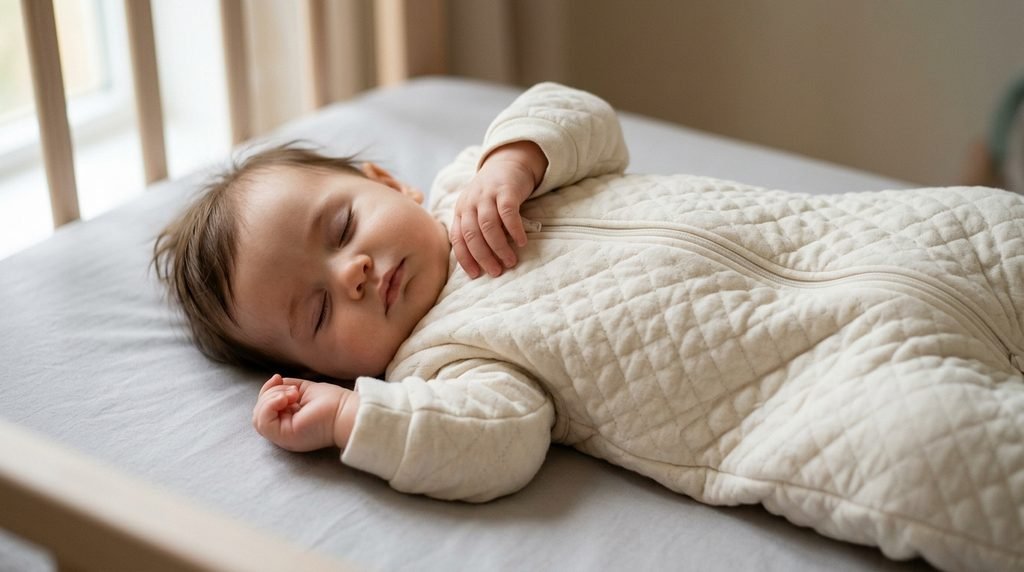
The same idea applies to a baby sleep sack. A low number means the fabric is thin and breathable, letting heat pass through easily, which is ideal for warm nights. A high number means the material is thicker or more insulated, holding heat close to your baby’s body, which suits colder rooms. Once you understand this one relationship, higher number equals warmer garment, the rest of the sizing chart becomes intuitive rather than something to memorize.
Ratings exist so that parents do not have to guess based on touch or thickness alone. A manufacturer tests the fabric under controlled conditions and assigns a number, which means a 1.0 TOG sleep sack from one brand should feel roughly as warm as a 1.0 TOG sleep sack from another, even if the materials look different.
Why TOG Rating Matters for Baby Sleep
Choosing the correct TOG rating is not just about comfort; it ties directly into safe sleep recommendations that pediatricians and sleep researchers have studied closely. Babies, especially in the first year, cannot regulate their own body temperature the way older children and adults can. Their internal thermostat is still developing, so they rely almost entirely on what a caregiver dresses them in and how warm the room is.
Overheating during sleep has been linked as a contributing risk factor in studies on Sudden Infant Death Syndrome, which is one reason sleep organizations recommend keeping a baby comfortably warm rather than bundled excessively. At the same time, a baby who is too cold will often wake frequently, fuss, or struggle to settle into deep sleep, which affects everyone’s rest, not just the baby’s.
This is also why loose blankets are generally discouraged for infants. A blanket can shift, bunch, or cover a baby’s face during the night, creating a suffocation risk that a properly fitted sleep sack avoids entirely. Because a wearable sleep sack stays in place regardless of how much your baby wriggles or rolls, it has become the safer, pediatrician-recommended alternative to loose bedding, and getting the TOG rating right is what makes that sack actually work the way it is meant to.
TOG Rating Chart by Room Temperature
The single most useful habit you can build as a parent is checking the actual temperature of your baby’s room with a simple thermometer rather than guessing based on how the house feels to you. Adults tend to prefer slightly warmer rooms than what is ideal for infant sleep, so relying on your own sense of “cozy” can easily lead to overdressing your baby.
Here is a general reference chart used across most sleepwear brands:
| TOG Rating | Room Temperature (°F) | Room Temperature (°C) | Best For |
| 0.2 | 75°F and above | 24°C and above | Hot summer nights |
| 0.5 | 69–74°F | 21–23°C | Warm rooms |
| 1.0 | 68–72°F | 20–22°C | Standard, mild rooms |
| 2.5 | 61–68°F | 16–20°C | Cool or air-conditioned rooms |
| 3.5 | Below 61°F | Below 16°C | Cold winter rooms |
Pediatric sleep specialists commonly point to 68–72°F (20–22°C) as the ideal nursery temperature range, which is exactly why the 1.0 TOG sleep sack is the most popular everyday choice for households in moderate climates. If your nursery consistently sits outside that range, whether from a poorly insulated room, strong air conditioning, or a colder climate overall, adjusting the sack’s rating rather than piling on extra layers underneath is usually the safer and simpler fix.
How to Choose TOG Based on Season
Thinking in seasons rather than exact numbers can make shopping much easier, especially if you are buying ahead for a baby who will grow through several months of changing weather.
During summer, a 0.2 or 0.5 TOG sleep sack is typically enough on its own, sometimes paired with nothing more than a diaper underneath in very hot climates. The goal in warm months is breathability first, since babies overheat far more easily than they get cold when the weather itself is already warm.
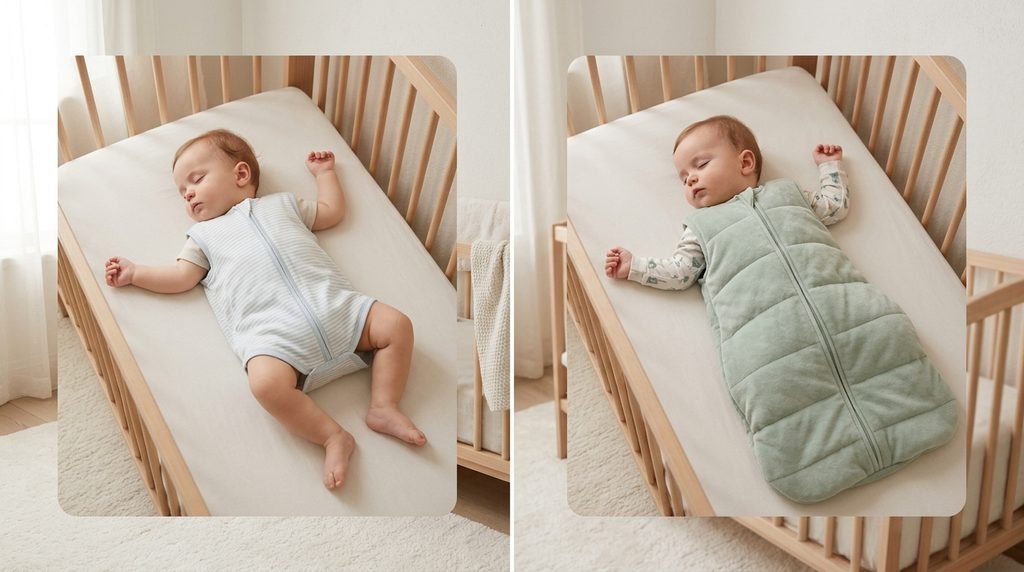
Spring and autumn tend to sit in the middle, where temperatures fluctuate from week to week or even day to night. A 1.0 TOG sleep sack is the reliable workhorse for these transitional months, and many parents find they can use it for the majority of the year if their home stays climate-controlled.
Winter calls for either a 2.5 or 3.5 TOG sleep sack depending on how cold the nursery genuinely gets overnight, not just during the day. It’s worth noting that heating systems often cycle down in the middle of the night, so a room that feels warm at bedtime can drop several degrees by 3 a.m. Checking the room temperature at different points in the night during the first week with a new sack can help you confirm you picked the right rating.
What to Dress Baby In Under Each TOG
The sleep sack’s rating only tells half the story; what your baby wears underneath completes the equation. Manufacturers design their charts assuming a baseline, usually a bodysuit or lightweight onesie, so layering has to be adjusted around that assumption rather than stacked on top of it randomly.
A simple way to think about it: as the sleep sack’s TOG rating goes up, the layers underneath should generally go down, not up. Parents sometimes make the mistake of adding a thick sleeper suit underneath an already warm sack, which can quickly tip a baby into overheating.
Here is a practical starting point for layering:
- 0.2–0.5 TOG: A short-sleeve bodysuit, or just a diaper in very hot rooms
- 1.0 TOG: A short-sleeve bodysuit in warmer moments of the range, or a long-sleeve bodysuit closer to the cooler end
- 2.5 TOG: A long-sleeve bodysuit or a lightweight sleeper underneath
- 3.5 TOG: A long-sleeve bodysuit paired with a warmer sleeper or light layer
These combinations are starting points rather than rigid rules. Every baby runs slightly warmer or cooler than average, so use the temperature checks described below during the first few nights with any new combination to fine-tune it for your own child.
How to Check if Baby Is Too Hot or Too Cold
Because babies cannot tell you directly how they feel, learning to read their physical signals becomes an essential skill, especially in the newborn months. Fortunately, there is a simple and widely recommended method pediatricians teach new parents.
The most reliable approach is what many sleep guides call the neck or chest check. Slide two fingers along the back of your baby’s neck or across their chest, rather than their hands or feet, which are naturally cooler and not a good gauge of core temperature. If the skin there feels warm and slightly damp, your baby is likely too hot. If it feels notably cool to the touch, they may need an extra layer or a warmer TOG rating.
Other signs of overheating include flushed cheeks, damp hair at the hairline, rapid breathing, or a baby who seems restless and unsettled despite otherwise being fed and comfortable. Signs of being too cold tend to show up as a baby who wakes frequently, feels cool at the chest, or has noticeably cold hands and feet along with a cool torso, since cold extremities alone are normal and not a reliable warning sign on their own.
TOG for Newborns vs. Older Babies
Temperature regulation is not static throughout the first year; it changes noticeably as your baby grows, which means the “right” tog sleep sack for a two-week-old is not necessarily right for a nine-month-old in the same room.
Newborns, and especially premature babies, generally struggle more with temperature regulation than older infants because they have less body fat and a higher surface-area-to-body-weight ratio, both of which make heat loss happen faster. Many parents find their newborn needs to be on the slightly warmer end of a given range compared to how the same room might dress an older, more active baby.
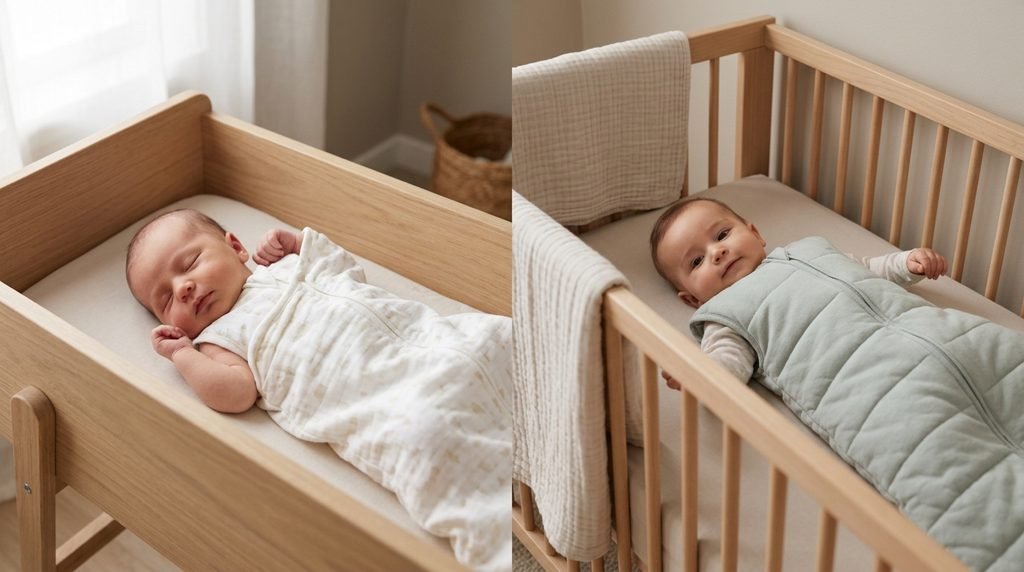
By around four to six months, babies typically become more efficient at holding their own body heat and start moving more during sleep, including rolling, which generates additional warmth on its own. This is often when parents notice they can step down slightly within the same TOG chart, or switch to a lighter combination underneath, without their baby feeling any colder than before.
If your baby was born prematurely, it’s worth discussing sleep sack warmth specifically with your pediatrician rather than relying solely on general charts, since premature infants sometimes need individualized guidance beyond the standard recommendations.
Sleep Sack Materials and Their Effect on Warmth
TOG rating and fabric type work together, not separately, which is why two sleep sacks with the same number can still feel a little different against the skin.
Cotton is breathable and widely used across nearly every TOG range, from ultra-light summer sacks to heavier winter versions, largely because it regulates moisture well and rarely irritates sensitive skin. Bamboo fabric has grown popular in recent years for its softness and natural moisture-wicking properties, which some parents find helps reduce night sweating even within the same TOG rating as a cotton alternative. Fleece, often used in higher TOG sacks meant for genuinely cold rooms, adds warmth through its plush texture but is generally less breathable, so it is best reserved for rooms that are consistently cold rather than used as an everyday choice. Merino wool sits somewhere in between, offering natural temperature regulation that keeps a baby warm in cool conditions while still wicking moisture away, though it typically comes at a higher price point than cotton or bamboo options.
When comparing two sleep sacks with an identical TOG number, checking the fabric composition can still help you decide which one suits your specific climate, your baby’s skin sensitivity, and your own laundering preferences.
Common Mistakes Parents Make
Even attentive parents fall into a handful of recurring habits that work against the purpose of a tog sleep sack, usually out of an abundance of caution rather than carelessness.
One frequent mistake is layering a loose blanket over a baby who is already wearing a sleep sack, which defeats the entire safety purpose of switching to wearable bedding in the first place and reintroduces the suffocation risk that sleep sacks are designed to eliminate. Another common issue is choosing a TOG rating based on the season outside rather than the actual measured temperature inside the nursery, particularly in homes with strong heating or air conditioning where indoor and outdoor temperatures can differ dramatically. Overdressing is also common among first-time parents who instinctively want their baby to feel extra warm and cozy, not realizing that a baby who runs warm is statistically a greater safety concern than one who runs slightly cool. Finally, some parents stick with the same TOG rating for months at a time without rechecking it, forgetting that both the seasons and their baby’s own temperature regulation are constantly shifting.
Frequently Asked Questions
Can I use a 1.0 TOG sleep sack all year?
In climate-controlled homes where the nursery stays consistently between 68 and 72°F regardless of the season, a 1.0 TOG sleep sack can realistically work year-round. In homes without reliable heating or cooling, you will likely need to switch between at least two or three ratings as the seasons change.
Do I need different TOG ratings for daytime naps versus nighttime sleep?
Generally no, as long as the room temperature stays similar between day and night. If your baby naps in a sunnier room that runs warmer during the day, it is worth checking the temperature separately rather than assuming it matches the overnight nursery reading.
What TOG rating should I use in an air-conditioned room?
Air-conditioned rooms often run cooler than parents expect, especially overnight, so a 2.5 TOG sleep sack is frequently the better fit in these environments even during summer months. Checking the actual room temperature with a thermometer rather than assuming based on the season outside will give you a more accurate answer.
Is a higher TOG rating always warmer, and therefore better?
Not necessarily. A higher rating only means more insulation, which is only “better” if your baby’s room genuinely runs cold. Choosing a rating higher than your room requires increases the risk of overheating rather than offering extra safety, so matching the number to your actual measured temperature matters more than defaulting to a heavier option.
Conclusion
Choosing the right tog sleep sack ultimately comes down to one simple habit: matching the rating to your baby’s actual room temperature rather than to guesswork or general assumptions about the season. Once you know that a low TOG number means a lighter, more breathable sack and a high number means a warmer, more insulated one, the rest of the decision becomes far more straightforward.
As a quick checklist, measure your nursery’s real temperature with a thermometer, match that reading against the chart above, dress your baby in appropriately light layers underneath, and use the neck or chest check during the first few nights with any new combination to confirm you got it right. Revisit the rating as the seasons change and as your baby grows, since both factors shift what “right” looks like over time. With that simple framework in place, you can spend less time second-guessing the nursery thermostat and more time enjoying a baby who is sleeping safely and comfortably through the night.
Related Post:
Should I Remove Pacifier When Baby Is Sleeping? 5 Safe Tips
When Can Baby Sit in Stroller? 5 Safe, Essential Signs
When Can Babies Have Blankets? The Safe Sleep Timeline
Can Babies Have Allergies? 7 Essential Signs and Safe Steps
Why Do Babies Grunt in Their Sleep? A Complete Parent’s Guide

6 thoughts on “TOG Sleep Sack Guide: How to Choose the Right Warmth for Your Baby”