Babies breathe through their noses from birth, and most keep doing it. So when do babies start breathing out of their mouth? Newborns can switch to mouth breathing within days if their nose gets blocked, but it becomes steadier and more efficient somewhere between about 3 and 6 months. Sources give different ages because nobody has found a clean on and off switch.
Here’s the part that matters more than the age. Mouth breathing is not a milestone. It’s a backup route, and it usually shows up because something is blocking the nose, most often a cold. A few open-mouth moments during a stuffy week are normal. Mouth breathing that keeps going while your baby is healthy deserves a closer look.
This guide explains what’s normal, what causes it, and how to tell a parted mouth from true mouth breathing. You’ll also get safe home care steps and a clear list of signs that mean you should call the doctor. If you’re worried right now, jump to the warning signs section first.
Quick takeaways
- Newborns can breathe through their mouth, but they prefer the nose.
- Most sources answer when do babies start breathing out of their mouth with a range of about 3 to 6 months.
- A blocked nose is the usual trigger, and colds are the usual reason.
- Mouth breathing that lasts several weeks without a cold should be checked.
- Blue lips, fast breathing, grunting, or a chest that pulls in need help right away.
When Do Babies Start Breathing Out of Their Mouth?
The short answer to when do babies start breathing out of their mouth is this: babies can do it from the first days of life, but it usually becomes steady and effective around 3 to 6 months. Until then, the nose does most of the work, even when the mouth hangs open.
What newborns can already do
For years, parents were told that newborns are “obligate” nose breathers, meaning they physically can’t breathe any other way. The research doesn’t fully back that up. A 1985 study in The Journal of Pediatrics tested healthy full-term babies who were only one to three days old. When researchers briefly blocked the nose in 20 of them, eight (40%) switched to mouth breathing and kept it going.
In a separate group of 10 sleeping babies, three breathed through both nose and mouth on their own. Wikipedia makes a similar point, noting that the word “obligate” can mislead because most infants can breathe through the mouth if the nose is blocked.
There’s a catch, though. When those babies switched, the total air they moved each minute dropped by about a quarter. Oxygen readings stayed steady in these healthy newborns, so the mouth works. It’s just a weaker backup, and the study was small and old, so treat it as a clue rather than a rule.
When do babies start breathing out of their mouth? Why sources disagree
Search when do babies start breathing out of their mouth and you’ll see three answers: 3 to 4 months, 3 to 6 months, and 2 to 6 months. They differ because they describe different things. One is the earliest moment a baby can mouth breathe, which is close to day one. The other is when it becomes comfortable and habitual, which takes months.
As your baby grows, the airway changes shape. Some sources describe the soft palate and epiglottis moving farther apart at around 4 to 5 months, which gives a baby more freedom to use the mouth. So treat the ages as a rough guide, not a deadline. No baby turns mouth breathing on at a set date.
The practical takeaway is simple. A 5-week-old who breathes through the mouth during a cold is not early or abnormal. An 8-month-old who does it every day with no cold is past the “age window” but still worth raising with a pediatrician. The cause matters far more than the calendar.
Why Newborns Prefer Breathing Through the Nose
Newborns prefer the nose because it lets them feed and breathe at the same time. Nursing or bottle feeding fills the mouth completely, so air needs another route.
A baby’s voice box sits high in the throat, and the tongue fills most of a very small mouth. Milk and air travel along separate paths, so a baby can swallow and breathe in a steady rhythm. If the nose were blocked, every feed would become a stop and start job.
The nose also warms, moistens, and filters the air before it reaches the lungs. The mouth skips all of that. For a baby with an immature immune system, that filtering is a small but useful bonus.
Some clinicians prefer to call newborns “preferential” nose breathers rather than “obligate” ones. One pediatric emergency medicine teaching blog makes a helpful point about this. A stuffy nose matters in a tiny baby not because the baby can’t mouth breathe, but because the switch may not happen quickly enough, especially during sleep.
That also explains why congestion sounds so dramatic in babies. Their nasal passages are narrow, so even a little swelling or mucus causes snuffling, snorting, and noisy breathing. Most of the time the noise sounds worse than it is.
Is It Normal for a Baby to Breathe Through Their Mouth?
Occasional mouth breathing is normal, especially during a cold, but steady mouth breathing in a healthy baby is not typical. Parents who ask when do babies start breathing out of their mouth are usually really asking whether what they see is normal. The table below shows how to sort it.
| Usually normal | Worth checking with a pediatrician |
| Mouth open briefly in sleep while air still moves through the nose | Mouth open most of the time at rest, with no cold |
| Mouth breathing during a cold or stuffy night | Mouth breathing that lasts several weeks |
| Breathing through the mouth while crying | Loud snoring on most nights |
| Open-mouth sleeping for a few nights after a cold clears | Trouble feeding, or dry lips every morning |
The second row of the left column surprises many parents. After a cold, the lining of the nose stays a little puffy for a while. The jaw muscles have also gotten used to falling open in deep sleep. One pediatric telehealth practice says this carryover can last a week or two, and it tends to fade on its own.
If your baby is feeding well, gaining weight, and has healthy pink color, this kind of leftover open-mouth sleeping is usually harmless. If it drags on, or if you see any item from the right column, that’s your cue to ask for an exam.
What Causes a Baby to Breathe Through Their Mouth?
The most common cause is a stuffy nose, and most cases are simple and short-lived. So when do babies start breathing out of their mouth for reasons beyond a cold? Usually only when something structural or ongoing keeps the nose from doing its job.
Common, short-term causes
- Colds and viral infections. Viruses make the nose produce extra mucus and swell. This is the top reason babies start mouth breathing.
- Irritants in the air. Dry air, smoke, dust, and strong fragrances can all trigger a stuffy nose in a baby.
- Allergies. They can contribute, although they tend to show up more as children get older than in the first few months.
Less common, longer-lasting causes
- Enlarged adenoids or tonsils. These tissues can partly block the airway. They’re more common in toddlers and preschoolers, but they can occur in infants too.
- Structural differences. A deviated septum or a cleft palate can change how air flows through the nose.
- Tongue-tie. Some dental practices link a restricted tongue to mouth breathing, so it’s worth mentioning to your pediatrician if feeding is also hard.
- Sleep-disordered breathing. Snoring, gasping, and visible pauses can point to an airway problem that needs medical attention.

Choanal atresia deserves a special mention because it’s rare but serious. It’s a blockage of the nasal airway that’s present at birth, and the Minnesota Department of Health reports it in about 1 in 7,000 live births. A baby with both sides blocked struggles right after birth, turns bluish when trying to feed, and pinks up again when crying, because crying opens the mouth. If only one side is blocked, it may go unnoticed for months or even years.
Habits can play a part later. Long-term pacifier use or thumb sucking doesn’t directly cause mouth breathing, but it can influence jaw and tongue position over time. That’s one reason dentists like to check in early.
Mouth Open vs Mouth Breathing: How to Tell the Difference
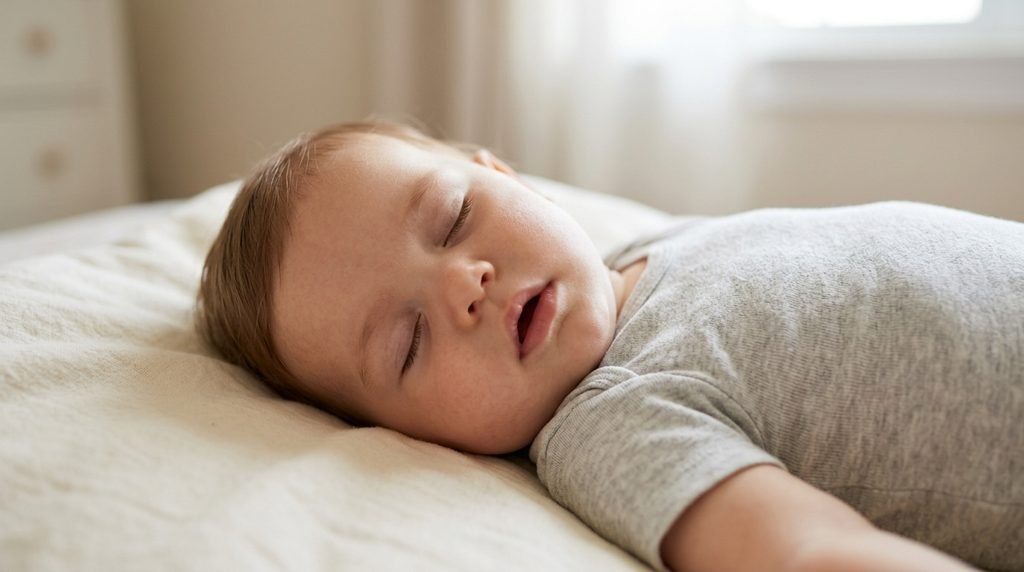
A parted mouth doesn’t always mean mouth breathing, because what matters is where the air is moving. Many parents who search when do babies start breathing out of their mouth are really noticing an open mouth, not mouth breathing. Plenty of babies sleep with a relaxed, open jaw and still breathe quietly through the nose.
A sleep-focused pediatric resource notes that it’s normal to see a newborn sleep with an open mouth while breathing through the nose. So don’t panic at the sight of an open mouth alone. Look at the whole picture instead.
Over a day or two, watch your baby for a minute or two during calm moments, both awake and asleep. Ask yourself a few simple questions:
- Does the mouth stay open at rest even when your baby is calm and healthy?
- Are the lips or mouth dry in the morning?
- Is the breathing noisy, or is there snoring?
- Does feeding look hard, with frequent pauses or pulling off?
- Has this gone on for several weeks without a cold?
Several “yes” answers point toward true mouth breathing. One or two, during a cold, usually don’t. This isn’t a diagnosis, but it gives you useful facts to share.
Here’s a tip that helps more than you’d expect. Take a 30 second video of your baby sleeping on your phone. Noises often vanish the moment you walk into the exam room, and a short clip lets your pediatrician see and hear what you did.
Safe Home Care for a Mouth-Breathing Baby
For cold-related mouth breathing, the goal is to clear the nose and keep your baby comfortable. Simple steps work for most babies.
- Use saline drops. A few drops in each nostril thin the mucus and make it easier to remove.
- Suction gently. After the drops, a rubber bulb can pull out loosened mucus. Go easy, because using it too hard or too often can irritate the nose.
- Run a cool mist humidifier. Moist air can loosen mucus. Clean it as the maker directs so it doesn’t grow mold.
- Clear the nose before feeds and sleep. A blocked nose makes feeding harder, so a quick clean-out first can make feeds calmer.
- Keep the air clean. Avoid smoke and strong scents around your baby.

Sleep safety still comes first, even when your baby is stuffy. Keep your baby flat on the back in an empty crib. Don’t prop the mattress with pillows or wedges, and don’t add sleep aids. An American Academy of Pediatrics spokesperson has warned that objects in the crib create a suffocation risk.
A few things to skip. Don’t give over-the-counter cold medicines to a baby unless your pediatrician tells you to. And skip mouth taping. It’s a trend aimed at adults and older children, and it has no place with babies, because a baby with a stuffy nose who can’t open their mouth has no backup airway.
Most cold congestion improves within a few days. One pediatrician advises seeing a doctor if your baby gets better and then worse again. Children’s Health suggests calling if nasal symptoms last longer than three weeks.
Warning Signs: When to Call the Doctor or Get Emergency Help
Call your pediatrician if breathing looks like hard work, and get emergency help for blue color or struggling to breathe. Trust your instincts here.
The Children’s Hospital of the King’s Daughters lists signs of breathing trouble in a newborn that need a call to the pediatrician. They include:
- Blue-tinged skin
- More than 60 breaths a minute
- Pauses of more than 10 seconds between breaths
- Flaring nostrils, a chest that sucks in, or grunting when breathing in
- Moaning or sighing when breathing out
- A cough that won’t quit
Brief pauses of a few seconds are common in newborns, so one short pause isn’t a reason to panic. A gap longer than 10 seconds is.
Beyond that list, call the doctor if your baby has trouble eating, a fever, loud snoring on most nights, or choking and gasping sounds. Also call if congestion runs longer than a week or two. With a baby under 3 months, many practices want a call early for any illness, so don’t wait and see.
If your baby’s lips turn blue or your baby is struggling to breathe, don’t wait for a callback. Get emergency help right away.
Does Mouth Breathing in Babies Change Jaw and Face Growth?
Long-term mouth breathing in older children is linked to some differences in jaw and face growth, but nothing shows that brief mouth breathing in babies reshapes the face. The evidence is more limited than many articles suggest.
Many pages on this topic come from dental practices, and they often warn about a “long face.” There’s real research behind part of that. A 2020 systematic review of 19 studies found that mouth-breathing children and teens tended to show differences in jaw position and face height compared with nose breathers. The authors also said more high-quality studies are needed.
A 2025 review added an important caution. Researchers still debate whether mouth breathing causes these changes or whether children with certain facial structures simply end up mouth breathing. The studies it covered looked at children aged 6 to 18, not babies.
So the honest summary is this. The research concerns school-age children who breathe through the mouth for years. It says little about a baby with a cold. Still, if mouth breathing continues after an illness, checking the cause early is sensible, because treating the cause is usually the path forward.
Dry mouth is the other concern. Mouth breathing reduces saliva, which raises the risk of cavities and irritated gums. That matters more once your baby has teeth.
Frequently Asked Questions
Can newborns breathe through their mouth?
Yes, but they prefer the nose. In a study of babies only one to three days old, many switched to mouth breathing when the nose was blocked, although it moved less air. Clear a stuffy nose, and call if the breathing looks labored.
Is it normal for a baby to sleep with their mouth open?
Often, yes. A parted mouth is common while the nose is still moving air. Open-mouth sleeping every night with no cold is worth mentioning at the next visit.
Does mouth breathing go away on its own?
When a cold causes it, usually yes. It tends to fade within days to a couple of weeks once the nose clears. If it continues after the illness, ask your pediatrician.
Can a pacifier or thumb sucking cause mouth breathing?
Not directly. Long-term use can influence jaw and tongue position, which may contribute over time. Raise it with your pediatrician or dentist if you’re concerned.
Can mouth breathing cause feeding problems?
Yes, it can. Babies rely on the nose while feeding, so a blocked nose can make latching and sucking harder. Ongoing feeding trouble deserves a call to the doctor.
Can mouth breathing change a baby’s face shape?
Long-term mouth breathing in older children is linked to some changes in jaw and face growth. Brief mouth breathing during colds hasn’t been shown to do that. Persistent cases should be evaluated.
How long is too long for a baby to mouth breathe after a cold?
A week or two of leftover open-mouth sleeping can be normal if feeding and color are fine. Go sooner if you notice snoring, pauses, or trouble feeding.
Key Takeaway: Watch the Pattern, Not the Age
So when do babies start breathing out of their mouth? Early, if the nose is blocked, and more easily from about 3 to 6 months on. The age is a soft guide. The pattern is what counts.
Brief mouth breathing with a cold is normal. Mouth breathing that lasts weeks, comes with snoring or feeding trouble, or shows up when your baby is well is worth a pediatric visit. And blue lips, fast breathing, or a chest that pulls in need help right away.
If what you’re seeing sits in the “worth checking” column, book a visit this week and bring a short sleep video. Did your baby’s mouth breathing start with a cold? Tell us in the comments.
Related Post:
Moses Basket for Baby: 7 Essential Checks Before You Buy
When Can You Take a Baby to the Beach? 7 Essential Steps
Why Do Some Babies Wear Helmets? 7 Simple, Essential Facts

One thought on “When Do Babies Start Breathing Out of Their Mouth? 7 Key Facts”