Quick Takeaways
- Most babies need less help burping by about 4 to 6 months, but there is no single “stop” date.
- Your baby’s cues (calm feeds, comfort after eating, little spit-up) matter more than age.
- Phase burping out gradually: drop the mid-feed burp first, then shorten the post-feed burp.
- Keep burping if your baby is fussy, arches during feeds, or spits up a lot, and check in with your pediatrician if you’re worried.
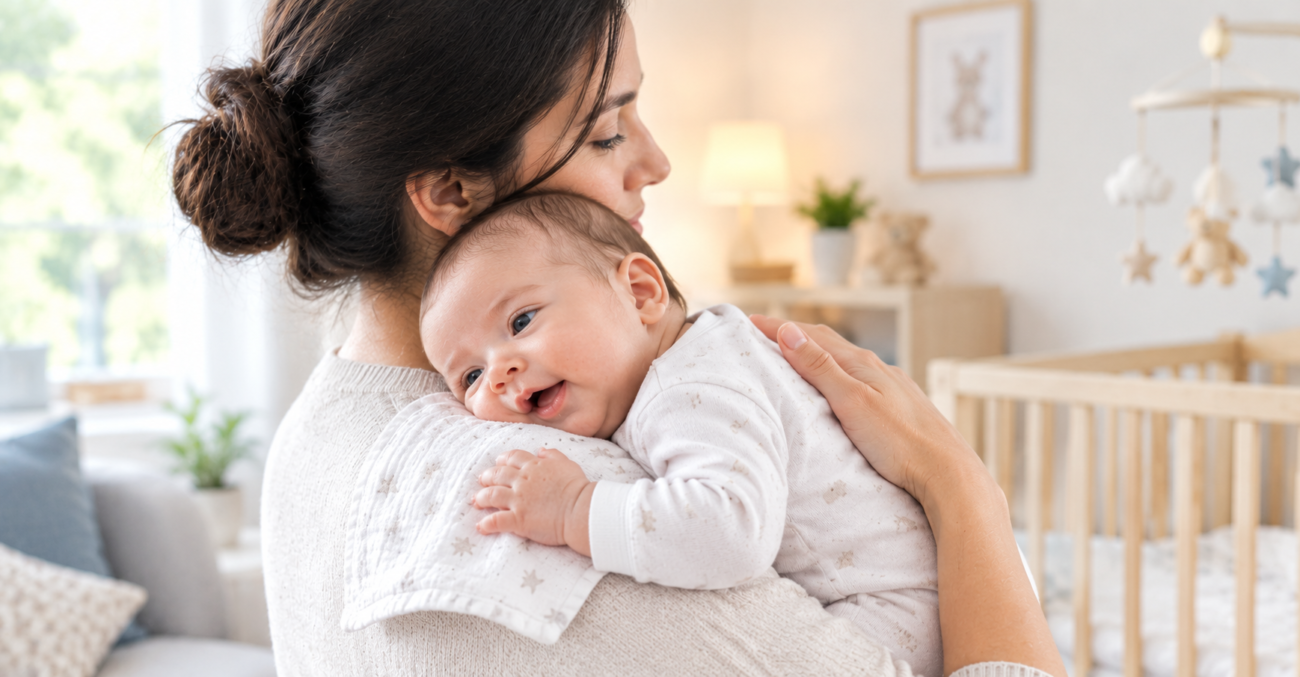
If you’re up at 2 a.m. patting a sleepy little back, you’ve probably wondered: when do you stop burping a baby? The short answer is that most babies need much less help with burping by around 4 to 6 months, though your baby’s comfort matters more than the calendar.
At Zayapol, a U.S.-based baby care and parenting resource, this is one of the questions new parents ask us most. Burping can feel like a never-ending chore, and then one day your baby seems fine without it.
This guide covers the typical timeline, the signs your baby is ready, and a gentle step-by-step plan for phasing burping out. You’ll also learn when to keep going, especially if spit-up or reflux is part of your daily routine.
When Do You Stop Burping a Baby? The Short Answer
Most babies can stop being burped regularly between 4 and 6 months of age. Healthline shares this general range, citing Boys Town Pediatrics, and also notes that every baby is different. Around this age, babies usually have better head control and a more mature digestive system.

The typical 4–6 month window
Babies swallow some air whenever they feed. Healthwise guidance, shared by University of Michigan Health, says most babies burp readily on their own after about 2 months. Many parents keep up the routine a little longer out of habit or caution, and that’s okay.
By 4 to 6 months, many babies are sitting with support, feeding more efficiently, and spending more time upright. Those changes all help trapped air work its way out without a parent’s pat on the back.
Why age is only a guide
Age gives you a starting point, not a deadline. A few things can shift your timeline:
- Feeding method. Bottle-fed babies often swallow more air than breastfed babies, so they may need burping a bit longer.
- Spit-up and reflux. Babies who spit up often may be more comfortable with continued burping.
- Prematurity or health conditions. Your pediatrician can tell you whether your baby’s timeline should differ.
One more thing worth knowing: burping isn’t a magic fix. A pediatrician writing for Science-Based Medicine points out that babies often burp just fine on their own, and that burping can sometimes make a baby more likely to spit up. That’s a good reason to follow your baby’s lead rather than burping out of habit.
Why Babies Need Burping in the First Place
Babies need burping because they swallow air while feeding, and that air can make them uncomfortable. Burping helps release the air before it moves further into the digestive system.
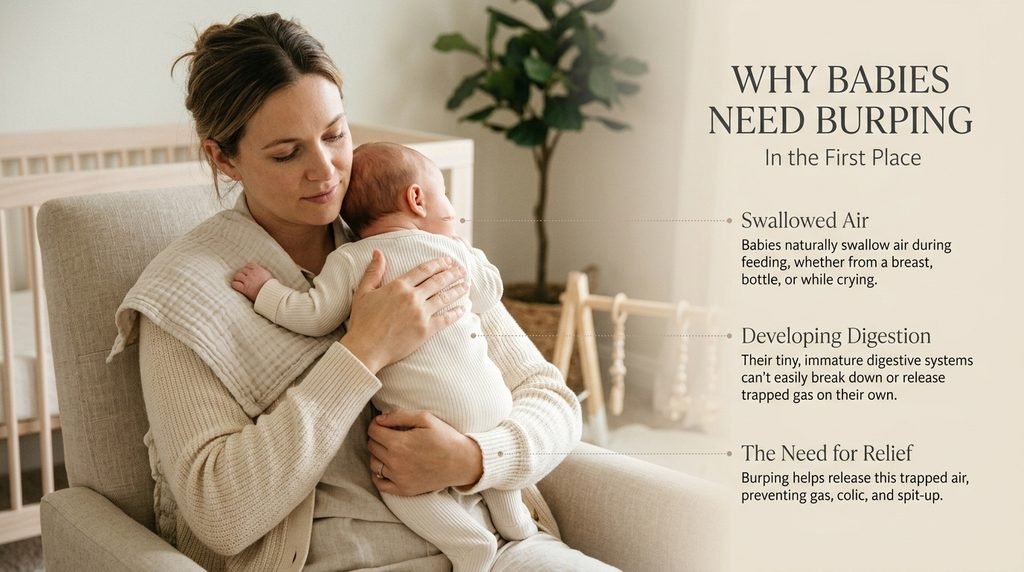
Swallowed air and an immature digestive system
A newborn’s digestive system is still developing, and feeding is hard work. Trapped air can lead to fussiness, squirming, and spit-up.
How often to burp in the early months
The American Academy of Pediatrics (AAP) offers clear starting points on HealthyChildren.org:
- Bottle-feeding: burp after every 2 to 3 ounces (60 to 90 ml).
- Breastfeeding: burp when your baby switches breasts. Some breastfed babies don’t swallow much air and may not need to burp at all.
- After the feed: burp again, then keep your baby upright for about 10 to 15 minutes to help prevent spit-up.
The AAP also reminds parents that no baby burps every single time. If a burp doesn’t come after a few minutes, it’s okay to carry on with the feed.
If your baby is gassy or spits up often, Healthwise suggests burping more frequently. Arkansas Children’s adds that if your baby gets fussy mid-feed, it helps to pause, burp, and then start again.
Signs Your Baby Is Ready to Stop Being Burped
The clearest sign is a baby who feeds calmly and stays comfortable afterward, even without a burp. A nurse interviewed by Fatherly explains that when a baby feeds without fussing or is ready to play right after eating, burping is likely no longer needed.
5 signs your baby may be ready
- Calm feeds. Your baby eats without squirming, arching, or pulling away.
- Happy afterward. They’re content or ready to play after feeding, not cranky.
- Burps on their own. You hear little burps or notice them releasing gas without help.
- Better posture. They hold their head steady and sit with support.
- Little or no spit-up. Spit-up is occasional and doesn’t seem to bother them.
If you’re seeing three or more of these most days, you can start the gradual plan below.
Signs to keep burping
Hold off on stopping if your baby:
- Fusses, cries, or arches their back during or after feeds
- Pulls their legs up toward their belly
- Has a hard or swollen-looking belly after eating
- Spits up frequently
Remember that you never need to force a burp. If you’ve tried a few positions for a few minutes and your baby stays calm, there’s likely no trapped air to release.
How to Stop Burping Your Baby Gradually (Step by Step)
The easiest way to stop burping your baby is to cut back a little at a time and watch how they respond. A slow approach lets you catch any discomfort early.
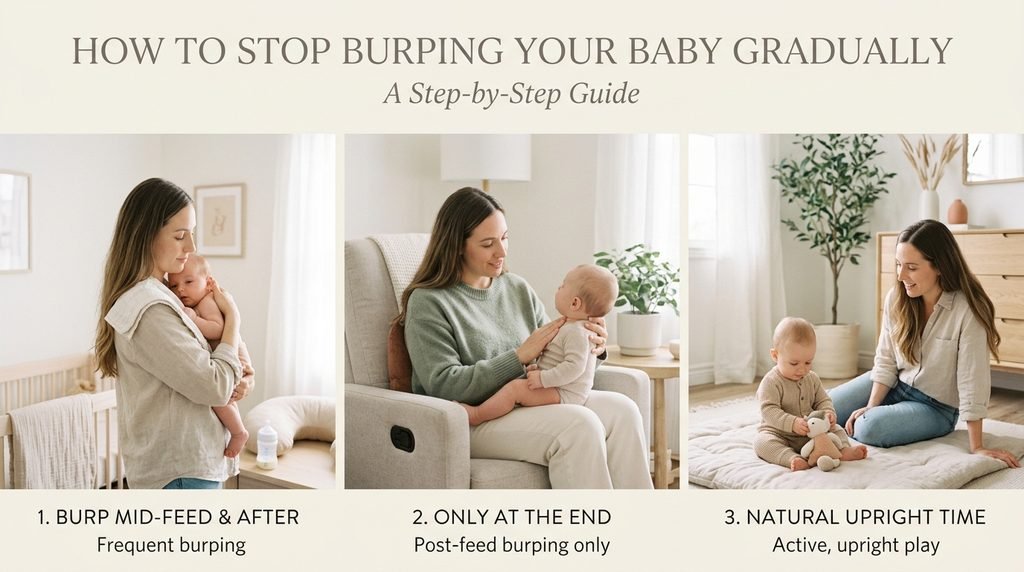
Step 1: Drop the mid-feed burp first
On a calm day, skip the burp break halfway through a feed. If your baby stays relaxed through the whole feeding, you’re off to a good start.
Step 2: Shorten the post-feed burp
Instead of patting for several minutes, try one minute and see what happens. Keep your baby upright afterward for 10 to 15 minutes, as the AAP recommends, since staying upright can help with spit-up.
Step 3: Skip it on calm feeds, keep it for night feeds if needed
Once your baby seems fine without the post-feed burp, try skipping it during the day. Many parents keep a quick burp for nighttime feeds, when a baby may be sleepier and swallow air differently. That’s a reasonable middle ground.
Step 4: Watch for 3 to 5 days, then adjust
Give each change a few days. If your baby seems comfortable, move to the next step. If fussiness, spit-up, or gas picks up, go back to the previous step for a while and try again in a week or two.
If gas bothers your baby after you cut back, burping isn’t the only tool. Healthline mentions options like gentle baby massage, and adjusting bottle nipple flow if feeds seem too fast. Our article on easing baby gas has more ideas.
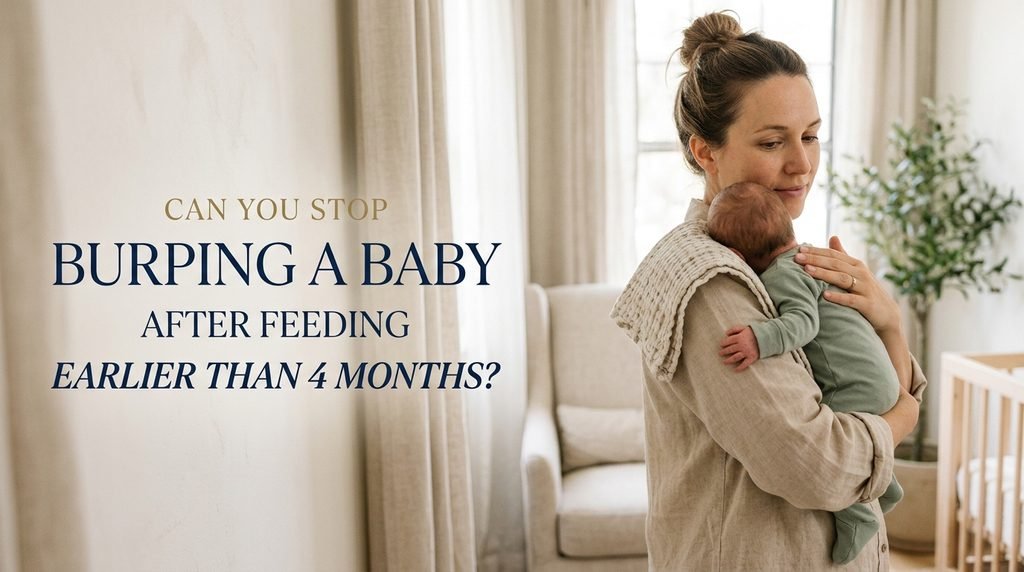
Can You Stop Burping a Baby After Feeding Earlier Than 4 Months?
Yes, some babies can skip burping earlier than 4 months if they’re comfortable, but most young babies still benefit from it. Healthwise notes that many babies burp on their own after about 2 months, so a baby who feeds calmly and shows no signs of gas may not need much help.
Breastfed vs. bottle-fed babies
Breastfed babies often swallow less air, so some of them need fewer burps. The AAP says some breastfed babies may not need to burp at all. Bottle-fed babies tend to take in more air, especially if the milk flows quickly, so they may need burping a little longer. If you’re bottle-feeding, check that your bottle setup supports a slower, steadier flow, and browse our anti-colic bottle picks.
What about night feeds and sleeping babies?
If your baby falls asleep during a feed, a gentle upright burp attempt is fine, but you don’t need to wake a settled baby to keep patting. The AAP also advises that even for babies who spit up often, the safest sleep position is on their back on a flat mattress, not propped up or elevated.
Spit-Up, Reflux and When to Keep Burping
Spit-up is very common in healthy babies and usually fades with time. According to GIKids, more than half of babies spit up regularly in their first months. It typically peaks around 4 months and stops by 12 to 18 months.
The normal spit-up timeline
Children’s National Hospital notes that infant reflux resolves in up to 88 percent of babies by 12 months and in nearly all by 24 months. So if your baby is a “happy spitter” who’s growing well and generally cheerful, spit-up alone isn’t a reason to worry.
Because spit-up peaks around the age burping becomes optional, it’s normal to ease off gradually.
When to call your pediatrician
Spit-up becomes a concern when it comes with other symptoms. Contact your pediatrician if you notice:
- Refusal to feed or poor weight gain
- Breathing problems or coughing with feeds
- Projectile vomiting or clear distress when burping
- Ongoing irritability, or anything that simply doesn’t feel right
Healthline and GIKids both recommend checking in with your child’s doctor in these situations, since they can rule out issues like gastroesophageal reflux disease (GERD).
FAQs About When to Stop Burping a Baby
When can I stop burping my baby after a bottle?
You can usually ease off burping after bottles around 4 to 6 months, once your baby feeds calmly and stays comfortable. Bottle-fed babies tend to swallow more air, so go gradually. Start by skipping the mid-bottle burp, then shorten the post-bottle burp.
When can I stop burping my baby after breastfeeding?
Many breastfed babies need less burping, and some may not need it at all. The AAP notes that some breastfed babies don’t swallow much air. If your baby seems comfortable after nursing, you can try skipping the burp and see how they do.
Is it okay to stop burping at 3 months?
It can be, if your baby is comfortable after feeds and isn’t gassy or spitting up often. Many babies burp on their own after about 2 months. Try the gradual steps above, and go back to burping if fussiness returns.
What if my baby doesn’t burp at all?
Don’t worry: no baby burps after every feed. If your baby doesn’t burp after a few minutes in one or two positions, they likely don’t have much trapped air. If they seem uncomfortable, try a different position or a short break, and mention it to your pediatrician if it keeps happening.
Should I burp a baby who falls asleep while feeding?
You can try a gentle upright burp, but there’s no need to wake your baby. If they’re sleeping peacefully, keep them upright for a few minutes. If they stir and seem uncomfortable, a short burp attempt may help them settle again.
Conclusion: Follow Your Baby’s Lead
So, when do you stop burping a baby? For most families, the answer arrives somewhere between 4 and 6 months, but the real signal is your baby: calm feeds, a happy mood afterward, and little spit-up.
Here are the three main takeaways:
- Age is a guide, not a rule. Cues come first.
- Phase burping out gradually, starting with the mid-feed burp.
- Keep burping, and talk to your pediatrician, if your baby shows signs of discomfort, frequent spit-up, or feeding trouble.
If you’d like more feeding tips, read our newborn feeding guide and subscribe to Zayapol for practical baby care advice delivered to your inbox. And we’d love to hear from you: when did your baby stop needing burps? Tell us in the comments.
This article is for general information and isn’t a substitute for medical advice. Please talk to your pediatrician about your baby’s feeding, burping, spit-up, or any health concerns.
Related Post:
Who Pays for a Baby Shower? 7 Essential Etiquette Rules
Are Baby Hairs a Sign of Balding? 5 Clear Ways to Tell
How to Introduce Wheat to Baby: 7 Safe, Easy Steps

4 thoughts on “When Do You Stop Burping a Baby? Age, Signs & How to Phase It Out”