Zayapol is a parenting resource for new and expecting parents in the United States. This guide is general information, not medical advice.
Knowing how to choose a baby stroller starts with three questions: how old your baby is, where you’ll use the stroller most, and whether it meets current US safety standards. Everything else, from fold style to cup holders, comes after those basics.
If you’re staring at dozens of options on your registry, you’re not alone. This guide walks you through seven simple steps so you can narrow the field without second-guessing yourself.
Quick takeaways
- Match the stroller to your baby’s age and your daily routine first.
- Every stroller sold in the US must meet a federal safety standard, and a JPMA seal adds another layer of checking.
- Newborns need a seat that reclines nearly flat or a bassinet option.
- Test the weight, fold, and brakes in person before you buy.
- Never hang bags from the handlebar, and always use the harness.
Step 1: Start With Your Baby’s Age and Your Daily Routine
The right stroller depends first on your baby’s stage and second on how you live. A newborn needs a stroller that supports a fully reclined position, while an older baby who sits up can use a more upright seat.
What type of stroller does a newborn need?
A newborn needs a stroller with a seat that reclines nearly flat, a bassinet or carrycot attachment, or a compatible infant car seat. Always check the manufacturer’s minimum age and weight, and choose a stroller made for your child’s age, height, and weight, as KidsHealth advises.
Many parents choose a stroller that can grow with their baby. Look for one with an adjustable recline and a seat that works from the newborn stage through the toddler years.
How your lifestyle changes the answer
Think about how you’ll actually use the stroller on a normal week. TIME’s shopping guide points out that how walkable your area is, the transport you use, and the weather all matter.
Ask yourself:
- Do you drive, take transit, or walk most places?
- Do you live in an apartment with stairs or an elevator?
- Where will the stroller be stored?
- Do you expect to have more than one child in a stroller?
Step 2: Compare the Main Baby Stroller Types
Most families choose among five baby stroller types: full-size, travel system, lightweight, jogging, and double. Each trades size, features, and portability differently.
| Type | Best for | Watch out for |
| Full-size | Everyday use, longer walks, more storage | Heavier and bulkier to store |
| Travel system | Moving a sleeping baby from car to stroller | Infant seat is outgrown sooner than the stroller |
| Lightweight / umbrella | Quick errands, travel, small spaces | Less support, so check the minimum age |
| Jogging | Active parents, rougher terrain | Check the manufacturer’s age guidance before running |
| Double / tandem | Twins or siblings close in age | Width and weight in doorways and trunks |
Do you need a travel system?
A travel system is a good fit if you drive often and want to move your baby between car and stroller without unbuckling them. Make sure your infant car seat is compatible with the stroller, and follow the manufacturer’s instructions for both. Some parents later add a lightweight stroller as a second option. For car seat basics, see our infant car seat safety guide
Step 3: Check Baby Stroller Safety Features
In the US, every stroller must meet a mandatory federal safety standard. That standard is 16 CFR Part 1227, which incorporates the ASTM F833 specification. Its current version, ASTM F833-19, became the mandatory standard in November 2019.
Why does it matter? Before the rule, the CPSC reviewed more than 1,200 stroller-related incidents from 2008 to 2012. These included four deaths and nearly 360 injuries. Problems included stroller collapse and finger injuries from folding hinges.
Federal standards and JPMA certification explained
A JPMA Certified seal means an independent, CPSC-accredited lab has tested the product. Babylist’s guide to safety certifications explains that you can check a stroller in the JPMA Certified Products Directory. Certification is a helpful extra signal, but it doesn’t replace reading the manual and using the stroller correctly.
Brakes, harness, stability, and the “grab bar gap”
Check these features on any stroller you’re considering, using KidsHealth’s stroller checklist:
- Reliable restraint belts. A secure harness is a must, and you should use it every ride.
- Easy-to-use brakes. Practice engaging them with one foot.
- Stability. The stroller shouldn’t tip backward when you press lightly down on the handles.
- A closable grab bar opening. If there’s a front grab bar, the gap between it and the seat should close when the seat is reclined, to avoid trapping a baby’s head.
Step 4: Plan for Safe Naps and Comfort
Strollers are for rides, not for routine sleep. The American Academy of Pediatrics (AAP) recommends that babies sleep on a firm, flat, non-inclined surface. In its safe sleep update, as summarized by Dignity Health, inclined surfaces over 10 degrees are unsafe for babies under four months, and that includes strollers.
Can a newborn sleep in a stroller?
A newborn may doze off during a short, supervised walk, but a crib or bassinet is the safest place for sleep. When your baby falls asleep on the go, move them to a flat, firm sleep surface as soon as you’re home. If you plan long outings with a young baby, a stroller with a bassinet or near-flat recline can make it easier. Keep your baby’s face visible and never leave them unattended.
Recline, canopy, and seat support
Comfort features matter more than they seem. Look for:
- A smooth, adjustable recline you can change with one hand
- A roomy canopy for sun coverage
- Padded, supportive seating that fits your baby’s size
- Wheels and suspension suited to the sidewalks and paths you use
Step 5: Test the Weight, Fold, and Handling in Person
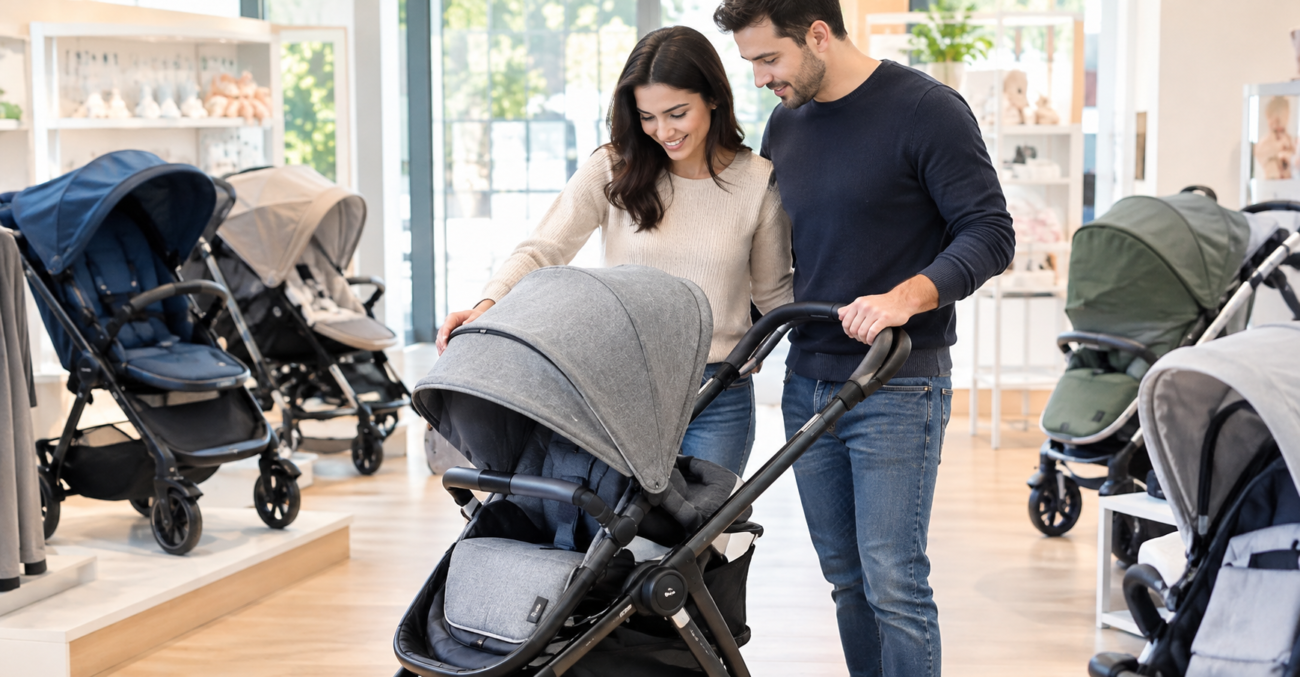
Try the stroller in a store whenever you can. A stroller that looks great online can feel awkward once you’re steering it with a baby on your hip.
CHOICE’s parent tips recommend checking the stroller’s weight and thinking about where you’ll store it before you buy.
The 5-minute store test
- Fold and unfold it with one hand, then with a bag on your arm.
- Lift it as if you were loading a trunk.
- Push it in a straight line and around a tight corner.
- Press down on the handles to check it doesn’t tip backward.
- Engage and release the brakes.
- Adjust the recline and the handlebar height.
- Check that the basket is easy to reach.
- Look for a JPMA seal and a date label.
Aim for a shortlist of three or four options, as TIME’s advisors suggest, so you can compare them side by side.
Step 6: Set a Realistic Budget
The best stroller is the one that fits your life and meets safety standards, not necessarily the most expensive. Stroller prices vary widely, and higher prices often reflect materials, ride quality, and extras rather than basic safety.
How much should you spend on a baby stroller?
Decide what you truly need, then price out options with those features. Features worth paying for include smooth wheels, an easy fold, and a good recline. Extras like cup holders or fancy fabrics can be nice to have.
Buying secondhand safely
A used stroller can save money, and some parents say they wish they’d gone secondhand at first. If you do, check the model for recalls, confirm that all parts and the harness are intact, and make sure the brakes and fold lock work. Skip any stroller with damage or missing pieces.
Step 7: Use It Safely After You Buy
Safe habits matter as much as safe design. Follow these tips from KidsHealth:
- Always buckle the harness.
- Set the brakes whenever you stop.
- Never hang purses or diaper bags on the handles, since they can tip the stroller.
- Fold and unfold the stroller away from children to protect small fingers.
- Never leave your child unattended in a stroller.
How to Choose a Baby Stroller: Your Questions Answered
What should I look for when buying a baby stroller?
Look for a stroller that matches your baby’s age and size, meets US safety standards, and fits your daily routine. Check the brakes, harness, stability, and recline, and test the fold and weight in person. A JPMA seal is a helpful extra signal.
What is the safest type of stroller for a newborn?
There isn’t one “safest” type, but a stroller with a near-flat recline or bassinet option, strong brakes, and a secure harness suits newborns best. Choose one made for your baby’s age and weight, and follow the manufacturer’s guidance. Ask your pediatrician if you have questions about your baby’s needs.
Is it safe for a baby to sleep in a stroller?
A brief, supervised doze is common, but strollers aren’t designed for routine sleep. AAP guidance recommends a firm, flat, non-inclined surface for sleep, so move your baby to a crib or bassinet as soon as you can.
How much should I spend on a stroller?
Spend what fits your budget and covers the features you’ll use daily. Safety standards apply to all strollers sold in the US, so a higher price mainly reflects design and extras. Compare shortlisted models side by side before deciding.
Conclusion
Learning how to choose a baby stroller comes down to three takeaways. Match the stroller to your baby’s age and your routine, confirm it meets safety standards, and test it in person before you buy.
Take it one step at a time, and trust your own routine and instincts. When you’re ready to keep going, explore more in our baby products and gear guides (internal link: URL needed) and subscribe for new parent-friendly tips.
Which of these steps will you tackle first? Tell us in the comments.
Talk to your pediatrician about safe sleep, your baby’s size, and any health questions. This article is for general information only.
Related Post:
When to Send Out Baby Shower Invites: 6 Easy Timelines
Does a Surrogate Share DNA With the Baby? 7 Clear Facts
When to Move Baby Out of Bassinet: 6 Must-Know Signs

4 thoughts on “How to Choose a Baby Stroller: A Step-by-Step Guide for New Parents”